
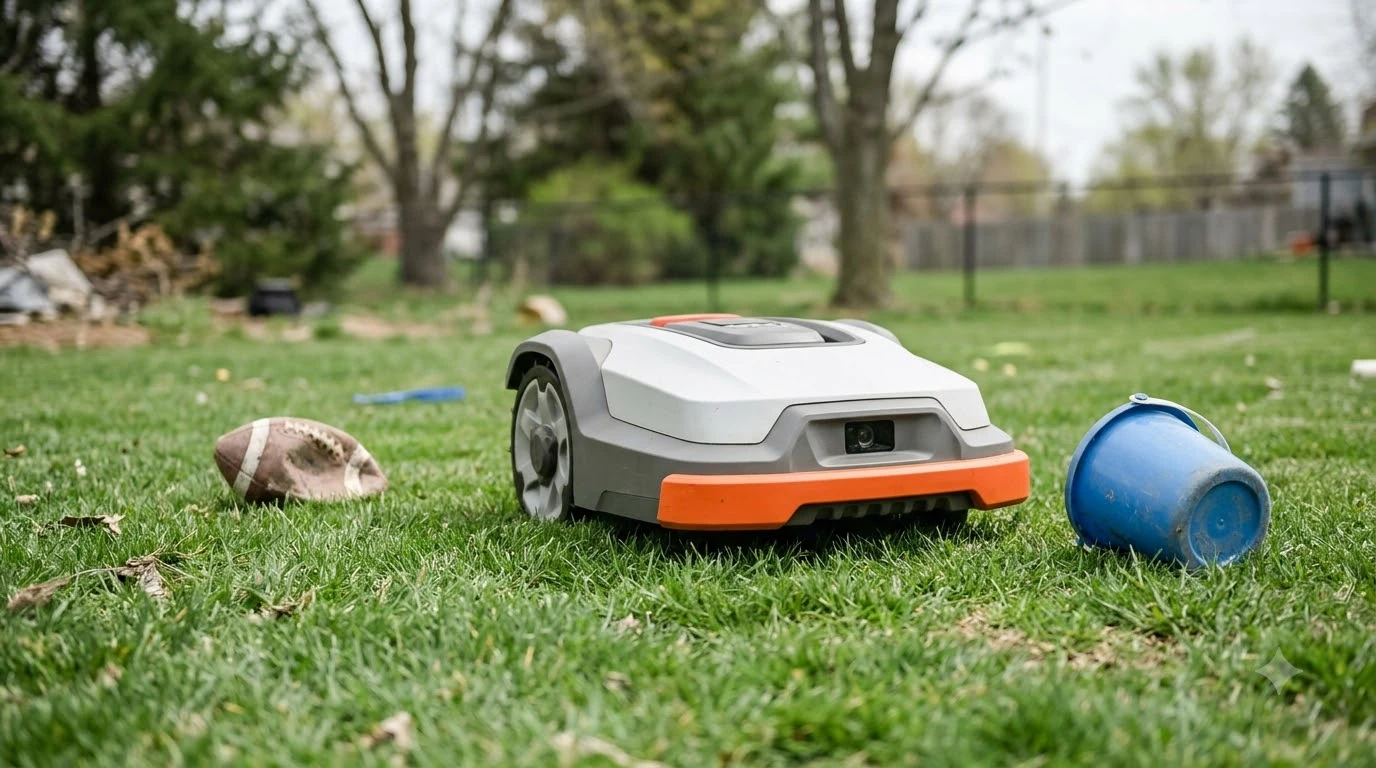

In an ultrasonic vs camera obstacle avoidance robot mower comparison, the key difference is recognition: ultrasonic sensors tell the mower that something is in the way, while cameras with AI can also work out what it is. Both help a mower stop or steer around obstacles, but they fail in different conditions. Vendor and review sources broadly agree on that split, though most of the material comes from companies that sell one or the other, so the claims below are presented as what each side says.
The short answer
- Ultrasonic: cheap and common on budget mowers. It detects objects by sound echo, and it does not depend on light.
- Camera with AI: can classify objects, so it can tell a garden hose from a cushion. It depends on light, clean lenses and clear sightlines.
- Most mid-range models combine a camera with ultrasonic sensors and bump sensors, so one method covers the other’s weak spots.
- Neither is a substitute for a clearly defined boundary wire or a physical no-go zone around fragile plants.
Ultrasonic vs camera obstacle avoidance robot mower: what each one detects
The two sensing methods start from different questions. Ultrasonic asks how far away something is. A camera asks what that something looks like.
What ultrasonic sensors detect
Ultrasonic sensors send out sound pulses and listen for the echo. GOKO, a maker of camera-based mowers, describes them as cheap and common in budget machines, and says they keep working in darkness, dust and bright sun. That consistency is their main appeal: the mower knows roughly how far away an object is without needing a clear view.
The limit is recognition. An ultrasonic sensor reads a hose, a low toy and a sleeping cat in much the same way, because all three return an echo. GOKO also notes that thin or soft objects can be harder for these sensors to pick up. For a simple lawn with few obstacles, that may be acceptable. For a yard with hoses, pet bowls and children’s toys left out, it means the mower reacts to everything or sometimes misses something it should not.
What camera systems add
A camera system uses image recognition to classify what it sees. GOKO describes stereo cameras that provide depth, and side cameras that widen the field of view. GOKO says its M6 is trained to recognise over 200 object types. That is a vendor figure, and the sources we read give no independent test to confirm it. Most mowers combine several sensor types, and vision versus bump sensor detection explains the range of options.
The practical benefit is selectivity. A mower that can tell a hose from a patch of long grass can slow down, route around it, or avoid a garden bench without bumping into it first. That matters most in yards with many small, movable objects.
Where camera systems struggle
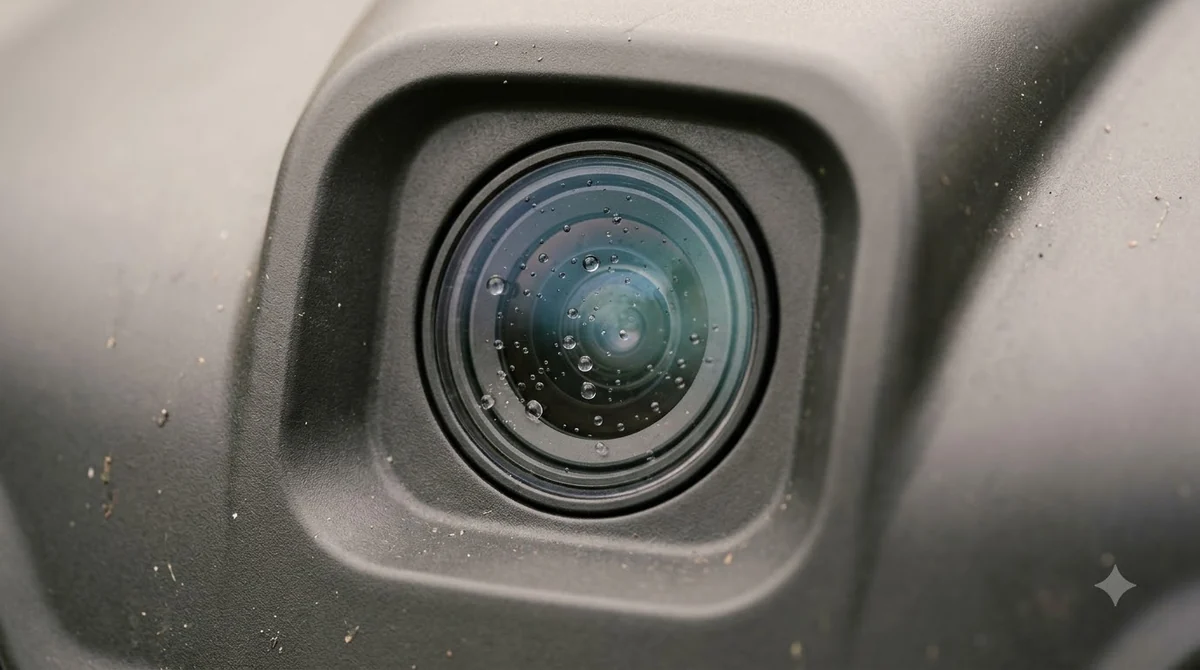
Cameras depend on light, and the vendor sources list the same problems again and again. GOKO says deep shade, glare and darkness reduce accuracy. Grass clippings or water splashes on the lens can block the view. A robot that runs in early morning dew or in the shade of a large tree may see less reliably than it does in open sun. Camera weaknesses in low light are easier to place after reading LiDAR sensing compared with cameras.
The reviews back this up in practice. In a Gardeners’ World roundup, one camera-led budget mower avoided a garden bench that stopped pricier models, yet the same review notes that the lawn edge is found with the sensors and needs clearly defined boundaries. Another camera-led model was described as “quite timid” near bushy borders and left tufts along the edge. Camera systems do not remove the need for a tidy perimeter.
How budget and mid-range mowers combine the two
Many current mowers do not choose one method. A common budget layout is one central camera with two upward-facing ultrasonic sensors, plus a front bumper. The camera handles recognition in good light, and the ultrasonic pair covers the gaps when the image is poor. The bumper is the last line of defence and simply triggers a turn when contact is made. Budget and mid-range models often mix sensor types, as Eufy alternatives with budget sensors illustrates for shoppers.
Higher-priced models usually add more cameras or a satellite-style navigation layer, with the aim of keeping obstacle avoidance working when light falls. GOKO argues that its four-camera design works after dark and does not need LiDAR, which it describes as precise but expensive and unable to identify object types. That is GOKO’s own position, not a neutral measurement, so it is worth reading alongside independent reviews.
Heads up
A bump sensor and a camera can both report an obstacle, but the mower still reacts after contact in some designs. If a flower bed or a young shrub is close to the lawn edge, a physical barrier or a no-go zone set in the app is a better protection than any sensor alone.

How to compare an ultrasonic vs camera obstacle avoidance robot mower on your lawn
Start with the yard itself, not the spec sheet. Count the objects you leave out most often, such as hoses, toys, furniture, and planters. If those are rare and the lawn has a clear, straight edge, an ultrasonic-led mower may be enough. If the lawn is busy, shaded for part of the day, or used by children and pets, a camera-led mower is worth the extra cost, as long as you accept that it works best in daylight. How a mower covers the lawn matters as much as how it avoids objects, as random and systematic coverage patterns explains.
Ask the seller two questions: what does the mower do when light drops, and what happens when the lens is dirty? Vendor answers vary, so a reseller who can name the failure mode is more useful than one who only quotes the number of recognised objects.
Who each setup suits
An ultrasonic-led mower suits a small, open, mostly obstacle-free lawn where price matters more than fine recognition. A camera-led mower suits a yard with many movable objects, uneven light, or a need for the mower to keep working in shade and dusk. A hybrid of camera, ultrasonic and bump sensing suits most typical suburban yards, because each method covers the other’s limits. In every case, a well-marked boundary and a short walk around the lawn to remove loose objects will do more for performance than the choice of sensor. Sensor choices show their weak points over several seasons, which is covered in a long-term robot mower ownership review.
Frequently asked questions
Can ultrasonic sensors see objects in the dark?
Yes, according to GOKO, ultrasonic sensing does not depend on light, so it keeps working in darkness. It does not tell the mower what the object is, though.
Do camera mowers work at night?
Camera accuracy falls in darkness, glare and deep shade according to the vendor sources. GOKO says the best current systems handle low light and often pair vision with other sensors, but a camera-only mower should be expected to work best in daylight.
Is a camera always better than ultrasonic?
No. A camera can recognise objects, but it can be blocked by clippings or dirt and it struggles in poor light. Ultrasonic sensing is simpler and steadier in those conditions, which is why many mowers use both.
Do I still need a boundary wire with camera or ultrasonic mowers?
Reviewers report that several camera and ultrasonic budget models need clearly defined lawn edges to work well. A boundary, a physical edge or a no-go zone in the app is still the safest way to keep the mower off beds and paths.
Sources
- GOKO, “Robot Mower Obstacle Avoidance Explained” (vendor): ultrasonic, camera and LiDAR limits, and the vendor’s own comparison.
- Gardeners’ World, “Best robotic mowers to buy in 2026” (magazine review): budget and mid-range obstacle-avoidance behaviour and caveats.
 Up next6 min readReviews & CompareIs the Dreame A2 Worth It? Camera and LiDAR Mower CheckUpdated Nov 14, 2026
 7 min readReviews & CompareRobot Mower vs Letting the Lawn Grow Into a MeadowUpdated Nov 14, 2026
 8 min readReviews & CompareRobot Mower vs Battery Push Mower: Cost, Time and Lawn SizeUpdated Nov 17, 2026
 7 min readReviews & CompareRobot Mower Subscription vs No Subscription: Which Brands ChargeUpdated Nov 14, 2026
 7 min readReviews & CompareLithium vs Lead Acid Robot Mower Battery: Which Lasts LongerUpdated Nov 17, 2026
 7 min readReviews & CompareRefurbished vs New Robot Mower: Warranty, Battery and App ChecksUpdated Nov 17, 2026