
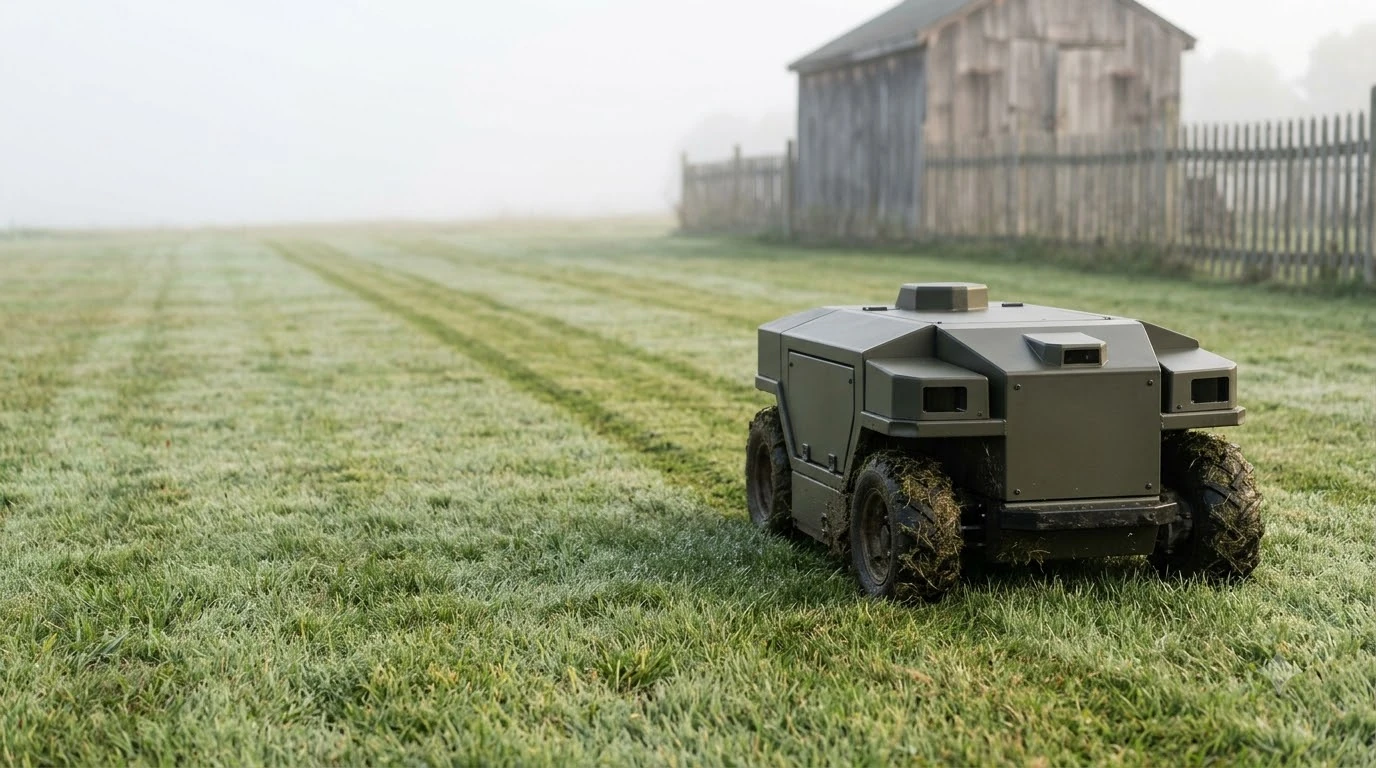

For a church or small campus lawn, the best robot mower is usually the one rated for the real area with a safety buffer, not the largest model you can find. A campus lawn has more obstacles, more boundaries and more people walking around than a home yard, so the setup often matters more than the spec sheet. The points below come from manufacturer guidance we read, plus our reading of how it applies to a shared site, as of November 2026.
The short answer
- Size with a buffer. Robomow says to leave a buffer between your lawn size and the rated output, especially if the mower takes breaks.
- Look at the commercial line. Husqvarna’s Automower 580 EPOS is described for campuses and facility management, with a standard rating of 4 acres and a sports rating of 2 acres.
- Check the slope at the boundary. The same Husqvarna page lists 45% inside the installation area but only 20% along the boundary.
- Plan for more than one mower. Robomow suggests two mowers that share the workload when one cannot cover the area.
Start with the area, then leave room for breaks
A campus lawn is usually split into several zones by paths, beds and parking. Robomow’s guide to robot mowers for large areas says there is “no fixed definition” of a large lawn, but notes that private gardens start at about 1,000 m², while playgrounds, schools and big parks often cover several thousand square meters. That gives you a rough sense of scale before you compare models. A campus is one of several property types, and the guide to mowers for varied property types covers the others. If the grounds are large, see mowers for five acres for anyone comparing the options in more depth.
The rated area is the next number to read. Robomow distinguishes recommended area output, which reflects an average garden, from maximum area output, which assumes ideal conditions. Our reading is that a church lawn should be sized to the recommended figure, because a mower that runs close to its maximum will spend longer on each pass, take more breaks and fall behind in the busy weeks of the year.
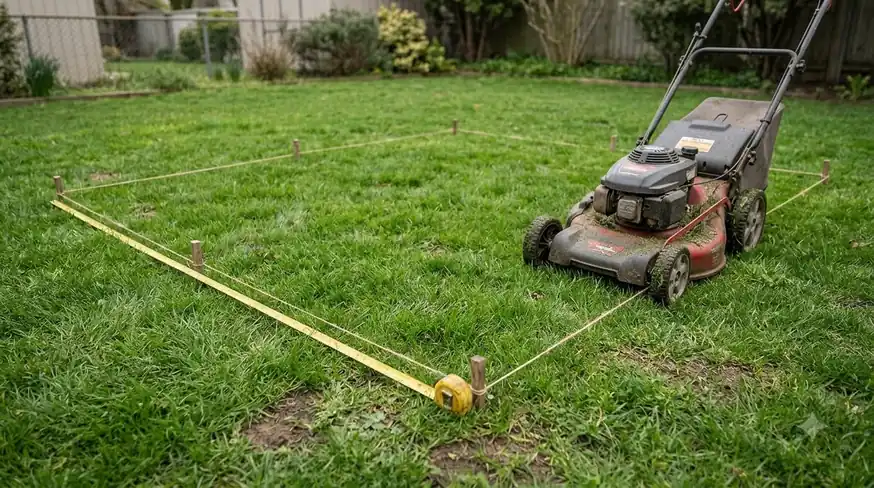
Measure the lawn in square meters or acres, subtract the beds and paths, and then compare the result with the rated output in the manual. Our reading is to keep a clear margin below the rating: the Husqvarna page gives its lawn-size figure a ±20% tolerance, so treat any single rating as approximate.
Commercial-line models and what they promise
Husqvarna’s Automower 580 EPOS sits in its commercial range. The product page describes it as “a high-performance robotic mower for demanding commercial turf care,” and says it is “built for immense scale” and suited to “facility management.” It also says virtual transport paths can connect scattered work areas “around a campus or sports complex,” which is the layout many church sites have, with a main lawn, a side lawn and a path between them. Managed sites share similar needs, as mowers for rental properties explains for readers who want more detail on the subject. Large open ground raises similar issues, as mowers for rural sites shows.
Those are manufacturer claims. The same page lists the mower as wire-free, using a virtual boundary, but it also says the EPOS system needs an RS5 reference station that is not included with the product, and that a local wire can be used for the charging station where satellite coverage is weak. Our reading is that a church site with tall trees or buildings around the lawn should confirm satellite coverage before buying, because that affects both the boundary and the dock.
Slopes, boundaries and the edges people use
A commercial mower’s slope rating is a different number from its cutting area. The Husqvarna page lists a maximum slope of 45% inside the installation area, but only 20% at the boundary. That gap matters on a campus where a lawn may slope down to a driveway, a graveled path or a parking lot edge, because the boundary is where the mower is most likely to slip. Edges and passages are covered in mowers for a corner lot as a useful companion to the points in this section. New sites have different boundaries, as mowers for newly built sites describes. Small shared spaces are discussed in mowers for townhouse lots if you want to read further before deciding.
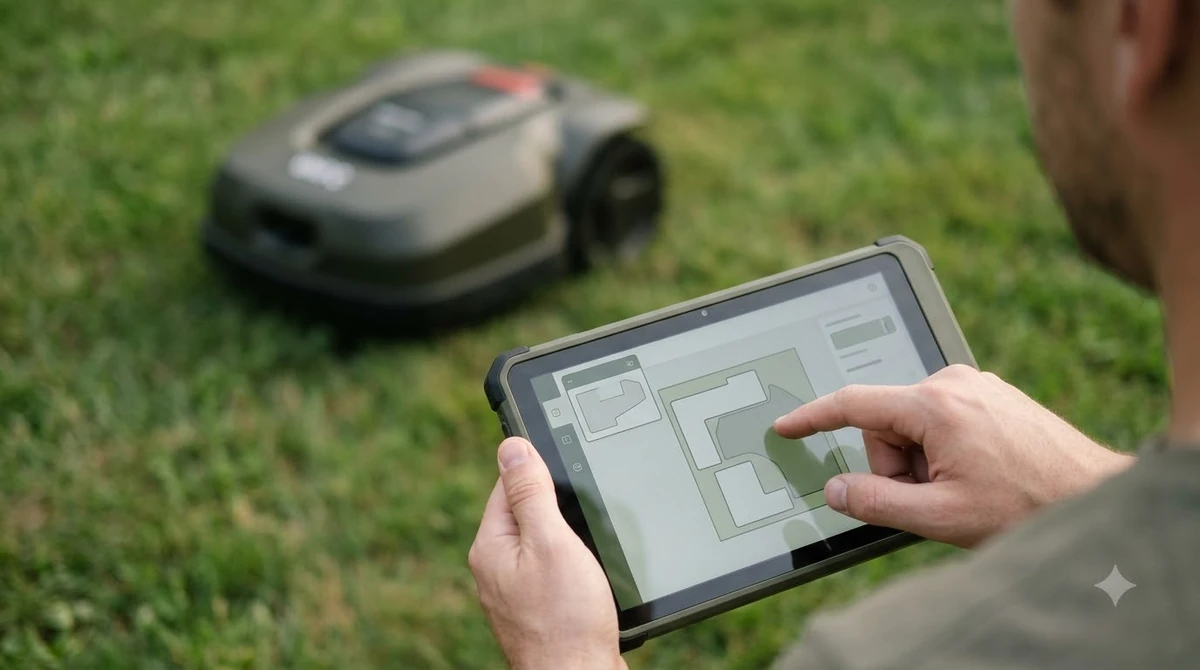
Robomow also advises checking each model’s maximum gradient, since an overwhelmed mower can stall or slide, and that traction wheels improve grip on slopes and in wet conditions. Our reading is that a church lawn with a slope near the street or a walkway should use a wider boundary buffer and a shallower slope setting than the spec sheet suggests, and that wet days should be scheduled around services and events.
Fleets, zones and when one mower is not enough
For areas beyond what one robot can handle, Robomow suggests two mowers that share the workload. Each mower gets its own charging station and its own perimeter wire, and the mowers run on different induction loop frequencies so their wires do not interfere with each other. The page also notes that professional mowers exist for lawns up to 30,000 m², but that they are costly. Large sites are not the only ones that run unattended, and mower setup for a part-time property raises many of the same zone questions.
For a small campus, one mower with the right zone setup is often enough. Robomow recommends mowers that support a main zone, a secondary zone and separate zones, with remote starting points the robot can reach at intervals. Our reading is that a church site split by a path is a good case for two zones on one mower, rather than two mowers, unless the lawn is clearly larger than the rated output.
What to check before you buy for a church or campus
- Rated area with a buffer. Compare the recommended output, not the maximum, to your measured lawn.
- Slope at the boundary. Check the boundary figure, not only the slope inside the installation area.
- Satellite coverage. If the lawn sits under trees or next to tall buildings, confirm the mower’s positioning works there.
- Zone and remote-start support. Confirm the mower can reach a separate lawn across a path.
- Service and support. Ask the dealer how a commercial unit is serviced and who responds if it stops during a busy week.
The best robot mower for a church or small campus lawn is the one you can size, install and service with confidence. Start with the measured area and the boundary figure, then decide whether one mower with zones is enough.
Frequently asked questions
How big does a lawn need to be before one robot mower is not enough?
Robomow suggests two mowers that share the workload when a single robot cannot handle the area. It also says professional mowers exist for lawns up to 30,000 m², but they are costly. Our reading is that you should size to the recommended output with a buffer first, then consider a second mower only if that still does not fit.
Is a commercial model worth it for a small campus?
It can be, if the site needs facility-level support or sports-field capacity. Husqvarna describes the 580 EPOS for campuses and facility management, but those are manufacturer claims. Compare the cost against the time saved and check the service arrangement before buying.
Why does the boundary slope matter more than the slope inside the lawn?
On the Husqvarna 580 EPOS page, the maximum slope is 45% inside the installation area but only 20% at the boundary. The boundary is where a slipping mower is most likely to leave the lawn, so it is the figure to check first on a sloped campus lawn.
Do I need a wire for a campus mower?
Not always. The Husqvarna 580 EPOS uses a virtual boundary, but it needs a reference station that is sold separately, and a local wire can be used for the charging station where satellite coverage is weak. Check the setup requirements with the dealer before buying.
Sources
- Robomow, mowing robots for large areas (manufacturer): area sizes, recommended and maximum output, fleet setup and zones.
- Husqvarna, Automower 580 EPOS product page (manufacturer): rated area, slope limits, virtual boundary and commercial claims.
 Up next8 min readBest Robot MowersWhat Is the Best Robot Lawn Mower for a Small Yard?Updated Nov 13, 2026
 6 min readBest Robot MowersBest Robot Mower for a Yard with a Rain Garden: What to CheckUpdated Nov 14, 2026
 6 min readBest Robot MowersBest Robot Mower With Apple HomeKit Support: What to CheckUpdated Nov 14, 2026
 7 min readBest Robot MowersBest Robot Mower for a Corner Lot: Wire, Passages and Charging SpotUpdated Nov 14, 2026
 7 min readBest Robot MowersBest Robot Mower for a Lawn with a Pergola: What to CheckUpdated Nov 14, 2026
 6 min readBest Robot MowersBest Robot Mower With Offline Mode: What Keeps CuttingUpdated Nov 17, 2026