
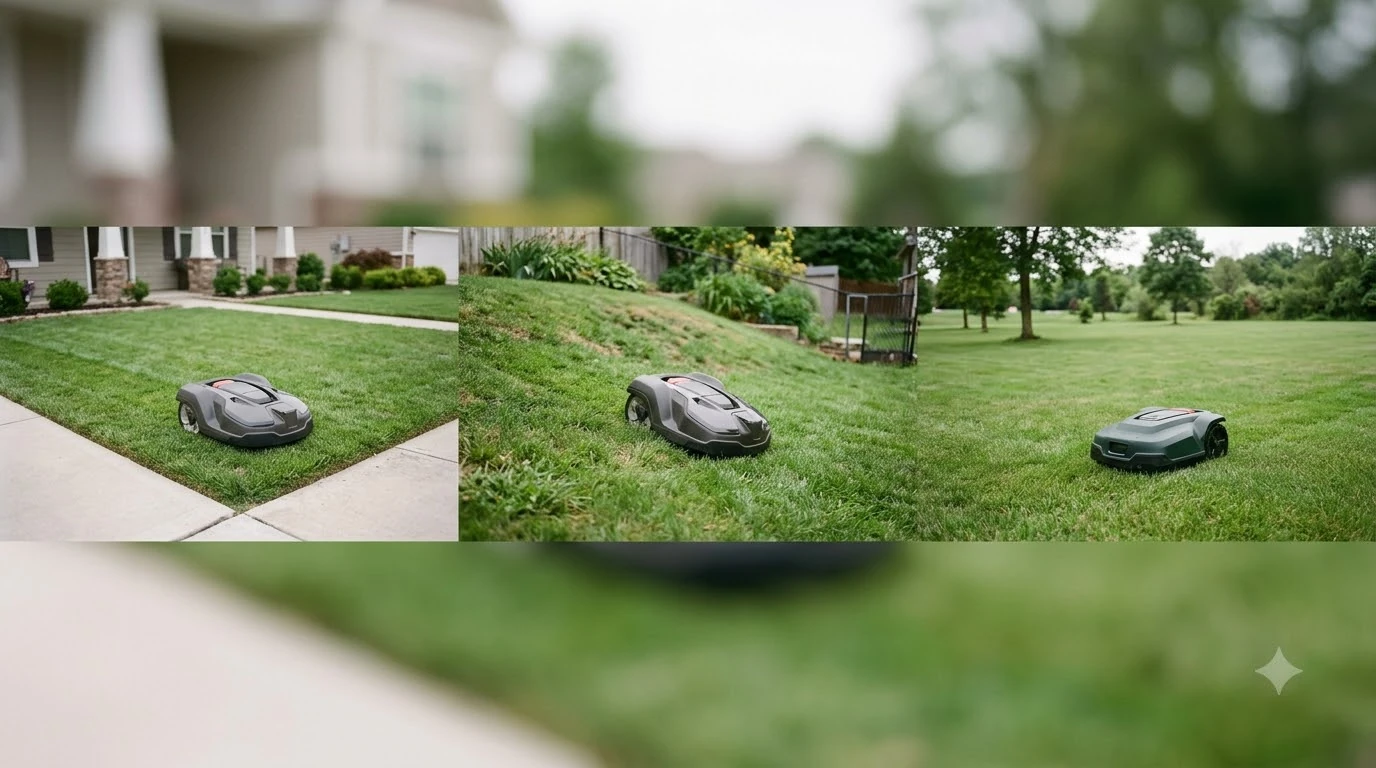

A robot mower for a lawn with tall ornamental grasses should keep the grass clumps outside its boundary, because a robot mower trims the lawn grass around them and cannot cut tall clumps down to a lawn height. The clumps themselves need a yearly cutback by hand in late winter or early spring, and the way you handle that cutback decides how often the mower meets stems, debris, and uneven ground.
The short answer
- Keep clumps outside the mowing area. Place the boundary wire a safe distance from each clump, so the mower works the lawn and never drives into the base of a clump.
- Cut the clumps by hand in late winter or early spring, not in fall, because fall cuts can let water reach the crowns and may cause rot.
- Leave a low stubble. LawnStarter advises cutting warm-season grasses to about 2 to 4 inches, and cutting low but not to the ground.
- Clear the cut debris from the lawn before the mower’s next scheduled run.
Why tall ornamental grasses are a problem for a robot mower
An ornamental grass clump is a different thing from lawn grass. It stands taller than the lawn, its blades are wide and arching, and its stems can stay upright through winter. A robot mower is designed to trim short turf on a regular schedule, so a clump that grows well above the lawn sits outside what the mower can manage. Large clumps are usually part of a planted border, so flower bed planning around a robot-mowed lawn helps set the edge. Lower plantings create a different problem from tall clumps, which low ground cover beside lawn grass describes.
The bigger risk is the mower driving into the clump. Dense stems can tangle the cutting system, lift the mower off the ground, or push it into a dead-end where it spins. Our reading is that the clump should sit clearly outside the boundary, with a buffer of open lawn around it.

Robot mower for a lawn with tall ornamental grasses: placing the boundary
Set the boundary so the mower turns before it reaches the clump. Measure the clump’s spread, not just its height, because the arching blades can reach well past the crown. Leave a wider turn than you would for a flat garden bed, since the mower’s turning path can clip the outer blades of a wide clump. Informal planting schemes mix many heights, and the cottage garden lawn mower shortlist covers which features suit them.
A good rule is to plan a clear margin around each clump and to avoid placing the boundary wire inside the clump’s footprint. If a clump sits right at the edge of the lawn, consider moving the wire inward rather than trusting the mower to stop short. Check the wire after each season, because a clump that grows wider each year can slowly push into the boundary.
- Single clump in the lawn: treat it as an island, with the wire running around it at a wider margin.
- Row of clumps along a border: keep the border clear of the mowing path, and run the boundary along the lawn side of the row.
- Clump at a corner: the mower turns sharply there, so give the corner the widest margin.
When to cut the clumps back
The timing advice is consistent across the garden sources we read. Most ornamental grasses that die back each winter are cut in late winter or early spring, just before new growth starts. LawnStarter describes this as the time when new shoots appear, and Nature Hills says fall is generally not the best time to cut, because water can reach the crowns and cause rot. Seasonal cutting back is also relevant for meadow patches, which wildflower patches in a robot-mowed yard describes.
Warm-season grasses can be cut from late fall to mid-spring, according to LawnStarter, and the article suggests March to April for most locations. Cool-season grasses are cut in February to March, once fresh green growth shows at the center of the clump. Evergreen grasses need only light grooming, and LawnStarter advises against cutting them back every year.
Nature Hills also lists exceptions for fall cutting: diseased foliage, self-seeding grasses, and plumes you want for dried arrangements. Those cases are worth handling by hand rather than leaving to the mower.
How high to leave the stubble
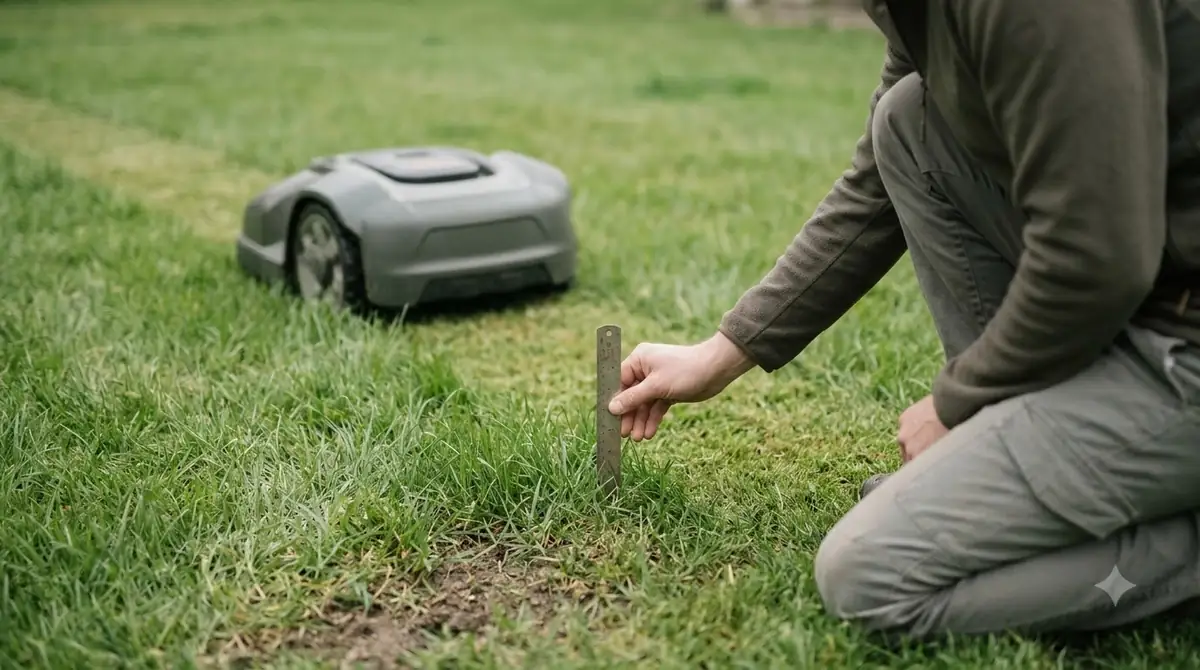
LawnStarter’s guidance for warm-season grasses is to cut to about 2 to 4 inches above ground, and for cool-season grasses to remove no more than about two-thirds of the height. It advises cutting low but not to the ground. The Nature Hills article we read covers timing and standing stems rather than stubble height. A solid edge helps keep stubble and clumps from drifting onto the lawn, as edging strips between lawn and borders explains.
For a robot mower, a clean stubble inside the clump is not a mowing task. The mower should never be expected to do the cutback, so the stubble height matters mainly for the look of the bed and for the crown’s health.
Cleaning up the debris before the mower runs
A cutback leaves cut stems, leaves, and seedheads on the lawn. Rake or blow the debris off the mowing area before the mower’s next scheduled run. Loose stems can wrap around the cutting system, and a pile of debris can look like an obstacle to the mower’s sensors. Cleaned-up trimmings should not be left on the lawn, which wheelbarrow debris left on the grass relates to when the mower runs.
Standing stems through the winter are a related issue. Nature Hills notes that standing stems add winter interest and shelter wildlife. Keep those stems within the clump’s footprint and outside the mowing path, so the mower never has to drive over the dead stems that fall across the lawn.
What to check at setup
Before you schedule the mower, walk the lawn with the clumps in mind. Check each clump’s spread, the wire margin around it, and the corners where the mower turns. Make sure that the mowing area has no loose stems or cut debris from the most recent cutback. Grass clumps often sit in island beds, and planting islands within a mowed lawn explains how to define the stay-out areas.
Our reading is that a yard with a few large clumps is usually easier to manage than one with many small ones along the lawn edge, because each clump adds a turning point and a place where the wire needs a wider margin.
Related reads: Paths that run past borders add another boundary decision, which stepping stone paths near planting borders discusses.
Frequently asked questions
Can a robot mower cut around tall ornamental grasses?
It can work the lawn around them if the boundary keeps the mower clear of each clump. The clumps themselves should be cut back by hand, not left to the mower.
When should I cut back ornamental grasses in a yard with a mower?
Late winter or early spring, just before new growth starts, according to LawnStarter and Nature Hills. Nature Hills says fall is generally not the best time because water can reach the crowns and cause rot.
How short should I cut ornamental grass?
LawnStarter advises cutting warm-season grasses to about 2 to 4 inches above ground, and cutting low but not to the ground. Do not cut the clump flush with the soil.
Should I leave ornamental grass stems standing for winter?
Nature Hills says standing stems add winter interest and shelter wildlife, and they help protect the crowns. If you leave them, keep the clumps outside the mowing path so the mower does not drive into dead stems.
Sources
- When to Cut Back Ornamental Grasses (LawnStarter): timing by grass type, stubble height, evergreen grooming.
- To Cut or Not to Cut (Nature Hills): fall versus spring cutting, standing stems, exceptions.
 Up next7 min readBy YardBest Robot Mower for Bunch-Type Tall Fescue: 3.5 Inch CheckUpdated Nov 14, 2026
 8 min readBy YardRTK Robot Mower Near Tall Buildings: What Affects AccuracyUpdated Nov 11, 2026
 8 min readBy YardRobot Mower for Tall Fescue Lawns: Height Limits That MatterUpdated Nov 11, 2026
 8 min readBy YardBest Mowing Height for Fescue: Tall vs Fine Fescue GuideUpdated Nov 11, 2026
 7 min readBy YardRobot Mower for a Lawn With Ground Cover Plants: Zones and EdgesUpdated Nov 14, 2026
 7 min readBy YardRobot Mower for a Lawn with a French Drain: What to KnowUpdated Nov 13, 2026