
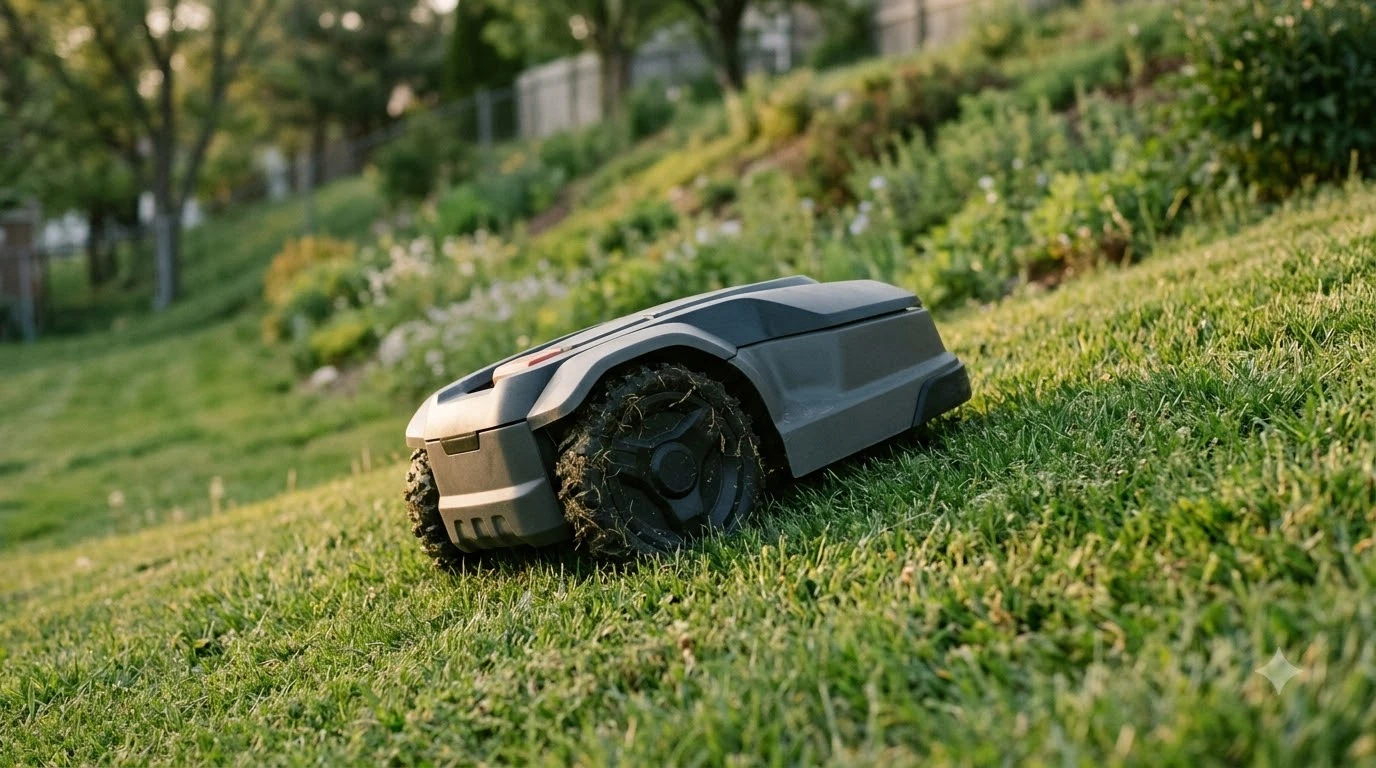

Robot mower vs sheep grazing: a robot mower gives a short, even cut on a lawn, while sheep grazing suits larger pastures and is far less even. Sheep are selective eaters and can leave tall patches, while a mower cuts to one height. Extension guidance treats the two as different tools for different jobs, so the right choice depends on how much grass you have and what you want it to look like.
The short answer
- Robot mower: a short, even cut on a residential lawn, on a schedule you control, with no animals to manage.
- Sheep grazing: works on larger pasture, adds manure and hoof action, but leaves uneven heights and needs fencing and care.
- Selective eating: sheep choose what they eat, so some plants stay tall unless the paddock is rotated.
- Timing: both methods work best when cutting or grazing happens before plants set seed.
- Scale decides it: a small lawn rarely justifies livestock, while a large pasture rarely suits a single mower.
What sheep grazing does that a mower cannot
Sheep grazing is not just cutting done by animals. Animals return nutrients through manure, and hoof pressure can change the soil surface. Extension research on grazing describes these as real benefits, which is why many farms use animals rather than machines on large acreage. Cost is the usual starting point, and robot against gas mower cost sets a reference for grazing too.
A mower does none of this. It removes the top of the plant and leaves the rest of the work to the lawn. For a residential lawn that is often the point, since no one wants manure or hoof damage on a yard used by people and pets.
Why sheep grazing is not an exact substitute for mowing
Sheep are selective. They prefer some plants and skip others, so a paddock grazed by sheep can end up with tall clumps next to heavily grazed areas. Mowing leaves a short, even cut, while selective grazing can leave some plants standing much taller than the rest.
Extension material from Ohio State makes a similar point from the pasture side. Grazing slows when animals have to eat into thick-stemmed stubble, and cutting too low can favor the wrong grasses. A mower avoids that unevenness because it cuts the whole area to one height.
Heads up
Sheep grazing and mowing can be combined. Mowing evens out areas that animals avoid, which is one reason pasture managers mow after grazing a paddock.

When mowing helps a grazed pasture
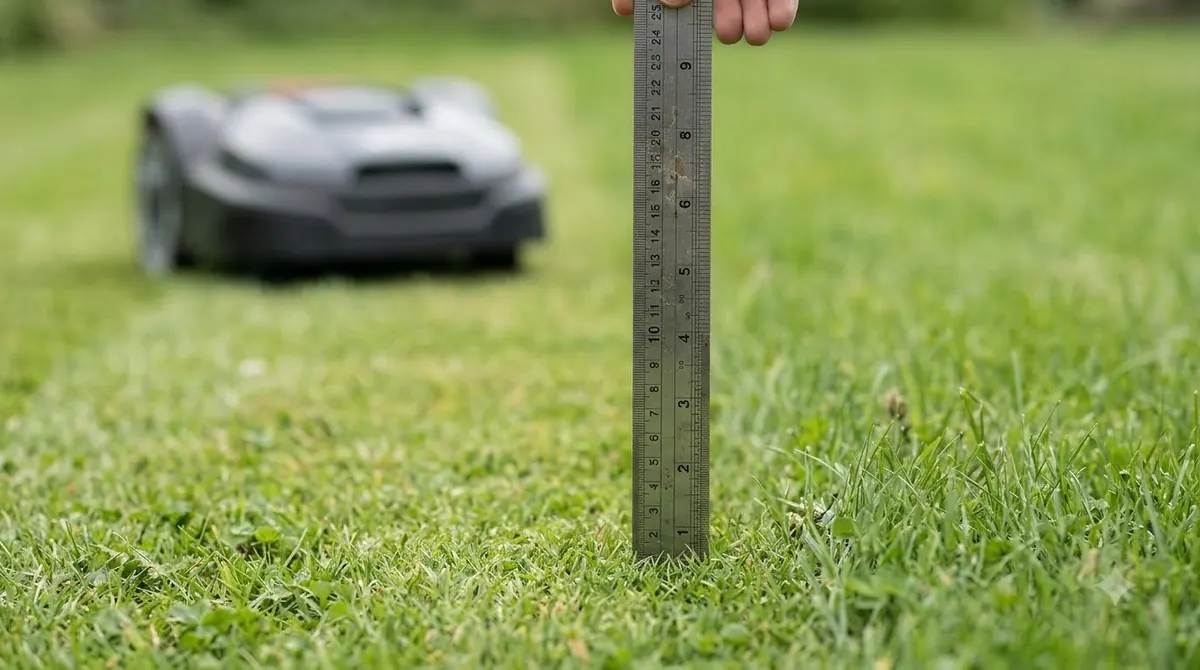
The University of Maryland guide says mowing is neither always necessary nor always wasteful. The need is usually site and time specific. Its main reasons to mow are to remove seed heads, to even out grazing, and to control weeds from setting seed. Mowing a grazed pasture with fuel has an environmental cost, which is covered in gas push mower emissions against a robot.
- Seed heads: removing stems and seed heads encourages new leaf growth, which the guide describes as higher in quality.
- Even grazing: mowing can remove lower-quality forage in underused areas, which offsets selective eating.
- Weed control: mowing keeps weeds from setting seed, though it will not kill them outright.
- Aesthetics: the guide treats this as the weakest reason, since taller forage supports drought resilience and wildlife habitat.
Rotation changes how much mowing you need
The Maryland guide notes that continuous grazing lets livestock be more selective, so mowing matters more there. Rotational grazing with smaller paddocks and frequent moves tends to graze more evenly, so mowing is often less necessary. Our reading is that rotation and rest usually beat repeated clipping of underused areas.
Ohio State makes a related point about rest. Plants need time after grazing or mowing to store energy in their roots or bases, so the timing of each cut matters more than the cut itself.
Timing for mowing and grazing
The Ohio State article suggests mowing at the point where a grass plant shifts from producing a seed head to storing energy for winter. Once a seed head forms, it says the quality of the grass, especially the stem and seed head, is low. Cutting before that stage helps keep forage palatable.
Ohio State also reports that mowing in June and August can work as well as monthly mowing for weed control, and suggests mowing twice a season for persistent perennial weeds. These are pasture figures, so a residential lawn will follow a different calendar.
What a robot mower does better on a lawn
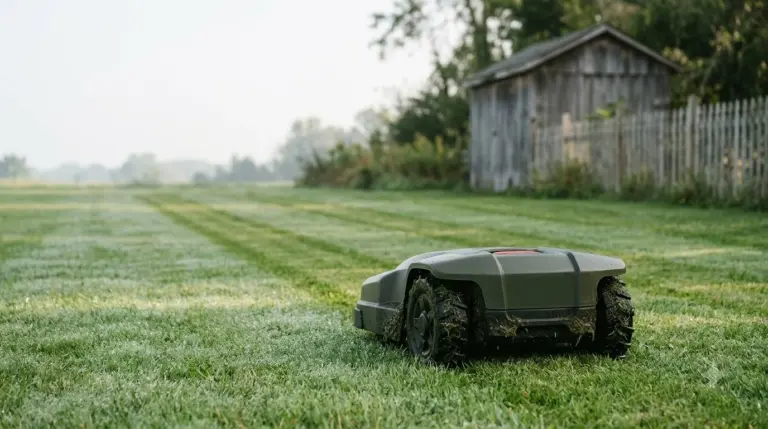
A robot mower is built for a small, defined area. It runs on a schedule, keeps a single cutting height, and returns to its dock without help. For a yard, that means a neat, even lawn with frequent short cuts that never remove too much of the blade at once. Grazing is not the only option for cutting mowing time, as no-mow alternatives for lawn owners shows. For the mower decision itself, Navimow i110N compared with GOAT O1000 is a direct two-model comparison.
It also means no fencing, no feeding, and no worries about animals eating ornamental plants or leaving droppings in a play area. The trade-off is that a mower does not add manure or hoof action, so the lawn gets no fertilizer effect from the cutting itself.
Robot mower vs sheep grazing: when grazing makes more sense
Sheep grazing suits larger acreage, where the land is used for livestock or forage and where animals can be rotated among paddocks. It also suits owners who want the soil benefits of manure and hoof action and are prepared to manage fencing, water, and animal health. Small lawns have a different option in replacing grass with artificial turf, which avoids animals altogether.
- Large acreage: animals cover ground that a single mower would take hours to work through.
- Livestock already on the property: a grazing plan fits naturally into the farm routine.
When a robot mower makes more sense
A robot mower usually fits a residential or small lot, a yard with pets and children, or a lawn where a clean, even height matters more than soil effects from animals. It also suits anyone who does not want to manage livestock, fencing, or feed.
Before you buy, check that the lawn is reasonably level, has clear boundaries, and can fit a dock and a boundary wire or beacon. A grazing plan needs similar planning, but with animals, fencing, and water added to the list.
Related reads: Fence lines and borders are where grazing and robots both leave work, and edging time with a string trimmer puts a figure on it.
Frequently asked questions
Can sheep replace a mower on a lawn?
Sheep can keep grass short on a larger pasture, but they are selective and leave uneven heights. A residential lawn usually needs a more even cut than grazing gives, so a robot mower is the more practical option for most yards.
Do sheep leave the grass uneven?
Yes, often. Selective grazing leaves some plants standing much taller than the rest, while mowing leaves a short, even cut. Rotating paddocks and mowing after grazing can reduce the unevenness.
Is it better to mow or graze for weed control?
Both can help, but neither works alone every time. The Maryland guide says mowing controls weeds by stopping seed set rather than killing them outright, and Ohio State points to timing as the key factor. Timing matters more than the tool.
When should I mow a grazed pasture?
Ohio State suggests mowing when grass shifts from producing seed heads to storing energy, before seed heads are formed and quality drops. Pasture timing differs from lawn timing, so check local extension guidance for your region.
Sources
- To Mow or Not to Mow? (University of Maryland Extension): reasons to mow pastures, continuous vs rotational grazing.
- When Should We Mow Pastures? (Ohio State University Extension, sheep program): seed heads, timing, weed control, rest after grazing.
 Up next6 min readReviews & CompareSunseeker X4 Review: Specs, Price and Who It SuitsUpdated Nov 18, 2026
 8 min readReviews & CompareHusqvarna Automower 435X AWD Review: Specs, Slope and Who It SuitsUpdated Nov 16, 2026
 8 min readReviews & CompareNavimow i206 AWD Review: Specs, Slope and Who It SuitsUpdated Nov 16, 2026
 8 min readReviews & Compareeufy E18 Pros and Cons: Specs, Limits and Who It SuitsUpdated Nov 15, 2026
 8 min readReviews & CompareDreame A2 vs Sunseeker X7: Specs, Sensors and Who Each SuitsUpdated Nov 12, 2026
 7 min readReviews & CompareCorded Electric Mower vs Robot Mower: Which Suits Your LawnUpdated Nov 12, 2026