
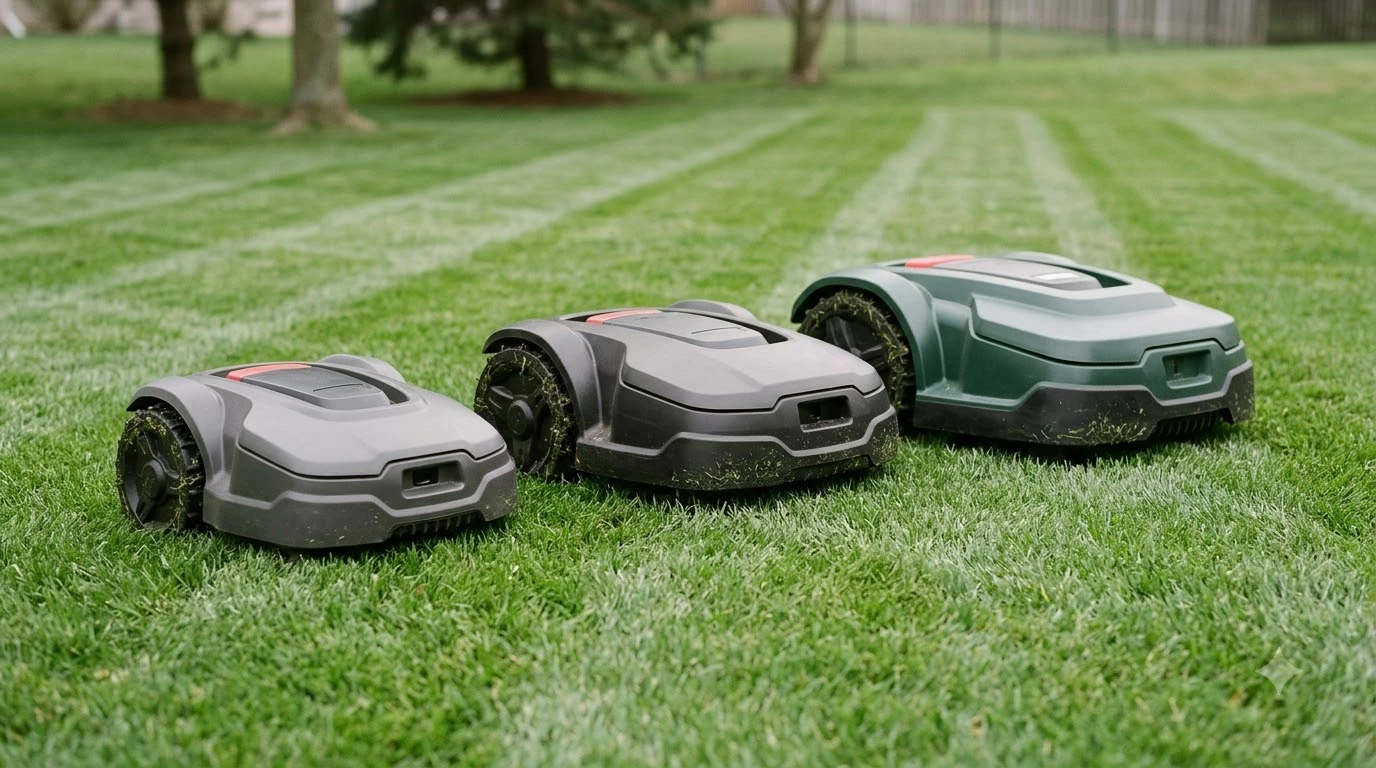

The best robot mower for Missouri lawns is one that cuts high enough for tall fescue and Kentucky bluegrass, which MU Extension recommends keeping at 3.5 to 4 inches. Missouri sits in the transition zone, so many yards mix cool-season grass in the north with warm-season zoysia and Bermuda in the south. This guide explains what to check before you buy, how Missouri’s grass mix and spring growth change the job, and why the cutting height should come before the cutting speed.
The short answer
- Cool-season lawns: tall fescue and Kentucky bluegrass need a cut of about 3.5 to 4 inches, so the mower’s top setting matters most.
- Warm-season lawns: MU lists zoysia at about 1 to 2 inches, so a lower range is needed if your yard is zoysia.
- Know your grass first: the right height depends on whether your lawn is cool-season or warm-season.
- Spring growth: Missouri lawns grow fast in spring, so the mower should run often enough to keep each cut small.
Why the cutting height is the first thing to check
Missouri lawns are often mowed too short. MU Extension’s turf specialists warn that mowing short stresses the plant and leads to a shallower root system, which makes the lawn less able to handle heat and drought. For tall fescue and Kentucky bluegrass, including mixes, the MU recommendation is 3.5 to 4 inches. Another MU article puts the range for turf-type tall fescue blends at 3 to 4 inches. Missouri sits at the edge of the Midwest, so the robot lawn mower guide for Midwest states helps frame the regional choices. Both cool-season and warm-season grass depend on cutting height, so compare cutting height ranges on robot mowers before you shortlist a model.
For a robot mower, this is the first filter. A model whose lowest setting is 2 inches may be fine for a warm-season lawn, but it will push a fescue lawn into stress if you run it at that low setting. Compare the highest setting with the height your grass needs, and confirm the mower can reach it.
Heads up
MU’s turf specialists note that cutting short in spring gives crabgrass room to establish. Keeping the mower at a higher setting in the early season is one of the simplest weed controls.
Cool-season and warm-season yards in Missouri
Missouri’s lawns are split by climate. In the north and central parts of the state, tall fescue and Kentucky bluegrass dominate. Further south, zoysia and Bermuda become more common. The grass decides the cutting height, so identify which one you have before you set the mower. Tennessee sits in a similar transition zone for grass, so Tennessee robot mower picks add a useful regional comparison.
| Grass in your lawn | Height guidance from Missouri sources | What it means for a robot mower |
|---|---|---|
| Tall fescue and Kentucky bluegrass | 3.5 to 4 inches (MU); 3 to 4 inches for turf-type tall fescue blends | Choose a mower that reaches at least 4 inches |
| Zoysia | About 1 to 2 inches (MU) | A low range is needed; check the lowest setting |
| Bermuda | No MU height found in this search; check MU publication G6706 directly | Confirm the range against the extension guide before setting the mower |
Bermuda is the gap in this table. Non-Missouri sources give ranges around 0.5 to 2.5 inches, but they are not MU recommendations, so treat them as a rough guide only and check the MU publication before you set the deck.
Spring green-up and the one-third rule
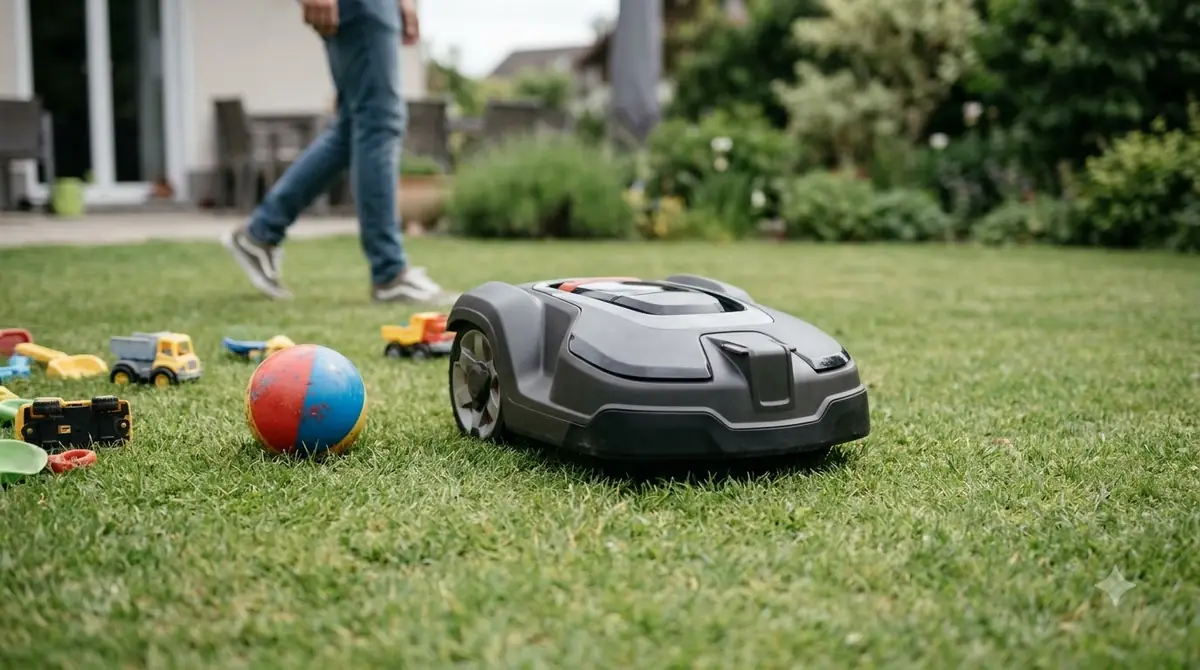
Missouri’s spring is wet and the grass grows quickly. Extension guidance on the one-third rule says to never remove more than one-third of the blade height in one mowing. A robot mower that runs several times a week removes only a little grass each time, which keeps the cut within that rule without any measuring. For another Midwestern spring green-up pattern, read the Ohio lawn picks for robot mowers alongside this guide.
In a fast-growing spring, a lawn can grow past 5 inches in a few weeks. Our reading is that the mower should run often enough to keep each cut small, rather than waiting until the grass is long and then cutting it down in one pass. A long grass cut down to a low setting is the most common way to scalp a fescue lawn.

Storms, slopes, and tight yard edges
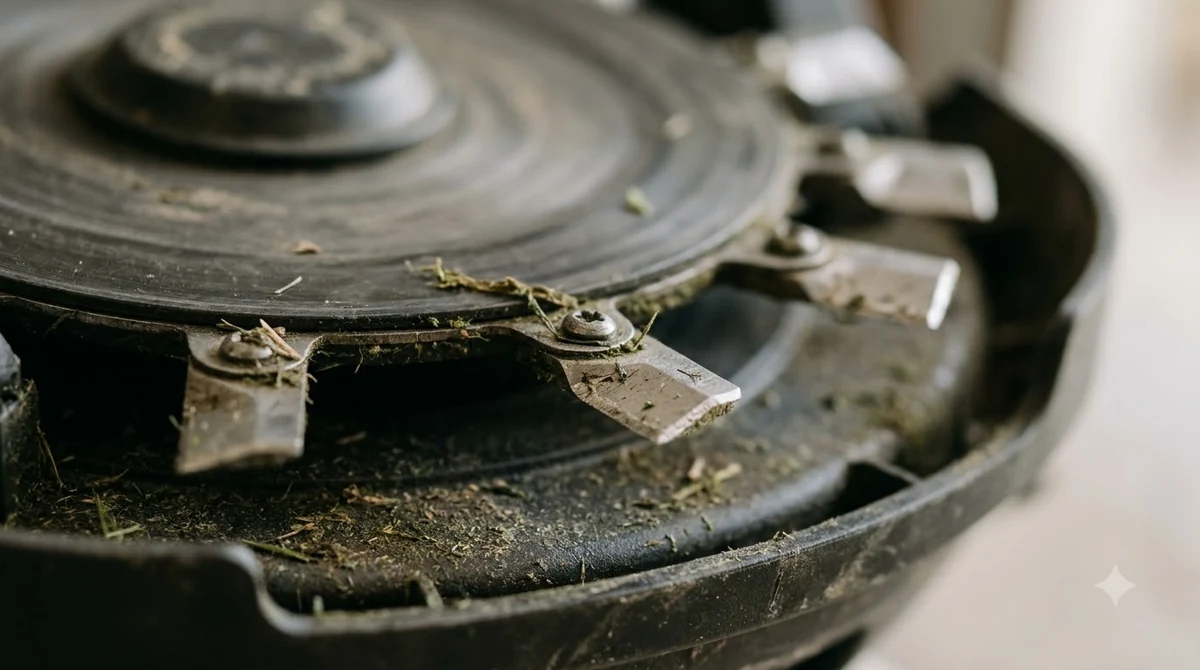
Spring storms in Missouri can bring heavy rain and saturated ground. A robot mower should be able to pause and wait for the lawn to dry rather than running on wet, muddy turf that can rut and clog the path. Look for a model with a rain sensor and a stated way to handle wet conditions. Missouri storms can interrupt a schedule, and the page on mowing through frequent thunderstorms covers the routine and dock considerations. Rolling Missouri yards raise slope questions, which the guide to robot mowers for hilly yards addresses in more detail.
Many Missouri yards have rolling ground, a few steep banks, and tight edges around beds and fences. Check the slope rating and the drive wheels, then plan the boundary wire route before you buy. A mower that can climb a slope and turn sharply at the edge will cover more of the lawn without manual trimming.
Best robot mower for Missouri lawns: what to check before you buy
For a Missouri lawn, start with the grass type, then check the cutting height range, the slope rating, the wet-weather behaviour, and the boundary setup. Confirm that the top setting covers your grass, and that the mower can keep a higher cut through the hottest weeks.
Also think about the mow schedule you can keep up. A robot mower runs on its own, but the lawn still needs a height that fits the grass. Set the height first, then adjust the schedule so the mower runs often enough to meet the one-third rule.
Related reads: Tight yard edges are easier to manage with landscape edging along mowing borders that gives the mower a clear path.
Frequently asked questions
What height should tall fescue be cut at in Missouri?
MU Extension recommends 3.5 to 4 inches for tall fescue and Kentucky bluegrass, including mixes. Another MU article gives 3 to 4 inches for turf-type tall fescue blends.
What height is right for zoysia in Missouri?
MU sources give zoysia at about 1 to 2 inches. A robot mower with a low range is needed for zoysia lawns.
Why does mowing too short hurt a Missouri lawn?
MU Extension says cutting short stresses the grass plant and leads to a shorter root system. That makes the lawn less able to handle heat and drought, and it lets weeds such as crabgrass establish in spring.
Can a robot mower run in wet Missouri weather?
It should not run on saturated, muddy turf, because it can rut the lawn and clog the path. Choose a model with a rain sensor or a stated way to wait out wet conditions.
Sources
- MU Extension, mowing too short can harm your lawn (university): the warning that short mowing stresses the plant and shortens roots, as shown in its search summary.
- MU Extension, G6705 cool-season lawn calendar (university): the 3.5 to 4 inch cool-season guidance for tall fescue and Kentucky bluegrass, as shown in its search summary.
- MU IPM, lawn mowing guidance (university): the advice that proper mowing supports lawn health, as shown in its search summary.
 Up next7 min readBest Robot MowersBest Robot Mower for Alabama Lawns: Grass and Height GuideUpdated Nov 13, 2026
 6 min readBest Robot MowersBest Robot Mower for Louisiana Lawns: Heights and What to CheckUpdated Nov 13, 2026
 8 min readBest Robot MowersBest Robot Mower for Arizona Desert Lawns: Heat, Dock and HeightUpdated Nov 14, 2026
 8 min readBest Robot MowersHow to Choose the Best Robot Lawn Mower with Automatic Height Adjustment in AppUpdated Nov 19, 2026
 8 min readBest Robot MowersBest Robot Mower With Adjustable Cutting HeightUpdated Nov 11, 2026
 7 min readBest Robot MowersBest Robot Mower for Utah Lawns: What to Check Before You BuyUpdated Nov 13, 2026