
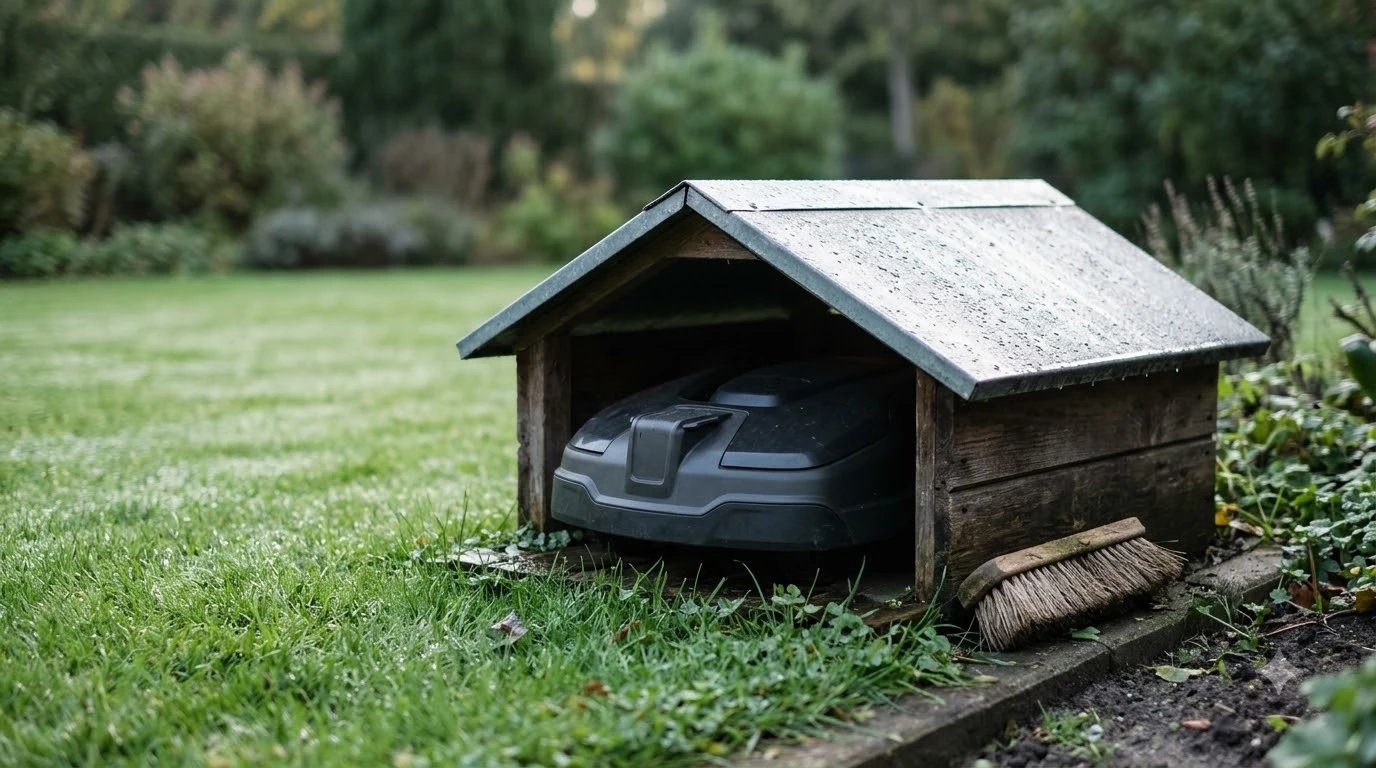

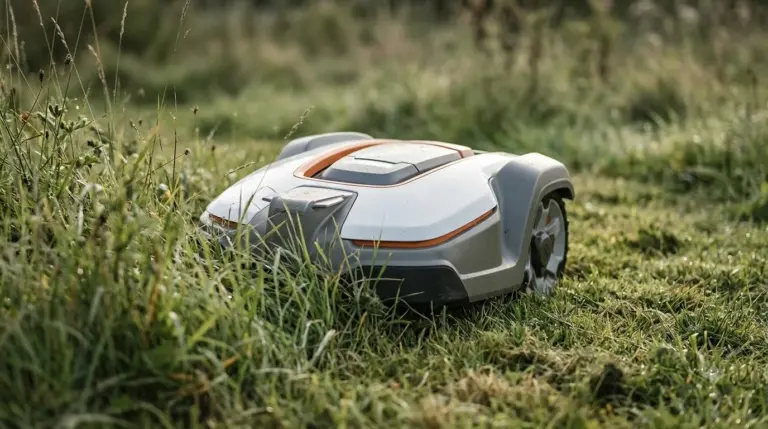
Do you need a grass collector on a robot mower? For most lawns, no. Robot mowers are built to mulch. They cut often and leave clippings so fine that they fall back into the grass. A collector only helps in a few specific conditions, which this guide covers.
The short answer
- Regular mowing: a grass collector is usually unnecessary because the mower mulches clippings into the lawn.
- Leaf-heavy seasons: a collector or bagging makes sense when leaves mix with the grass.
- Overgrown or damp grass: a collector can reduce clumping and leave a cleaner lawn.
- Check first: collectors are optional on some models, so confirm support on the spec sheet before you buy.
Why most robot mowers mulch instead of collecting
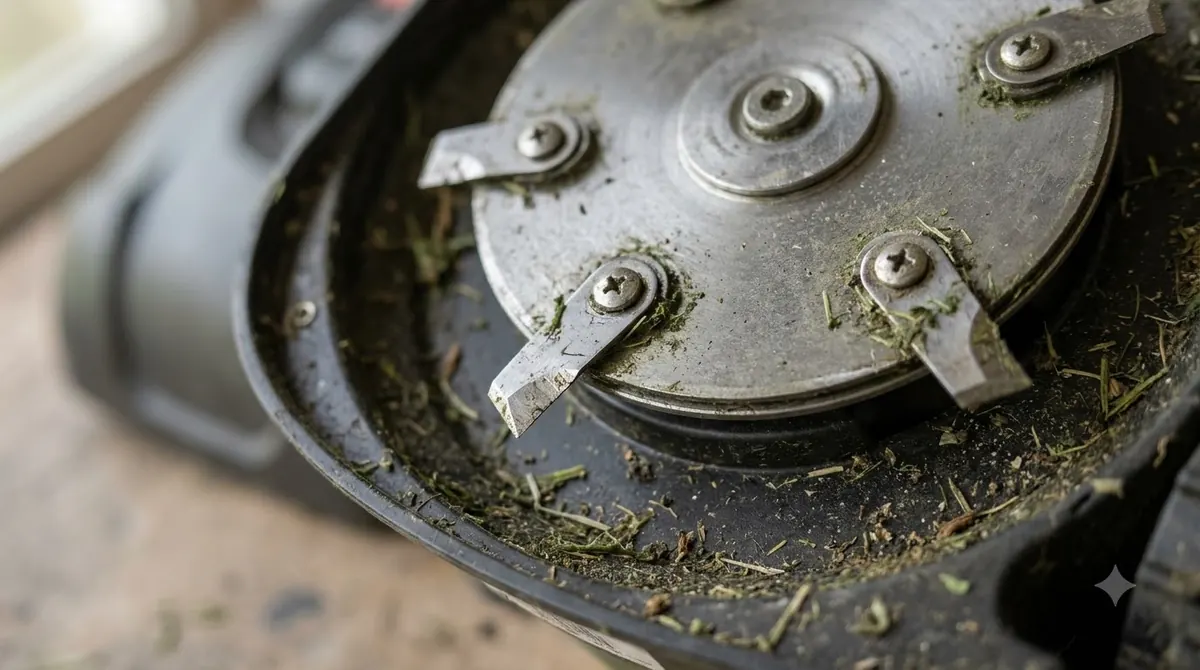
Most robot mowers are designed to mulch rather than collect clippings, according to Anker’s guide to robot lawn mowers with grass collectors. The main reason is frequency. Because robot mowers cut little and often, each pass removes only a small amount of leaf, and the clippings stay short. That frequent schedule comes from how the machines are built to work, which our guide to how robot lawn mowers work explains. Anker’s page also says that for most regular mowing, mulching is the more practical and low-maintenance option. For the mechanics behind it, see how a mulching robot mower works.
Navimow, a robot mower maker, goes further and says its mowers do not collect grass at all. It describes micro-clippings of about 1 to 3 mm, compared with about 25 to 75 mm for the clippings left by regular mulching. Those figures come from the manufacturer, so treat them as its own description of the product rather than independent measurements.
Navimow also calls the clippings a free fertilizer and claims micro-clippings can cut a lawn’s nitrogen needs by 25 to 30 percent. That number has no stated conditions or independent source, so it is a vendor claim, not a measured result. Anker makes a similar but milder point: it says mulched clippings act as a natural fertilizer over time and that mulching works best with frequent mowing schedules.
So do you need a grass collector on a robot mower if you simply want a lawn that looks fine and needs little work? Usually not. Anker lists the practical upsides of mulching: there is no grass box to empty, it supports healthier lawn growth over time, and it suits regular, automated mowing schedules. Its listed downsides are that mulching may leave visible clippings after wet cuts, is less effective if grass grows too long, can struggle with heavy leaf fall and does not give a freshly cleaned look.
When a grass collector helps
Do you need a grass collector on a robot mower in these cases? A collector helps most during rapid growth, in leaf-heavy autumn weeks, in damp conditions and when grass has grown too long for mulching to work well, according to Anker.
- Rapid growth: collection is useful in periods when the grass grows quickly.
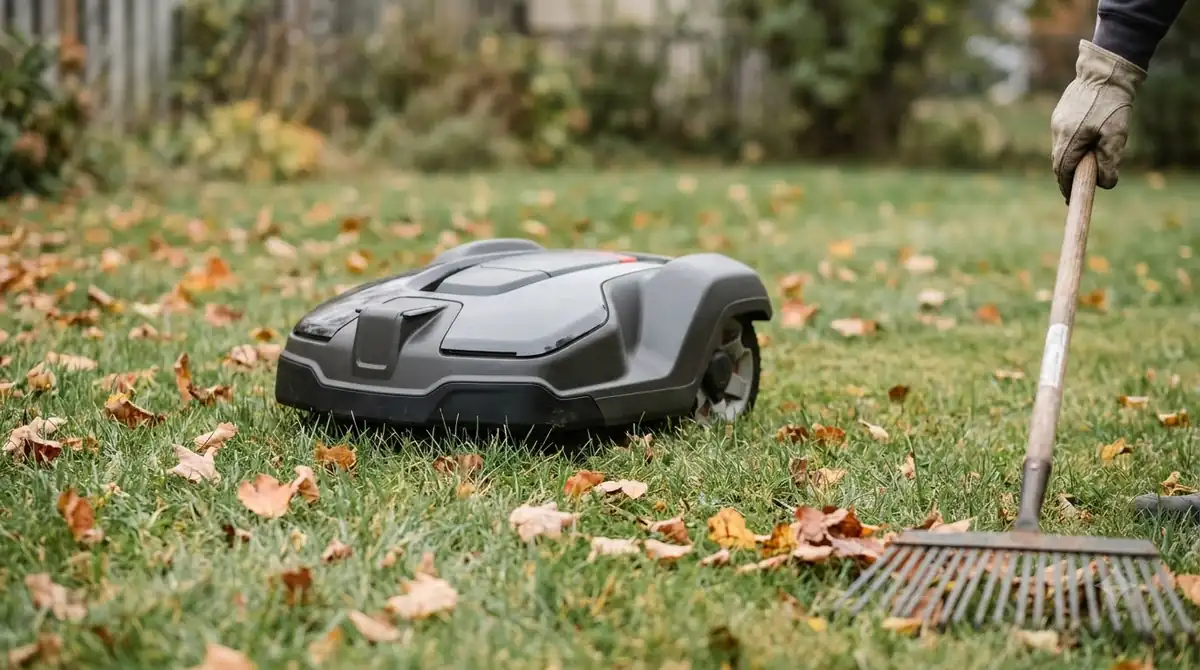
- Autumn leaves: a collector is helpful when leaves mix with the grass. Mulching can struggle with heavy leaf fall, and Anker says that with significant autumn leaf fall, a collecting model may be worth the extra investment.
- Damp conditions: collection reduces clumping in wet weather, and it is one more reason to check whether robot mowers work in the rain on your model. Mulching can struggle more when clippings get wet or heavy, and may leave visible clippings after wet cuts.
- Long grass: mulching is less effective if the grass grows too long.
Anker also says a collector leaves a visibly cleaner lawn straight after mowing, and that collected clippings can be composted easily. Those are convenience and appearance benefits. They are a reasonable reason to buy a collector if a tidy look matters to you, but the page does not show that collection improves the grass itself.
| Point | Mulching | Collecting |
|---|---|---|
| What it does | Chops grass finely and leaves it on the lawn | Gathers clippings into a bag or catcher |
| Best for | Frequent mowing and low-maintenance care | Tidier finish and leaf cleanup |
| Trade-off | Can struggle more when clippings get wet or heavy | Adds emptying, cleaning and extra complexity |
| Availability | The default on most robot mowers | Fewer models offer it, and it can raise the upfront cost |
The table follows Anker’s own comparison, so it reflects a manufacturer’s view. In our reading, the pattern is simple: mulching wins for low upkeep, and collection wins when a clean look or leaf cleanup matters more than extra chores.
Models with a collector and what to check
A growing number of robot mowers offer collection bags or sweeping attachments, so a collector is an option you confirm on the spec sheet, not a default feature. Anker notes this trend without naming specific models, and the page gives no capacity or price figures. It also mentions that some current robot mowers can empty automatically at a set point, which moves them toward a self-emptying design, and that sweeper-style features are still being explored rather than standard.
Before you buy, check these points in the manufacturer’s listing:
- Whether the collector comes with the mower or is sold as an accessory.
- The bag or catcher capacity, if the manufacturer lists one.
- Whether the collector suits the leaves and clumps your yard actually produces.
- How the collector is emptied. Anker says a collector requires emptying unless it is paired with automation, while a mulching mower has no grass box to empty.
Anker also notes that collection can increase the upfront cost, although the page gives no price. Our reading is that a collector is a feature to confirm on the spec sheet before you assume it is included, and to weigh against the extra purchase cost and the emptying chore. Whatever you choose, cleaning the deck and any bag belongs on your robot mower maintenance checklist.

Bagging and alternatives to a collector
Some owners bag clippings to prevent thatch build-up and grass clumps, according to Navimow’s explanation of micro-clippings. Navimow’s position is that large clippings add to the thatch layer over time, while micro-clippings decompose quickly and do not contribute to it.
The same page notes that large clippings often clump together, while micro-clippings do not. It also says mulched clippings can stick to shoes and trousers when the grass is wet, which is a practical reason some owners prefer a collector in wet weather.
If you are still asking do you need a grass collector on a robot mower, mowing often is the main alternative to a collector. Navimow says robot mowers frequently cut the grass and do not let it overgrow. Our reading is that if the lawn is already overgrown, you should cut it down first with a standard mower and let the robot take over once the grass is back to a normal height. That approach avoids the long-grass problem without buying a collector at all.
Do you need a grass collector on a robot mower? A quick checklist
Work through these five checks to decide whether a collector is worth buying for your yard. If you can answer no to most of them, the answer to “do you need a grass collector on a robot mower” is probably no.
- Mow on schedule. If you mow often, mulching usually handles the clippings without a collector.
- Check the leaf load. Heavy autumn leaf drop is the strongest case for a collector, according to Anker.
- Look at grass length. If the lawn often gets long, a collector helps more than it does on a tidy lawn.
- Consider damp weather. Collection reduces clumping in wet conditions, so a wet climate raises the case for one.
- Confirm model support. Not every robot mower offers a collector, so check the spec sheet before you assume one is included.
Frequently asked questions
Do robot mowers need a grass collector to work?
No. A robot mower runs without a collector because it mulches clippings back into the lawn. The collector is optional and matters mainly in specific conditions, such as heavy leaf drop, tall grass or damp weather.
Does a robot mower leave grass clippings on the lawn?
Yes, by design. Navimow describes micro-clippings of about 1 to 3 mm that fall onto the lawn. Those figures come from the manufacturer, so check your grass type with a local extension service if you want independent guidance.
Can a robot mower pick up leaves?
Some models can, through a collection bag or sweeping attachment, but not all of them do. Check the spec sheet before buying. Anker says collection helps during leaf-heavy autumn seasons, so a collector is worth considering in those months.
When should I bag clippings instead of mulching?
Consider bagging when the grass has grown too long for mulching to work well, when the lawn is damp and clumping, or when leaves mix with the grass. Navimow adds that some owners bag to prevent thatch and grass clumps.
Sources
- Robot lawn mower with grass collector (Anker, eufy lawn mower blog, manufacturer): mulching as the default, and when a collector helps.
- Do robot lawn mowers collect grass (Navimow, Segway lawn care blog, manufacturer): micro-clipping size, thatch and clumping claims.
 Up next7 min readBest Robot MowersBest Robot Mower for Thick Grass: 5 Things to CheckUpdated Nov 11, 2026
 8 min readBest Robot MowersBest Robot Mower That Handles Tall Grass: 5 Things to CheckUpdated Nov 11, 2026
 9 min readBest Robot MowersDo Robot Mowers Need Wifi or Cellular?Updated Nov 11, 2026
 8 min readBest Robot MowersDo Robot Lawn Mowers Need a Boundary Wire?Updated Nov 11, 2026
 8 min readBest Robot MowersWhat Size Robot Mower Do I Need for 1.5 Acres?Updated Nov 11, 2026
 7 min readBest Robot MowersWhat Size Robot Mower Do You Need for 2 Acres?Updated Nov 11, 2026