


Looking for the best waterproof cable conduit for robot mower wire? It is a protective sleeve for the boundary wire where it runs exposed, crosses a path, or sits near a hard edge. “Waterproof” on a package is a seller claim, so check the sealed ends, a UV-stable outer jacket, and the bend and inside diameter before you buy. Husqvarna’s guidance for the wire itself is to place it 1 to 20 cm (3/8 to 8 in) into the ground, remove sharp objects, and avoid tight bends. A conduit helps with some of those problems but does not replace them.
The short answer
- Purpose: the best waterproof cable conduit for robot mower wire protects it where it is exposed, crosses a path, or runs near a hard edge.
- Burial depth: Husqvarna gives 1 to 20 cm (3/8 to 8 in) for the wire. A conduit does not change that range.
- “Waterproof”: treat it as a seller claim until the ends are sealed with tape or sealant and the jacket is UV-stable.
- Bends: avoid tight bends. Husqvarna and Safran both warn against them.
- Buy check: confirm the inside diameter fits your connector before you bury the conduit.
What a conduit protects the wire from
A conduit guards against the slow damage that breaks a buried or surface wire over time. Husqvarna’s tips page tells owners to “remove rocks and sharp objects from the ground that may break the wire over time,” and to keep the wire tightly secured so it stays flat. Those steps matter most where the wire is most exposed, such as a path crossing, a gate loop, or a bed edge where stones collect. See how to lay boundary wire around obstacles before you decide where a conduit is needed.
Burying is one way to hide the wire, and Husqvarna presents it as an option rather than a requirement. It suggests burying the wire “if your lawn is uneven, or if you want to hide the wire.” A GNSS cabling guide from the International GNSS Service takes the same view for outdoor runs: “Externally running cables can be protected by using buried or secured conduits.” That guide covers base-station antennas, not mower wire, so we use it for the principle only.
Why “waterproof” needs proof
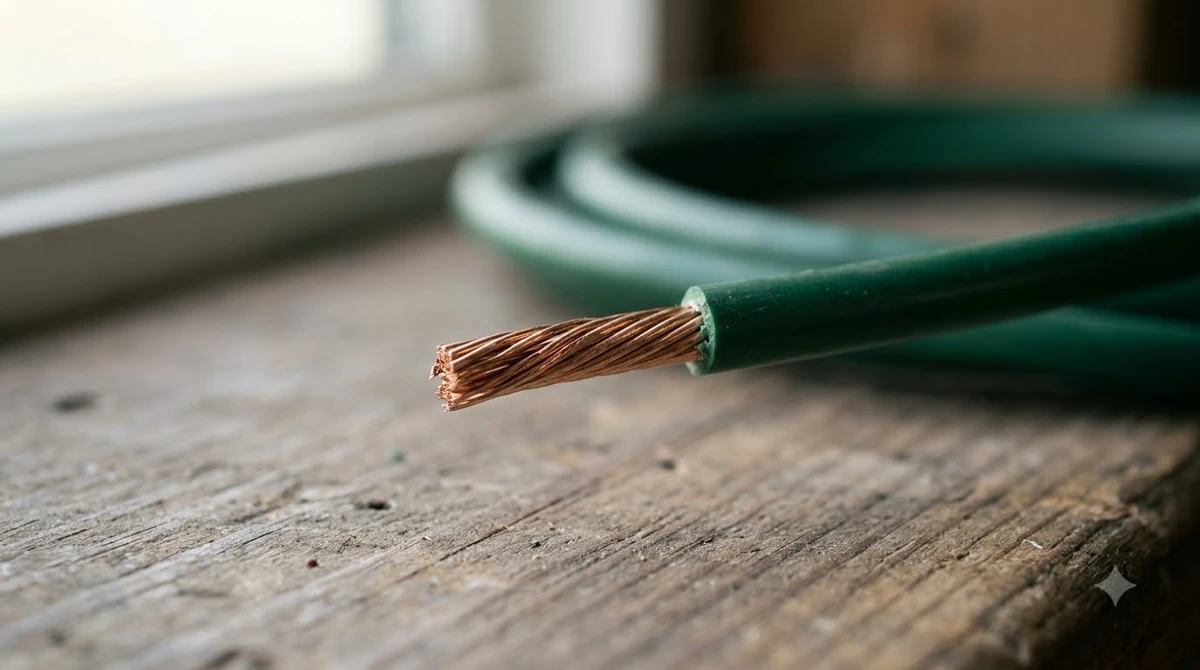
The waterproof part of a conduit is only as good as its joints. The IGS guide says connectors should be “sealed with self-amalgamating ultraviolet stable tape” to guard against water and UV, and Safran’s installation note goes further: “The application of weather proofing sealant or tape is a good idea for all outdoor connections.” A tube with a waterproof label still leaves the ends and any splice open to water if they are not sealed.
Our reading is that a conduit’s waterproof claim means something only when the seller can say how the ends close and what the jacket is rated for. Retail listings commonly make the claim, but none of the manufacturer pages we read confirm a waterproof or UV rating for conduit sold for robot mower wire.
Heads up
We did not find a published waterproof or UV rating for consumer conduit sold for boundary wire. Treat “waterproof” on a listing as the seller’s claim, and do not assume a rating that no source gives.
Sealed ends and connectors
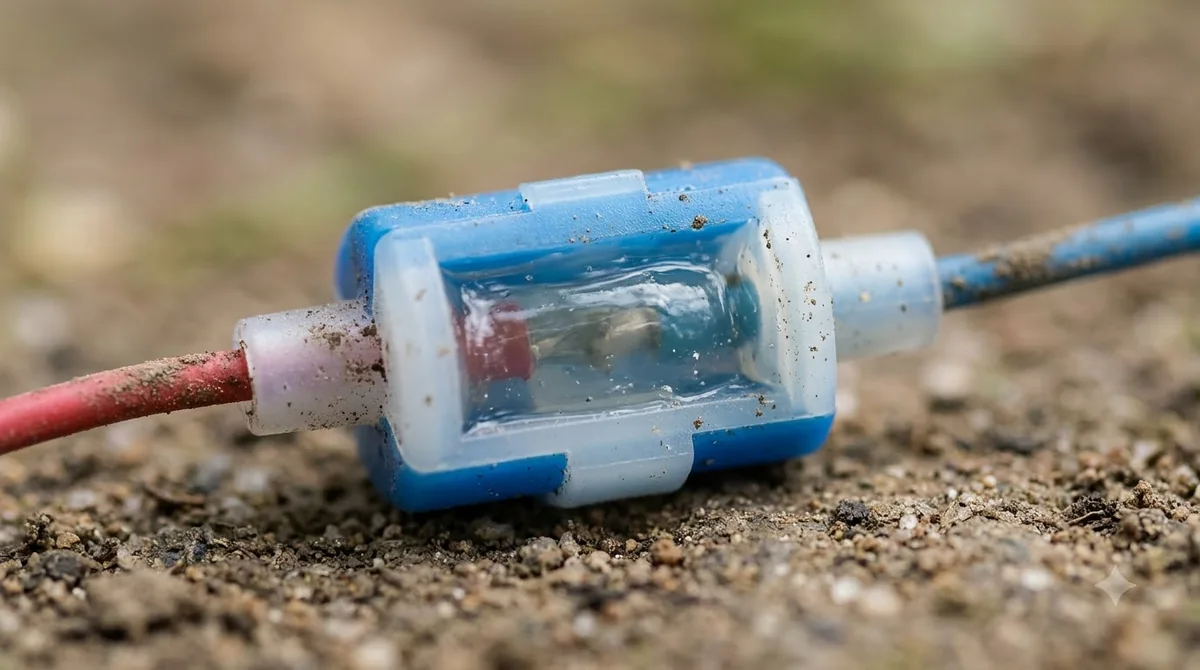
The joint is the weak point of any waterproof cable conduit for a robot mower. A boundary connector that sits inside a conduit can take water through the open end of the tube, so the best practice is to keep the joint itself sealed and easy to reach. Safran’s advice applies directly here: sealant or tape is “a good idea for all outdoor connections,” and that includes a splice inside a conduit. Our guides to waterproof wire connectors and a wire splice kit cover those joints.
The IGS guide also recommends a short loop of spare cable at the ends, so a joint can be opened and redone without cutting the run. Our reading is that a conduit should be installed so that either end can be reached without digging up the whole route.
Inside diameter and bends
A conduit has to be wide enough for the connector and gentle enough for the bend. Safran’s note says “the conduit dimensions must be large enough to accommodate the ‘N’ type connectors,” and warns that “using a conduit that is too small or whose bend radius is too tight will prove difficult during installation.” That example is an antenna connector of about 20 mm, not a mower connector, so measure the connector you actually use before you buy.
| What to check | What to look for | Why it matters | Source |
|---|---|---|---|
| Ends | Sealed caps or sealed fittings | Keeps water out at the open tube end | Safran; IGS |
| Outer jacket | Stated as UV-stable or sunlight-resistant | Sunlight can wear down exposed material above ground | IGS (UV-stable tape principle) |
| Inside diameter | Room for the connector and for pulling the wire | Too small is hard to install | Safran (antenna example) |
| Bend | Gentle curves, no sharp corners | Tight bends stress and can damage the cable | Husqvarna US; Husqvarna NZ |
| Run length | Short run, few joints | Fewer joints mean fewer sealed points | Our reading |
The table is our checklist built from those sources, not a ranking of products. Each row names a point a seller should be able to answer.
Burial depth still matters
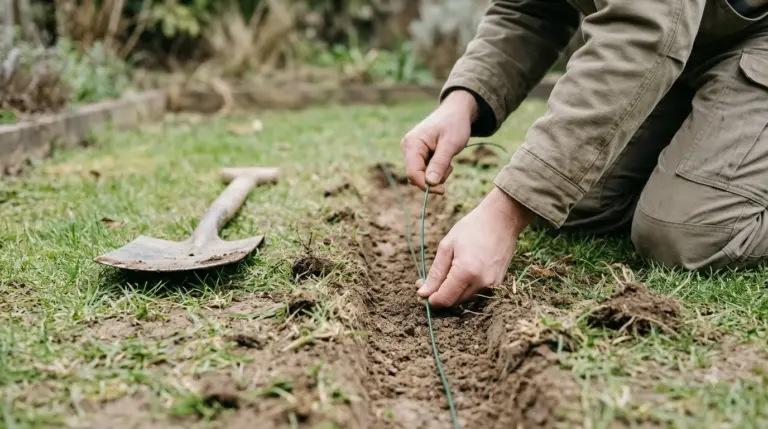
A conduit does not replace the placement range for the wire. Husqvarna’s US tips page gives 1 to 20 cm (3/8 to 8 in) for placing the boundary or guide wire, and it advises pushing stakes down in soft, mossy, dry, or compact ground so the wire stays flat. It also asks owners to inspect the installation before restarting the mower after winter. If you are weighing the two methods, read whether to bury or peg the boundary wire.
Our reading is that a conduit near the surface should be checked the same way as bare wire. If a conduit lifts out of the soil after a freeze or a mowing season, the wire inside is no longer protected where it matters most. The best waterproof cable conduit for robot mower wire should be secured at both ends with pegs, not just laid on the grass.
Common mistakes
Most problems we found in the sources come from setup rather than the product. These are the points the manufacturer and standards guidance warn about most often:
- Tight corners: Husqvarna asks owners to avoid tight bends, and the Husqvarna NZ guide says to avoid laying the wire at tight angles.
- Conduit that is too small: Safran says a conduit that is too small or too tight in bend radius “will prove difficult during installation.”
- Unsealed joints: a waterproof tube with an open end or a bare splice does not keep water out of the joint.
- Trusting the label: a waterproof claim on a listing is not a rating from a test body.
- Skipping the inspection: Husqvarna advises checking the installation before restarting after winter, and a hidden break is easier to trace if you know how to find a break in the wire.
Checklist for the best waterproof cable conduit for robot mower
Use this list when you compare conduit options for a robot mower wire. It asks questions a seller should be able to answer, and it does not name a winner.
- Measure the connector. Check the boundary connector’s outside size against the conduit’s inside diameter, with room to pull the wire through.
- Ask how the ends seal. Look for sealed caps or fittings, and plan to tape or seal any splice that sits inside or at the end of the conduit.
- Look for a stated outdoor or UV rating. If the listing gives no rating, note that the “waterproof” claim is unverified.
- Plan the route. Keep bends gentle and the run short, with fewer joints.
- Plan for inspection. Make sure both ends can be reached, and check the route before the first winter and after it.
Frequently asked questions
Do I need a conduit if I bury the boundary wire?
Not always. Husqvarna presents burial as an option for uneven lawns or hidden wire, and gives 1 to 20 cm as the placement range. A conduit adds protection at a specific exposed spot, such as a path crossing, but it is not a requirement for every run.
Is the best waterproof cable conduit for robot mower the same as a waterproof connector?
No. The conduit is the tube around the wire, and the connector is the joint inside or at the end of it. The sources we read say the joint needs sealing with tape or sealant, so the conduit’s label does not cover the connector by itself.
How deep should I bury the wire?
Husqvarna’s US tips page gives 1 to 20 cm (3/8 to 8 in). That is a range, not a single depth. Check your mower’s manual for the depth the manufacturer expects, and keep the wire tightly secured with pegs.
Can I use the same conduit for a power cable?
The sources we read cover boundary wire and GNSS antenna cabling, not mains power. Check the rating of any power cable and the conduit before you use one for the other, and follow the product’s own guidance.
Sources
- Husqvarna US support, “Tips to prevent wire break in an Automower installation” (manufacturer): burial range 1 to 20 cm, rocks and sharp objects, tight bends, stake and secure guidance, winter inspection.
- Husqvarna NZ, “Automower wire installation” (manufacturer): avoid laying the wire at tight angles.
- International GNSS Service, CORS Guidelines: cable (standards body): buried or secured conduit for outdoor runs, UV-stable tape on connectors, short loops at the ends.
- Safran Navigation & Timing, “Outdoor GNSS antenna installation considerations” (manufacturer): conduit size for connectors, bend radius, sealant or tape on outdoor connections.
 Up next8 min readGearRobot Mower Cable Conduit for Driveways: When to Use OneUpdated Nov 20, 2026
 10 min readGearRTK Antenna Extension Cable for Robot Mower: 6 ChecksUpdated Nov 19, 2026
 10 min readGearRTK Base Station Power Cable Outdoor: What to Check FirstUpdated Nov 19, 2026
 8 min readGearCable Cover for RTK Antenna Wire: 5 Checks Before You BuyUpdated Nov 19, 2026
 7 min readGearRobot Mower Charging Station Extension Cable Outdoor: What to CheckUpdated Nov 19, 2026
 6 min readGearUV-Resistant Cable Ties for Robot Mower Perimeter Wire: What to CheckUpdated Nov 12, 2026