
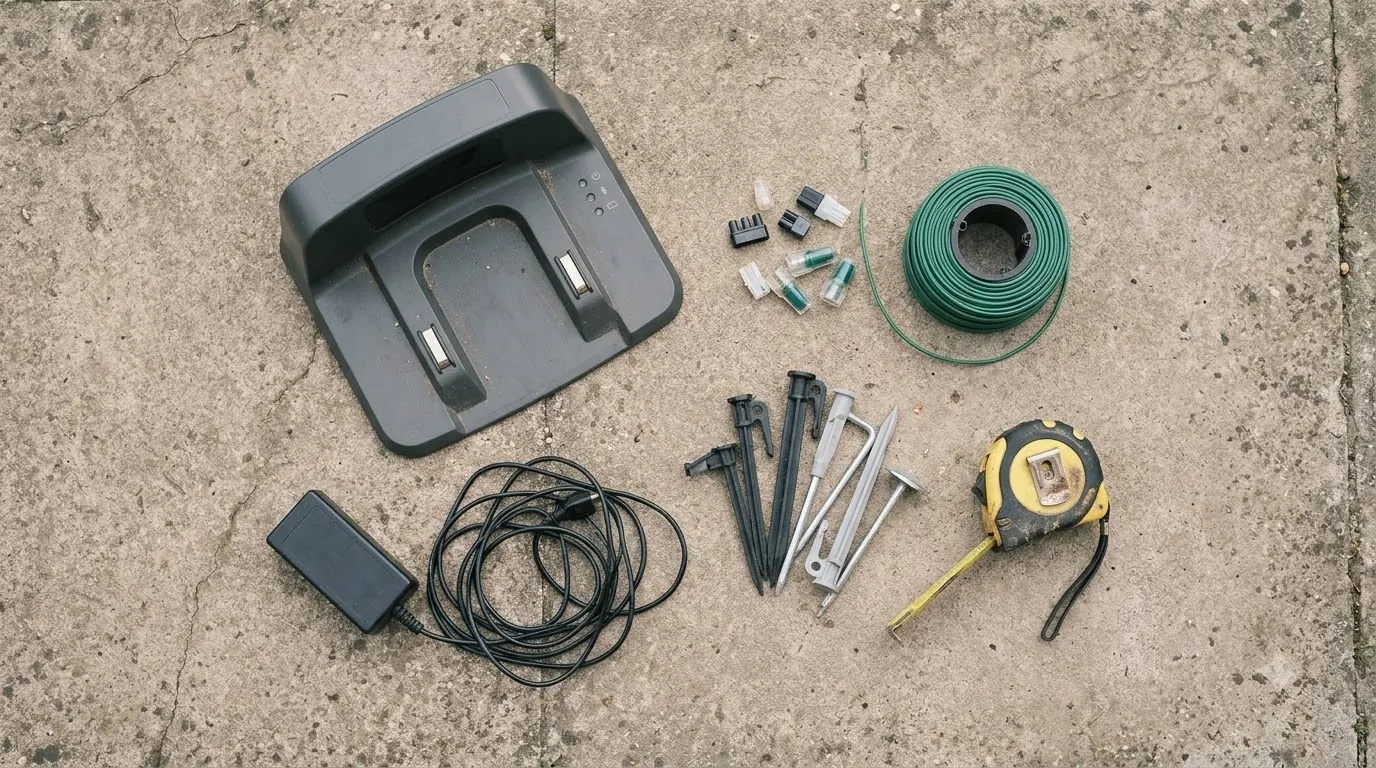

A robot mower low voltage extension cable lengthens the link between the power adapter and the charging station, and it should stay within the length the manufacturer rates. Most mowers ship with a cable that only reaches a station placed close to an outlet. If the station has to sit farther away, an extension can solve the reach problem, but the wrong cable can cause charging faults or a safety risk.
The short answer
- Check the length limit first. Many makers say the cable should not be extended or run too long, so the manufacturer’s rating beats any general rule.
- Keep the outlet side protected. Use an outdoor-rated, GFCI-protected outlet for the adapter.
- Choose a cable built for outdoors. Look for UV-resistant jacket, sealed connectors and a gauge that matches the length.
What a robot mower low voltage extension cable does and why length matters
The low voltage cable carries power from the adapter to the charging station, so it sits between the mains outlet and the dock. Because the signal and power pass through a fixed resistance, a longer run can drop voltage at the station. That is one reason makers set a maximum length. The Robomow installation guidance says a nearby outlet matters so the station can run on a low-voltage cable, and that the cable should not be too long or extended. The broader question of extending the charger cable outdoors covers different cable types and how they behave over longer distances.
Our reading is that the rated length is the number to design around. Measure the actual path along the ground, not the straight line, and add the height of any wall or post the cable climbs.
Check the manufacturer length limit before buying
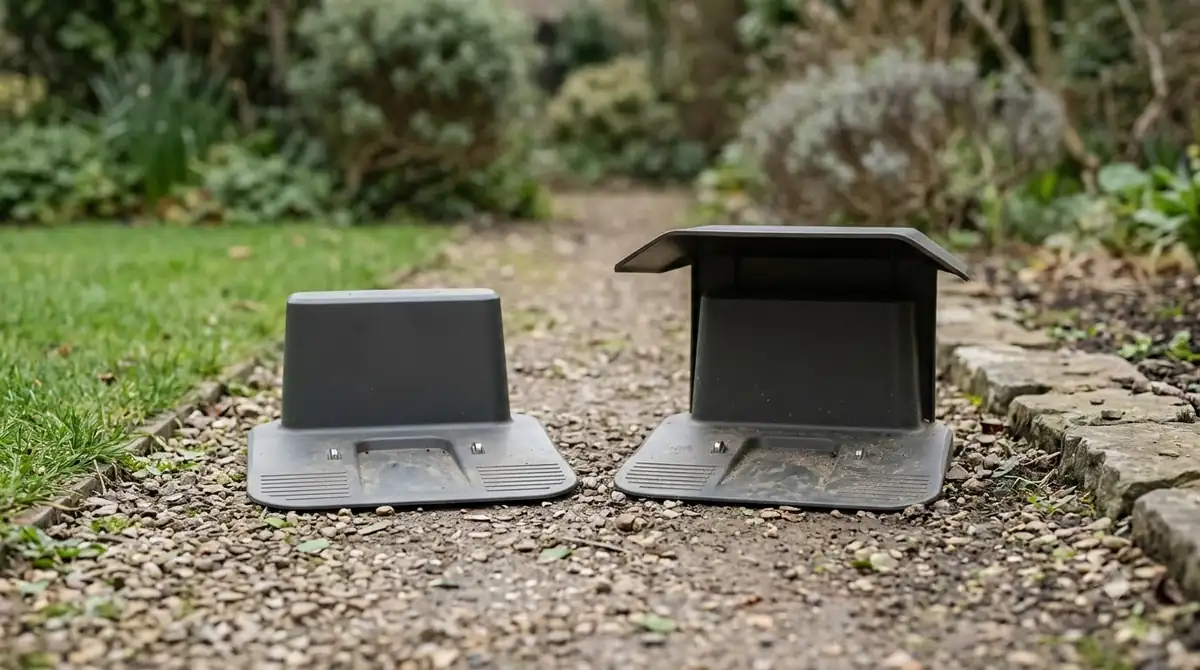
Look up the maximum length in the manual or support page for your exact model. Worx, for example, says its Landroid Vision charging base should sit within 10 m of an AC outlet because the cable has a maximum length of 10 m. Husqvarna’s placement guidance also tells owners to put the charging station near a power outlet. Those two statements point to the same habit: shorten the run before you extend it.
If the rated length is shorter than your layout needs, the better fix is often moving the station, not stacking extensions. Two cable joins add two points of failure.
Pick a cable built for an outdoor run
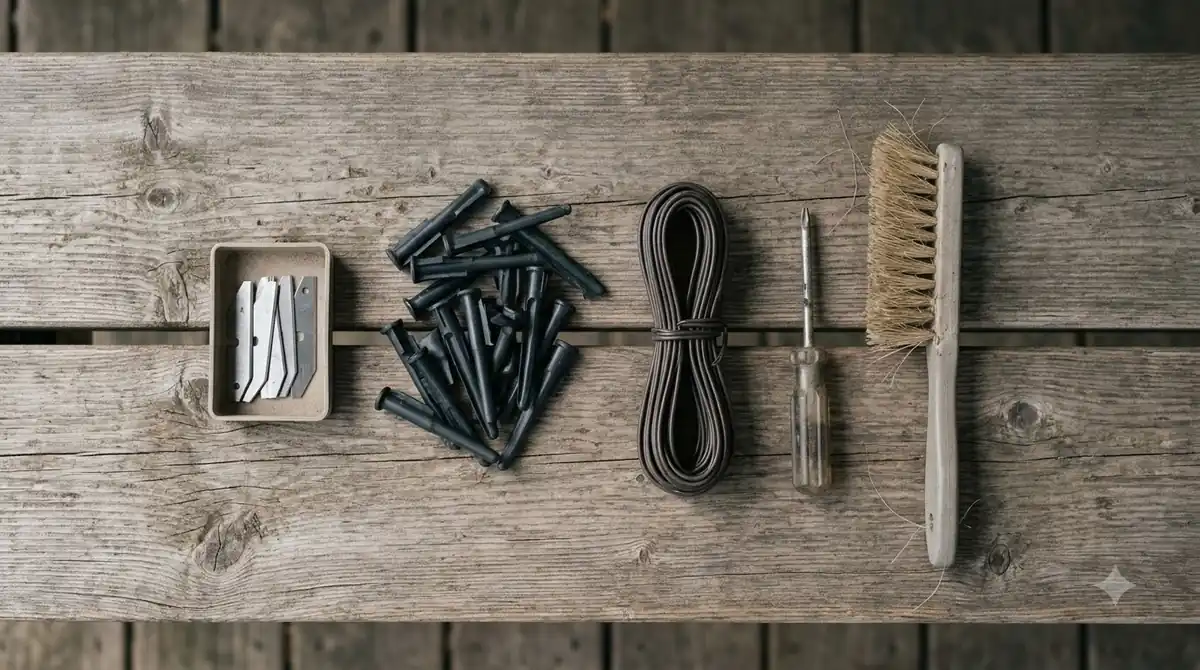
A cable for a robot mower spends its life in sun, rain and grass clippings, so the jacket and connectors matter as much as the length. Our reading of what to check: An outdoor run is easier to maintain when it sits inside conduit that protects the outdoor run from spades and strimmers.
- Jacket: UV-resistant and rated for direct burial or outdoor use.
- Connectors: sealed and matched to the mower’s plug style, with no bare copper at the join.
- Gauge: a thicker wire for longer runs, since resistance rises with distance.
- Splices: avoid them where you can; if one is needed, use a sealed, weather-rated connector.
Do not assume a cable meant for a lamp or a garden tool has the same rating. Read the labeling and match it to the charger’s requirements.
Protect the outlet side
The adapter plugs into mains power outdoors, so the outlet needs protection. The University of Illinois Extension safety guidance recommends ground fault circuit interrupters on outdoor outlets, and a portable GFCI can cover an outlet that lacks one. A GFCI cuts power when it detects leakage current, which is the kind of fault that matters around wet lawns. On the supply side, covers for the outdoor outlet keep rain away from the plug and the transformer.
Keep the adapter off the ground where splashes and mower spray reach it, and cover it with a rated enclosure. Do not run the cable under mats or through gaps where it can be pinched by a gate or a lid.
What to check before you buy
Before you buy an extension, measure the run, read the maximum length for your model, and confirm the cable’s outdoor rating and connector type. If the run is already near the limit, plan to move the station closer to the outlet instead. After installation, watch the charging light over a few docking cycles. A station that does not show a steady charge may point to a voltage drop or a bad join, and that is the moment to recheck the cable and the outlet. Compatibility goes beyond the plug shape, so replacement adapters and compatible ratings should match the original specification.
Test the charger after installing the run
Once the extension is in place, test it before you leave the mower to work on its own. Dock the mower by hand, let the charging light settle, and check that the base light is steady rather than blinking. Watch the first few docking cycles and note whether the mower returns with a full charge at the end of its schedule. If the charge looks slow or the light flickers, unplug the adapter, check each join for moisture and loose pins, and retest with the shortest run you can manage. If the dock does not charge after the new run is in, telling charger faults from battery faults saves unnecessary part swaps.
Keep a small record of the date, the length of the run and any faults. That record helps a dealer or support team see whether the problem is the cable, the outlet or the station. Our reading is that a run that needs regular attention is a sign the station should move, not that the cable needs another join.
Cable damage from mowing is common in tight corners. Route the cable along a wall or under edging where the mower cannot catch it, and check the jacket once a season for nicks, cracks or chewed sections. Replace any damaged length rather than wrapping it with tape.
Frequently asked questions
Can I use any extension cord with a robot mower charger?
Not safely. Use only a cable approved for your model and rated for outdoor use. A household cord may not match the voltage or gauge the charger expects.
How long can a robot mower low voltage cable be?
It depends on the model. Check the maximum in the manual or support page. Worx lists a 10 m maximum for one of its charging bases, but other brands differ.
Is it better to move the charging station than to extend the cable?
In most layouts, yes. Moving the station shortens the run and removes a join, which is one more point of failure.
Do I need a GFCI for the outlet that powers the charger?
It is a good idea for any outdoor outlet. A GFCI helps cut power when it detects a leakage fault, and it is especially useful near wet grass.
Sources
- Robomow installation guide (manufacturer): cable should not be too long or extended; nearby outlet for low-voltage cable.
- Husqvarna charging station placement guide (manufacturer): place the station near a power outlet.
- Worx Landroid Vision charging base guide (manufacturer): station within 10 m of an AC outlet due to the 10 m cable limit.
- University of Illinois Extension (university): GFCI protection for outdoor outlets.
 Up next10 min readGearRTK Antenna Extension Cable for Robot Mower: 6 ChecksUpdated Nov 19, 2026
 7 min readGearRobot Mower Charging Station Extension Cable Outdoor: What to CheckUpdated Nov 19, 2026
 7 min readGearMammotion Extension Cable: Length, Safety and SetupUpdated Nov 13, 2026
 7 min readGearNavimow Extension Cable: Antenna Limits and SetupUpdated Nov 13, 2026
 6 min readGearUV-Resistant Cable Ties for Robot Mower Perimeter Wire: What to CheckUpdated Nov 12, 2026
 8 min readGearBest Waterproof Cable Conduit for Robot Mower: What to CheckUpdated Nov 11, 2026