

How to stop crows from pecking at a robot mower? Break the visual reflection on glossy body panels, shelter the charging dock inside a roofed garage, and shift mowing schedules away from peak early-morning foraging hours. Crows typically attack autonomous mowers because they mistake their own reflection on dark plastic shells for a rival bird, or because the machine stirs up surface grubs and insects across the turf. Combining simple surface modifications with smart scheduling stops the pecking without harming local wildlife or interfering with onboard sensors.
The short answer
- Eliminate reflections: Apply matte vinyl wrap or non-reflective painters tape over glossy black or dark metallic mower lids so crows no longer see a territorial rival.
- Install a mower garage: Cover the charging station with a solid-roofed enclosure to hide the parked unit from overhead perching spots.
- Adjust mowing hours: Run cutting cycles during midday or afternoon instead of dawn, when crows actively forage for grubs and defend territory.
- Rotate visual deterrents: Place reflective Mylar tape or predator decoys near the dock and move them every few days so crows do not habituate.
- Address lawn grubs: Treat turf for beetle larvae if crows are following the mower to feed on exposed insects in the grass.
Why do crows peck at robot lawn mowers in the first place?
Crows peck at robotic mowers primarily due to territorial reflection battles, curiosity about shiny surfaces, and food associations around freshly cut grass.
Unlike loud gas push mowers that scare wildlife away, battery-powered robot mowers glide across the yard quietly. According to wildlife guidance from Humane World for Animals, crows are highly intelligent and territorial birds that quickly notice new objects or food opportunities in their home range. Many modern robot mowers feature glossy dark grey, black, or metallic top shells, camera lenses, and shiny bumper strips that act like mirrors in bright sunlight. When a crow lands on the deck or approaches the charging dock, it sees another crow staring back and repeatedly strikes the plastic with its heavy beak.
Foraging behavior also drives the interaction. As a robot mower trims grass blades and disturbs the thatch layer, earthworms, cranefly larvae, and beetles move closer to the surface. Crows learn to follow the machine like wild birds follow grazing animals, occasionally pecking at the mower wheels, rubber skirts, or status lights out of investigative curiosity. Left unchecked, repeated beak strikes can scratch LiDAR or optical camera lenses, pit soft rubber bumper trim, and wear down membrane keypad buttons.
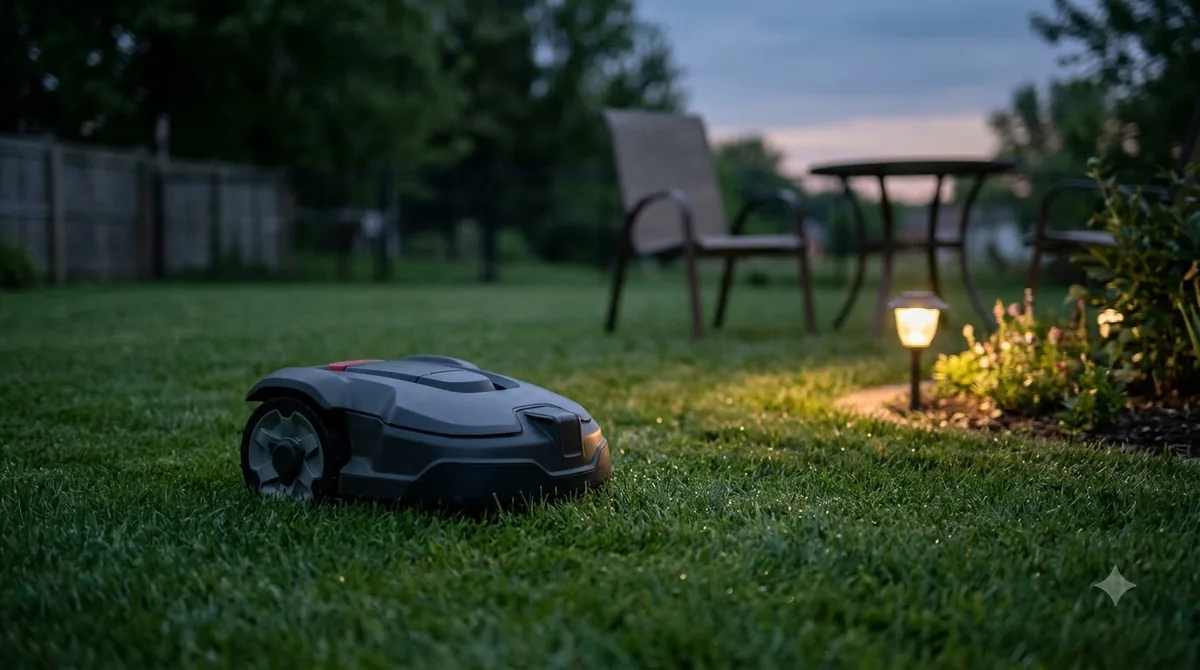
How can you modify the mower body without blocking sensors?
Covering glossy panels with matte vinyl or textured decals removes the mirror effect while keeping navigation cameras, ultrasonic sensors, and charging contacts unobstructed.
The fastest physical fix targets the reflective finish on the mower hood. Before applying any material, inspect the user manual to identify every sensor window, radar dome, rain sensor pad, and charging strip on your specific model. Covering an optical camera or RTK antenna dome can cause navigation errors or missed docking runs.
- Clean the top shell. Wipe dirt, grass sap, and wax residue off the plastic housing with mild soapy water and a microfiber cloth, then let it dry completely.
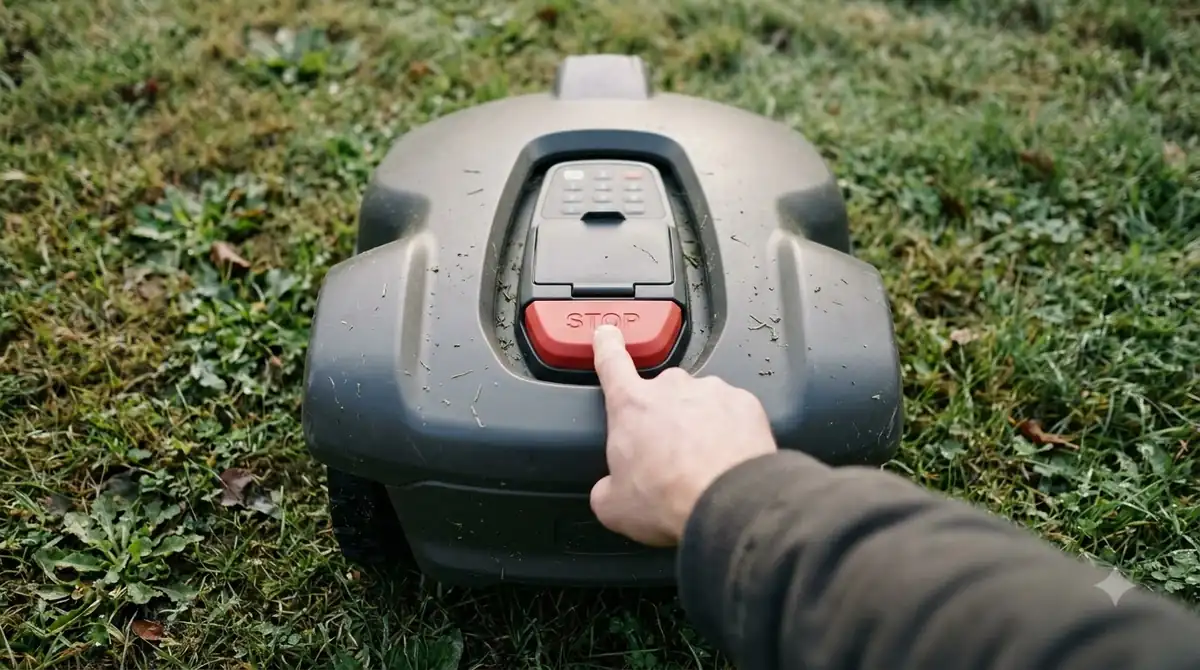
- Map out sensor zones. Locate front obstacle cameras, ultrasonic eyes, rain sensor pins, the emergency stop button, and top charging contacts so you leave a clean margin around each component.
- Apply matte film or tape. Smooth matte automotive vinyl wrap, matte camouflage decal sheets, or low-sheen gaffer tape across the flat, glossy areas of the lid where reflections are strongest.
- Avoid shiny metallic stickers. Skip chrome decals, aluminum foil, or glossy stickers on the mower itself, as high-contrast glints can draw even more investigative pecking from corvids.
- Test docking and obstacle detection. Run a manual return-to-dock test and watch the mower approach a soft obstacle to confirm all sensors operate normally.
Heads up
Never spray bittering agents, hot pepper wax, or sticky bird gels directly onto a robot mower chassis. Liquid repellents can seep into stop-button seams, cloud camera lenses, and attract abrasive dust that wears out wheel bearings.
What dock enclosures and yard deterrents work best?
A physical roofed garage protects the parked mower from overhead attacks, while rotating visual deterrents discourage crows from lingering near the lawn perimeter.
Most pecking incidents happen while the robot mower sits stationary on its charging base, exposed to crows perched on nearby fences, sheds, or tree branches. Adding a dedicated shelter, such as the Husqvarna Automower House or a similar open-front wooden or composite garage, blocks overhead sightlines and shields the top shell from direct sun glare. When building or buying an enclosure, leave adequate side clearance for the mower’s entry path and ensure wireless boundary or RTK satellite signals are not blocked by solid sheet metal roofs.
In the surrounding yard, rotating visual and physical barriers work far better than static gadgets. According to University of Minnesota Extension, birds rapidly develop tolerance to stationary deterrents, meaning fake owls or plastic snakes lose effectiveness within days unless moved regularly. Ultrasonic bird repellers are also poorly suited for crows because avian hearing falls outside ultrasonic frequency ranges.
| Deterrent method | Where to use it | Effectiveness against crows | Key maintenance tip |
|---|---|---|---|
| Matte vinyl wrap on mower lid | Glossy plastic hood panels | High for reflection-driven pecking | Keep clear of cameras, rain sensors, and stop buttons |
| Roofed mower garage | Over the charging station | High for parked protection | Use wood or plastic instead of thick metal if using GPS/RTK |
| Reflective Mylar flash tape | Fence posts or trees near dock | Moderate to high when fluttering | Reposition every 3 to 5 days to prevent habituation |
| Motion-activated sprinkler | Lawn edge near charging zone | High initial startle response | Turn off or zone out the mower path so sensors stay dry |
| Static plastic owl or ultrasonic box | Lawn or patio edge | Low after the first few days | Avoid ultrasonic units; move decoys twice a week if used |
How do schedule changes and lawn care reduce crow interest?
Shifting mowing runs to midday and eliminating hidden food attractants make your yard far less appealing to territorial and foraging crows.
Crows are most active during the first few hours after sunrise and again shortly before dusk as they forage and patrol roosting territories. If your robot mower leaves its dock at dawn, it enters the yard at the exact moment local flocks are actively scanning the turf. Adjusting the app schedule so cutting cycles run between late morning and mid-afternoon reduces overlap with peak crow activity and minimizes low-angle morning sun glare off the mower shell.
Removing nearby food triggers completes the strategy. Crows congregate in yards that offer reliable meals, so securing trash lids, bringing pet food bowls indoors, and switching to weight-activated songbird feeders stops flocks from staging near the lawn. If crows are tearing up turf behind the mower to reach white grubs or crane fly larvae, treating the lawn with beneficial nematodes or targeted seasonal grub control removes the underlying food draw.
Frequently asked questions
Can crows actually damage a robot lawn mower?
Yes. While a crow cannot break through a thick ABS plastic chassis, repeated pecking can scratch optical obstacle-avoidance cameras, pit soft rubber bumpers, tear waterproof keypad membranes, and damage exposed rubber charging port flaps.
Do ultrasonic bird repellers stop crows from attacking a mower?
No. Wildlife management research shows that most birds cannot hear ultrasonic frequencies, making ultrasonic yard repellers ineffective against crows compared to physical covers, matte surface wraps, and moving visual deterrents.
Will putting a garage over the charging dock block GPS or RTK signals?
Plastic, wood, and composite mower garages generally allow satellite signals to pass through without issue, whereas thick metal roofs can attenuate RTK or GPS reception. Check your mower’s signal strength indicator in the companion app after installing any enclosure.
Is it safe to use bird repellent sprays on a robot mower?
No. Chemical or natural taste deterrents can leave oily residues on camera lenses, seep into electronic switches, and void manufacturer warranty coverage on exterior housings.
Sources
- What to do about crows (Humane World for Animals): used for crow territorial behavior, food attractant removal, Mylar streamer tactics, and the ineffectiveness of ultrasonic devices.
- Keeping animals out of your garden (University of Minnesota Extension): used for guidance on bird habituation to static decoys and the need to rotate visual deterrents like flash tape.
- Husqvarna Large Automower House (Husqvarna): used for mower garage design features, keypad access, and shelter protection from exterior damage.
 Up next9 min readLearnWhy Does My Robot Mower Stop When Crossing Patio Pavers?Updated Nov 19, 2026
 10 min readLearnHow to Stop a Robot Mower From Digging Holes on TurnsUpdated Nov 19, 2026
 6 min readLearnWhen to Stop Using a Robot Mower in FallUpdated Nov 13, 2026
 6 min readLearnHow to Stop a Robot Mower from Mowing Flower BedsUpdated Nov 13, 2026
 6 min readLearnWhy Does My Robot Mower Stop in the Middle of the Lawn?Updated Nov 14, 2026
 8 min readLearnWhy Does My Robot Mower Beep and Stop Mid-Cut? Common CausesUpdated Nov 14, 2026