
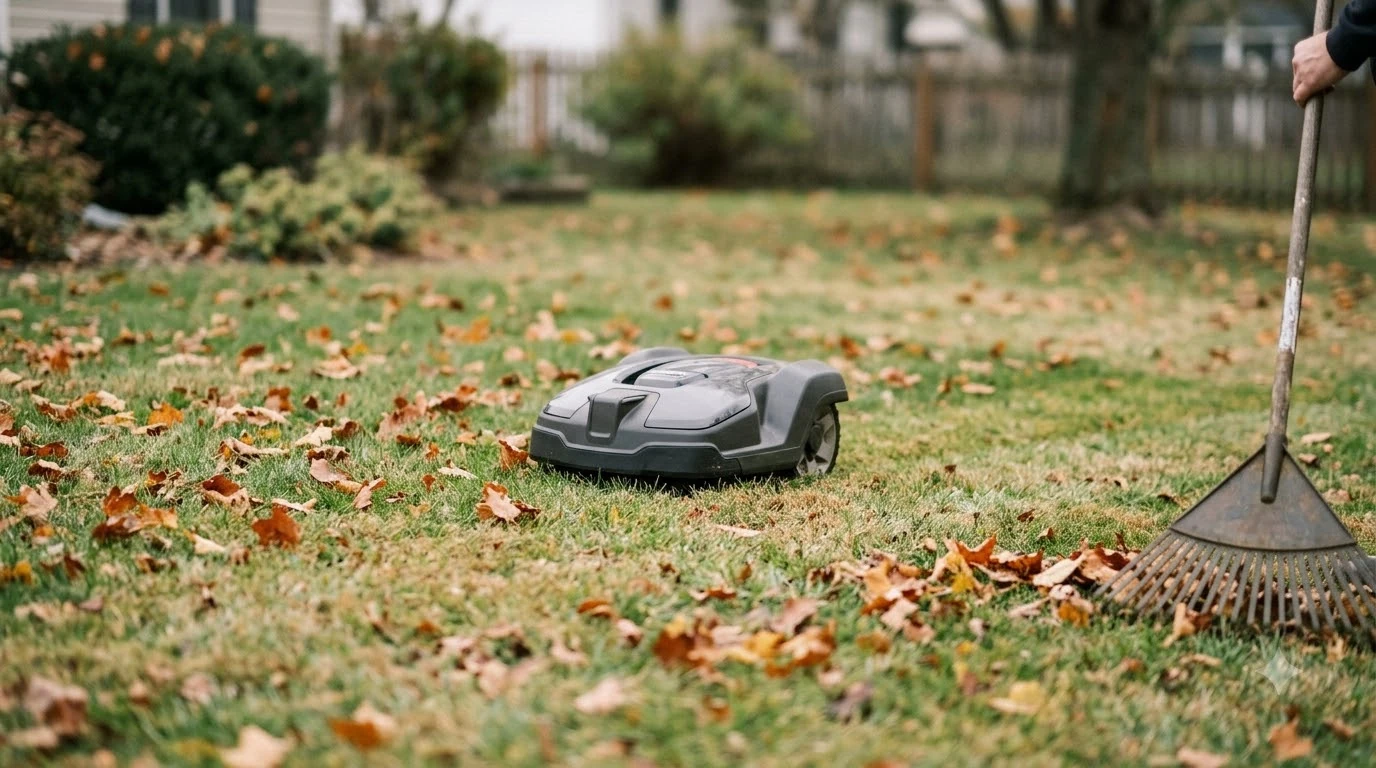

When to stop using a robot mower in fall depends on growth, not the calendar. Iowa State University Extension says cool-season grasses such as Kentucky bluegrass stop growing when daytime highs stay consistently below 50 degrees Fahrenheit. Keep the robot running until growth stops, then put it away for the winter.
The short answer
- Stop trigger: growth ends, which for cool-season lawns is when daytime highs stay consistently below 50 F.
- Regional timing: in central Iowa, bluegrass usually stops growing in early to mid-November.
- Keep running: while the grass is still growing, the robot can keep cutting on its normal schedule.
- Stop the schedule: once growth slows and stops, end the mowing schedule and move to winter storage.
- Check locally: the date shifts with your climate and grass type, so ask your county extension office.
Growth is the signal, not the date
A fixed date like November 1 or Thanksgiving does not tell you when a lawn is done growing. The grass tells you. Iowa State’s FAQ says to continue mowing until the grass stops growing in the fall, and that once growth stops the mower can be put away for the winter. The same logic applies to a robot mower, which should follow the lawn rather than a schedule set in the spring. Once mowing ends, the next question is where the mower sits, and whether a mower can stay outside is covered in a separate guide.
Growth slows in steps. Early in autumn the lawn may still need a cut every week. As nights cool and days shorten, the cutting interval stretches out until a cut is no longer needed. The moment to stop is when the lawn is no longer putting on visible growth, not when the first frost appears.
A practical habit helps here. Keep a simple log of each mow for a few weeks in autumn, noting the date, the interval since the last cut, and how much grass came off. When the gap between cuts stretches to a week or more and the clippings are light, growth is slowing. Our reading is that this log tells you more than a date on the calendar.
The 50 degree rule for cool-season lawns
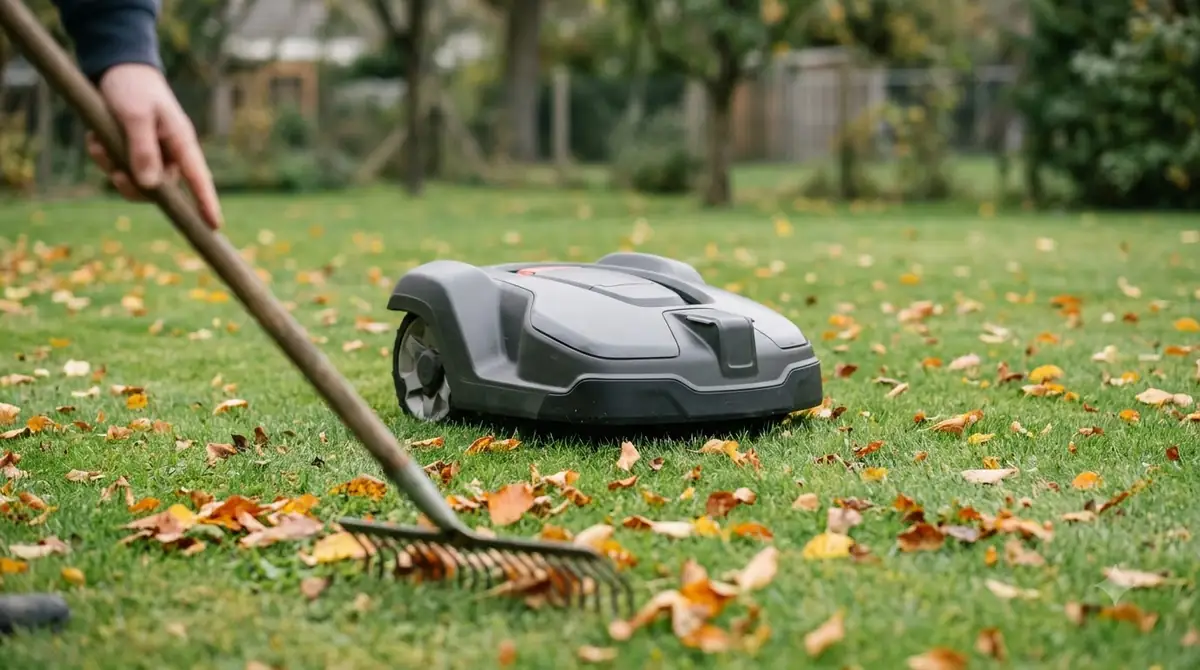
The 50 F threshold is the most useful number in fall lawn care. Iowa State’s guidance is that cool-season grass growth ends when daytime highs remain below 50 F. Kentucky bluegrass is the example it gives, and in central Iowa that usually means early to mid-November. The 50 degree rule is about the grass, but the working temperature range matters for the mower itself.
The threshold describes the daytime high, not a single cold night. A week of cold nights with warm afternoons can still leave the grass growing, which is why a single frost is not the signal to put the mower away. Watch the forecast for several days of daytime highs below 50 F.
Heads up
The 50 F rule is written for cool-season grasses such as Kentucky bluegrass. Warm-season lawns follow a different growth calendar, so the rule does not transfer unchanged. Confirm your grass type before you plan the last cut.
How the robot schedule changes through fall
Through early autumn, the robot can keep its normal run schedule, though many owners find that a slightly longer interval works as the lawn slows. The aim is the same as in spring: never remove more than one-third of the leaf blade at a single cut. Wisconsin Extension’s lawn care calendar gives this as the general mowing rule while grasses are growing.
As growth drops off, shorten the schedule rather than running the mower on an empty lawn. Cutting grass that is barely growing adds wear to the blades and the battery without much benefit. Our reading is that the final cuts of the season should be spaced out until the schedule can end on its own.
Putting the mower away when growth stops
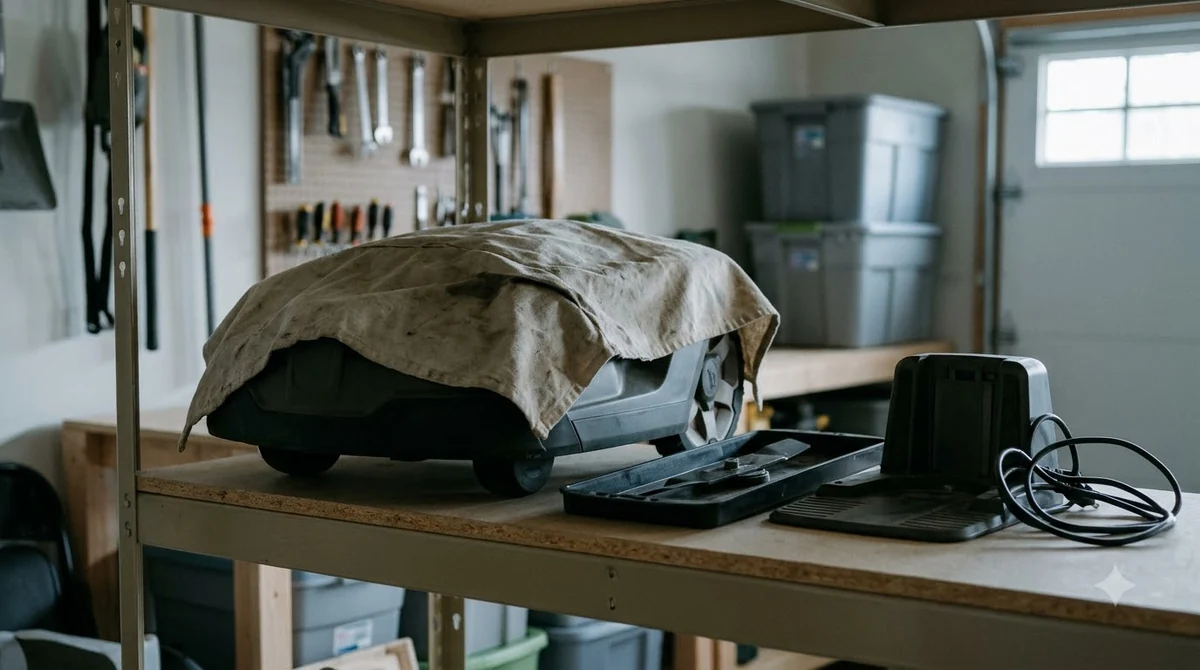
Once growth has stopped, end the mowing schedule and prepare the mower for storage. Clean the deck and wheels of clippings and debris, charge or store the battery as the owner’s manual directs, and keep the machine somewhere dry and protected from frost. Our reading is that a clean, dry mower stored properly is far less likely to need repairs in spring. When growth stops, the mower needs cleaning and battery care, and winter storage steps for a mower lay out the order. Not every shed is suitable, and storing a mower in an unheated shed depends on the manufacturer temperature limits.
Leaves are a separate issue. Fallen leaves can block the cutting deck and sensors even when the grass itself has stopped growing. If the trees are still dropping leaves, a last run to clear the lawn may be needed before storage, but only once the grass is dry.
When to stop using a robot mower in fall, and when to keep going
Keep the robot running while growth continues and the lawn stays dry enough to cut cleanly. Stop once the grass has stopped growing, the daytime highs stay below 50 F for several days, and the mower has had its last run. If you are unsure, look at the lawn after a week with no growth: if it looks the same as the week before, growth has likely stopped. The same growth signal applies in reverse in March or April, and when to start mowing in spring covers the first weeks.
Check the forecast for the next two weeks before you pack the mower away. A warm spell after the first cold snap can restart growth for a few days, so a single warm afternoon is not a reason to restart the full schedule. Wait for the daytime highs to stay below 50 F before you end the schedule for good.
Frequently asked questions
When to stop using a robot mower in fall: is the date fixed?
No. Iowa State Extension ties the end of mowing to growth, which for cool-season grasses slows when daytime highs stay consistently below 50 F. In central Iowa that usually falls in early to mid-November, but the date changes by region.
Does one frost mean I should stop mowing?
Not by itself. The 50 F rule refers to daytime highs held over several days. A single frosty night can happen while the grass is still growing, so watch the daytime temperatures and the lawn.
Should a robot mower run through the last weeks of fall?
It can, as long as the grass is still growing and dry enough to cut cleanly. Once growth stops, end the schedule. Cutting grass that is no longer growing adds wear without much benefit.
Do I need to clean the robot before storing it for winter?
Yes, clean the deck and wheels of clippings and debris before storage. Follow the owner’s manual for battery and storage steps, since they vary by model.
Sources
- Iowa State University Extension, When can I stop mowing the lawn in the fall? (university extension): 50 F daytime-high threshold, central Iowa timing, keep mowing until growth stops.
- University of Wisconsin-Madison Extension, Wisconsin lawn care calendar (university extension): mow regularly without removing more than one-third of the leaf blade as grasses grow.
 Up next7 min readLearnWhen to Start Using a Robot Mower in SpringUpdated Nov 13, 2026
 9 min readLearnWhy Does My Robot Mower Stop When Crossing Patio Pavers?Updated Nov 19, 2026
 9 min readLearnWhy Does My Robot Mower Spin Its Wheels When Turning?Updated Nov 19, 2026
 7 min readLearnWhy Does My Robot Mower Lose WiFi When the Garage Closes?Updated Nov 19, 2026
 6 min readLearnHow to Stop a Robot Mower from Mowing Flower BedsUpdated Nov 13, 2026
 7 min readLearnHow to Stop Crows From Pecking at a Robot MowerUpdated Nov 19, 2026