
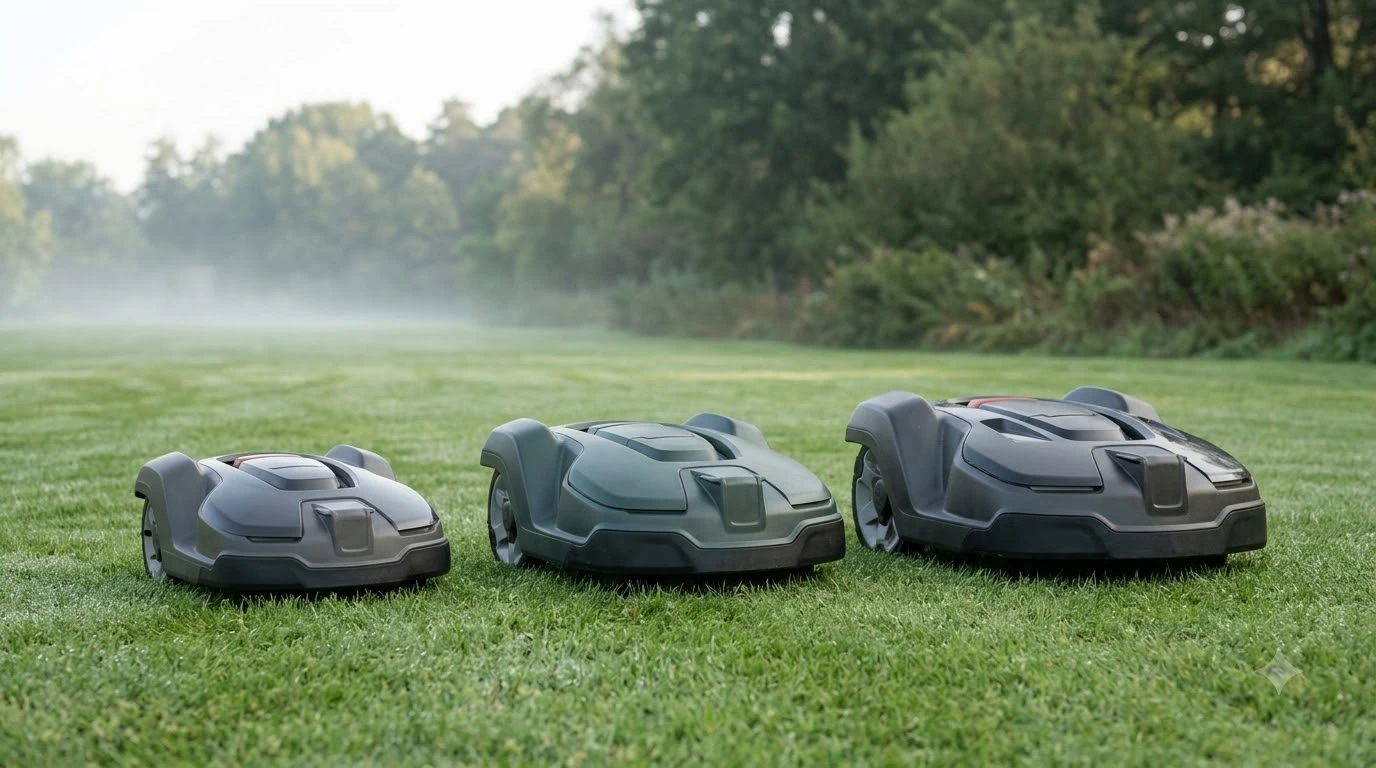

Robot mower brands ranked by reliability do not come from any independent test we could find. The sources we read do not rank robot mower brands on reliability, and none of them runs a multi-year durability trial. What exists is a set of narrower facts: brand warranty terms, manufacturer lifespan claims, and independent tests of specific features such as slopes, rain sensors and boundary wires. Those facts can help you judge reliability for your own yard, even though they cannot produce a brand ranking.
The short answer
- No ranking exists. The independent source we read tested more than 10 models from 8 brands, but it does not publish robot mower brands ranked by reliability.
- No long-term test. Consumer NZ describes a four-week test and says it has no dedicated long-term reliability test.
- Lifespan figures are claims. Brands say a mower lasts about 5 to 10 years and its battery about 3 to 5 years, under good care (see our page on how long a robot mower lasts).
- Warranties have conditions. A warranty covers defects under normal use and requires proof of purchase and a service route, so it is not a durability test.
- Upkeep and yard matter. Blade changes, weekly cleaning, annual service and your slopes and trees shape how long any brand lasts.
Are robot mower brands ranked by reliability? No independent test does
The independent testing we read does not produce a brand ranking, and it does not follow mowers over several years.
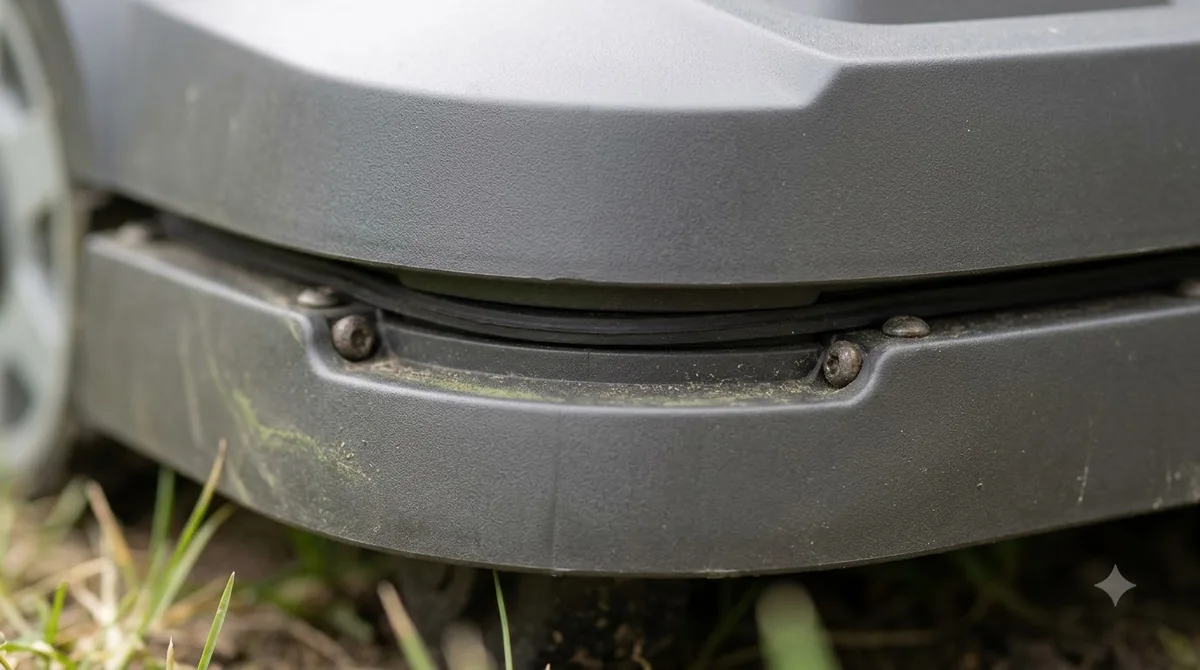
Consumer NZ’s robot lawn mower guide says it independently tested more than 10 models from 8 brands. Its how-we-test page describes a four-week run on a 200 square meter lawn, plus a safety test in which a fake foot is placed in the mower’s path. It also says there is no dedicated long-term reliability test. Instead, the reviewers inspect how robustly each mower is built.
Four weeks can show how a mower handles its first season of runs. It cannot show how the same machine holds up after several years of rain, winter storage and battery cycles. That gap is why a “most reliable” headline is hard to support. A brand can do well in a short test and still develop faults later, and a brand with a long warranty may simply never have been tested on the question.
Our reading is that any brand-level reliability claim needs a dated source that explains its method. For robot mowers, we did not find one. Any list of robot mower brands ranked by reliability should show the method behind it, and if it does not, treat it as opinion.
Heads up
This article does not test any mower. Brand names appear only to show what a published source says, and they are not our own experience with any machine.
What reliability depends on: upkeep and boundary wires
Much of a robot mower’s working life depends on upkeep and on how the mower finds its way around the lawn. A brand name does not change either one.
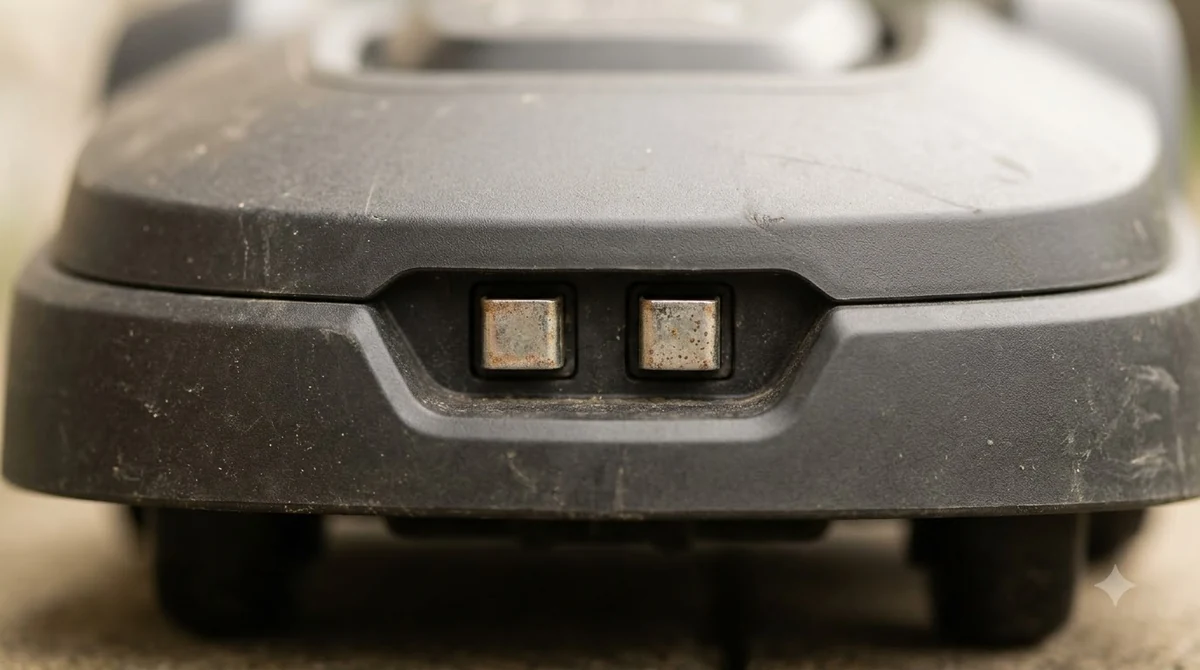
Consumer NZ lists this maintenance routine, which shapes how long any brand’s mower lasts, and our robot mower maintenance checklist expands on it:
- Every few days: remove debris such as branches, twigs, leaves, stones and toys, which can interfere with mowing and damage the blades.
- Weekly: inspect and clean the mower. Sensors, blades and wheels should be undamaged and free of debris, and the battery contacts on the mower and the charging station should be clean and rust-free.
- Every one to two months: replace the blades, depending on how often the mower runs and on the lawn.
- Yearly: most manufacturers require or recommend an annual winter service at a specialist service center.
- Every few years: replace the battery. Check local availability and cost before you buy, because Consumer NZ says the battery needs replacing every few years.
Boundary wires add a second factor. Consumer NZ says physical boundary wires can be damaged and can disrupt mower operation, while virtual boundaries cannot be damaged. It also notes that wire boundaries suit properties with poor satellite reception, because they do not depend on the signal. Our comparison of wired versus wireless robot mowers covers the trade-offs.
Our reading is that the boundary type is part of reliability, not only a matter of convenience. A cut or moved wire can stop the mower until someone finds the fault, and a wireless boundary removes that failure point while adding its own dependence on satellite or sensor signal.
Warranty: what a brand’s terms do and do not prove
A warranty describes what a brand will repair, and under which conditions. It does not measure how often a mower fails, so it cannot rank robot mower brands by reliability on its own.
Husqvarna’s warranty page is a useful example of the conditions. It says the warranty covers “defects in material or workmanship under normal use,” and that defective parts are repaired or replaced at no charge if the product was used and maintained normally. Returns must include reliable proof of purchase, such as a warranty card, invoice or receipt, showing the purchase date, model number, serial number and the selling dealer’s name and address. The product goes back to the dealer where it was bought, or to an authorized service center that the dealer recommends. The page does not state a warranty length for robotic mowers and points to yearly warranty statements instead.
Our reading is that the conditions matter as much as the length. The phrase “maintained normally” ties the warranty to the upkeep routine above, so a mower with skipped cleaning or unchanged blades could become a point of dispute at claim time. Keep your service records and proof of purchase together from day one. Our robot mower warranty guide lists what to look for in the terms.
A 2026 comparison by GrabARobot lists terms for several brands, but its entries were not all checked against the manufacturers’ own documents. The table below shows what it reports, with the caveats it carries. Treat each row as a lead to confirm with the brand, not as a settled fact. Figures are as of 2026-11-10.
| Brand | What the comparison reports | Status of the entry |
|---|---|---|
| Husqvarna Automower | 2 years for the unit; battery under the unit term | Not checked against Husqvarna’s own document |
| Worx | 3 years if registered within 30 days, or 24 months | Conflicting; battery term unresolved |
| Mammotion | Battery 2 years on older models, 3 years on newer models | Retailer comparison |
| Segway Navimow | 3 years for the unit, 2 years for the battery | Australian terms; US terms not published |
Lifespan figures come from manufacturers
The lifespan numbers that circulate online mostly come from brand blogs, so read them as claims rather than results. They are not a way to rank robot mower brands by reliability.
Ecovacs says robot mowers typically last around 5 to 10 years with good care, and batteries around 3 to 5 years. It says blades generally last 4 to 6 weeks, and that its GOAT battery is rated for more than 1,000 cycles, with more than 70% capacity after 1,000 full charges. Anker’s eufy blog gives the same 5-to-10-year range for a mower in typical UK garden conditions and a 3-to-5-year range for batteries. It adds that its advanced high-capacity battery is rated for up to 2,000 charging cycles.
Our reading is that these ranges are useful for planning a battery replacement, but they do not separate one brand from another. Both blogs publish nearly the same ranges, and neither is an independent test. A battery rated in cycles also depends on how often the mower runs and how it is stored, so the cycle count will not tell you the age you will see in your own yard.
Navigation trade-offs: RTK, LiDAR and vision
Each navigation type trades accuracy in one condition for weakness in another, and the manufacturer’s own material says so.
Mammotion’s article on wire-free navigation describes three systems. Its limits are summarized below. The article is written by a brand, so use it as a list of limits, not as a comparison of brands.
| System | What the source says it does | Where it struggles |
|---|---|---|
| RTK GPS | Locates the mower with centimeter-level accuracy | Dense tree cover, tall structures, challenging terrain; depends on satellite signal quality |
| LiDAR | Scans the surroundings to position the mower | Heavy rain and highly reflective surfaces; higher cost and power use |
| Vision (camera) | Uses camera analysis to navigate | Low light, heavy shadows, fog and extreme weather |
The same article says LiDAR scanning, vision analysis and positioning all use more power than basic wired systems, which can mean higher battery use on large or complex lawns. It does not give figures, so you cannot tell from the article how much more power a given model draws.
Our reading is that a yard with tall trees and a yard with heavy rain will point to different systems. Match the navigation to the conditions you have, and do not assume that one system works everywhere. Our explainer on RTK, LiDAR and vision navigation compares the three.
Slopes, rain and tree cover
Slope and weather ratings are where manufacturer claims and independent results most often differ.
Consumer NZ tested mowers on a slope of 19 degrees, which is 35%. It reports that some models performed better than the manufacturers’ claims. Some models are claimed to handle slopes up to 39 degrees (80%), and some user manuals say the mower should run on its maximum claimed slope only for short spells, not across the whole mowing area. The guide also says fewer than half of the tested models have a rain sensor, which makes the mower return to its base when it detects rain and resume when the weather clears. It notes that lawn mowers usually cut better in dry conditions, and that IPX6 offers better water resistance than IPX5.
Our reading is that a mower rated for a steep slope only in short spells will wear faster on a steep yard. Check the rating against the slope you actually have, not against the headline number on the box. Tree cover is a separate check: satellite-based navigation depends on a clear signal, so a yard shaded by large trees may need a different system or a wire boundary.
What to check before you buy
Instead of a list of robot mower brands ranked by reliability, use checks you can make before you buy, most of which cost nothing but time.
- Warranty terms. Read the current warranty statement for the exact model, and get the length in writing. Check the proof-of-purchase rules, and note whether the warranty depends on regular maintenance.
- Service route. Find the dealer or authorized service center near you, and ask about turnaround times for repairs and battery replacements.
- Parts and battery. Check blade, battery and charging-station parts are available locally, and ask what a replacement battery costs before you commit.
- Navigation fit. Match RTK, LiDAR, vision or a wire boundary to the tree cover, slopes and rain in your yard.
- Slope rating. Compare the slope you have with the tested result, not the headline figure.
- Upkeep you will keep. Plan for a weekly check, blade changes and a yearly service, because many warranties assume them.
Frequently asked questions
Are robot mower brands ranked by reliability in any independent test?
Not by the independent sources we could read. Consumer NZ tested more than 10 models from 8 brands but describes no dedicated long-term reliability test, so the sources we found do not rank brands on reliability.
Does a longer warranty mean a more reliable mower?
Not necessarily, and a warranty cannot rank robot mower brands by reliability by itself. A warranty states what the brand will repair under its terms and conditions. It does not measure how often faults happen. Check the proof-of-purchase rules and the service route as well as the length.
How long do robot mowers last?
Manufacturers claim around 5 to 10 years for the mower and 3 to 5 years for the battery, under good care. These are brand claims, not results from independent long-term tests.
Do wireless mowers avoid boundary-wire problems?
They avoid wire damage, because Consumer NZ says virtual boundaries cannot be damaged. They depend on satellite or sensor signals instead, which tall trees, buildings or heavy rain can affect.
Sources
- Consumer NZ robot lawn mower guide (consumer testing organization): test scope, maintenance routine, boundary wires, rain sensors, slope results.
- Consumer NZ how we test (consumer testing organization): four-week test length and the absence of a long-term reliability test.
- Husqvarna warranty page (manufacturer): warranty coverage, proof-of-purchase fields and service route.
- Mammotion wire-free navigation article (manufacturer): RTK, LiDAR and vision limits and power use.
- Ecovacs blog on robot mower lifespan (manufacturer): lifespan and battery cycle claims.
- Anker (eufy) blog on robotic mower lifespan (manufacturer): lifespan claims for UK garden conditions.
- GrabARobot 2026 robot mower warranty comparison (retailer): warranty terms by brand, with entry-level caveats.
 Up next8 min readReviews & CompareRobot Mower Reliability Ranking 2026: What the Evidence ShowsUpdated Nov 11, 2026
 7 min readReviews & CompareWhich Robot Mower Brand Lasts the Longest? What the Evidence ShowsUpdated Nov 11, 2026
 8 min readReviews & CompareRobot Mower Reddit Owners Favorite: What the Evidence SaysUpdated Nov 11, 2026
 8 min readReviews & Compareeufy vs Segway Navimow Robot Mower: Which Brand Fits Your LawnUpdated Nov 11, 2026
 7 min readReviews & CompareWhich Robot Mower Has the Best Edge Cut? Brand Figures ComparedUpdated Nov 11, 2026
 7 min readReviews & CompareWhich Robot Mower Brand Has the Best App?Updated Nov 11, 2026