
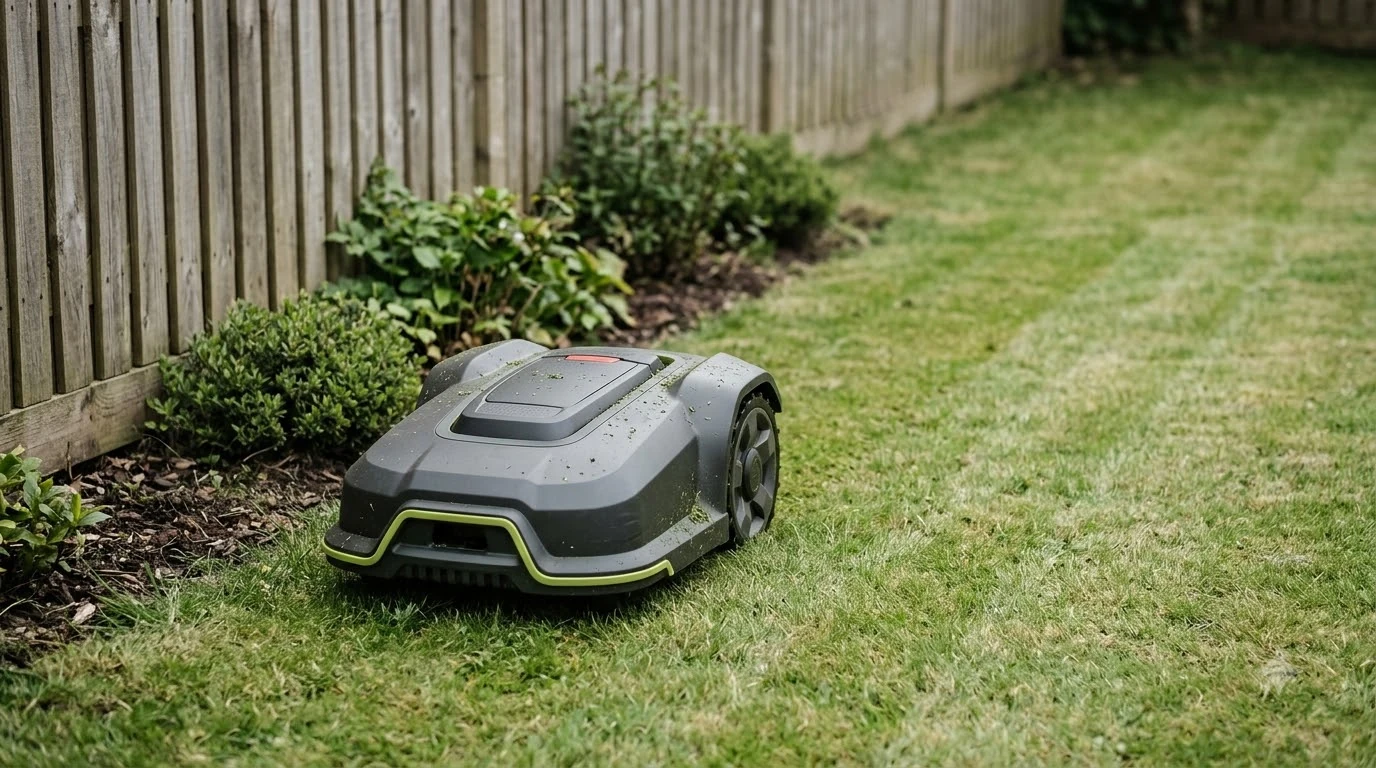

In a robot mower vs push reel mower comparison, the robot suits most backyards you cannot mow every few days, while the push reel is the better pick for a small, flat, closely kept lawn. The reel wins on noise, purchase price, and simplicity. The robot wins on time, because it trims the grass on its own schedule. The rest of this guide explains where that trade-off sits for real yards.
The short answer
- Choose a robot mower if the lawn is larger than a few hundred square metres, has slopes, or you want the grass kept short without a weekly session.
- Choose a push reel mower if the lawn is small, level, and free of thick weeds, and you want the quietest and cheapest option.
- Noise: a reel mower is quieter than any powered machine. A robot is quieter than a petrol push mower, but it runs for hours on its own.
- Upkeep: a reel needs a sharpening every season. A robot needs deck cleaning, sensor care, and blade changes.
Robot mower vs push reel mower in daily use
A push reel mower works only when a person pushes it. It cuts with a set of scissor-like blades that spin against a fixed bar, so it gives a clean, precise cut when the grass is short and dry. A robot mower is a battery machine that leaves its dock on a schedule, follows a boundary, and returns to charge. The difference is less about the blade and more about who does the work. With a reel, the hour you spend mowing is the hour you spend on the lawn. With a robot, the time goes into setup and then mostly disappears.
That gap shapes which option fits a household. Someone who likes walking the yard and watching the grass change will value the reel. Someone who travels, works long hours, or simply dislikes the chore will find a robot easier to live with, even after counting its maintenance.

Noise and quiet hours
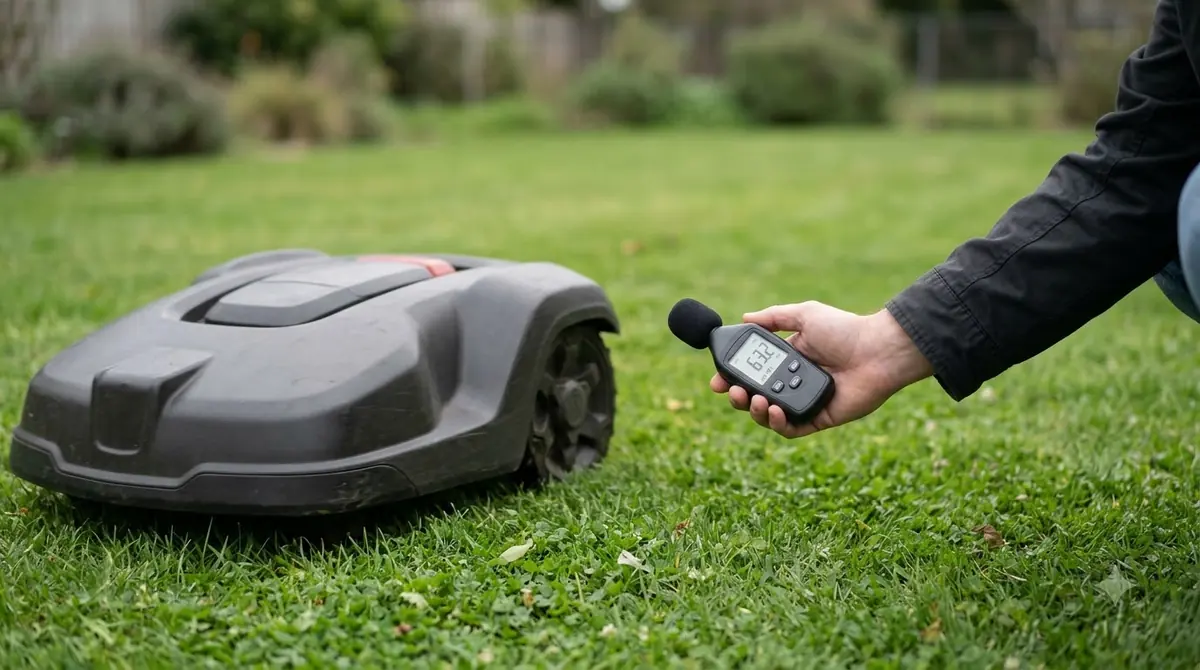
Noise is where the reel mower has the clearest advantage. It has no motor, so the only sound is the blades and the wheels on the grass. Robot mowers are much quieter than gas push mowers, and retail listings often quote about 60 dB for common models. That figure is a vendor number, so treat it as a rough guide. Our reading is that a robot can run during the day while the neighbours are home, but a reel is still the only option that will not register as noise at any hour. Quiet-hour rules also affect electric machines, as electric lawn mowers against robots explains.
For a sense of scale, the U.S. Occupational Safety and Health Administration treats sustained exposure above 85 dBA as a hearing risk over an eight-hour day. Lawn equipment is usually used for far shorter stretches than that, so the rule is more useful as a reference point for how loud a gas mower really is than as a limit for a robot.
Cost and upkeep over several seasons
A reel mower is the cheapest machine in this comparison, and its running cost is close to zero. You need a periodic sharpening, a few drops of oil on the moving parts, and a clean deck after cutting. A robot costs far more up front, and the price range is wide, from budget models to premium units with GPS or camera navigation. Prices change often, so compare the current listing rather than an older figure. Another human-pushed option is cordless push mower upkeep, which brings battery costs rather than blade sharpening. Upkeep over several seasons depends on dependability, so check robot mower reliability rankings by brand.
The robot’s upkeep is different in kind. Grass and clippings build up on the underside, the charging contacts can corrode, the blades wear, and the boundary wire or the positioning sensors need checking if the machine starts to wander. Wired models also add the small job of repairing a cut boundary cable. None of this is hard, but it is a recurring task, and you should count it honestly against the convenience.
Where a reel mower falls short
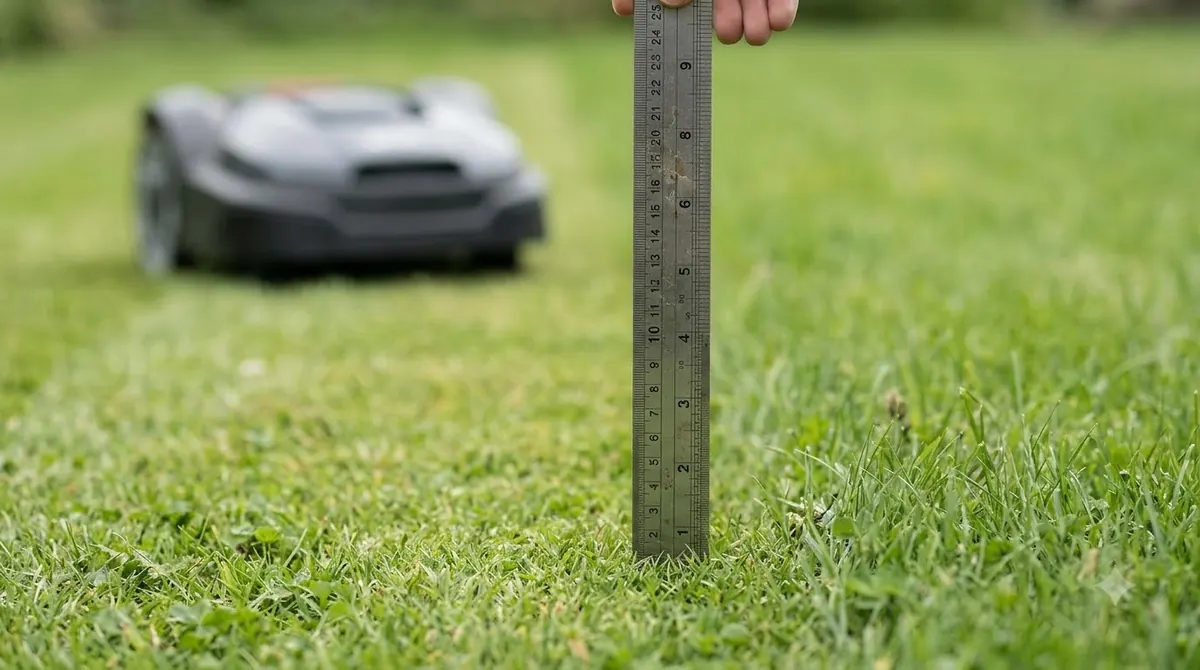
A reel is a poor fit for uneven ground, long grass, and stems that are thicker than a blade can cut cleanly. It also expects a regular rhythm: the lawn should be cut often and kept low. If you let it grow for two weeks after a wet spell, the reel will bend rather than cut, and you will be stopping to rake. Slopes add a safety concern too, because a person pushing a mower on a steep bank has less control than the wheels can give on flat ground. When a reel mower falls short on thick grass, corded electric mower tradeoffs are one option.
A robot handles those conditions better, provided the slope and grass height are within the manufacturer’s stated limits. It also does not get tired, so it can keep a larger lawn trimmed through a busy season.
Who should pick which
The fastest way to decide a robot mower vs push reel mower question is to answer three questions. How large is the lawn, and is it level? How often can you realistically mow? How much do you value quiet? If the answers are a small flat lawn, a regular mowing habit, and a strong preference for silence, the reel is a sound buy. If the answers are a larger or sloped yard, an irregular schedule, and a wish to stop mowing altogether, the robot earns its price. Choosing by lawn size is easier with zero turn mowers on large lawns as the upper end of the range.
Many owners end up with both, so the robot mower vs push reel mower choice is not always either/or. A reel handles the fine edges and the small front lawn, and a robot keeps the main area trimmed between visits. That combination costs more, but each tool does the job it is best at.
What to check before you buy
- Lawn area and slope: compare the machine’s stated coverage and maximum slope with your yard, not with the largest figure on the box.
- Grass height and weeds: a reel needs short, fine grass. Thick clover or tough weeds will drag it down.
- Your mowing rhythm: be honest about how often you will mow. A reel only works if you keep up with it.
- Service access: for a robot, check that replacement blades, batteries, and a local repair option exist before you commit.
Related reads: For owners who find manual pushing hard, self-propelled mowers for easier pushing is a related read.
Frequently asked questions
Is a robot mower quieter than a push reel mower?
No. A reel mower has no motor and is the quietest option available. A robot is much quieter than a petrol mower, but it still makes a motor and blade sound while it runs.
Can a reel mower cut as well as a robot on a small lawn?
On a small, level, closely kept lawn, a reel often gives a finer cut than a robot. The reel needs your time, and it struggles when the grass is long or wet.
Does a robot mower really save time?
It saves the hands-on mowing time, but you still spend time on setup, cleaning the deck, checking sensors, and changing blades. Count those tasks when you compare the two.
Which is cheaper over five years?
A reel is almost always cheaper, because it has no battery, boundary wire, or software to replace. The gap narrows if you hire someone to mow a reel lawn every week, so include that cost in your comparison.
Sources
- Top Ten Reviews, robot vs push lawn mower guide (publisher): used for the comparison of robot and push mower features, the quoted noise figure for a robot model, and what each type suits.
- OSHA, noise and hearing protection (U.S. government): used for the 85 dBA eight-hour threshold for hearing risk.
 Up next8 min readReviews & CompareRobot Mower vs Battery Push Mower: Cost, Time and Lawn SizeUpdated Nov 17, 2026
 7 min readReviews & CompareRobot Mower vs Gas Push Mower Emissions: What the Data ShowsUpdated Nov 18, 2026
 7 min readReviews & CompareMammotion LUBA 2 AWD Lawn Size: Which Model Fits Your YardUpdated Nov 17, 2026
 6 min readReviews & CompareLiDAR vs Vision Robot Mower: Which Sensor Fits Your YardUpdated Nov 17, 2026
 7 min readReviews & CompareRobot Mower vs Lawn Care Subscription Service: Which Fits Your LawnUpdated Nov 14, 2026
 7 min readReviews & CompareRobot Mower vs No Mow Lawn Alternatives: What Fits BestUpdated Nov 13, 2026