
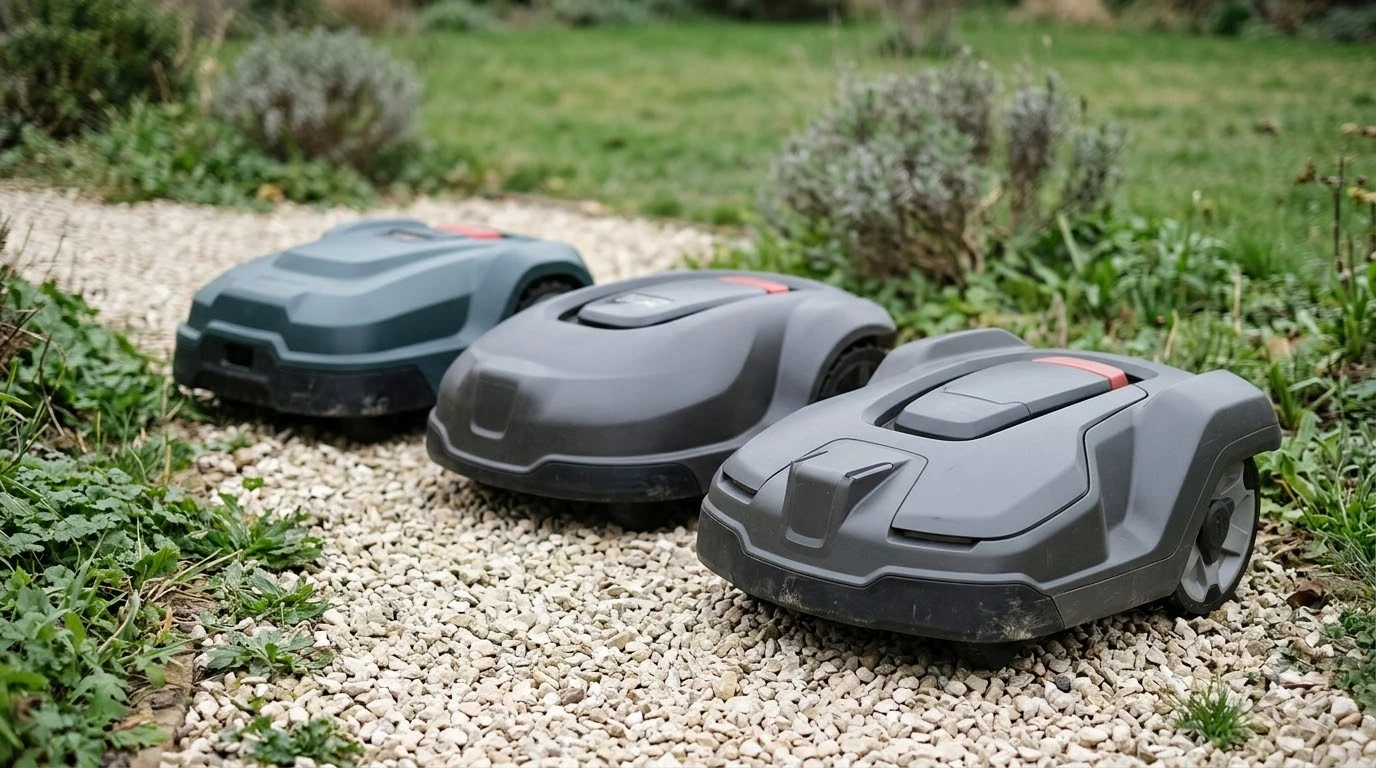

Can a robot mower work in a yard with gravel path crossings? Only in limited cases. Firmly compacted fine gravel can usually be crossed, but loose stones can get caught in the blades, shift under the wheels, and trap the mower. Most yards work best when the boundary wire keeps the mower off loose gravel altogether.
The short answer
- Firm, fine gravel: may be crossed, according to Anker, although Robomow says driving over gravel is not always advisable.
- Loose or rounded gravel: avoid it, because stones can damage the blades and the wheels can dig in.
- Best fix: route the boundary wire so the mower never enters the gravel path.
- Required crossing: use solid pavers, stone slabs, or a narrow bonded-gravel strip, and keep the passage at least 1 meter wide.
Can a robot mower work in a yard with gravel path crossings?
In principle, a robot mower can drive over gravel, but Robomow says it is not always advisable. The main concern is loose stone, not the gravel itself. Robomow also says that raising the cutting height to get over a gravel path is a workaround it does not recommend, so the answer depends on the type of gravel and how the path is laid. For most lawns, the honest answer to “can a robot mower work in a yard with gravel path crossings” is yes, with conditions.
A gravel path is also a bad place for the mower to stop. Robomow warns of the risk of the robot getting stuck in a gravel bed, so a crossing that looks harmless can leave the mower stranded in the middle of the yard.
Why loose gravel damages blades and wheels
Loose gravel is risky for two separate reasons: what it does to the cutting system and what it does to the drive wheels. Robomow describes the blade problem directly, and Anker describes the wheel problem.
- Blades: a loose stone can be caught by the running mower and damage the blades, according to Robomow. Robomow adds that stones can ricochet off the blades and damage the housing.
- Wheels: loose stones can shift beneath the wheels or catch around the cutting deck, according to Anker.
- Deep or rounded pebbles: Anker calls these particularly difficult, because the mower can dig in while turning.
- Edges: if the wire runs too close to a sloping bed edge, a wheel may get caught in the bed and make the robot skew, per Robomow.
Our reading is that the blade risk matters most, because Robomow names a caught stone as the main damage risk. The wheel risk is harder to see, and it shows up as a mower that keeps stopping on the same spot.
Which gravel is safe and which is not
The question “can a robot mower work in a yard with gravel path crossings” depends on the surface first. Firm, compacted fine gravel is the safest type to cross, and loose, deep, or rounded gravel is the type to avoid. Surface type matters more than the mower brand, so check the path before you decide to route the mower across it. A yard suitability check is a good place to start.
| Surface | What the sources say | Our reading |
|---|---|---|
| Firmly compacted fine gravel | Anker says a mower may cross it, but loose stones can still shift beneath the wheels. | Possible crossing if the surface is tight and flat. |
| Loose gravel | Robomow warns of a high risk of stones damaging the blades and of the robot getting stuck. | Keep the mower out. |
| Deep or rounded pebbles | Anker says the mower can dig in while turning. | Avoid. |
| Flat paved path | Robomow calls flat paved areas unproblematic. | Easiest crossing. |
| Bark or wood chips | Robomow says bark leads to faster wear and wood chips are chopped by the blade. | Avoid. |
Gravel edges can be a problem even when the path is firm. Robomow advises leveling stones with the ground surface, so the wheels do not drop off a step into the bed.
How to route the boundary wire around a gravel path
The most reliable option for loose gravel is to keep the mower out of it, and our guide to laying boundary wire around trees and obstacles covers the routing basics. If you are asking can a robot mower work in a yard with gravel path crossings, the wire layout is the first decision.
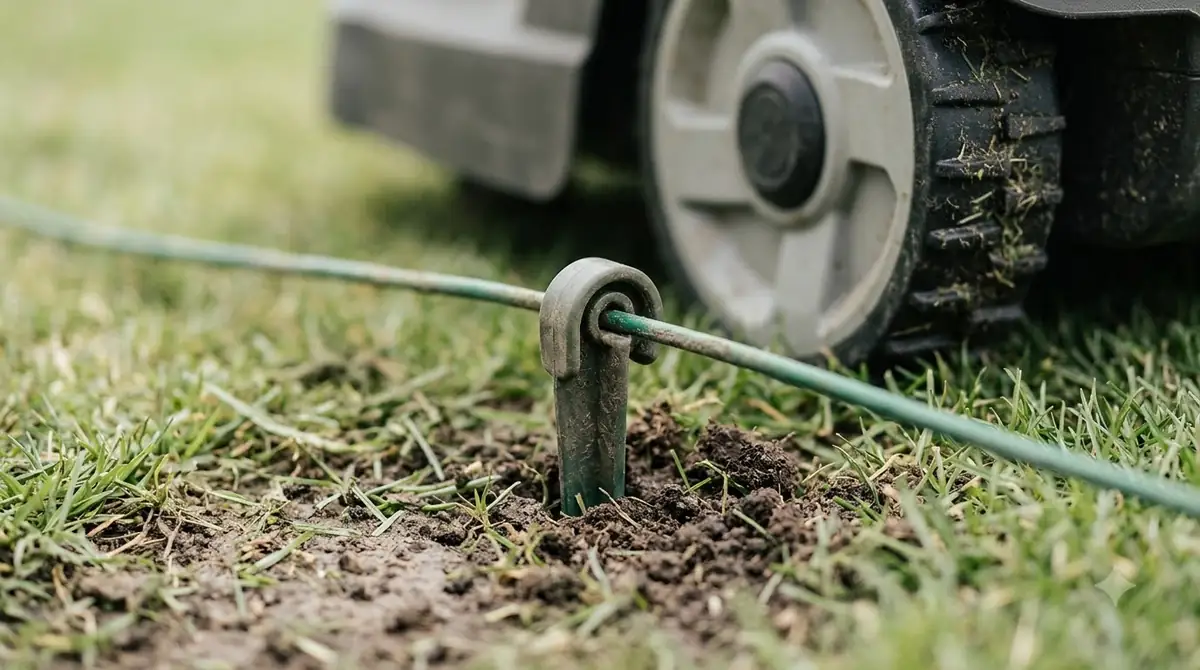
Route the perimeter wire so the mower turns before the path, which leaves the gravel uncut and untouched. If you need a crossing, build it on a firm surface and set the wire to guide the mower straight across.
- Measure the crossing. Keep the passage at least 1 meter wide, as Robomow advises, and check your model’s manual for its own minimum.
- Choose the surface. Use two flush rows of solid pavers or a narrow bonded-gravel strip for the wheels, as Anker suggests.
- Level the edges. Lay stones level with the ground so the mower does not drop into the bed.
- Set the wire. Run the wire so the mower meets the crossing head-on, and keep the wire clear of the gravel itself.
- Test the return. Watch the first few runs to confirm the mower crosses cleanly and finds its dock.
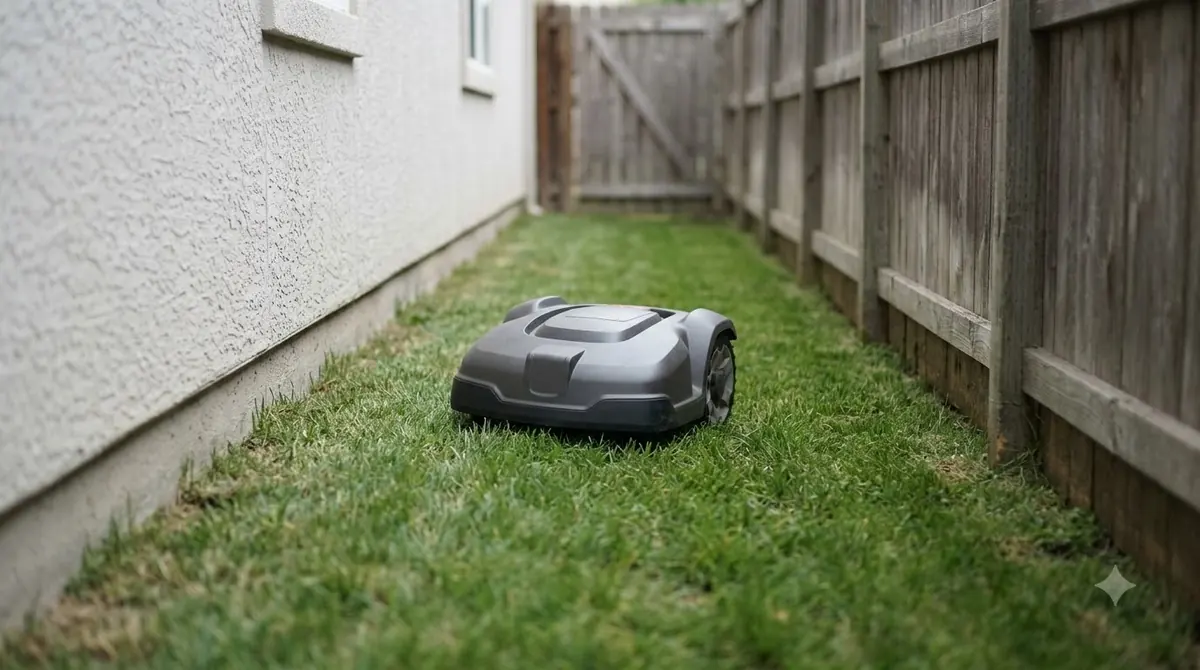
Anker suggests 80 to 100 cm as a useful starting point for many gardens, but it also says your model may need more or less. The passage width in your manual overrides any general figure.
Wire-free mowers and stepping-stone paths
Wire-free mowers do not depend on a wire to find the crossing, but a gravel path still needs a clear plan. Worx says its Vision mower can cross a stepping-stone path if you place one RFID tag on each side, which guides the mower over the path. The mower will not cut the area it crosses, so you need to trim the grass between the stones yourself.
Segway’s Navimow blog reports that its mower can travel on shingle driveways, using a test surface of GAP 20 metal, which means stones up to 20 mm. The same blog says approaching a guide rail at 45 degrees did not work well, because the driving wheels began to slip on the shingle, and it recommends crossing rails at right angles. Those are manufacturer test results, so treat them as a guide, not a guarantee for your path.
What to check before you build a gravel crossing
Before you answer “can a robot mower work in a yard with gravel path crossings” for your own lawn, check the surface, the width, and the model’s own limits. These checks cost little and prevent most of the problems described above.
- Gravel type: fine and firm is the only type worth considering. Loose or rounded stone should be left out.
- Width: confirm the minimum passage in your manual. Robomow says at least 1 meter for narrow passages.
- Edges: the lawn edge and the path should be level, so the wheels do not drop into the bed.
- Return route: the mower must find its charging station from the far side of the crossing, so charging station placement matters.
- Supervised runs: our reading is that the first runs should be watched, with the mower stopped if the wheels slip or the blades catch a stone.
Frequently asked questions
Can a robot mower work in a yard with gravel path crossings if the gravel is firm?
Possibly. Anker says firmly compacted fine gravel is a surface a mower may cross, while Robomow says crossing gravel is not always advisable. Loose or rounded gravel is the case to avoid.
Will a robot mower damage its blades on gravel?
It can, if a loose stone is caught by the spinning blades. Robomow warns of a high risk of this with loose gravel. Firm, compacted fine gravel carries less risk, but the surface still needs to be checked before you rely on it.
Can a robot mower get stuck on a gravel path?
Yes. Robomow warns of the risk of the robot getting stuck in a gravel bed. Deep or rounded pebbles are the hardest, because the mower can dig in while turning, according to Anker.
How wide should a passage be for a robot mower?
Robomow says narrow passages should be at least one meter wide. Anker gives 80 to 100 cm as a useful starting point for many gardens. Your model’s manual sets the real minimum, so use that figure.
Should I raise the cutting height to cross gravel?
No. Robomow says raising the cutting height as a workaround for crossing gravel is not recommended. It is better to route the wire so the mower avoids loose gravel, or to build a firm crossing.
Sources
- Can a robotic lawnmower cross paths? (Robomow): gravel and stone risks, paved and bark surfaces, 1 meter passage width.
- Can a robotic lawnmower get stuck? (Robomow): gravel bed risk, stones and blades, wheel drop at the edge.
- Can Robot Lawn Mower Cross Path? A Practical Setup Guide (Anker): firm versus loose gravel, pavers and bonded-gravel strip, 80 to 100 cm starting width.
- Mower will not cross a stepping-stone path (Worx support): RFID tag guidance and the uncut crossing area.
- Navimow climbs over automatic gate guide rails and transverses shingle driveways (Segway Navimow): shingle surface test at 20 mm stones and angled-crossing slip.
 Up next8 min readBy YardHow Do Robot Mowers Deal With Narrow Paths?Updated Nov 11, 2026
 8 min readBy YardWill a Robot Mower Get Stuck on a Lawn With Gravel Edges?Updated Nov 11, 2026
 8 min readBy YardCan a Robot Mower Work in a Yard With a Detached Garage?Updated Nov 11, 2026
 9 min readBy YardCan a Robot Mower Work in a Yard With a Gate Between Zones?Updated Nov 11, 2026
 9 min readBy YardCan a Robot Mower Work in an L-Shaped Yard?Updated Nov 11, 2026
 8 min readBy YardRobot Mower for Narrow Side Yard Passages: What Widths Work?Updated Nov 11, 2026