
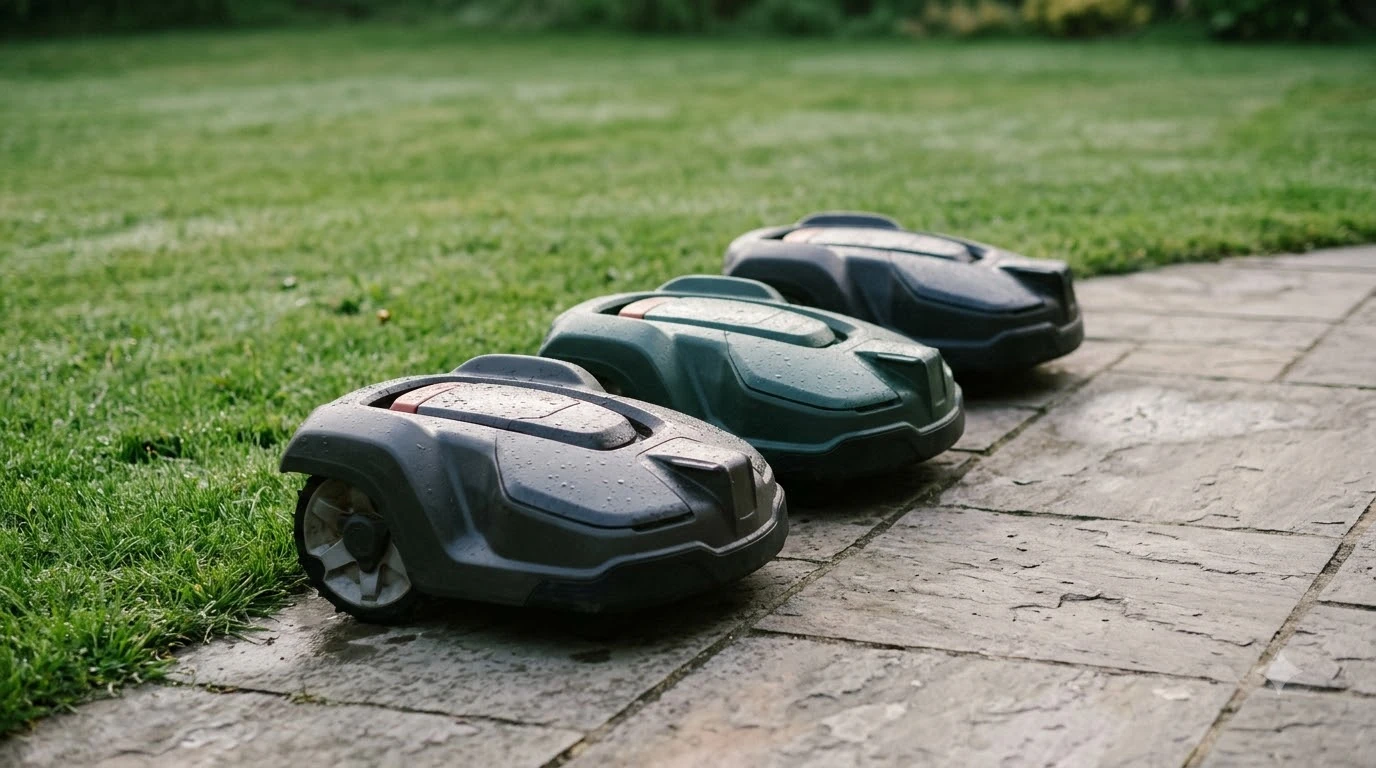

Will a robot mower get stuck on a lawn with gravel edges? Usually not, as long as the boundary wire keeps it on the grass. The bigger risk is loose stone. Robomow says stones can ricochet off the blades, and a gravel bed can trap the robot if it drives onto one.
The short answer
- Keep the wire between grass and gravel. Robomow says gravel areas must be separated with the cable unless a natural barrier exists.
- Loose gravel is the main risk. A loose stone caught by the running blades can damage them, according to Robomow.
- Deep or rounded gravel is the hardest surface. Anker says the mower can dig in while turning on it.
- Check your model’s manual. Wire distances differ by brand and model, so use the figures in your installation guide.
Will a robot mower get stuck on a lawn with gravel edges? Why it happens
A gravel edge causes trouble because loose stones can be thrown toward the blades, and a gravel bed can hold the wheels. A robot mower is built to cut grass, so gravel is not part of its job. Problems start when the boundary wire lets the mower wander onto the gravel, usually where the lawn turns along a border.
Robomow’s support blog says stones can damage the housing and ricochet off the blades. The same article warns that a gravel bed can trap the robot, and it advises against letting the robot drive over stony paths at all.
Our reading is that the risk depends on two things: how loose the gravel is, and whether the wire keeps the mower off it. A firm, fine gravel edge is a smaller problem than a bed of loose, round stones.
How the boundary wire keeps the mower off gravel
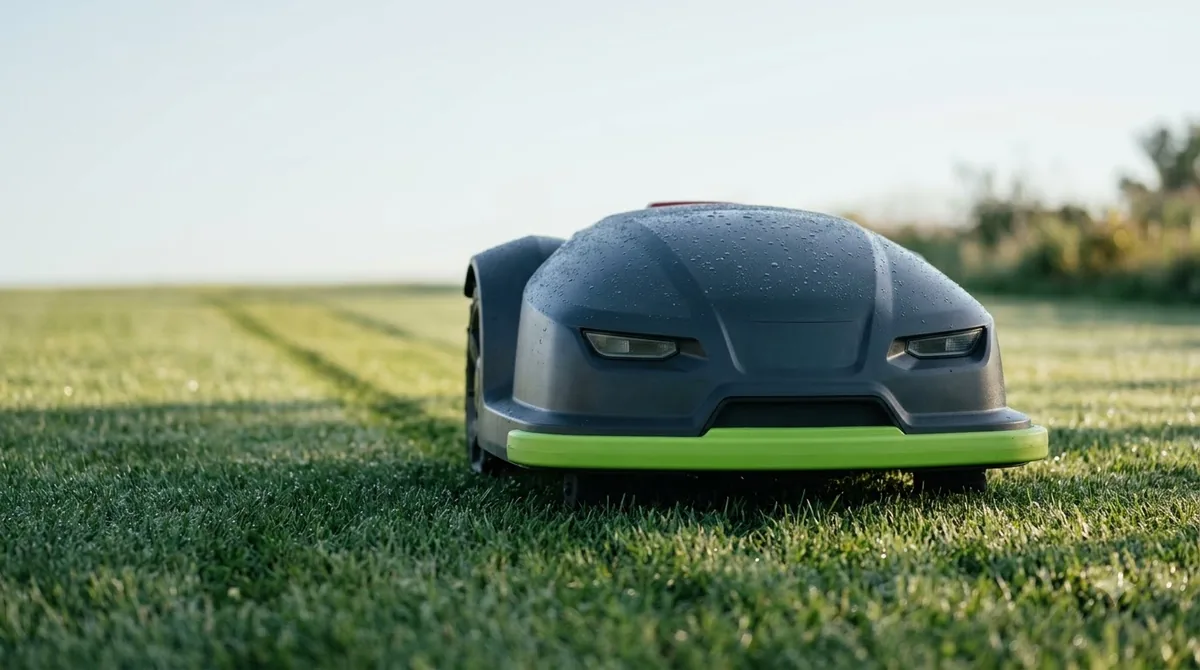
Robomow’s installation guidance says each bed, garden pond or gravel area should be separated with the cable unless a natural barrier stops the mower. If you are new to the wire itself, our explainer on how a boundary wire works covers the basics. Its published distances are the most concrete figures on that page: about 10 cm from beds, hedges, slabs and paths at lawn level, and about 35 cm from walls and tall stones.
| Surface next to the lawn | Robomow wire distance | What it means for gravel |
|---|---|---|
| Flower beds or hedges | Approx. 10 cm | Wire sits just inside the lawn edge |
| Slabs and paths at or below lawn level | Approx. 10 cm | Figure applies when the surface is at or below lawn level |
| Walls and tall stones | Approx. 35 cm | Raised objects need more clearance |
| Gravel area | No fixed distance given | Must be separated with the cable |
Gravel has no fixed distance on Robomow’s page. Our reading is that the practical rule is to fence the whole gravel area with wire, rather than trying to leave a narrow gap that the mower might still cross. Check the installation instructions for your model, because lawn-edge spacing varies by brand.
Robomow also notes that paved paths whose upper edge is level with the lawn generally do not pose a problem, because the mower can simply drive over them. Loose gravel is different for the reasons above. The same guide says the mower receives the wire signal at a laying depth of up to 7 cm, so the wire can be buried under stones or patio slabs. Our page on burying or pegging the boundary wire compares the two methods.
What loose gravel does to the mower
Loose gravel can be thrown into the blades, shift under the wheels, or catch around the cutting deck. Anker describes loose stones shifting beneath the wheels or catching around the deck, which is why a loose edge is harder than a firm one.
Robomow adds that a stone caught in a running mower can damage the blades, and that the robot may get stuck in gravel. Its guide on stuck mowers also says that when an obstacle moves the robot out of position, the blades usually stop and a manual restart is needed. Our reading is that this makes the first few runs over a gravel edge the time to watch closely.
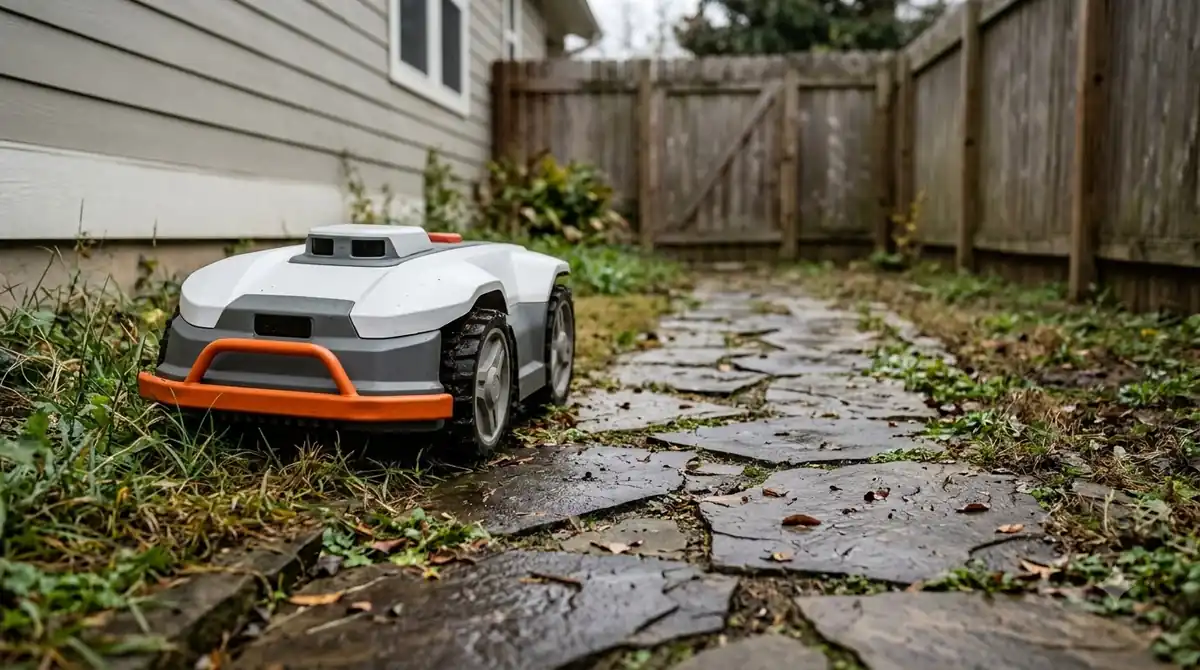
- Look for nicks or chips on the blades after the first few runs.
- Check for wheel ruts or stones pressed into the border.
- Note any spot where the mower stops at the same edge again and again, and check whether standing water or soft ground beside the gravel is the cause, since Anker says wet paving can reduce wheel grip and soft ground beside a path may rut.
- Rake or pick out loose stones before the mower runs again.
These are our reading of what to check, not test results. They are a way to spot a wire or surface problem early, before it becomes a repeated stop.
When a gravel edge is still a problem with the wire
Deep or rounded gravel is the hardest surface for a robot mower, even when the wire is placed carefully. Anker says that deep or rounded gravel is particularly difficult, because the mower can dig in while turning. A thin strip of firm gravel is a different case from a wide bed of loose stones.
Robomow advises against letting the robot drive over stony paths, and it notes that gravel beds can trap the robot. So the wire layout matters most where the gravel is loose or deep, and where the mower is most likely to turn near the border.
Anker adds that if an existing path is loose, a short run of flush solid pavers or a narrow bonded-gravel strip for the wheels is more reliable, and that displaced stones should be kept away from the lawn edge and the blades. Robomow mentions raising the cutting height as far as it goes as a temporary way to keep the blades away from the ground, but says it does not recommend it.
This advice applies to lawn edges next to gravel. A gravel path that crosses the lawn raises a separate question about how the wire routes around it, and the answer depends on the path width and surface. Our page on gravel path crossings in a robot mower yard takes that case on its own.
What to check before you install the wire
To settle will a robot mower get stuck on a lawn with gravel edges in your own yard, check how loose the gravel is, how wide the gravel area is, and whether the wire can enclose it. Those three checks tell you more than any single distance figure.
- Classify the gravel. Firm, fine gravel is the easiest case. Loose, deep or rounded stones are the hardest.
- Fence the gravel area. Run the wire around it unless a natural barrier stops the mower.
- Clear the border. Remove loose stones, sticks and loose wires before the first mow. A firm border such as landscape edging for robot mower borders helps keep stones on the gravel side.
- Use your model’s distances. Follow the installation guide for your model, not a figure from another brand.
Frequently asked questions
Will a robot mower cut right up to a gravel edge?
Usually it stops at the boundary wire, so the grass right next to a gravel border may need a hand trimmer. Robomow says gravel areas should be separated with the cable, so the mower is kept off the gravel itself.
Will a robot mower get stuck on a lawn with gravel edges if the wire is set correctly?
It is much less likely. Robomow says gravel areas should be separated with the cable, which keeps the mower on the grass. The remaining risk is loose or deep stone near the border, which Anker describes as the harder surface because the mower can dig in while turning.
Is a firm gravel edge safe for a robot mower?
Anker says firmly compacted fine gravel is a surface a mower may cross. Loose or rounded stones are the riskier kind, because they can shift under the wheels or catch around the deck.
Does a gravel border need boundary wire?
Robomow says gravel areas must be separated with the cable unless a natural barrier exists. Its guide gives about 35 cm for walls and tall stones, but no fixed distance for gravel.
What should I do if the mower gets stuck on gravel?
Robomow’s support blog says that when the robot stops and has been moved out of position, it must be restarted by hand. After any stop, check the gravel edge for loose stones and look at the wire position before the next run.
Sources
- Laying the lawn boundary wire (Robomow): wire distances to beds, slabs, walls and gravel areas.
- Can a robotic lawnmower get stuck (Robomow): stones ricochet off blades, gravel beds can trap the robot, manual restart.
- Can a robotic lawnmower cross paths (Robomow): loose gravel risk to blades and the robot getting stuck in gravel.
- Robot lawn mower cross path (Anker): firm versus loose gravel, deep or rounded gravel, mower digging in while turning.
 Up next9 min readBy YardWill a Robot Mower Get Stuck on a Lawn with Mulch Beds?Updated Nov 11, 2026
 9 min readBy YardWill a Robot Mower Get Stuck on a Soggy Lawn?Updated Nov 11, 2026
 8 min readBy YardWill a Robot Mower Get Stuck on a Newly Seeded Lawn?Updated Nov 11, 2026
 7 min readBy YardWill a Robot Mower Get Stuck on a Lawn with Mole Hills?Updated Nov 11, 2026
 8 min readBy YardWill a Robot Mower Get Stuck on a Newly Sodded Lawn?Updated Nov 11, 2026
 9 min readBy YardWill a Robot Mower Get Stuck on a Lawn With Holes and Dips?Updated Nov 11, 2026