
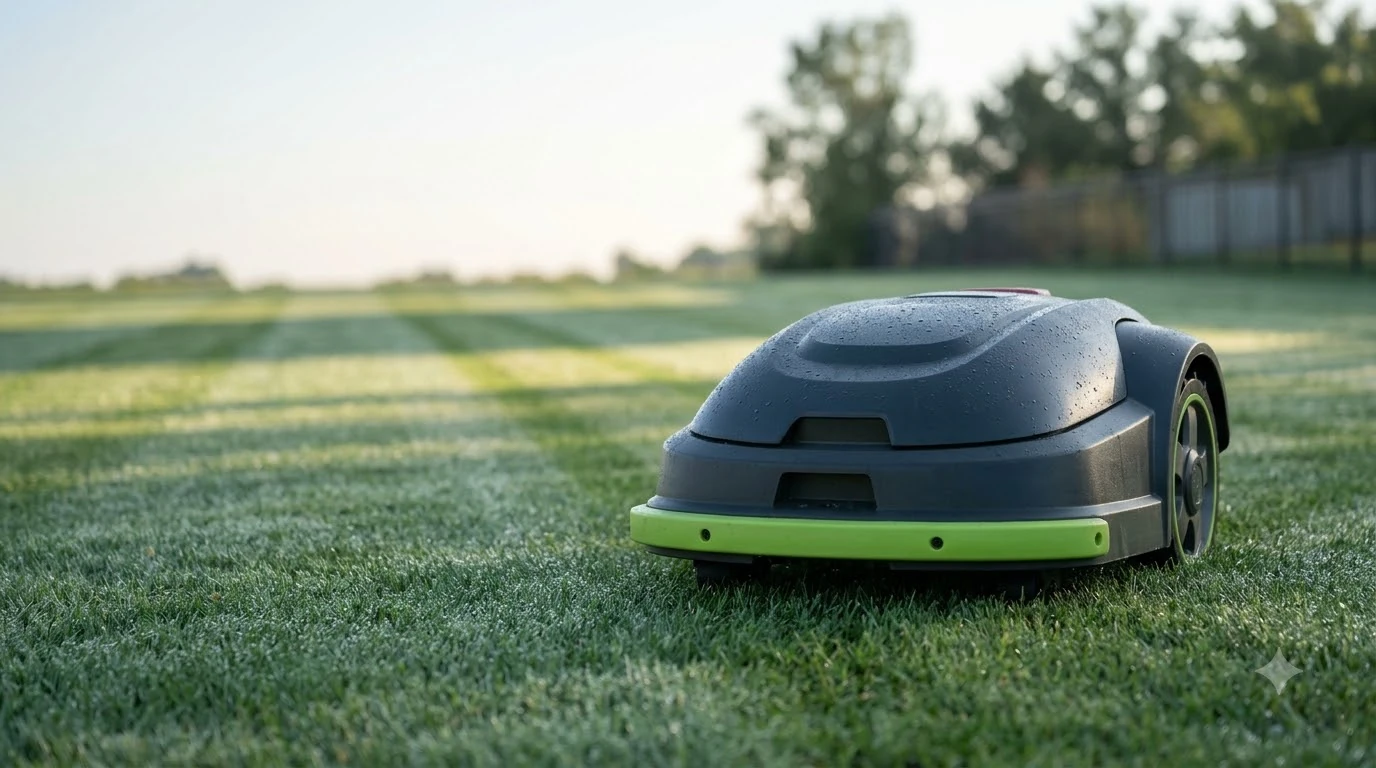

Does a robot mower cut clover flowers? Yes, whenever they sit inside its cutting height, and a mower that runs on a regular schedule will cut them often. White clover is a favorite pollinator plant for bees, so the flowers matter if you want a lawn that supports them. University of Maine Extension notes that keeping the lawn low may interfere with the flowering that attracts bees, so the cutting height and the mowing schedule are the two settings that decide how many blooms survive.
The short answer
- Flowers are cut when the blade height reaches them. A robot mower does not skip blooms unless you set it to.
- Height matters most: University of Maine Extension gives a 4 to 8 inch maximum as a reliable expectation for clover lawns.
- Low cutting may interfere with flowering, according to the same Maine guidance, and University of Maryland Extension describes clover as tolerant of low mowing.
- Schedule matters too: a robot mower that runs daily touches the blooms more often than a weekly mower does.
Why clover flowers get cut at all
A robot mower does not look for flowers, so does a robot mower cut clover flowers that stand low? It does, because the mower only checks its height setting. It cuts whatever grass and clover stand inside its set height, which means blooms are removed along with the leaves. The general case for mowing clover is covered in clover lawn robot mowing basics, which this page builds on for flowering. Clover is one of several lawn plants that grow low enough to evade the blade, and weed-heavy lawn mowing with a robot covers the rest.
Clover also grows where mowers cut low. University of Maryland Extension describes white clover as tolerant of low mowing, and LSU AgCenter notes that clover forms low, dense patches that are hard to control through low mowing alone. A lawn that is cut short therefore keeps its clover and its flowers, just at a lower level.
Does a robot mower cut clover flowers at each height?
Cutting height is the setting that decides how much clover flowers. The University of Maine guidance gives a 4 to 8 inch maximum as a reliable expectation for clover lawns, and it says that keeping the lawn at the lower end of that range makes it look neater, but may interfere with the flowering that attracts bees. Height range matters for flowering weeds, and the mower shortlist for mixed weedy lawns lists models by cutting-height range.
| Setting | What it does to clover |
|---|---|
| Near 4 inches | The lower end of the Maine range; the lawn looks neater, but Maine says this may interfere with flowering |
| Near 6 inches | The middle of the range; our reading is that it balances a tidy look with some blooms left standing |
| Near 8 inches | The top of the reliable range; more flower stalks are likely to stay above the blade |
The table is a reading of the Maine range, not a measured result. The sources here do not give bloom counts at each height, so treat the middle and top rows as a guide. Our reading is that a robot mower should be set high enough that the flower stalks stand above the blade for most of the week.
Does the robot mower’s schedule change the bloom?
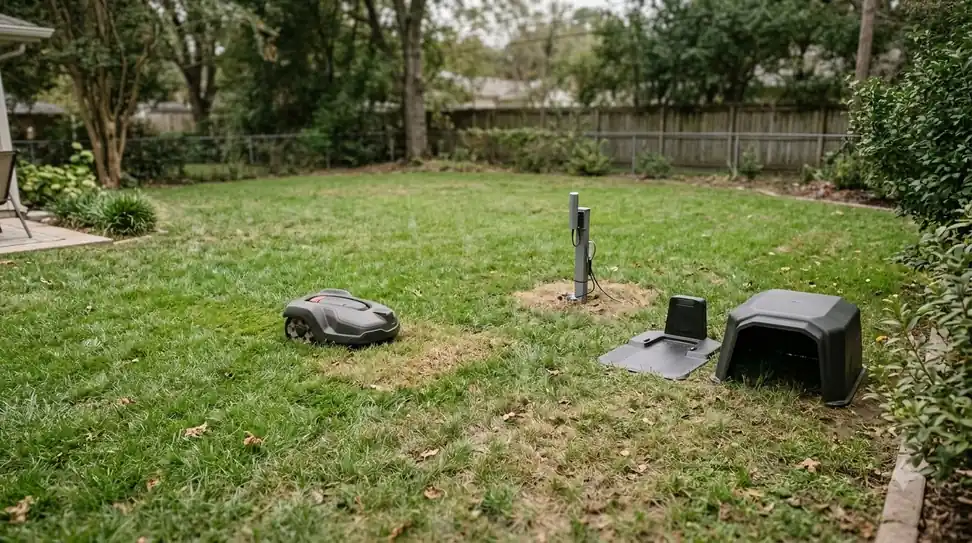
Yes, because a robot mower usually runs more often than a push mower. A mower that cuts daily can remove flowers before they open, and it can hit the same patches every time it passes. Maine’s guidance points to flowering as the thing a low cut interferes with, so frequency matters as much as height. When growth stops, the schedule should change, as dormant season mowing decisions explains.
Our reading is that the schedule should match the bloom. Keep the mower on a shorter schedule while the grass is growing fast, then reduce the number of runs during the flowering period. The mower only needs to hold off during the busiest weeks.
Bees, clover and the robot mower
Clover that flowers attracts bees, and bees on a lawn are a practical concern as well as a benefit. Maine Extension warns that bees on a clover lawn can be a walking hazard for bare feet and sandals, which is a reason to keep the flowering area clear of foot traffic. A robot mower that runs during the day may also pass bees working the flowers, so timing runs for the early morning or evening is a simple way to reduce contact. Pollinator-friendly areas are often left uncut, and meadow-style wildflower patch mowing shows how to mark them as stay-out zones.
Setting up a robot mower on a flowering clover lawn
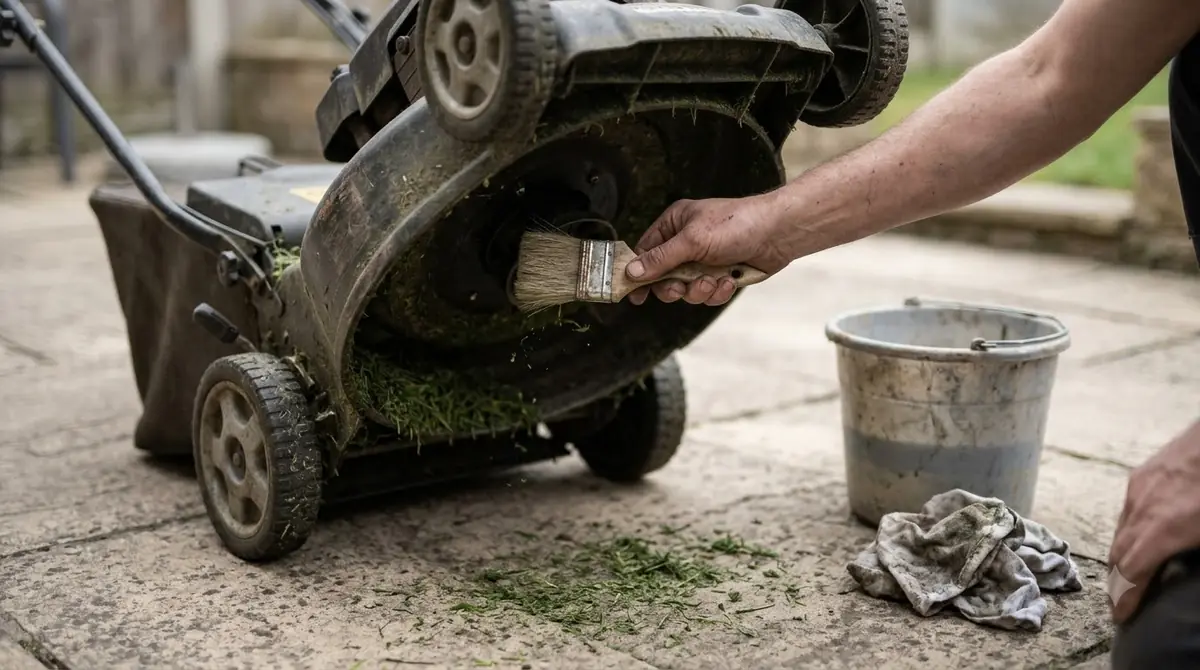
The setup steps are short. Decide first whether you want the flowers, because that choice sets the height and schedule. The steps below turn the guidance above into a working plan. Another low-growing plant that mixes with turf is covered in low ground cover that competes with turf. A lawn split into patches needs travel between areas, and robot mowing across separate lawn patches covers how that works.
- Decide whether you want blooms. If bees matter to you, plan for a higher setting and fewer runs during flowering.
- Set the height within the mower’s range. Choose a setting near the upper part of the 4 to 8 inch range that Maine describes, and check that the mower’s top setting reaches it.
- Limit runs at peak bloom. Use the mower’s schedule to skip the busiest weeks, or move runs to the morning or evening.
- Keep the blades sharp. A dull blade tears flower stalks and leaves ragged cuts, which looks worse and can slow recovery.
Heads up
Clover patches can spread into bare or thin areas. If the mower cuts low at the edges, the flowers there may disappear first. Check the edges after the first few weeks of running.
Related reads: Clover often fills thin areas first, which choosing a mower for patchy bare spots discusses from the equipment side.
Frequently asked questions
Will a robot mower cut clover flowers?
Yes, if the flowers are inside the cutting height. A robot mower cuts whatever stands within its set height, so blooms are removed along with the leaves unless the height keeps them above the blade.
What cutting height keeps clover flowers?
University of Maine Extension gives 4 to 8 inches as a reliable maximum for clover lawns. The guidance notes that the lower end looks neater but may interfere with the flowering that attracts bees, so the upper part of the range keeps more blooms.
Does mowing low remove white clover?
Not reliably. University of Maryland Extension describes white clover as tolerant of low mowing, and LSU AgCenter notes that clover forms low, dense patches that low mowing does not easily control.
Are bees a problem on a robot-mowed clover lawn?
They can be. Maine Extension says bees on a clover lawn can pose a walking hazard for bare feet or sandals, so keep the flowering area clear of barefoot traffic and consider running the mower in the morning or evening.
Sources
- Is white clover suitable for lawns? (University of Maine Cooperative Extension, 2023): pollinator value, 4 to 8 inch height range, and the link between low cutting and flowering.
- White Clover: Identification and Management (University of Maryland Extension): white clover tolerance of low mowing.
- White clover (LSU AgCenter): low dense clover patches that low mowing does not easily control.
- White Clover (NC State Extension): clover found under close mowing conditions.
 Up next7 min readBy YardBest Robot Mower for Mixed Weedy Lawn: 2 Inch Height TipsUpdated Nov 17, 2026
 8 min readBy YardRobot Mower for Clover Lawn: What the Extension Sources SayUpdated Nov 11, 2026
 6 min readBy YardBest Robot Mower for Cool Season Grass: Match Your Cut HeightUpdated Nov 14, 2026
 9 min readBy YardCan a Robot Mower Cut Warm Season Grass? Heights and LimitsUpdated Nov 11, 2026
 8 min readBy YardCan a Robot Mower Cut Centipede Grass? Heights and LimitsUpdated Nov 11, 2026
 7 min readBy YardCan a Robot Mower Cut Fine Fescue? Heights and What to CheckUpdated Nov 11, 2026