
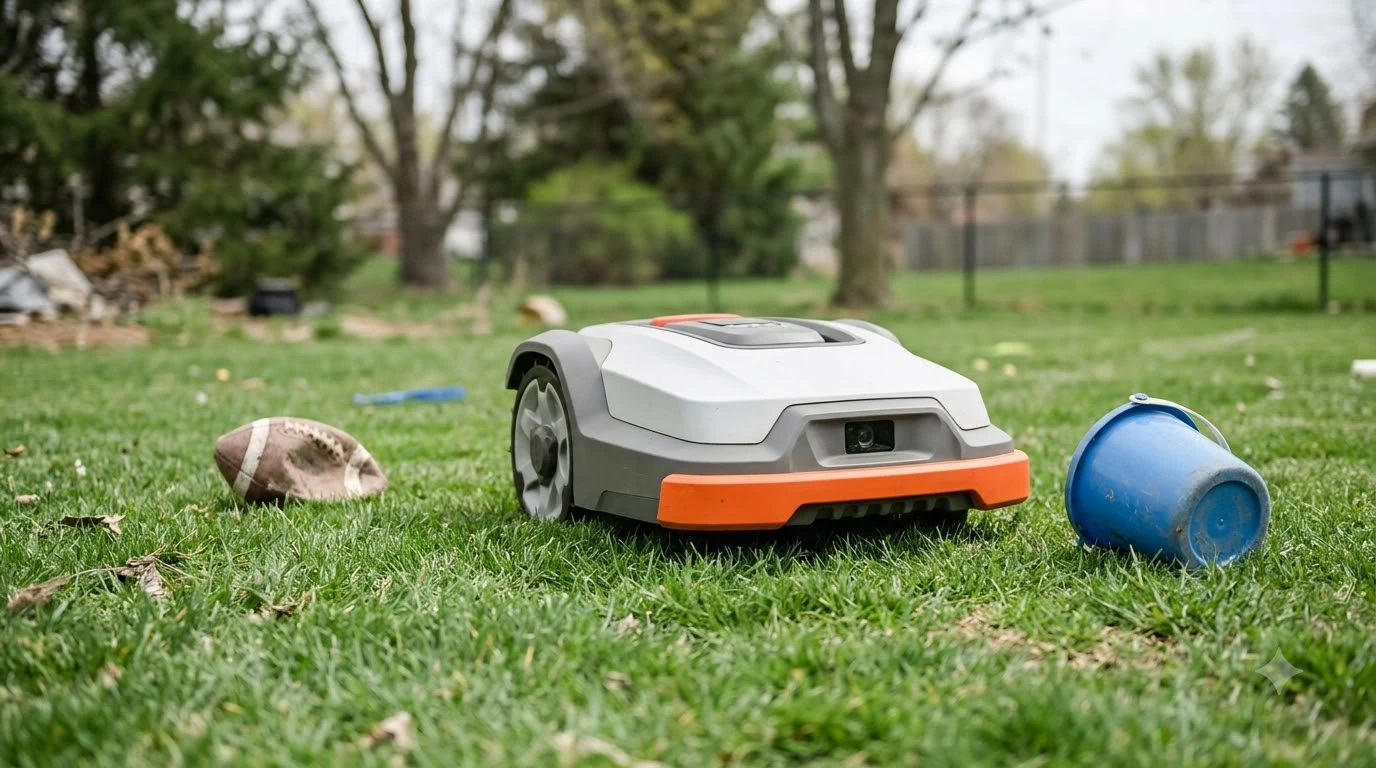

The best robot mower for mixed weedy lawn is not a single model. It is the mower whose height range, blade care and mowing schedule match the weeds you actually have. A University of Florida publication reports that autonomous mowers reduce overall weed coverage compared with rotary mowers, but weeds still tell you something about the lawn. Penn State Extension treats common weeds as indicators of mowing height, soil compaction, acidity and fertility, so the choice of mower should start with what is growing in your grass.
The short answer
- Weed coverage: UF/IFAS cites research showing autonomous mowers reduce overall weed coverage compared with rotary mowers.
- Clover is a height signal: Penn State says white clover indicates that the mowing height is lower than desired, and recommends at least 2 inches.
- Soil signals: dandelion, chickweed and plantain point to compaction; crabgrass and prostrate knotweed point to acid soil.
- Check the mower’s range: UF/IFAS notes most autonomous mowers were designed for cool-season grass typically cut below 2.5 inches.
What a weedy lawn tells you before you buy
A mixed lawn is a signal, not just a problem. Penn State Extension explains that certain weeds show what is happening in the soil and in the cutting habits. White clover, for example, indicates that the lawn is being mowed lower than the grass prefers. Dandelion, chickweed and plantain tend to appear where the soil is compacted, while crabgrass and prostrate knotweed point to acid soil. Weeds change both the cutting pattern and the blade wear, which robot mowers on weedy lawns covers before you compare specific models. Clover is one of the most common lawn weeds, and clover bloom and robot mower cutting describes how the schedule affects flowering.
That matters for a robot mower because a mower cannot fix compaction or acidity. It can change how often and how high the grass is cut, which affects the weeds that compete with it. Our reading is that the best robot mower for mixed weedy lawn is the one that lets you keep the grass at a healthy height and run on a schedule that does not cut too low.
How much do robot mowers reduce weeds?
UF/IFAS reports that autonomous mowers reduce overall weed coverage compared with rotary mowers, citing research by Grossi and colleagues from 2016. The same publication notes that clover can increase under frequent mowing, and that the effect may be positive in a mixed-species lawn. The result is a mixed picture: fewer weeds overall, but not a guarantee that every weed disappears. If part of the lawn is allowed to flower, leaving a wildflower patch uncut describes how to keep the mower out of it.
The UF/IFAS publication is a useful starting point, and it describes the mowers’ design rather than a single winner. Use it to judge the category, then check the details of the model you are considering.
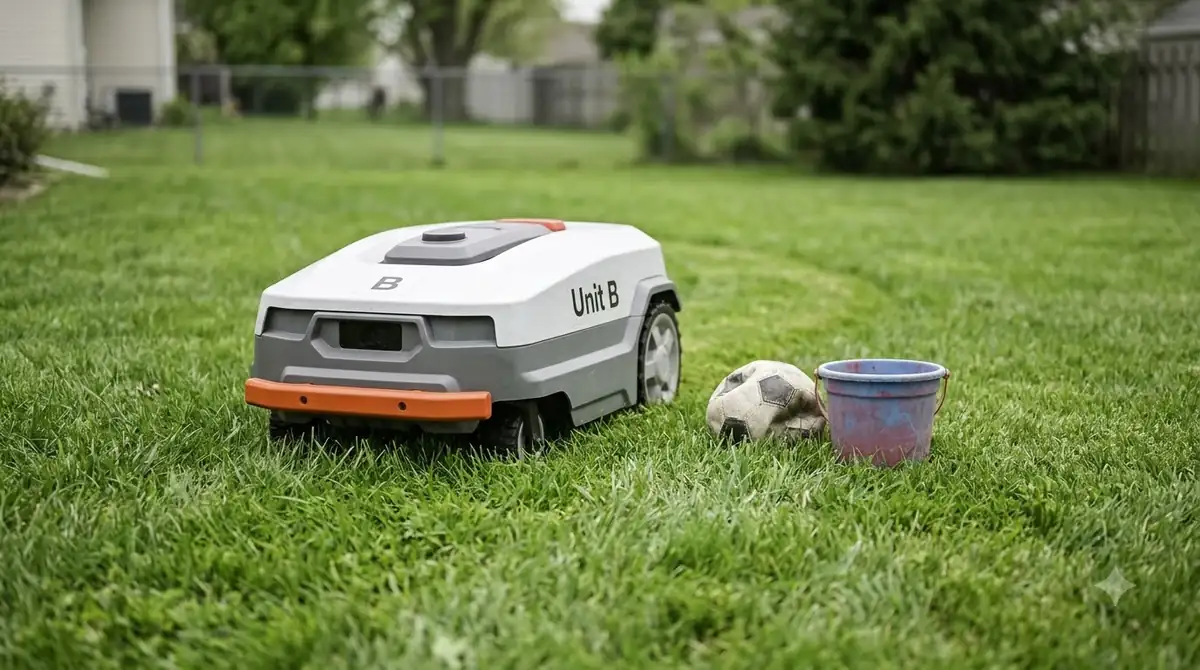
Best robot mower for mixed weedy lawn: the height check
Height is the first thing to check. UF/IFAS says most autonomous mowers were designed for cool-season grass that is typically cut below 2.5 inches, and a weedy lawn may hold a mix of grass species with different height needs. A mower whose top setting stops at 2.5 inches may not suit a lawn you plan to keep taller. Weeds often outlast turf in cold weather, and running a robot mower on dormant grass covers when to pause the schedule.
Penn State’s guidance on white clover gives a useful minimum. If clover is spreading, the cut may be lower than the grass wants, so a mower that can be set to at least 2 inches gives you room to correct it. For some species, 3 inches is better, as the same Penn State page notes.
Heads up
Do not raise the mower only to hide weeds. Weeds such as clover signal a height or soil problem, so a taller setting helps only if the rest of the lawn care matches it.

Blades, edges and maintenance on a weedy lawn
Weedy lawns often have tall edges, which robot mowers leave behind. UF/IFAS lists raised beds and borders that leave tall edges, along with complex landscapes and irrigation heads, as limits to plan for. Map those obstacles before you choose a mower, because a model that handles a simple lawn may struggle with a yard full of beds. Shady, damp areas often grow moss rather than turf, and moss patches in a robot-mowed lawn explains how the mower copes.
Blades matter too. UF/IFAS describes robot mower blades as small and notes that sharpness declines with use, recommending replacement every six to eight weeks during the growing season. A dull blade tears grass and leaves ragged edges, which can make weeds look worse than they are.
Steps for choosing and setting up the mower
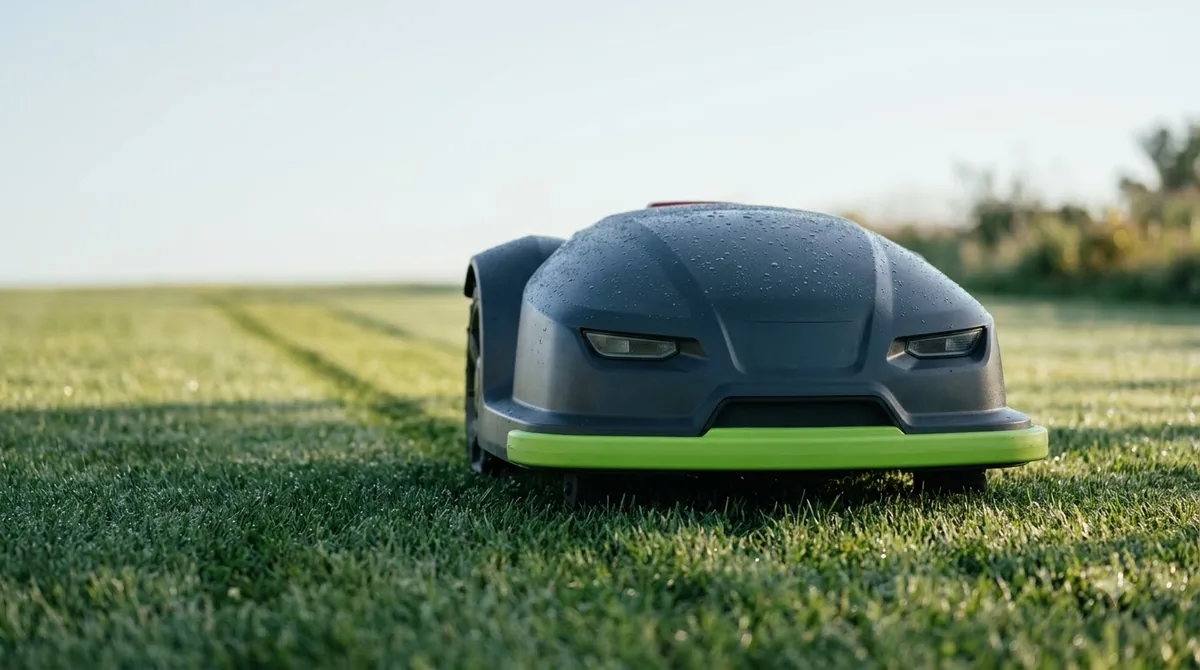
Use the lawn’s weeds to narrow the choice first, then check the mower against what the lawn needs. The steps below follow the extension guidance above. Patchy turf calls for a different set of features, which mower picks for lawns with bare spots examines.
- List the weeds. Note whether clover, dandelion, crabgrass or other weeds dominate. Each one points to a different cause.
- Check the height range. Look for a maximum cutting height that stays above the low end of your grass and reaches at least 2 inches for clover.
- Map the edges. Plan a manual trim for tall edges and beds the mower cannot reach.
- Replace blades on schedule. Follow the six to eight week interval UF/IFAS gives in the growing season.
- Test the soil if weeds persist. Penn State’s indicator guidance links crabgrass and knotweed to acid soil and dandelion to compaction, which a mower cannot correct.
Related reads: Fungal growth often goes with weedy, damp turf, and mushrooms growing in a mowed lawn explains what the mower does with caps.
Frequently asked questions
Is the best robot mower for mixed weedy lawn the one with the lowest cut?
Not necessarily. Penn State says white clover signals a mowing height lower than desired, and recommends at least 2 inches, so a very low cut can make a weedy lawn worse.
Do robot mowers reduce weeds?
UF/IFAS cites research showing that autonomous mowers reduce overall weed coverage compared with rotary mowers. The same publication notes that clover can increase under frequent mowing, so the result depends on the lawn.
What do weeds in my lawn tell me about the soil?
Penn State Extension links dandelion, chickweed and plantain to compaction, and crabgrass and prostrate knotweed to acid soil. Crabgrass can also point to low fertility, while dandelion can point to soil that is too fertile.
How often should robot mower blades be replaced on a weedy lawn?
UF/IFAS recommends replacing robot mower blades every six to eight weeks during the growing season. Sharp blades give cleaner cuts, which helps the grass compete with weeds.
Sources
- Autonomous or Robotic Mower Use on Florida Lawns (ENH1402) (UF/IFAS Extension): weed coverage research, blade interval, cool-season height limits, and lawn limits.
- Indicator weeds provide insight into growing a better lawn (Penn State Extension): clover as a height signal and soil indicators for weeds.
 Up next7 min readBy YardCan a Robot Mower Cut Mixed Weedy Lawn? What to KnowUpdated Nov 11, 2026
 7 min readBy YardDoes a Robot Mower Cut Clover Flowers? Simple Height TipsUpdated Nov 14, 2026
 8 min readBy YardCan a Robot Mower Work in a Yard With a 2 Foot Wide Passage?Updated Nov 10, 2026
 7 min readBy YardDo Robot Mowers Tip Over on Hills?Updated Nov 11, 2026
 6 min readBy YardBest Robot Mower for Fine Fescue: 1.5 Inch Low Cut GuideUpdated Nov 17, 2026
 6 min readBy YardBest Robot Mower for Thick Southern Grass: 3 to 4 Inch CheckUpdated Nov 17, 2026