
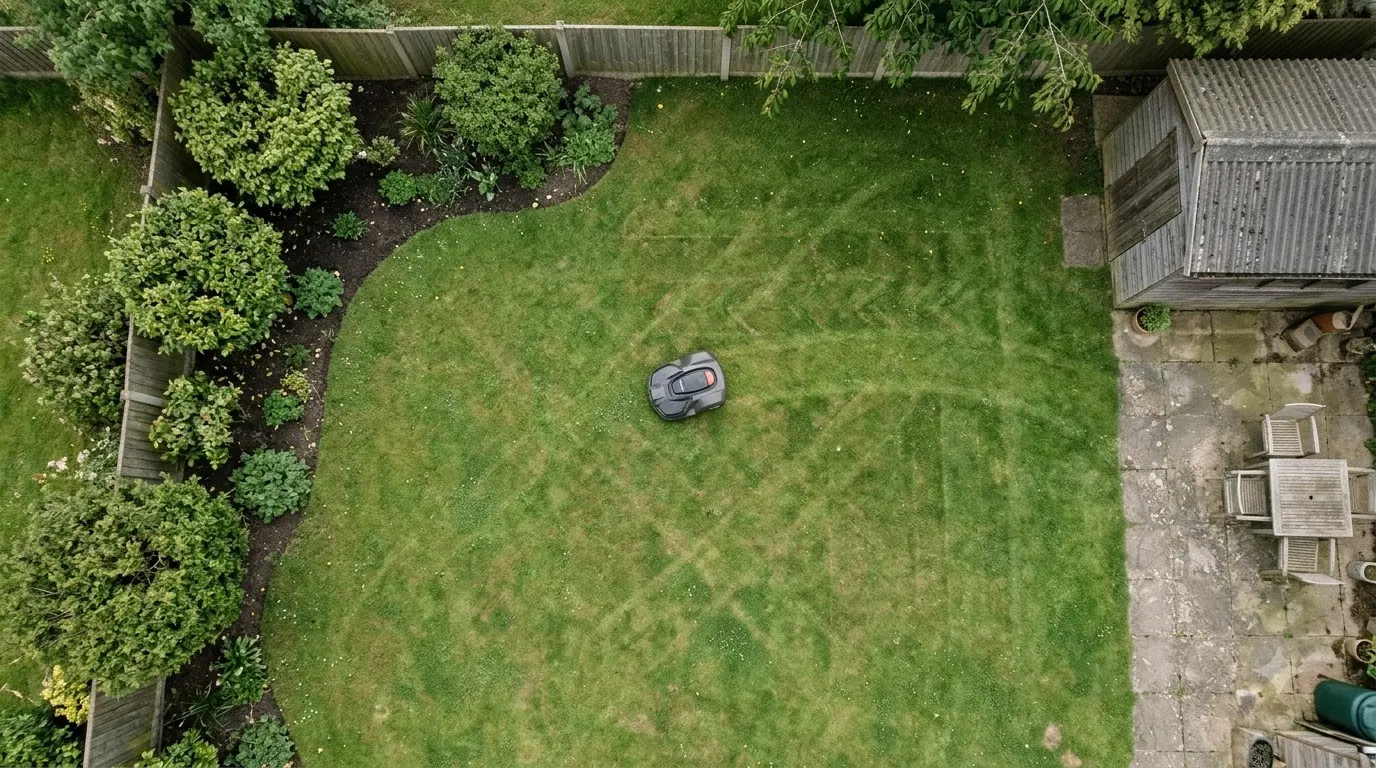

Robot mower for a lawn with a hammock and posts works when each post is wired as a small island and the ground under the hammock is kept out of the schedule. The posts are fixed, hard obstacles, and a hammock’s ground area often has bare spots and loose grass that a mower should not work through. A few islands and one stay-out zone cover most setups.
The short answer
- Island each post: a loop of boundary wire around every post keeps the mower from bumping the base.
- Keep the hammock ground out: a stay-out zone under the hammock stops the mower from working the soft, uneven patch.
- Watch the footings: posts set in concrete sit higher than the grass, so the mower must turn before it reaches them.
- Test the turns: run a supervised cycle around the posts before leaving the mower on a schedule.
Robot mower for a lawn with a hammock and posts: why the posts need islands
A hammock usually hangs between two posts, and each post is a fixed object with a footing that can sit a few inches above the grass. A robot mower can strike the base or stop short on a tight turn if the wire leaves no room. An island around each post gives the mower a clear turn before it reaches the object. Hammock posts are one of several fixed items in a family yard, and yards with hammocks and kids toys covers the wider plan.
Our reading is that wiring each post separately is more reliable than trying to loop both posts and the hammock ground in one large island. Separate islands keep the wire simple and make a single post easy to check or move later.
The hammock ground is a different problem
The ground under a hammock is not an obstacle. It is a patch of grass that gets walked on, sat on, and sometimes worn bare. A mower running over soft, uneven soil can leave ruts, and it can keep grinding a weak patch that needs rest. The cleaner choice is a stay-out zone over that area, so the mower works the rest of the lawn and leaves the patch alone. Family lawns with play areas have more to check, as play lawn mower picks for suburban homes explains in its checklist.
Husqvarna’s documentation on creating stay-out zones explains how to draw these zones in the app. Zones can go almost anywhere on the map except over the charging station or the guide wire, which makes them a good fit for a hammock patch that you may want to switch on and off.
Setting up the post islands
The island method for a post is the same as for any fixed object. Husqvarna’s guide to creating islands in a boundary wire lays out the loop: the wire runs from the boundary to the obstacle, goes around it, and returns along the same path, with the two return wires placed close together so they cancel the signal. Posts and play frames share the same island technique, which swing set wood chip borders describes for robot-mowed lawns. Post islands make the mowing area less regular, and robot mowers for irregular shaped lawns covers how shape affects the choice.
- Mark each post. Put a stake or spray paint around each post base with a small margin for the mower’s turn.
- Run the first loop. Lay the wire from the boundary to the first post, around it, and back, without crossing.
- Repeat for the second post. Use a separate loop for the other post so each island stays small and easy to check.
- Test the turns. Run a supervised cycle and watch the mower approach each post from several directions.
Keeping the hammock area healthy
A hammock area takes more foot traffic than the rest of the lawn, so the grass under it is often thin. Moving the hammock a few feet each season spreads the wear. Reseed bare patches in the cooler months, and keep the mower out of that area until the grass has recovered. Wooden frames and posts raise similar questions, which playset lawn mower picks addresses for several models.
If the posts sit in soft ground, check the footings after heavy rain. A post that leans can move the wire, and a shifted wire near the post can leave a gap the mower can drive through. Re-check the island after storms.
Mowing around posts and hammock hardware
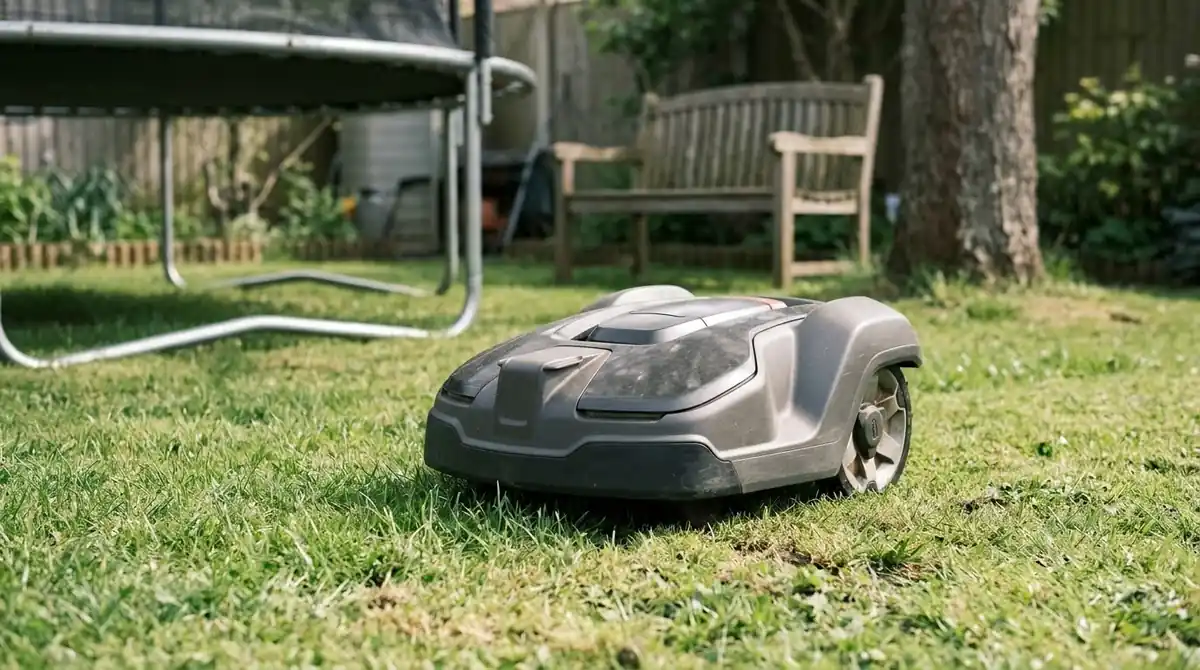
Hammock hardware can catch a mower. Straps, chains, and hooks that hang low can snag the body, and a loose chain on the ground can be pulled into the blades. Take the hammock down or lift the straps when the mower is scheduled, or keep the hardware well above the grass. Another set of heavy posts is covered in soccer goal placement on the lawn, including wire clearances.
Edges around the posts are also where the mower trims the least well. Plan a little hand trimming around each post base, since the mower stays outside the island and leaves a narrow strip of uncut grass that the wire margin creates.
Watch the seasons
In spring and fall the ground softens, and that is when a post’s footing and a hammock patch need the most care. A mower running on soft soil can leave tracks that the wire does not show. Keep the stay-out zone active in wet weeks, and check the islands once a month during the growing season. Fixed poles on the lawn need their own clearance, as basketball hoop pole clearance explains.
Related reads: Another feature that needs a stay-out zone is a sandbox, which sandbox fencing for a mowed lawn describes.
Frequently asked questions
Can a robot mower run around hammock posts?
Yes, when each post is wired as a small island. The mower turns around the loop before reaching the post, so the base is not struck during a run.
Should the ground under the hammock be wired or zoned?
A stay-out zone is usually the better choice. The hammock ground is not an obstacle, and a zone lets you keep the mower off the worn patch until the grass recovers.
Why do the two island wires need to sit together?
The two return wires cancel each other’s signal, so the mower can cross them. If they cross or spread apart, the mower may not recognize the island and can stop.
What about hammock straps and chains on the ground?
Lift or remove loose straps and chains before a scheduled run. Low hardware can catch the mower body or get pulled into the blades.
Sources
- How to create islands in a boundary wire installation (Husqvarna): the loop sequence and the rule that the wires must not cross.
- Creating stay-out zones with AIM technology (Husqvarna): how zones are drawn and where they can go.
 Up next6 min readBy YardRobot Mower for a Lawn With a Mailbox PostUpdated Nov 13, 2026
 8 min readBy YardHow Does a Robot Mower Handle a Lawn with Lamp Posts?Updated Nov 12, 2026
 7 min readBy YardRobot Mower for a Lawn With a Rain Barrel: Placement and Hose SetupUpdated Nov 14, 2026
 7 min readBy YardRobot Mower for a Lawn With a Koi Pond: Edge Margin GuideUpdated Nov 14, 2026
 7 min readBy YardRobot Mower for a Lawn With a Dog Run: Safe SetupUpdated Nov 14, 2026
 7 min readBy YardRobot Mower with Chicken Manure on the Lawn: Cleanup and SetupUpdated Nov 14, 2026