
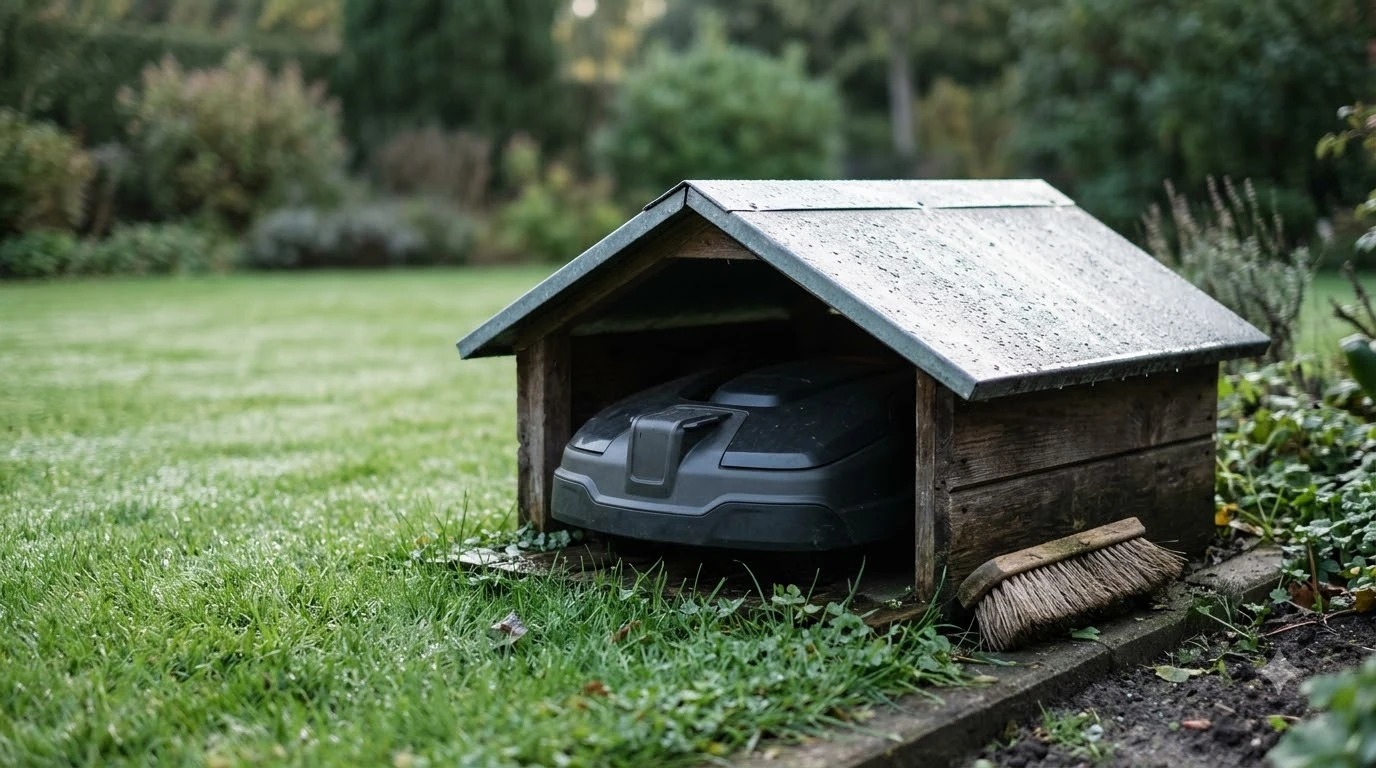

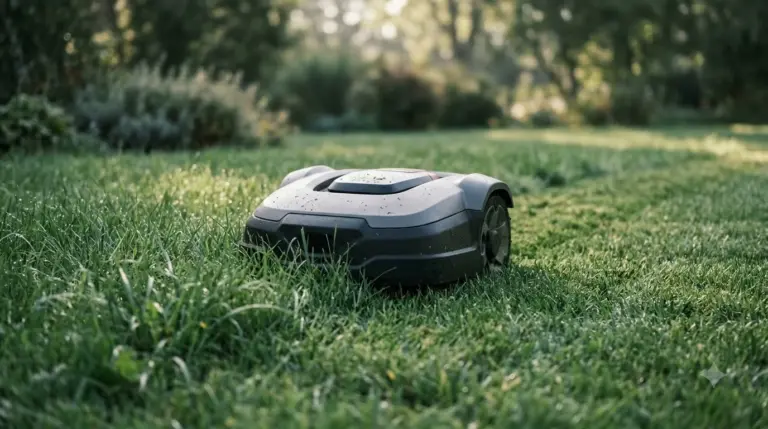
A robot mower for a lawn with voles can keep cutting, and it helps by holding the grass at a steady height that gives voles less cover. Voles leave surface runways about 1.5 inches wide, where the grass is clipped short along the path. Penn State Extension notes that the damage shows most in spring and is rarely permanent, because the surrounding grass usually covers the trails as the lawn recovers. The mower does not remove voles, so the practical plan is to tell voles apart from moles, change the habitat around the lawn, and trap or protect trees when the damage is serious.
The short answer
- Look for runways: surface paths about 1.5 inches wide with short-clipped grass are the usual sign of voles.
- Expect spring damage: runways often appear as the snow melts, and they usually fade as the lawn recovers.
- Keep the grass at a steady height: Penn State suggests mowing regularly at about 3 to 6 inches to reduce cover and food.
- Trap in fall or late winter: that is when traps work most easily, according to Penn State.
- Protect small trees: hardware cloth cylinders around the trunk keep voles from gnawing bark.
How to recognize voles in a lawn
Voles leave a clear set of signs. Penn State Extension describes surface runways about 1.5 inches wide, with grass clipped short along well-used paths. Fresh clippings and droppings in the runways show current activity. Runway networks may appear as snow melts in spring, and they usually fade as the grass grows back. Voles are often confused with other tunnelling animals, as moles and gophers on a robot-mowed lawn explains. Burrow openings are another animal feature, and ground squirrel holes in the yard covers how to tell them apart.
A useful check is to walk the lawn once the snow is gone or the grass has started to grow. Runways that are still clearly visible, with fresh droppings or clippings in them, suggest voles are active now. Old runways that are already greening over are less of a concern, since the lawn is recovering on its own.
Woodland voles behave differently. They leave small, cone-shaped soil piles from underground tunnels instead of surface runways, so the lawn may look more like a dug patch than a runway network.
Voles versus moles
Many lawn owners mix up voles and moles, and the difference matters because the control steps are not the same. Penn State lists the differences clearly. Moles have large digging front feet, no visible outer ears, and very small eyes. Voles have blunt snouts, chisel-shaped front teeth, visible eyes and ears, and short tails. Gopher mounds look different from vole damage, as gopher mounds beside vole runways shows.
Mole damage looks different on the surface. UC IPM describes mole mounds as circular and volcano-shaped, with no separate entrance or exit hole. A lawn with a long, flat runway and short grass along the path points to voles. A lawn with round, raised mounds points to moles.
How a robot mower for a lawn with voles fits in
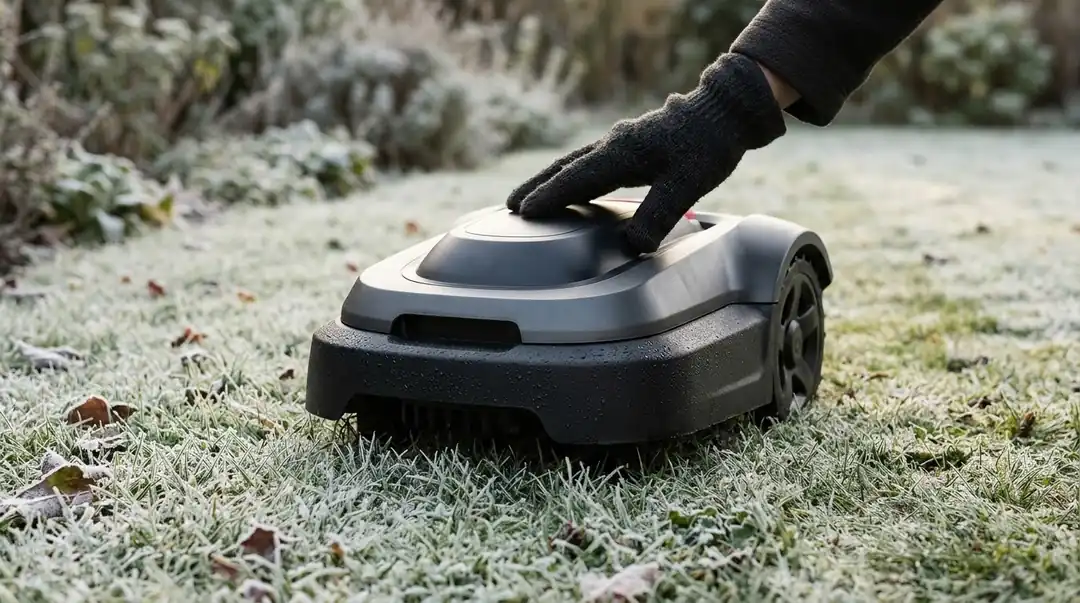
Penn State’s habitat advice is the most useful part for a mowed lawn. It recommends mowing regularly and keeping the grass about 3 to 6 inches tall, which reduces the cover and food voles use to move around. It also suggests removing weeds, ground cover, and litter where voles can hide. Seed on the ground can draw small rodents, which spilled seed that attracts rodents discusses for robot-mowed lawns.
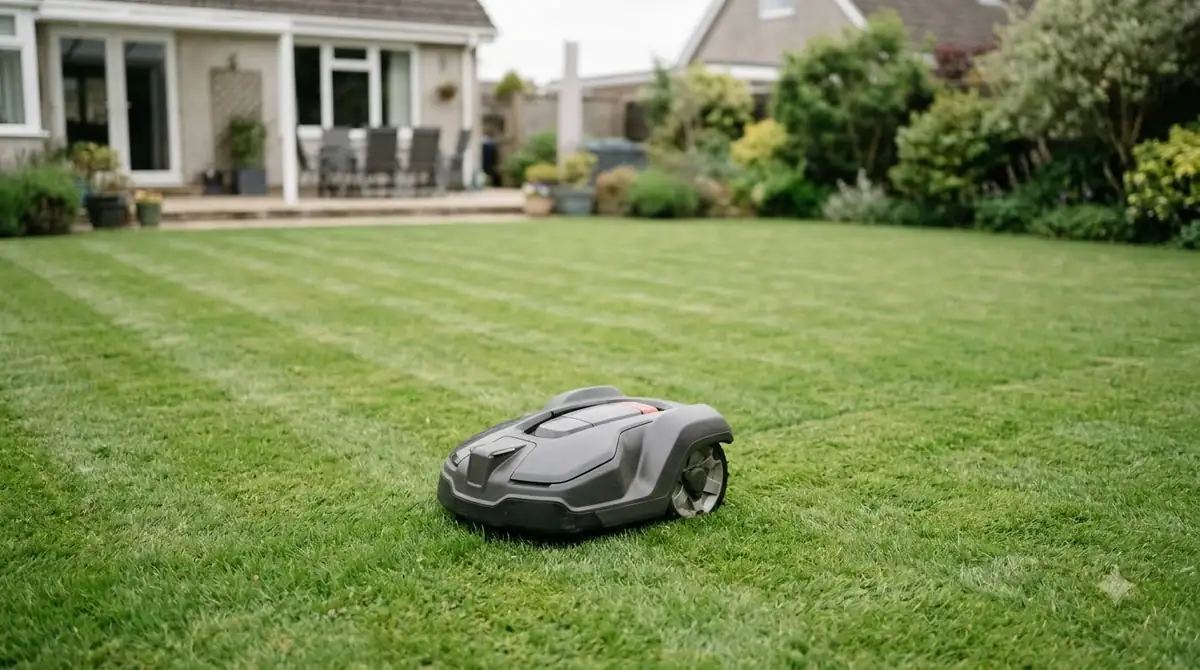
Our reading is that a robot mower fits this advice well. Its schedule keeps the grass at one height, so cover stays low without the lawn being scalped. The mower does not stop voles from digging or eating roots, but a steady, neat lawn gives them fewer hiding places than a long, unkempt edge.
Keep the mower off the most damaged areas while the grass recovers. Loose, torn turf gives poor traction, and the wheels can pull up what is left of the sod.
Control steps that have support
Penn State says that when populations are low and damage is not extreme, exclusion or trapping may be the most economical way to avoid damage. Habitat changes reduce the cover and food voles need, so they fit alongside either approach. Mole hills can stop a mower wheel, which mole hills and robot mower wheels describes in detail.
- Change the habitat. Mow regularly at about 3 to 6 inches, and remove weeds, ground cover, and litter near the lawn edge.
- Trap in the right season. Fall and late winter are the easiest times to trap, according to Penn State.
- Set the traps properly. Use mouse-sized snap traps at burrow openings or runways. Place them perpendicular to the runway, bait them with peanut butter and oatmeal or apple slices, and cover them with an inverted box or pan.
- Check the traps. Check them twice daily and keep resetting until no more voles are caught.
- Protect small trees. Wrap young trunks in hardware cloth. Penn State suggests quarter-inch hardware cloth cylinders 18 to 24 inches high, buried 4 to 6 inches deep.
Fencing and repellents for the whole lawn
Penn State says fencing a large area is generally not cost-effective. Exclusion is best used for a few valuable plants rather than the whole lawn. For repellents, we did not find extension guidance that shows a product works reliably on voles, so the trap and habitat steps are the more dependable choices. Grubs and voles often share the same problem lawns, and grubs that attract lawn pests describes treatment timing.
Heads up
Voles usually cause temporary damage to a lawn, so weigh the effort against the damage. A small runway that the grass covers in a few weeks may not need any control at all.
Related reads: Repairing runways is part of lawn preparation, as levelling before the mower arrives explains.
Frequently asked questions
Will a robot mower stop voles from making runways?
The mower will not stop voles directly. Keeping the grass at a steady, moderate height reduces the cover they use, which is part of the habitat control Penn State recommends.
Is vole damage permanent?
Usually not. Penn State notes that the damage is rarely permanent, and the surrounding grass often covers the trails as the lawn recovers.
Is it a vole or a mole?
Look for surface runways with short-clipped grass, which points to voles. Round, volcano-shaped mounds with no exit hole point to moles.
When is the best time to set vole traps?
Penn State says fall and late winter are the easiest times to trap voles. Keep checking and resetting the traps until catches stop.
Sources
- Voles (Penn State Extension): runway signs, vole and mole differences, mowing height and habitat changes, trapping, exclusion and fencing.
- Moles (UC IPM): circular, volcano-shaped mole mounds with no separate exit hole, used to compare mole and vole signs.
 Up next10 min readBy YardRobot Mower for a Snowy Region: Temperature and Storage LimitsUpdated Nov 11, 2026
 9 min readBy YardCan a Robot Mower Cut Warm Season Grass? Heights and LimitsUpdated Nov 11, 2026
 7 min readBy YardRobot Lawn Mower for 70 Percent Slope: What the Limit Really MeansUpdated Nov 11, 2026
 8 min readBy YardCan a Robot Mower Cut Centipede Grass? Heights and LimitsUpdated Nov 11, 2026
 9 min readBy YardRobot Mower for a Sloped Front Yard: Limits, Edges and SetupUpdated Nov 11, 2026
 9 min readBy YardCan a Robot Mower Cut Zoysia? Height and LimitsUpdated Nov 11, 2026