
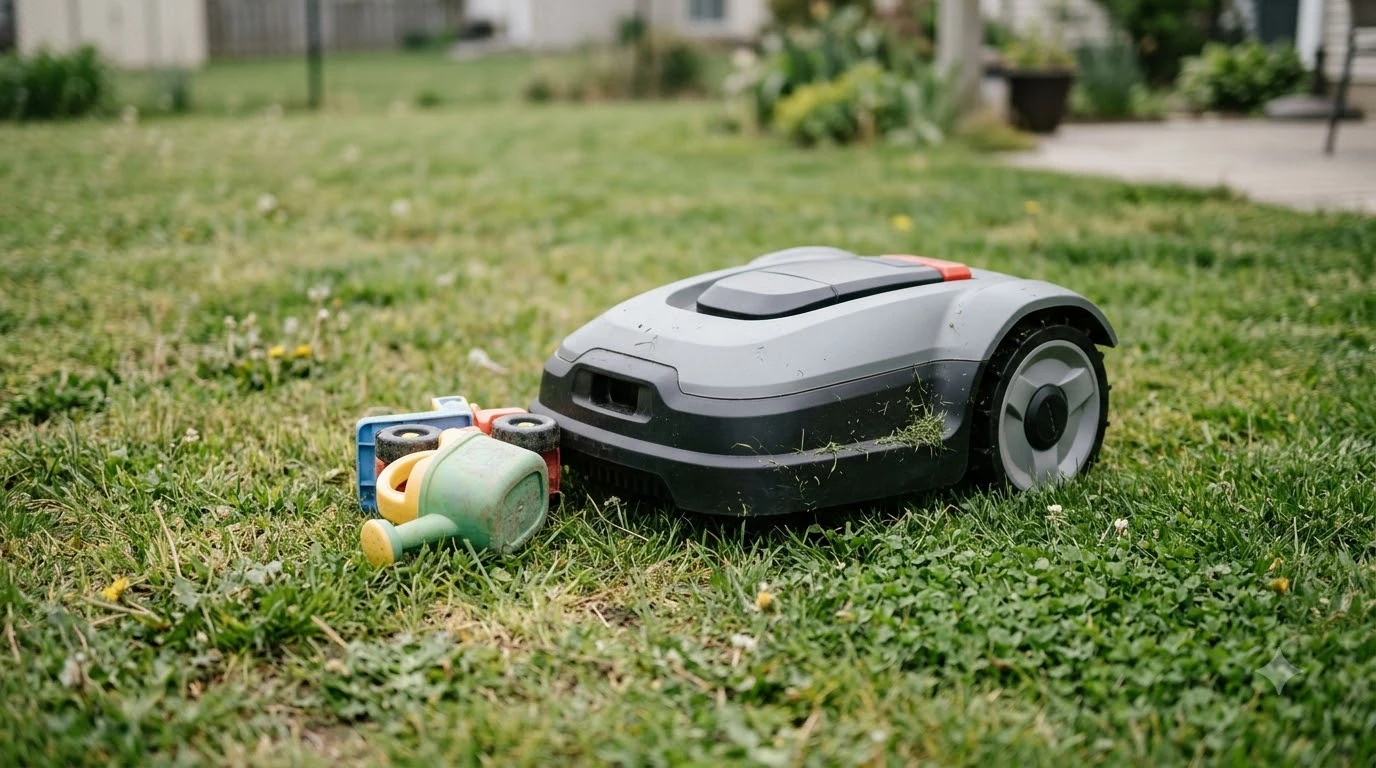

Robot mower for a lawn with bird feeders works if you wire the feeder poles as islands and keep the seed debris cleared from the mowing path. The feeder itself is an obstacle a mower should avoid, and the spilled seed and hulls on the ground are the bigger day-to-day concern. Both are manageable with a little planning.
The short answer
- Treat each pole as an obstacle: wire a small island around the base so the mower turns before it reaches the post.
- Clear the spilled seed: sweep or rake hulls and loose seed before each run, since they can clog the cutting system.
- Keep the feeder area out of the schedule: set a stay-out zone for the ground directly under busy feeders.
- Check the lawn beneath the feeder: hulls can leave a bare or weak patch that the mower cannot fix.
Robot mower for a lawn with bird feeders: the pole is the obstacle
A bird feeder on a metal or wood pole is a fixed obstacle with a narrow footprint. A robot mower does not need to hit it to be damaged, since the pole can knock the body, scrape the housing, or stop the mower on a tight turn. The simplest protection is an island, a small loop of boundary wire around the base of the pole. Feeders attract more than birds, and wildlife on a robot-mowed lawn covers other animals that visit. Small posts and decorations are detected differently by sensors, as lawn ornament obstacle handling explains.
Our reading is that a single pole is easier to handle than a cluster of feeders. A cluster creates a larger footprint that the mower has to pass around, so plan the island as one shape instead of several small loops.
Seed hulls and spilled seed on the mowing path
Feeders drop seed, and the ground under them collects hulls. Sunflower hulls are the most common problem. Some seed companies warn that the hull layer builds up and can keep grass from growing underneath, so the spot may thin out over time. That is a lawn problem as much as a mower problem. Squirrels often dig near feeders, which ground squirrels near feeders explains in terms of surface damage.
For the mower, loose hulls and seed can work into the blade area and the housing. Sweeping or raking the ground under the feeders before each scheduled run keeps the debris down. A stiff broom is usually enough for a small patch, and a leaf blower on a low setting works for a wider one.
Setting up the island and the stay-out zone
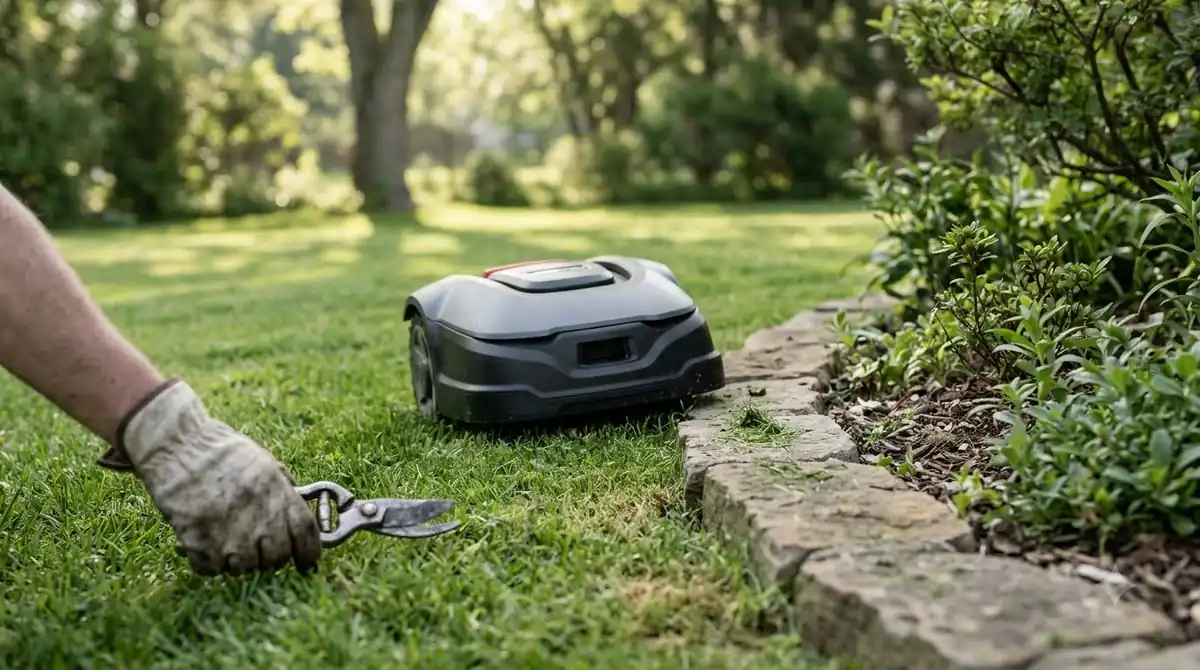
An island for each pole is the most reliable choice. Husqvarna’s guide to creating islands in a boundary wire describes the loop sequence, including the rule that the two return wires must sit close together and must not cross. A bird bath is another fixed feature to protect, which bird bath stay-out zones describes.
- Mark each pole. Put a stake or spray paint around the base of each feeder pole, with a small margin for the mower’s turn.
- Run the loop. Lay the wire from the boundary to the pole, around it, and back, without crossing the wire.
- Add a stay-out zone for the feeder ground. In the app, draw a zone over the area that gets the most seed and hulls, so the mower skips it until you have cleared it.
- Test before the season. Run a supervised cycle to check the turns around each pole.
A stay-out zone is a map instruction and not a physical barrier. Use it for the seed patch, and keep the wire island for the pole itself, since the pole is the hard obstacle.
Heads up
Do not let the wire cross or run under the feeder’s base where it can be cut by digging animals or by the pole being moved. Check the island after storms, since a loose pole can shift the wire.
Lawn care under the feeders
The grass under a feeder often needs more attention than the rest of the lawn. Hulls and spilled seed can smother it, and the mower cannot fix a bare spot. Move the feeder a few feet every season, or hang it from a hook so the drop zone shifts. Water and reseed the patch in the cooler months when the grass is recovering. Animal droppings under feeders raise the same cleaning questions, as dog droppings on the mowing path describes.
If you trim the grass around the poles by hand, keep it a little shorter than the rest of the lawn. That makes it easier to sweep the hulls out before a run and gives the mower a clean line to follow around each island.
Keep wildlife and debris in mind
Feeders draw birds, squirrels, and sometimes ground animals that dig for dropped seed. A mower can disturb a nest or a burrow if it runs over one. Inspect the lawn regularly for nests and holes, and remove any loose objects such as stones, sticks, or wire before a scheduled run, as robot mower guidance advises for any mowing path. Spilled seed can attract small rodents, and voles in a mowed lawn covers how to recognise them.
Also check the feeder hardware. A pole that leans or a hanging feeder that sits low can catch the mower’s body or the handle of a rake left on the grass. Keep the area around each feeder clear of tools when the mower is scheduled.
Related reads: Another form of animal waste on the grass is covered in poultry manure and robot mowing, with cleaning steps.
Frequently asked questions
Can a robot mower run around a bird feeder pole?
Yes, when the pole is wired as an island. The mower turns around the loop and does not reach the post, so the pole is not hit during the run.
Does seed spilled from feeders harm a robot mower?
Loose hulls and seed can work into the cutting area and the housing. Sweeping or raking the ground under the feeders before each run reduces that risk.
Should I use a stay-out zone for the feeder area?
A stay-out zone is useful for the seed patch, since you can switch it on until the hulls are cleared. Keep a physical wire island for the pole itself, because a zone on a map is not a hard barrier.
What happens to the grass under a feeder?
Hulls can build up and thin the grass. Move the feeder every season and reseed bare patches, since the mower cannot repair a worn spot.
Sources
- How to create islands in a boundary wire installation (Husqvarna): the loop sequence and the rule that the wires must not cross.
- Creating stay-out zones with AIM technology (Husqvarna): how zones are drawn in the app and their limits.
 Up next10 min readBy YardCan a Robot Mower Work Around a Bird Bath? Wire Setup GuideUpdated Nov 12, 2026
 7 min readBy YardRobot Mower for a Lawn With Heavy Clay Soil: Timing and HeightUpdated Nov 14, 2026
 7 min readBy YardRobot Mower with Chicken Manure on the Lawn: Cleanup and SetupUpdated Nov 14, 2026
 7 min readBy YardRobot Mower for a Lawn With a Dog Run: Safe SetupUpdated Nov 14, 2026
 7 min readBy YardRobot Mower for a Lawn With a Narrow Side Gate: Width RulesUpdated Nov 14, 2026
 6 min readBy YardRobot Mower for a Lawn With a Hammock and PostsUpdated Nov 14, 2026