
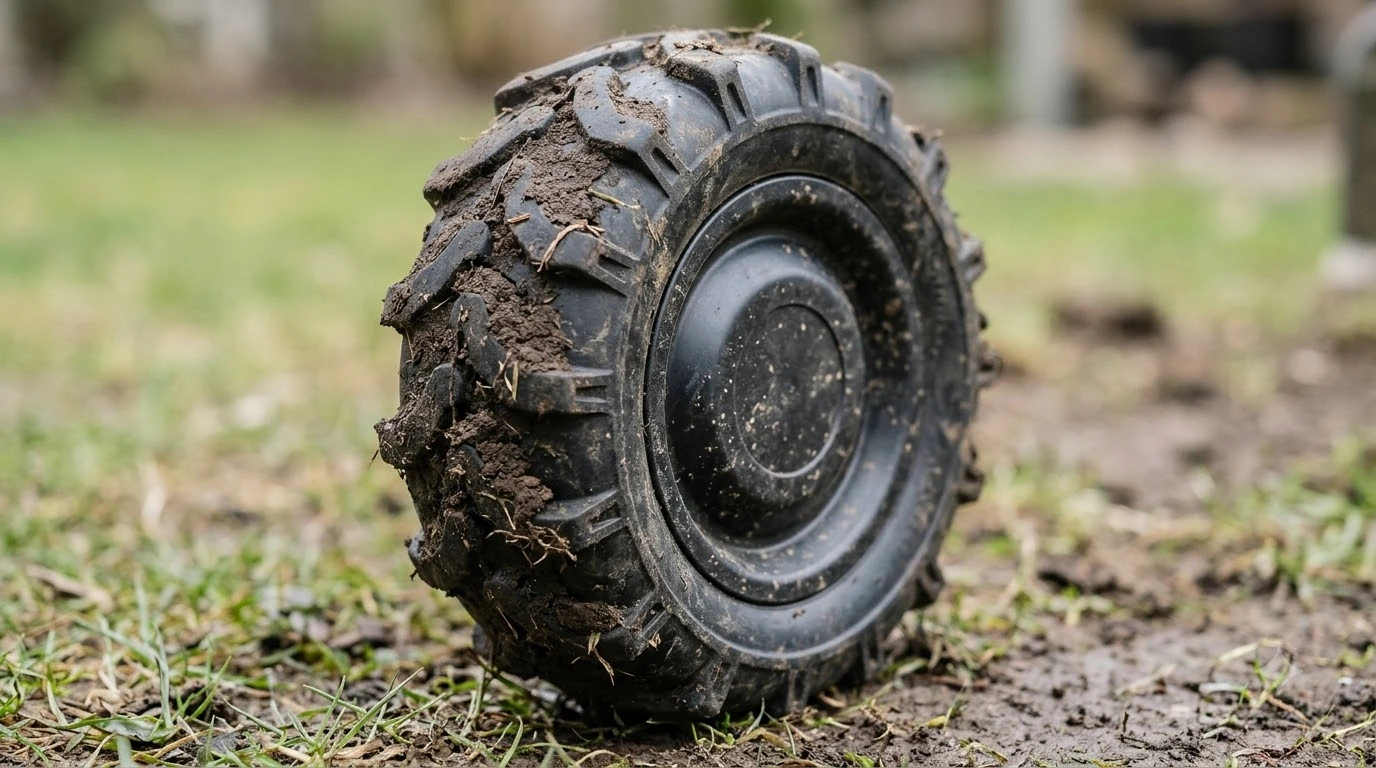

Will a robot mower get stuck on a lawn with tree roots? Yes, it can, but the usual problem is a repeat trap in the same spot rather than a one-time failure. Roots push up ridges, leave hollows beside the trunk, and sometimes stand far enough above the soil to tilt a wheel or catch the deck. This guide explains where those traps form, what manufacturers and extension sources say about mowing under trees, and how to check a root zone before the first run.
The short answer
- Likely: yes, when roots raise the grass into bumps or leave hollows the wheels drop into.
- Most common trap: repeat spots near the trunk, the shade edge, and where a root comes up through the turf.
- Navigation is a separate issue: satellite (RTK) positioning can lose accuracy under dense tree cover, according to vendor guidance.
- Fix first: level the worst raised roots, fill shallow hollows with a thin layer of soil, then set a no-go zone around what is left.
- Check after one pass: watch the first full mowing run before you leave the mower alone in a shaded area.
Will a robot mower get stuck on a lawn with tree roots? Why it happens
Roots do not block a mower the way a fence does. They change the ground under the wheels. A root that rises a few inches above the soil can lift one wheel and tilt the chassis, and the cutting deck may then ride over grass it cannot reach. The Anker blog on uneven lawns says that deep holes and ruts can tilt a robot mower, cause it to lose grip, or leave it stuck, although it does not give a depth threshold. Tree roots create exactly that kind of shape, and they do it in the same place every season. The question here is about stalls, and how mowers handle tree roots covers the broader behavior. Canopy affects more than roots, as the overview of mowing beneath trees explains.
Roots also tend to grow close to the surface in the top few inches of soil, so the lawn above them often looks flat from a distance but feels uneven under the wheels. That is why a yard that a mower handles well in the open can still produce repeat stuck events under a single large tree.
Where the trouble usually starts
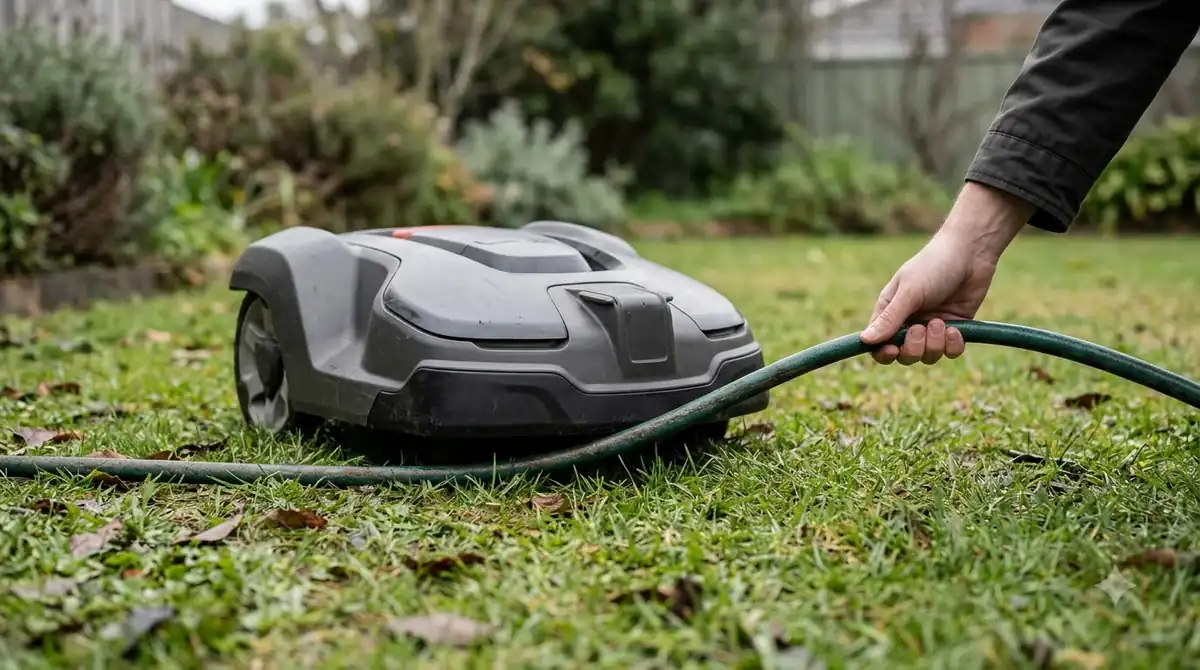
The trap zones are fairly predictable. In most yards they sit in three places: right at the trunk where the root flare meets the lawn, along the shade line where grass thins out, and at the edge of a bed or path where the mower has to turn tightly. These are the spots to inspect first. Stumps left in the lawn are hard obstacles that sensors may miss, as tree stump handling explains for typical yards. Loose stone and uneven fill cause a similar stall for wheels, as stuck on rocky ground explains for typical lawns.
Shade makes the lawn more fragile. Mississippi State University Extension notes that shaded turf faces root competition from trees and that foot traffic stresses grass growing in shade. Thinner grass shows more bare soil and more bumps, which means the surface a robot mower rolls on changes over time. Our reading is that a lawn that was fine last year can start trapping the mower after a few seasons of shade.
- Trunk flare: roots spread out and rise close to the base of the tree.
- Shade line: thin grass and exposed soil make a soft, uneven edge.
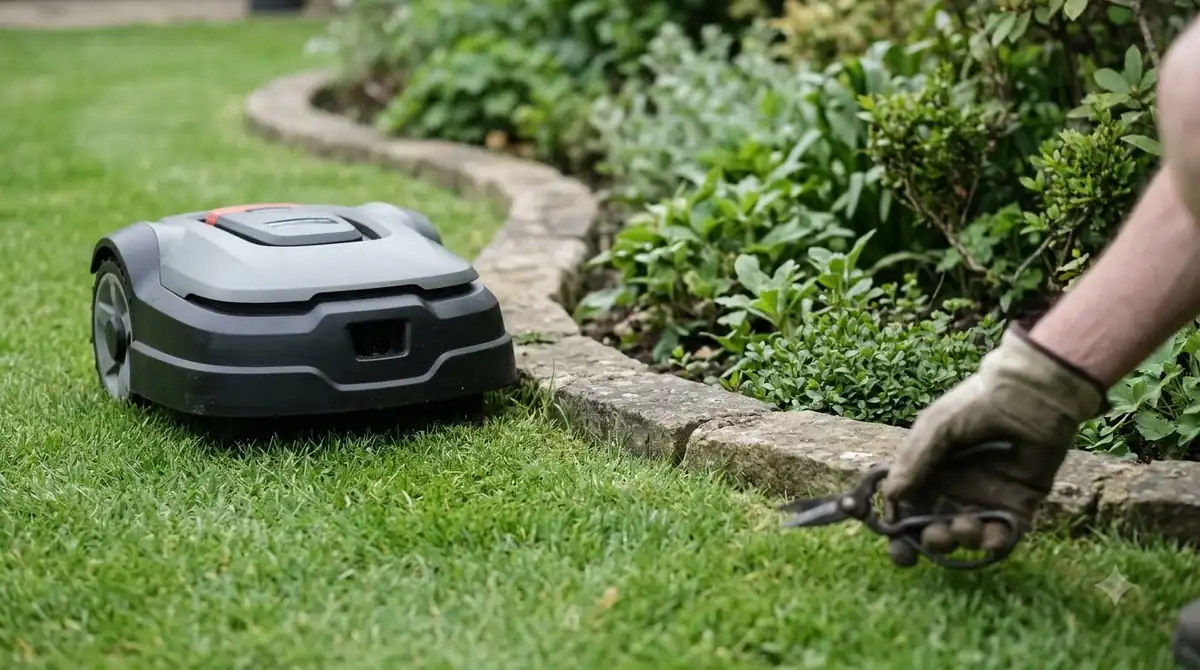
- Bed edges: tight turns near mulch or stone can push the mower onto a root or a hollow.
How to check a root zone before the first run
A short walk with a rake and a tape measure will catch most problems. Work through the area under the canopy before you set the mower’s boundary or start the first mowing run. Models suited to uneven ground are compared in picks for yards with exposed roots.
- Walk the shaded perimeter. Note raised roots, hollows, and bare patches. Mark anything that stands noticeably above the surrounding soil.
- Trim the grass low. Ecovacs advises trimming the lawn below 10 cm (about 4 inches) before a robot mower runs on it, which makes it easier to see the ground under the blades.
- Fill the hollows thinly. Ask Extension advises adding thin layers of soil over a period of weeks rather than one thick layer. A heavy layer can cover the grass crowns and smother them.
- Set a no-go zone. If one root or trunk area keeps catching the mower, a stay-out zone keeps it away from the trap while the rest of the lawn is still mowed.
- Watch the first pass. Stay nearby for one full run and note where the mower slows, turns repeatedly, or reports an error.
Heads up
Do not try to cut or shave roots with the mower or a tool to make the path easier. Cutting roots stresses the tree, and the damage is hard to see until later. Our reading is that levelling the soil around a root and marking it in the app is a safer fix.
Navigation under trees is a separate problem
Getting stuck is not only about the ground. It is also about where the mower thinks it is. The Ecovacs guide to LiDAR and RTK mowers notes that RTK positioning struggles under dense trees and buildings, because obstructions can interfere with satellite signals. Mammotion describes its LUBA mini AWD as using LiDAR, vision, and NetRTK rather than an RTK antenna, which is one reason some owners choose a mower that does not depend on satellite signal in a shaded yard. Choices for a densely planted yard are compared in mower picks for tree-heavy yards.
A commercial article from Resident says LiDAR “performs identically” under an oak canopy. That article does not include test data and links to products it sells, so treat it as a claim to verify on your own lawn rather than a fact.
Frequently asked questions
Will a robot mower get stuck on a lawn with tree roots?
It can, mostly at the trunk, along the shade line, and at tight turns near beds. The trap usually repeats in the same spot, which makes it easier to fix than a random failure.
Should I cut tree roots to make mowing easier?
We do not recommend it. Cutting roots stresses the tree. Levelling the soil around a root and setting a no-go zone is the safer approach.
Does a repeat stuck spot mean the mower is faulty?
Usually not. Husqvarna support describes repeat trap spots and suggests a stay-out zone, or enlarging it if collisions continue. Check the spot first before you assume a hardware problem.
Does shade change how I should run the mower?
Shade can thin the grass and expose soil, so the surface changes over time. Recheck the trap spots after each season, and keep the grass trimmed to a height the mower can see over.
Sources
- Ecovacs, LiDAR vs RTK robot lawn mowers (vendor): RTK positioning struggles under dense trees and buildings. Used for the navigation section.
- Mammotion, LUBA mini AWD LiDAR page (vendor): LiDAR, vision, and NetRTK without an RTK antenna.
- Mississippi State University Extension, P2892 (extension): root competition and foot traffic on shaded turf.
- Husqvarna support, trapped Automower message (manufacturer): repeat trap spots and stay-out zones.
- Anker blog, do robot mowers work on uneven lawns (brand blog): deep holes and ruts can tilt a mower or leave it stuck.
 Up next7 min readBy YardWill a Robot Mower Get Stuck on a Lawn With Low Spots That Flood?Updated Nov 13, 2026
 8 min readBy YardWill a Robot Mower Get Stuck on a Newly Seeded Lawn?Updated Nov 11, 2026
 8 min readBy YardWill a Robot Mower Get Stuck on a Lawn With Gravel Edges?Updated Nov 11, 2026
 9 min readBy YardWill a Robot Mower Get Stuck on a Lawn with Mulch Beds?Updated Nov 11, 2026
 9 min readBy YardWill a Robot Mower Get Stuck on a Soggy Lawn?Updated Nov 11, 2026
 7 min readBy YardWill a Robot Mower Get Stuck on a Lawn with Mole Hills?Updated Nov 11, 2026