

Will a robot mower get stuck on a lawn with low spots that flood? Often yes, because a hollow that holds water changes the ground under the wheels and makes the grass slippery. A shallow dip may be fine on a dry day, but the same dip after rain can tilt the chassis, cut grip, and leave the mower stuck in one place. This guide explains when a low spot becomes a trap, what the sources say about depth and wet grass, and how to fix the ground before the next run.
The short answer
- Likely: yes, when a hollow stays wet long enough for the wheels to slip or sink.
- Depth matters: Yarbo’s guidance says holes deeper than about 2 inches may keep the blades from reaching the grass. Shallow dips are usually fine.
- Wet grass is the real issue: Eufy notes that wet grass reduces tyre grip even when a mower is within its rated limits.
- Fix first: let the lawn dry, fill the hollow with thin layers of soil, and repair ruts before the mower returns.
- Use a no-go zone: if the spot keeps trapping the mower, keep it out of the run until the ground is level and drains.
Will a robot mower get stuck on a lawn with low spots that flood? Why wet is harder
A dry dip is mostly a geometry problem. A wet dip adds a grip problem. When the soil and grass are saturated, the drive wheels can spin in the same place, and the mower may slide sideways into the lower part of the hollow. The Eufy guidance on slope limits says wet grass reduces tyre grip, so the same ground that a mower climbs easily on a dry afternoon can trap it after a storm. If you are planning a mower around such hollows, the setup for lawn low spots that flood covers the practical steps. Standing water is one form of soggy ground, and the wet-ground mowing basics for soggy lawns give the broader view.
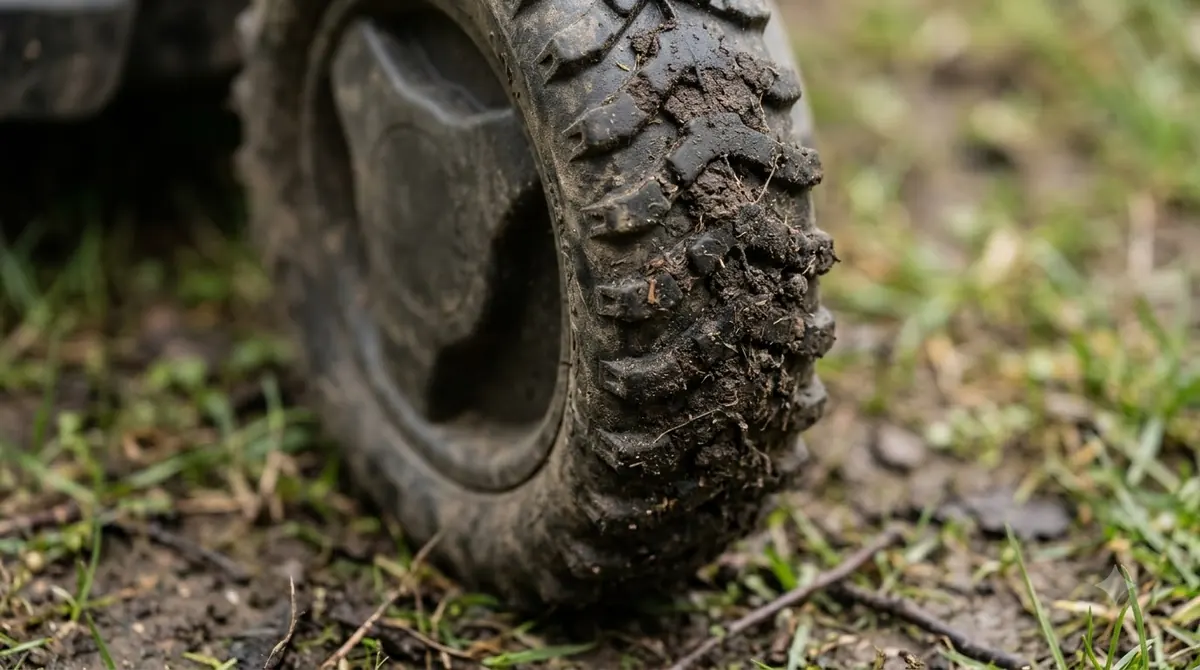
The soil also changes. Repeated wet and dry cycles can leave a hollow with loose or packed soil at the bottom, which leaves ruts where the wheels sink. Our reading is that a low spot that stays wet for days is more likely to produce repeat traps than one that drains within hours.
How deep a hollow has to be before it traps a mower
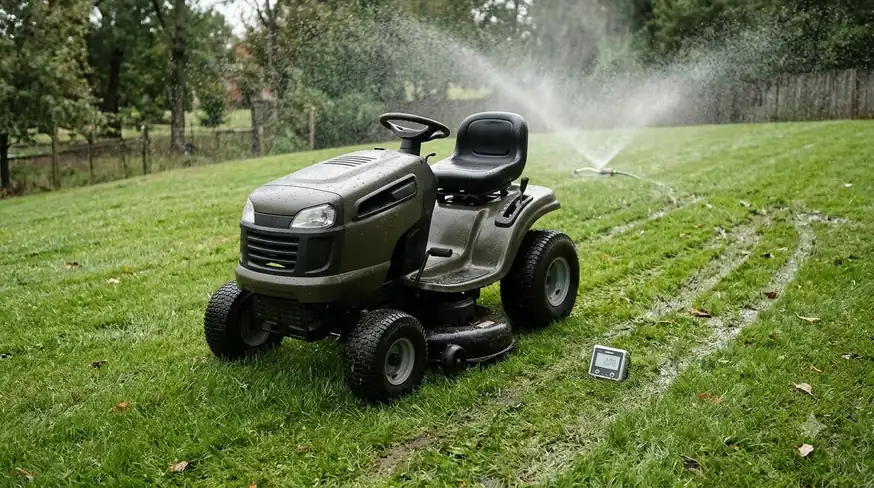
There is no single depth that fits every mower. Yarbo, a robot mower maker, says holes deeper than about 2 inches can stop the blades from reaching the grass, and it recommends filling them. Anker’s blog on uneven lawns says small bumps are usually fine, while deep holes and ruts can tilt a mower, cause it to lose grip, or leave it stuck. Anker does not give a depth figure, so use the two sources together rather than treating either as a rule. Depth is the key variable, and how holes and dips trap wheels adds the surface-condition side.
Eufy describes a surface variation of about 3 cm (roughly 1.2 inches) as a best practice rather than a hard specification. For most owners, the practical test is simple: if a hollow is deep enough that a wheel drops and the chassis tilts, it is deep enough to cause trouble, whatever the number on the box.
Fix the low spot before the first run
Most of the work happens before the mower goes back out. The steps below follow the sources above and our reading of them. Where grading alone cannot solve the problem, a French drain fix for wet spots is often used.
- Wait for the lawn to dry. Ecovacs advises mowing when the grass is dry, because wet grass and soft ground reduce traction and cutting quality.
- Trim the grass low. Ecovacs also advises trimming the lawn below 10 cm (about 4 inches) before a robot mower runs, so you can see the ground in the hollow.
- Fill with thin layers. Ask Extension recommends adding soil in thin layers over a week or two, never covering the grass crowns. A separate Ask Extension answer gives an example that mixes dry topsoil and sand in a 50/50 ratio for a low area about 6 by 6 feet.
- Repair ruts first. Eufy advises letting the area dry and repairing any rut before the mower returns. If the same spot keeps dropping the wheels, level it or add a No-Go Zone.
- Confirm the drainage. Water that sits in the same place after rain means the hollow still needs grading or a change to how the lawn drains.
Heads up
Do not run a robot mower on soggy ground to test whether it will get stuck. Our reading is that one wet run can dig ruts that make the next trap worse, and that a short wait is cheaper than a repair.
What to watch after a rain
After a storm, check the first mowing run closely. A mower that slows in one area, turns repeatedly, or reports a stuck error in the same spot is showing a pattern. Husqvarna support describes a repeat trap spot as a sign to set a stay-out zone, and to enlarge it if collisions keep happening. Treat the spot as a known trouble area until it is repaired and dry. Wheels can compact a soft lawn after repeated runs, which compaction after wet weather explains. The mower’s own settings help too, and the rain delay setting after storms shows what to adjust.
If the mower keeps getting stuck after the ground is level, the cause may be the mowing height or the grass length in that section. Trim it lower, check the wheels for packed soil, and run another short test before you set the mower back to its normal schedule.
Related reads: Clay holds water longest, so heavy clay ruts and timing is useful reading for a lawn that floods.
Frequently asked questions
Will a robot mower get stuck on a lawn with low spots that flood after rain?
It can. Wet grass reduces tyre grip, and a hollow that holds water can make the wheels slip or sink. Let the lawn dry before the next run.
How deep is too deep for a robot mower?
Yarbo gives about 2 inches as a depth where blades may not reach the grass. Anker gives no figure and says deep holes and ruts can tilt a mower or leave it stuck. Treat any hollow that tilts the chassis as too deep.
Should I fill a low spot before buying a robot mower?
Yes, fill and level it before the first run. Use thin layers of soil over several weeks rather than one heavy layer, because thick layers can smother the grass.
Can a no-go zone solve a flooded hollow?
It can keep the mower out while the ground dries and drains. Eufy suggests levelling the spot or setting a No-Go Zone if the mower keeps dropping into the same place.
Sources
- Yarbo, do robot mowers work on uneven lawns (vendor): holes deeper than about 2 inches need filling.
- Anker blog, do robot mowers work on uneven lawns (brand blog): deep holes and ruts can tilt a mower or leave it stuck.
- Eufy, robot lawn mower slope limits (manufacturer): surface variation of about 3 cm as a best practice, and wet grass reducing grip.
- Eufy, robot lawn mower stuck causes and fixes (manufacturer): let ruts dry and repair; use a No-Go Zone for a repeat spot.
- Ask Extension, FAQ 881570 (extension network): thin soil layers, and never covering grass crowns.
 Up next7 min readBy YardRobot Mower for a Lawn With Low Spots That FloodUpdated Nov 10, 2026
 8 min readBy YardWill a Robot Mower Get Stuck on a Clay Soil Lawn That Stays Wet?Updated Nov 11, 2026
 7 min readBy YardWill a Robot Mower Get Stuck on a Lawn With Tree Roots?Updated Nov 13, 2026
 8 min readBy YardWill a Robot Mower Get Stuck on a Newly Seeded Lawn?Updated Nov 11, 2026
 8 min readBy YardWill a Robot Mower Get Stuck on a Lawn With Gravel Edges?Updated Nov 11, 2026
 9 min readBy YardWill a Robot Mower Get Stuck on a Lawn with Mulch Beds?Updated Nov 11, 2026