
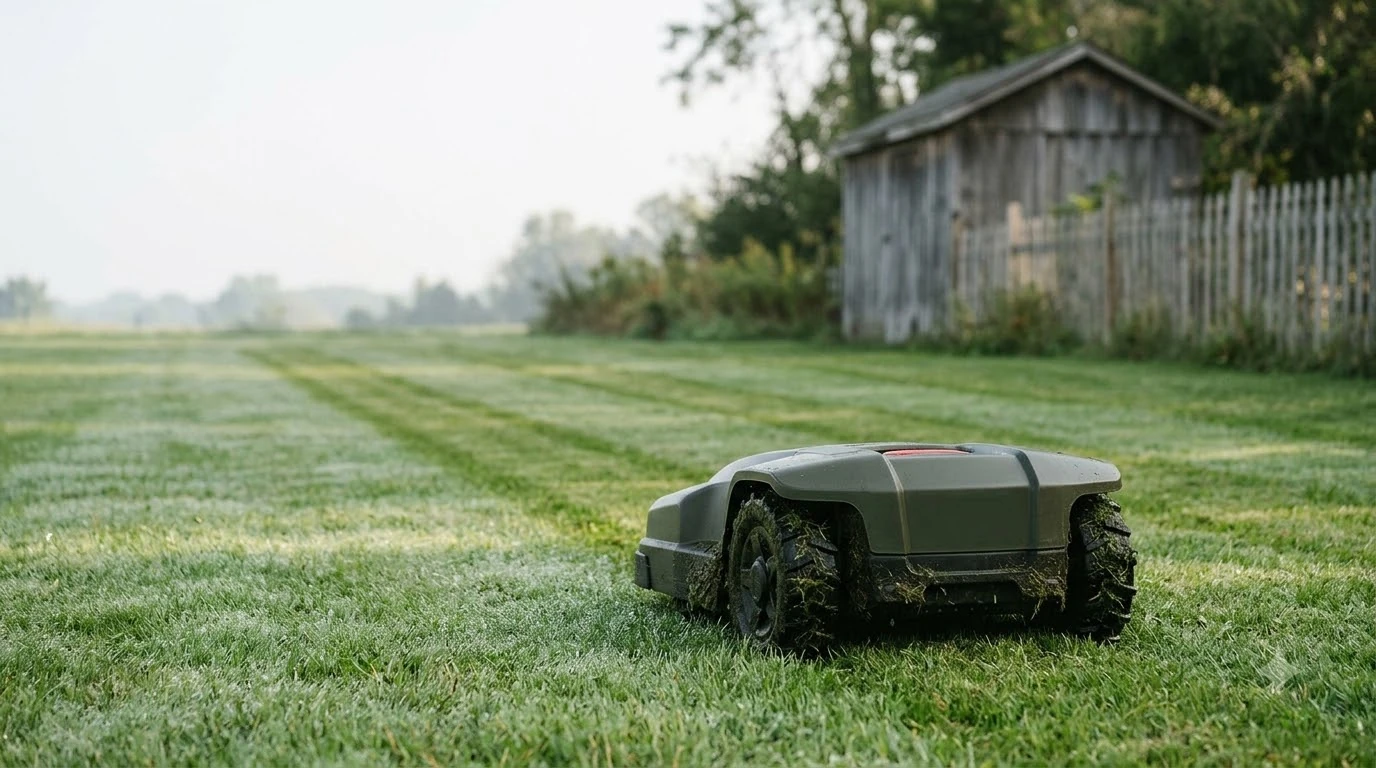

When to start using a robot mower in spring depends on growth, not a set date. Begin once the grass is growing again and the ground is firm and dry. Iowa State University Extension says there is “no set date to start mowing,” and timing depends on growing conditions and the type of grass in your area. For a robot mower, the practical signals are green-up, dry soil, and a lawn tall enough for a high first cut.
The short answer
- Trigger: the grass has greened up and resumed growth, not a calendar date.
- Ground: firm and dry, with no standing water or soft spots that take wheel marks.
- First cut: set the mower high, at about 3 inches, per Wisconsin Extension guidance.
- Height rule: never remove more than one-third of the leaf blade in one mowing.
- Schedule: run the robot often while growth is fast, then ease off as the lawn slows.
Why there is no set date for spring mowing
Spring weather changes from year to year and from one region to the next. Iowa State’s guidance is that the start depends on growing conditions and the grass species, so a calendar date is only a rough window. A lawn in a cold northern yard may not need its first cut until well after a warm southern lawn has started growing. Many owners restart a mower that spent months outdoors, so leaving a mower outside over winter is a useful background topic. The same growth signal works in the other direction, and stopping a robot mower in fall explains the autumn side.
Wisconsin Extension makes the same point in its lawn care calendar. It tells homeowners to follow green-up rather than dates, and it warns against rushing: “Avoid the temptation to start lawn work too early.” For a robot mower, that means the first run should wait until the lawn is actually growing.
When to start using a robot mower in spring: signs the lawn is ready
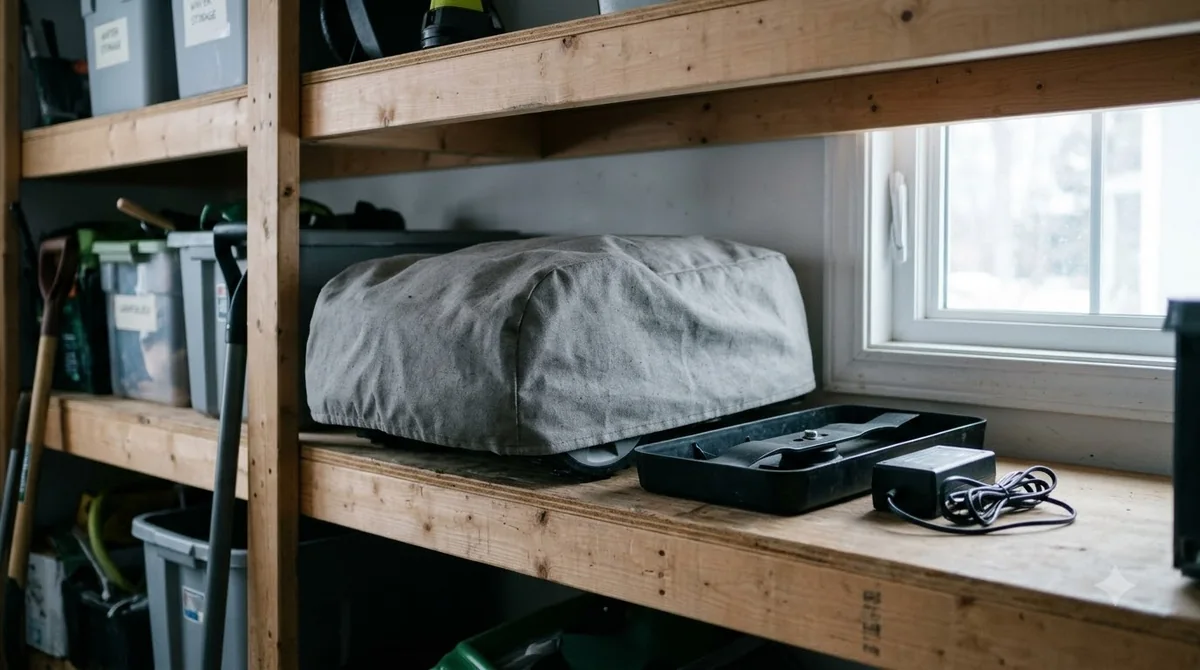
Look for a few signals together, not just one. The soil should be thawed and the grass should be green and growing, not still matted from winter. Wisconsin Extension points to soil thawing and the way lawns break dormancy as the cue for spring decisions. Before the first run, check the unit against its storage notes, and coming out of winter storage lists the usual checks.
| Signal | What to look for | Why it matters |
|---|---|---|
| Green-up | Grass is visibly green and growing again | Mowing before growth resumes adds stress |
| Soil thaw | Ground is no longer frozen | Frozen or hard ground can damage the turf under the mower |
| Dry surface | Bounce test passes and no footprints | Wet soil leaves ruts and compacts |
| Grass height | Grass is tall enough for the first cut to stay within one-third | Protects the blade and avoids scalping |
If one signal is missing, wait. A lawn that is green but still soggy is not ready, and a dry lawn that has not started growing does not need a cut yet.
Wet and frozen ground: hold the mower
Early spring is often the wettest part of the year, so the ground condition matters as much as the grass. Husqvarna’s guidance on wet lawns applies here: wait at least 24 hours after rain, and check with a bounce test. Damp or clumpy grass is still too wet, and visible footprints mean the ground needs longer to dry. Soft ground is a spring problem as well, and waiting after rain offers practical guidelines for wet turf. Cold mornings can still fall below the limit, so temperature limits in the manual are worth a look before the first cut.
Frozen ground is a separate case. Do not run the mower over ground that is still frozen or crunchy underfoot. Our reading is that a short delay of a few days after a thaw is cheap insurance, because the first cuts of the season are the ones most likely to leave tracks.
Set the first cut high, then step down
Iowa State gives a clear height rule for the first mow. It advises setting the mower to cut at 3 to 3-1/2 inches and starting once the grass reaches 4-1/2 to 5-1/4 inches, so that you “never remove more than one-third of the leaf blade in a single mowing.” Wisconsin Extension agrees on a height of about 3 inches and warns against making the first mowing excessively short.
For a robot mower, this translates into a simple first-run routine:
- Check the growth. Confirm the grass is green and growing, and that the bounce test passes.
- Raise the blade. Set the cutting height high for the first few runs, around 3 inches.
- Watch the first pass. Look for tracks, clumps, or patchy cuts before you leave it on a schedule.
- Lower gradually. Step the height down over several runs once the lawn is actively growing.
How often to run it after the first cut
Iowa State says most gardeners will mow every 5 to 7 days in spring, though the interval depends on growing conditions. That figure is for a person with a mower, not a robot, but it is a useful baseline. Our reading is that a robot should run more often during fast spring growth, because the one-third rule is easier to keep when each cut removes less grass. If your mower stayed out, staying outdoors through the cold months covers what to inspect before restarting.
As the lawn slows, the schedule can be reduced. The key is to keep the cut within the one-third limit at every run, so a quick spring flush may need more frequent runs than a slow early season.

Common mistakes in the first weeks
The most common mistake is starting the mower on a calendar date while the lawn is still dormant or the ground is soft. The second is cutting too low to make up for a late start, which removes more than a third of the blade and stresses the grass.
A third mistake is forgetting to check the boundary wire, the dock, and the rain delay after winter storage. A robot that was stored in the garage may need its battery, blades, and sensors checked before the first run. Read the owner’s manual for the spring startup steps your model uses.
Frequently asked questions
When should I start using a robot mower in spring?
Start once the grass is green and growing and the ground is firm and dry. Iowa State Extension says there is no set date, so the lawn itself is a better guide than the calendar.
What height should a robot mower cut at for the first mow?
Wisconsin Extension recommends about 3 inches and advises against an excessively short first cut. Iowa State gives a setting of 3 to 3-1/2 inches for a first mow, starting once the grass is 4-1/2 to 5-1/4 inches tall.
Can a robot mower run on wet ground in early spring?
It is better to wait. Husqvarna advises waiting at least 24 hours after rain and using a bounce test. Damp or clumpy grass is still too wet, and footprints mean the ground needs more drying time.
How often should a robot mower run in spring?
Iowa State says most gardeners mow every 5 to 7 days in spring. A robot can run more often during fast growth, as long as each cut stays within one-third of the blade.
Sources
- Iowa State University Extension, Mowing tips for spring (university extension): no set start date, first-cut heights, one-third rule, 5 to 7 day frequency.
- University of Wisconsin-Madison Extension, Wisconsin lawn care calendar (university extension): mow on green-up, about 3 inches first cut, avoid rushing lawn work.
- Husqvarna, Can you mow wet grass (manufacturer): 24-hour wait after rain, bounce and footprint tests.
 Up next6 min readLearnWhen to Stop Using a Robot Mower in FallUpdated Nov 13, 2026
 7 min readLearnWhy Does My Robot Mower Start Mowing at the Wrong Time?Updated Nov 13, 2026
 7 min readLearnHow to Clear a Robot Mower Map and Start OverUpdated Nov 14, 2026
 9 min readLearnWhy Does My Robot Mower Stop When Crossing Patio Pavers?Updated Nov 19, 2026
 9 min readLearnWhy Does My Robot Mower Spin Its Wheels When Turning?Updated Nov 19, 2026
 7 min readLearnWhy Does My Robot Mower Lose WiFi When the Garage Closes?Updated Nov 19, 2026