
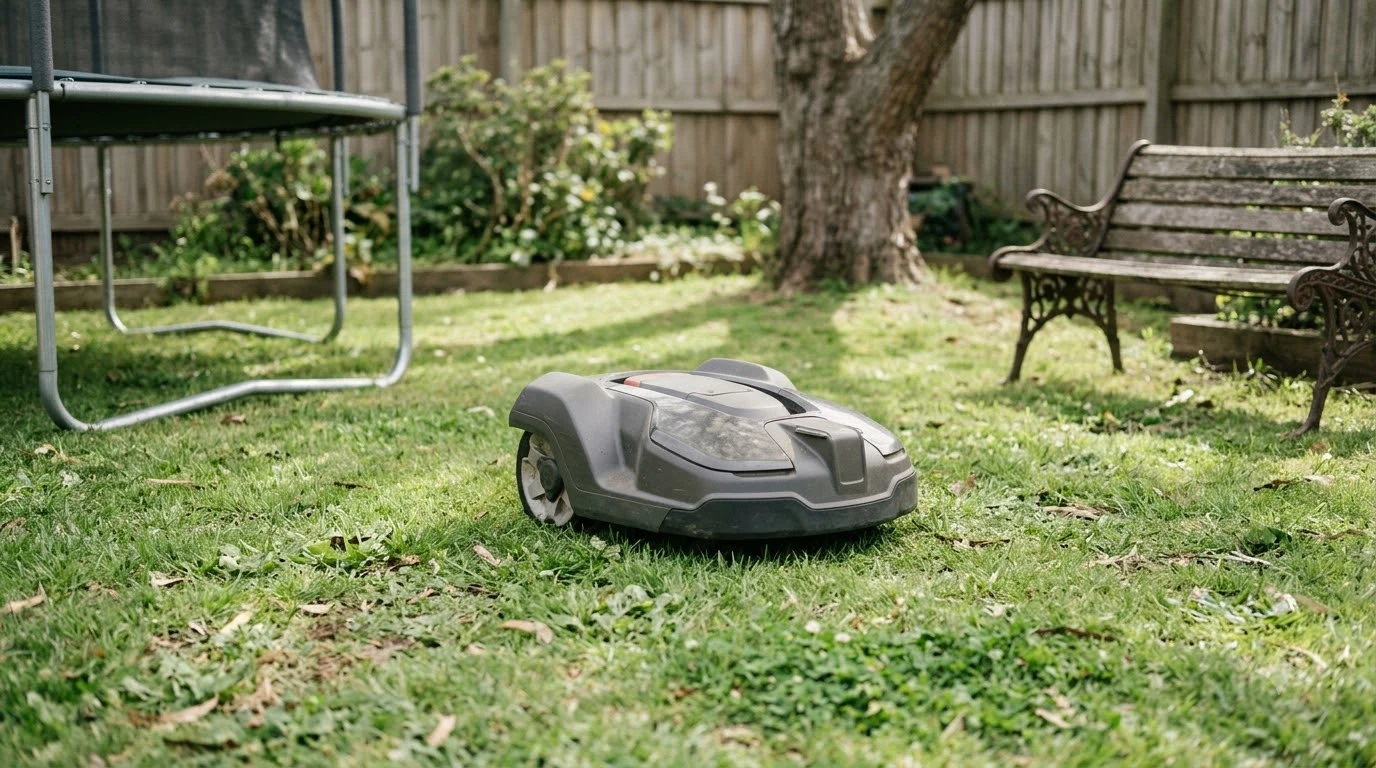

How does a robot mower handle garden furniture? It senses the piece, recalculates its route, and mows around it instead of pushing straight through. Tables and solid chairs are usually handled by collision detection or by the mower’s obstacle sensors, while light, low or small items are the ones most likely to be pushed, run over or missed. How well this works depends on which sensors your model actually has.
The short answer
- Sensing: Bumpers register contact, while cameras or ranging sensors can spot furniture before the mower touches it.
- Routing: The mower updates its path and goes around the piece rather than stopping for good.
- Limits: Light chairs, hoses and small toys are the items most likely to be pushed, run over or missed.
- Your part: Move movable pieces before mowing and return them afterward, so the mower can reach every patch.
What sensors tell the mower about a chair or table
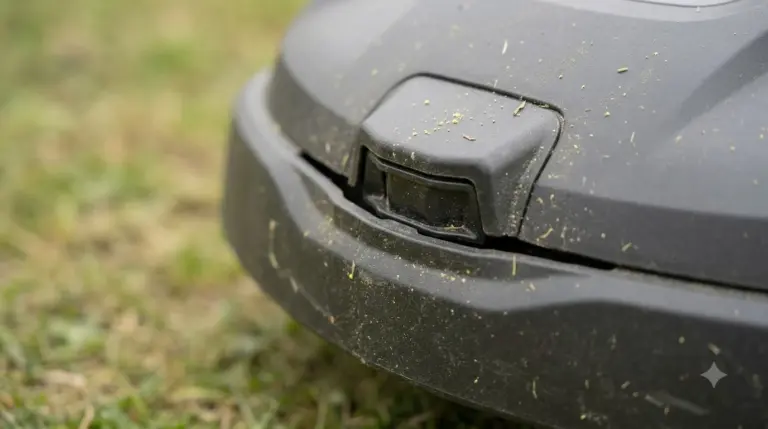
Most robot mowers combine a bumper, lift or tilt sensors, and some form of obstacle detection, and furniture is usually picked up by the last of these. Navimow describes its bumper sensors as “typically positioned around the mower’s perimeter to provide 360° coverage,” and says they respond only after the mower touches something. The same article lists lift sensors, which stop the blades when the mower is raised, and tilt sensors, which watch the angle of the mower on slopes. Navimow’s overview of hazard avoidance is the manufacturer’s own description of these parts.
Detecting furniture before contact relies on vision or ranging. According to Navimow, its AI camera recognizes “furniture, toys, and garden features” and avoids them without touching them. The company’s i Series is described with a 140° camera that recognizes over 150 obstacle types. These are manufacturer figures and were not checked by an independent lab, so treat them as the maker’s claims.
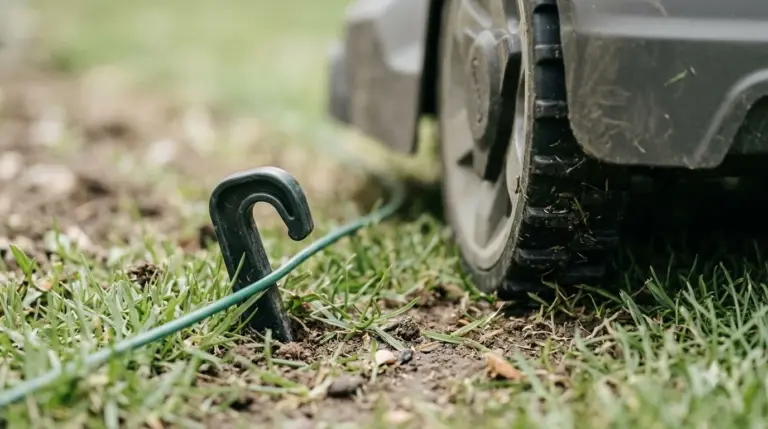
Wire-based models work differently. Myrobotmower explains that a perimeter wire carries a low-voltage field that the mower detects, and that the mower relies on that wire plus on-board collision detection to stay inside the area. In that setup, the wire defines the lawn and the bumper and collision systems handle what sits inside it.
Why a bumper alone is not enough
A bumper only tells the mower that it has already hit something, so it works best as a backup to earlier detection. Navimow notes that ultrasonic sensors “detect obstacles before physical contact,” but says they can struggle with “soft, sound-absorbing materials or very thin objects.” The same article says Navimow’s models do not use ultrasonic sensors and rely on cameras and bumpers instead.
Autohomebots adds that sensors detect objects in the mower’s path and let it adjust its route, but says detection is “not infallible,” and that small or transparent objects may still be missed. Our reading is that a bumper catches what the other sensors miss, which is why many mowers stack several sensor types rather than depending on one. If you are wondering how does a robot mower handle garden furniture without touching it, the answer is early detection by camera or ranging sensor.
How does a robot mower handle garden furniture on contact?
When the mower meets a table or chair, it stops or backs off, picks a new heading, and carries on with the rest of the zone. Myrobotmower describes the contact signal as “a sudden and unexpected decrease in the wheel speed,” which prompts the mower to back up and turn. Navimow adds that the mower “recalculates its path” when it detects an obstacle, including when “garden furniture is moved or temporary objects appear.”
- Detect. Cameras, ranging sensors or the bumper register the piece.
- Stop or back off. The mower slows, stops, or reverses after a bump.
- Reroute. It picks a new direction and updates its path around the object.
- Continue. It keeps mowing the rest of the zone, using the updated map.
Permanent objects are a different case. Myrobotmower says installers loop the perimeter wire around fixed items such as trees, flower beds and ponds, and that paired wires running side by side cancel each other’s signal, so the mower passes over that section. Movable garden furniture is not wired in this way, which is why it depends on sensing and rerouting instead. Our guide to laying boundary wire around obstacles covers the fixed-item setup, and mowing around flower beds covers the garden-bed side.
Which garden items are easy and which are hard
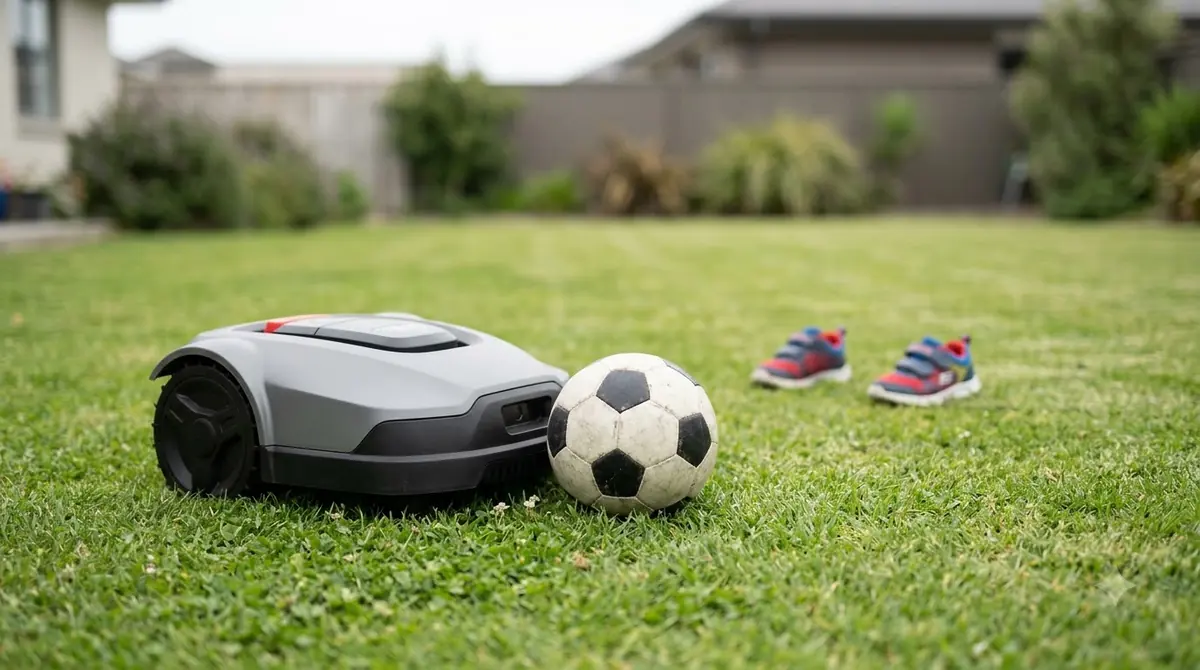
Large, solid furniture is usually the easy case, while light, low or small items cause most of the trouble. The table below groups common items by how the mower tends to handle them, based on the descriptions from the sources in this guide.
| Item | Typical handling | Why it matters |
|---|---|---|
| Tables and heavy solid chairs | Detected and mowed around | Large solid objects trigger collision detection, according to Myrobotmower. |
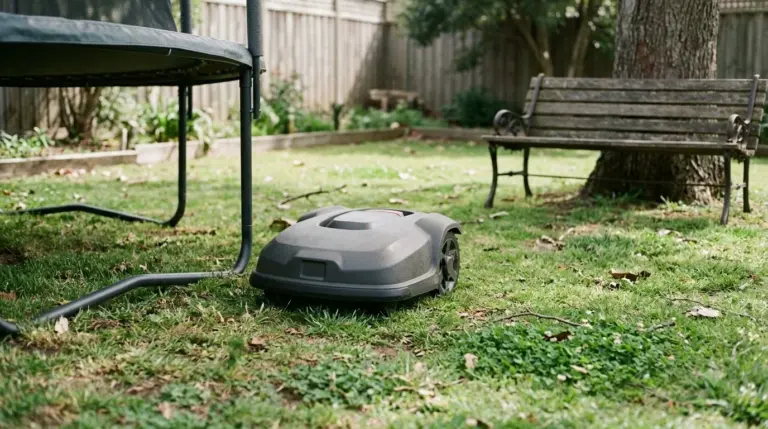
| Trampolines and large solid items | Mowed around by collision detection | Myrobotmower says garden furniture and trampolines are solid enough for collision systems to handle. |
| Lightweight chairs | Can be dragged, tipped or missed | Autohomebots advises moving light items before mowing. |
| Hoses and cables | Gently pushed aside | Navimow says a lightweight hose may be pushed rather than avoided. |
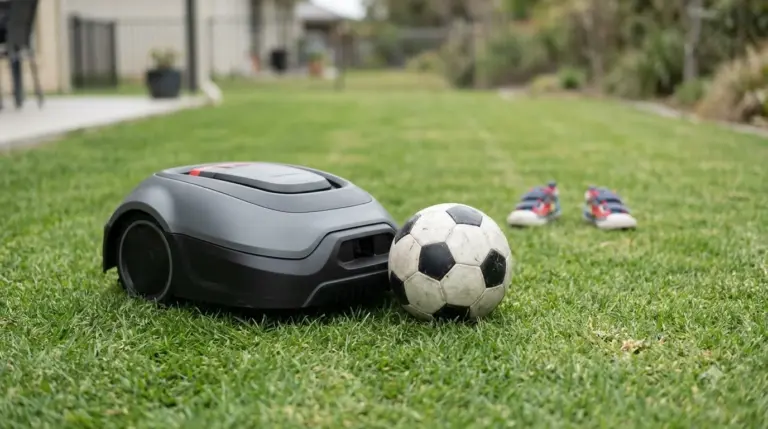
| Small toys, building blocks and tools | Often run over | Myrobotmower says plastic figures, building blocks and small garden tools are likely to be run over. |
| Very light items such as a paper cup | Pushed rather than avoided | Myrobotmower reports light items may be moved by the mower. |
The pattern matters more than any single item when you ask how does a robot mower handle garden furniture of different weights. Anything that is solid enough to register on the bumper or the collision sensors is likely to be avoided. Anything that is light, low or very small is the one to check after each session. Large solid items have their own page on how a robot mower handles a trampoline.
Should you move garden furniture before mowing
For movable pieces, moving them out of the way before a session and returning them afterward is the simplest fix. Autohomebots advises: “Before mowing, move furniture to a safe location, then return it afterward.” The page says this helps the mower reach all areas and avoids missed spots under and around the furniture.
Navimow’s article does not explicitly say to move chairs, but it recommends walking the lawn before each session and removing children’s toys, garden tools, hoses and cables, and fallen branches. Our reading is that the same routine covers garden furniture, especially lightweight chairs that can be pushed out of position. A fuller checklist is in our guide to preparing your yard for a robot mower. If you plan to sit outside while the mower runs, Myrobotmower suggests using the home command to send the mower to its charging station, then setting it back to auto afterward.
Using no-go zones around furniture
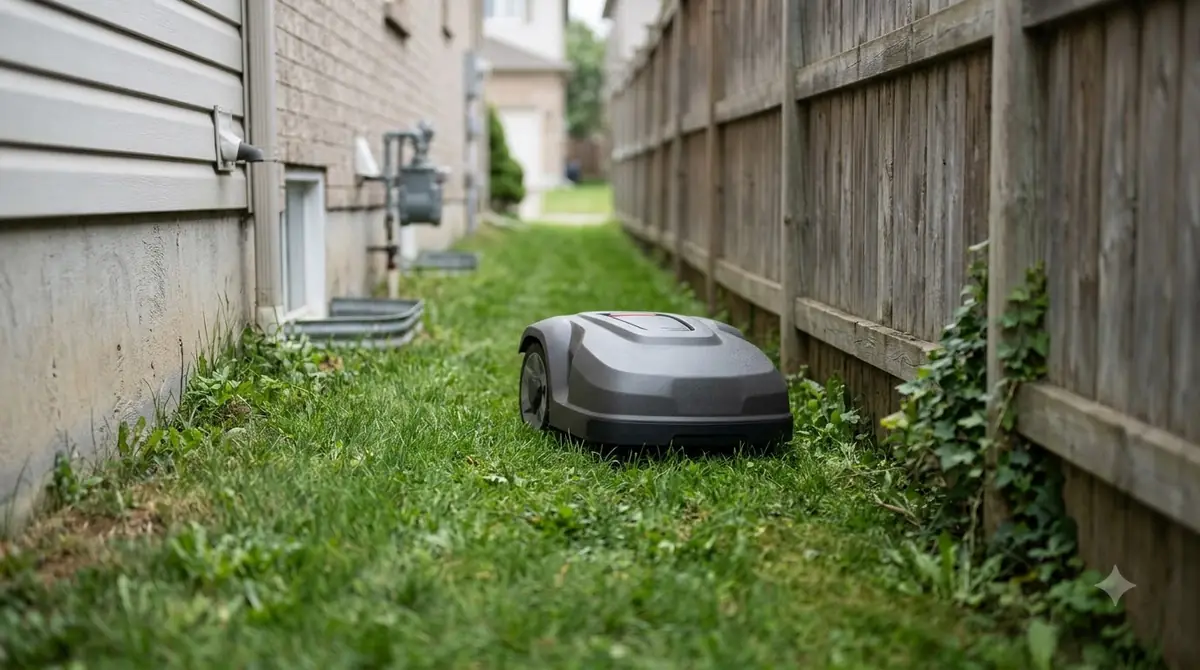
No-go zones tell the mower to stay out of a patch of lawn, which suits furniture you leave in place year round. Autohomebots says many mowers use boundary wires or GPS-based boundary setting. On GPS models, you select the existing zones in the app or control panel, change their boundaries or add new ones, and then save the changes.
The same page mentions physical boundary markers such as flags, stones or fencing, which give a visible barrier as well as a software one. Our reading is that a no-go zone is the usual answer to how does a robot mower handle garden furniture that stays put all season, and a zone around a permanent seating area is more predictable than relying on sensors to catch the furniture every time. Mark the zones clearly and make sure children and pets know to stay away from them, as Autohomebots recommends.
Limits to keep in mind
Obstacle handling is useful but not a guarantee, so the lawn still needs a quick check. Navimow’s article warns that “physical sensors can be tricked,” and that loose toys or cables can still tangle or cause unnecessary stops. Autohomebots makes the same point, saying detection is not perfect and that small or transparent objects may slip through.
So, how does a robot mower handle garden furniture in practice? Well for solid pieces and less reliably for light ones. Feature sets differ between models. Some mowers have cameras and sensors that recognize objects, while others rely on the perimeter wire and bumpers. Before depending on any of this, check your manual for which sensors your model has and how its obstacle settings work.
Frequently asked questions
Will a robot mower drive over a patio chair?
Usually not, if the chair is solid and sits on the lawn. Navimow and Myrobotmower both describe mowers detecting furniture and routing around it. Light chairs that can be dragged or tipped are the exception, so moving them before mowing is the safer choice.
Can a robot mower damage garden furniture?
Contact is possible, but Myrobotmower says the mower moves slowly and is unlikely to damage obstacles it bumps. That is a blog’s description rather than a lab test, so keep fragile or valuable pieces out of the mowing zone.
Do I need to move furniture every time I mow?
Not always. Heavy or fixed pieces can be handled by collision detection or a no-go zone. Movable and lightweight pieces are worth moving before each session, as Autohomebots advises, because they are the ones most likely to be missed or pushed.
How does a robot mower handle garden furniture without a perimeter wire?
They rely more on cameras and sensors that recognize objects, while wire-based models rely on the perimeter wire plus collision detection. Navimow describes its vision system as recognizing furniture, and Myrobotmower describes wire and bumpers. Check your model’s manual to see which approach it uses.
Sources
- How Robot Lawn Mowers Avoid Hazards (Navimow, manufacturer blog): bumper, lift and tilt sensors, vision and ultrasonic notes, and how the mower reacts to furniture and hoses.
- How Does A Robot Lawn Mower Deal With Obstacles? (Tech & Organic Outdoors): perimeter wire, wire islands, collision detection on furniture and trampolines, and small items that may be run over.
- Dealing With Yard Obstacles: Setting No-Go Areas for Your Robot Mower (Auto Home Bots): no-go zone setup and the advice to move furniture before mowing.
 Up next8 min readBy YardHow Does a Robot Mower Handle Raised Garden Beds?Updated Nov 11, 2026
 8 min readBy YardHow Does a Robot Mower Handle a Trampoline?Updated Nov 11, 2026
 8 min readBy YardHow Does a Robot Mower Handle a Pond?Updated Nov 11, 2026
 9 min readBy YardHow Does a Robot Mower Handle Sprinkler Heads?Updated Nov 11, 2026
 9 min readBy YardHow Does a Robot Mower Handle a Playset?Updated Nov 11, 2026
 7 min readBy YardHow Does a Robot Mower Handle Fallen Branches?Updated Nov 11, 2026