
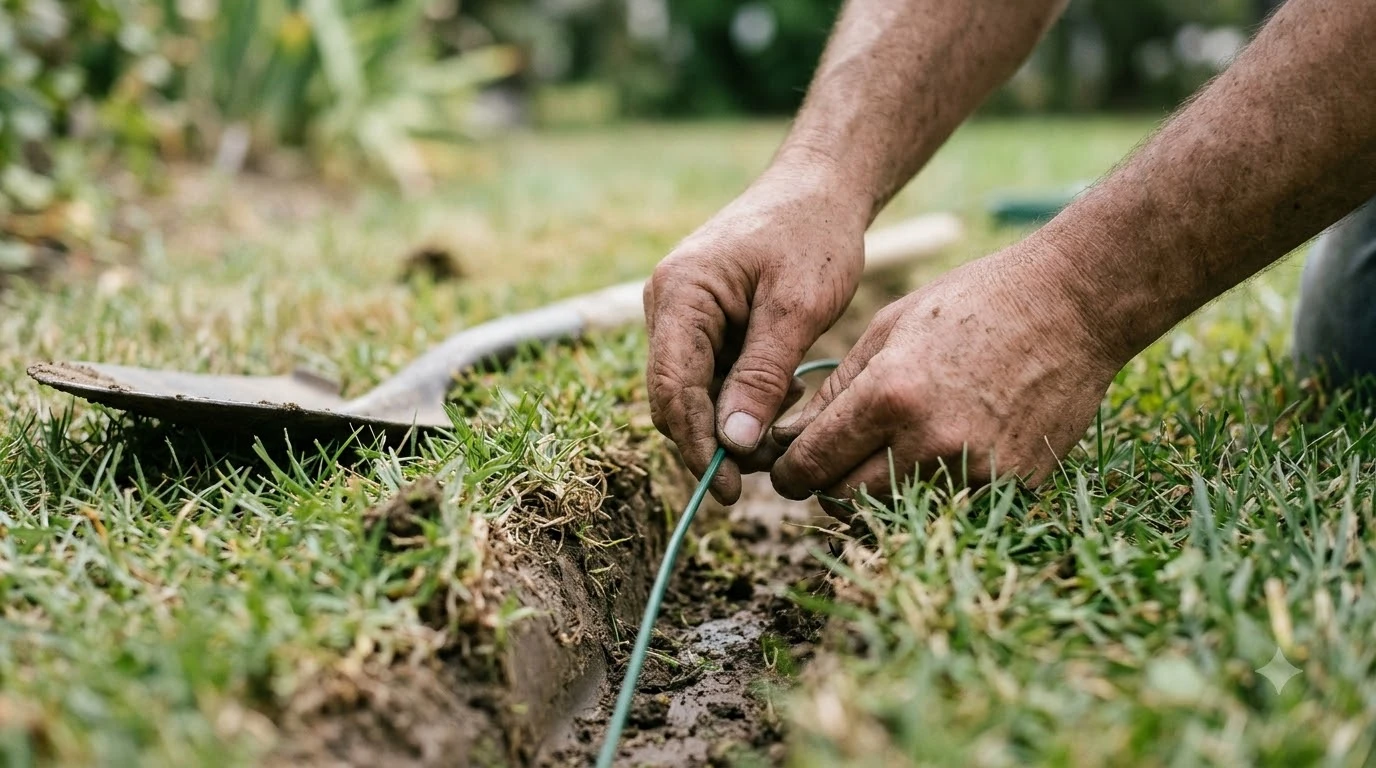

The best outdoor cable protector for robot mower work is the one that guards only the exposed spots, because burial depth and routing do most of the protecting. Husqvarna and Robomow give burial and sharp-object advice, but neither names a protector product, so no brand is ranked here. As of 2026-11-10, this guide explains what the best outdoor cable protector for robot mower must do and what to check before you buy.
The short answer
- Main protection: bury the boundary wire at the depth the mower maker allows, about 4 to 5 cm (1.6 to 2 in) in Robomow’s suggested optimum.
- Exposed spots: guard wire only where it crosses a path or driveway or is not buried, using a sleeve, saw-cut groove or expansion joint.
- Sharp objects and bends: remove rocks and sharp objects and avoid sharp bends, which Husqvarna says cause stress and damage.
- Product claims: the pages we read give no UV rating, test standard or warranty for protector products. Treat seller claims as unverified.
- Before you buy: confirm any protector fits your wire and can be pegged or buried in place.
Where the boundary wire needs protecting
The boundary wire is most at risk where it sits on the surface, where it crosses a path, and where trimmers can reach it. Husqvarna’s US tips page says to remove rocks and sharp objects that could break the wire over time, and to avoid sharp bends, since both cause stress and lead to damage. Neither advice names a protector product, so the first protection is the wire’s own route and depth.
Our reading is that the best outdoor cable protector for robot mower is a targeted fix for known exposed spots, not something to wrap around the whole loop. A sleeve placed over a damaged section hides the break rather than repairing it, so check the loop before you add any guard.
Burial depth comes first
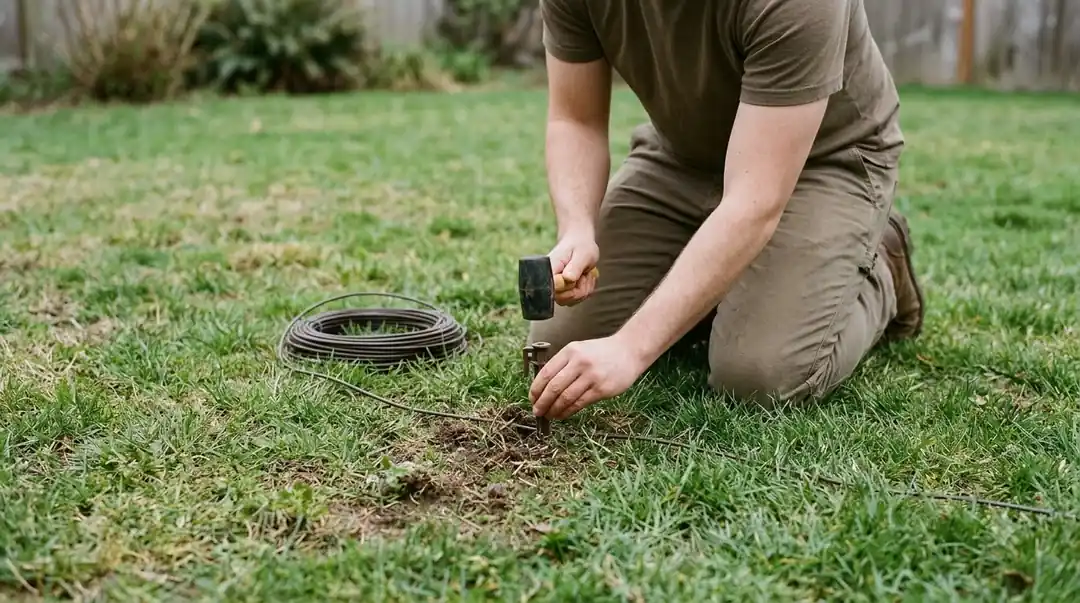
Robomow suggests burying the cable about 4 to 5 cm (1.6 to 2 in), which it says protects the cable while keeping the signal reliable. Its general manufacturer range is 3 to 7 cm (1.2 to 2.8 in), given to avoid signal interference, and it warns that a depth of only 1 to 2 cm risks the wire surfacing during scarifying. The depth figures from both manufacturers are compared below.
| Source and figure | Depth | What the source says it does |
|---|---|---|
| Husqvarna US tips page, recommended range | 1 to 20 cm (3/8 to 8 in) | Suggested if the lawn is uneven or you want the wire hidden |
| Robomow blog, general guideline | 3 to 7 cm (1.2 to 2.8 in) | Avoids signal interference |
| Robomow blog, suggested optimum | 4 to 5 cm (1.6 to 2 in) | Protects the cable and keeps the signal reliable |
| Robomow blog, too shallow | 1 to 2 cm (0.4 to 0.8 in) | Risks the wire surfacing during scarifying |
Our reading is that a depth of 4 to 5 cm sits inside both sources’ guidance, so it is a sensible target if your lawn allows it, whichever protector you choose. Burial is not a full answer, though. Robomow notes that a buried cable makes scarifying less worrisome, but locating and repairing damage becomes harder, which is a trade-off to weigh before you bury a whole loop.
Sharp objects, bends and stakes
Rocks, sharp bends and rising stakes are the three everyday risks Husqvarna names for the wire. Clearing and pegging the route costs little, and it reduces the number of spots that need a separate guard.
- Clear the path. Remove rocks and sharp objects that could break the wire over time.
- Avoid sharp bends. Husqvarna says they cause stress and lead to damage. It gives no bend radius, so use gentle curves.
- Check the stakes. Push stakes down periodically, since soft, mossy, dry or compact soil can make them rise.
- Mow before pegging. Husqvarna recommends mowing the lawn before you lay the wire with staples.
- Inspect before the season. Inspect the wire regularly, especially before restarting the mower after winter.
Our reading is to do these steps first, then add a guard only where a step cannot fix the exposure. The bury-or-peg decision and the full boundary wire installation guide cover the routing in more detail. Most of the work in finding the best outdoor cable protector for robot mower is in the routing, not in the product.
Crossings, driveways and gates
Where the wire crosses a driveway (see also whether a robot mower can cross a driveway), the installer guidance we read relies on the wire’s layout and fixing rather than a single product. On concrete, an installer blog describes laying one wire in an expansion joint or in a saw-cut groove, and suggests two expansion joints where there is no groove. On asphalt it says two grooves are cut, and that both ends should be secured tightly with pegs.
Driveway gates solve a different problem than a protector. The same blog describes them as loops of wire staked or buried beside the driveway. It gives a corridor width of about 26 to 30 cm (10 to 12 in), and says wires 12 to 28 in apart cause out-of-border errors.
The pages we read do not cover pipe, tube or hose sleeves as protection, so we cannot say how well one performs at a crossing. Our reading is that a sleeve can be the best outdoor cable protector for robot mower for a short exposed run, provided it still lets the wire sit at the depth the mower maker specifies.
What to check before you buy the best outdoor cable protector for robot mower
The best outdoor cable protector for robot mower is worth buying only when it fits your wire, can be fixed in place, and comes with a rating you can check. Use these checks on any listing, since the pages we read give no figures for protector products.
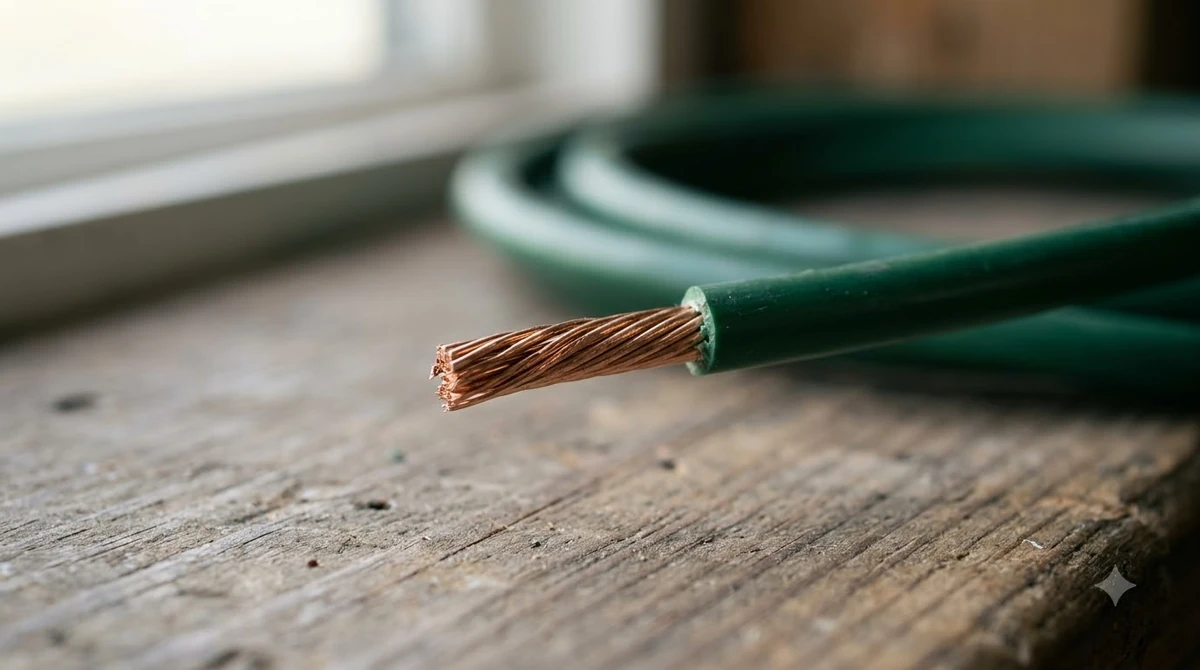
- Fit: the inside must take your boundary wire and any splice or connector, with room that your installer approves.
- Fixing: the sleeve or guard must be buried or pegged with the wire so it does not lift, the same rule the installer guidance uses for the wire itself.
- Sun and material: one reviewer reports that stock wire became brittle in the sun, while a UV-resistant alternative held up better. That is a user report, not a test result.
- Rating: ask the seller for a UV rating, test standard or warranty in writing. We did not find one in the pages we read.
- Depth: the protector must not force the wire above the depth the mower maker allows.
Our reading is to match the best outdoor cable protector for robot mower to the exposed spot, not to the whole loop. Compare the product with your mower maker’s manual before you use it on a live boundary loop. If a splice is the weak point, read about waterproof wire connectors, and if the loop has already failed, see how to find a break in the wire.
Frequently asked questions
Is there one best outdoor cable protector for robot mower?
No single product is named on the manufacturer pages we read, so we do not rank one. Choose a protector by the exposed spot it must cover, then check its fit with your wire and your mower maker’s manual.
How deep should the boundary wire be buried?
Robomow suggests about 4 to 5 cm (1.6 to 2 in), inside its general 3 to 7 cm range. Husqvarna recommends 1 to 20 cm (3/8 to 8 in) when the lawn is uneven or you want the wire hidden.
How do I stop the mower from mowing a driveway?
Installer guidance describes driveway gates, which are loops of wire staked or buried beside the drive. It also says wires placed too far apart cause out-of-border errors. The layout depends on your drive and mower model.
What can damage the boundary wire?
Husqvarna names rocks and sharp objects that could break the wire over time, and sharp bends that cause stress. Remove the rocks, use gentle curves and inspect the wire before restarting the mower after winter.
Sources
- Tips to prevent wire break in an Automower installation (Husqvarna, manufacturer): burial range, rocks, bends, stakes, mowing and inspection advice.
- How deep must the boundary wire be laid for robotic mowers (Robomow, manufacturer blog): depth ranges and scarifier protection.
- Ambrogio robot lawn mower: how to cross a driveway (installer blog): expansion joints, grooves, pegs, driveway gates and corridor width.
 Up next7 min readGearBest Outdoor Surge Protector for Robot Mower: What to Check Before You BuyUpdated Nov 11, 2026
 10 min readGearRTK Base Station Power Cable Outdoor: What to Check FirstUpdated Nov 11, 2026
 8 min readGearBest Garage for Dreame Robot Mowers: 5 Checks Before You BuyUpdated Nov 11, 2026
 9 min readGearBest Outdoor Security Camera to Watch a Robot Mower: What to CheckUpdated Nov 11, 2026
 7 min readGearBest Outdoor Mesh Wi-Fi for a Backyard Robot Mower: What to CheckUpdated Nov 11, 2026
 8 min readGearBest Outdoor Timer for Robot Mower Charger: Is One Needed?Updated Nov 11, 2026