
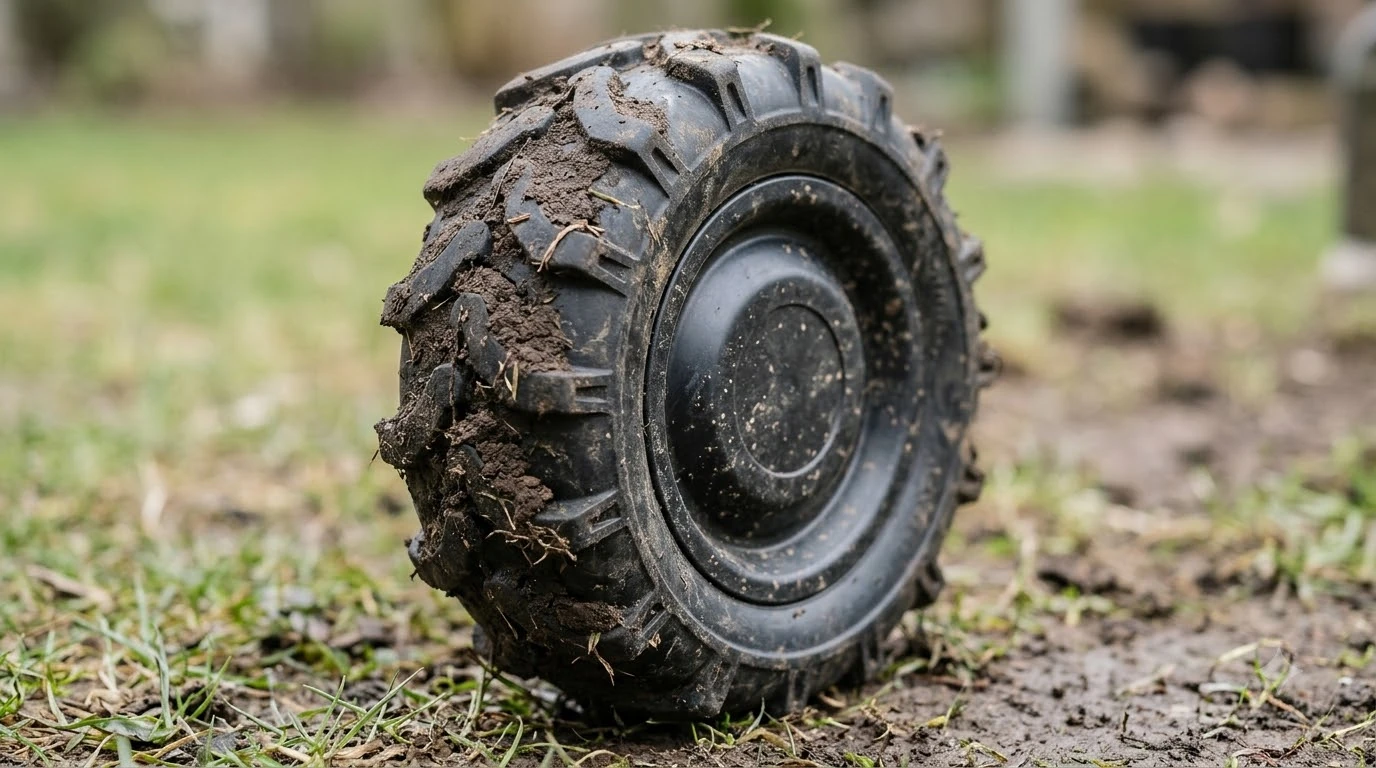

Will a robot mower get stuck on a lawn with holes and dips? Shallow dips usually no, but holes deeper than about 2 inches, deep ruts and sharp drops can trap it. Manufacturers describe the trouble as a wheel that loses grip or drops into a spot the mower cannot climb out of. Filling and firming the worst spots before the first run prevents most stops.
The short answer
- Small, rounded dips are the kind most robot mowers handle, because large wheels and a floating deck follow the ground.
- Holes deeper than about 2 inches are the number to fill first, according to one manufacturer’s guide. That figure is a vendor claim, not an independent test.
- Soft soil and wet grass make dips worse, because wheels sink or slip and the mower can stop.
- A repeat trap spot is better handled with a no-go zone than by hoping the mower clears it.
Will a robot mower get stuck on a lawn with holes and dips? Usually not for small dips
Small dips are usually not the main problem. Anker’s guide to uneven lawns says modern robot mowers can handle mildly uneven lawns, with the result depending on the model and how severe the bumps are. The same guide lists the conditions that cause real trouble: deep holes, ruts, exposed roots, sharp drops, loose stones and waterlogged ground. A shallow dip on an otherwise firm lawn is rarely the cause of a stop.
The useful question is therefore not whether the lawn has any dips, but whether a dip is deep enough or soft enough to stop a wheel. A mower that rolls through a shallow depression with all of its wheels on firm turf keeps cutting. A mower whose wheel drops into a pit, with the chassis resting on the edge, is the one that needs help.
How deep is too deep for a robot mower?
So, will a robot mower get stuck on a lawn with holes and dips of a particular depth? There is no single answer for every model, and the manufacturer pages read for this guide give no hole-depth limit apart from one brand’s figure. That guide advises filling holes deeper than 2 inches before mowing. Yarbo’s blog on uneven lawns gives that figure, but it comes from a vendor writing about its own product line, so treat it as a planning guideline rather than a certified limit.
The table below sorts the common ground conditions by how much risk they add, using the sources read for this guide. The risk column is our reading of those sources.
| Ground condition | Risk of a stop | What sources say |
|---|---|---|
| Shallow, rounded dip on firm turf | Low | Most modern models handle mild unevenness (Anker) |
| Hole deeper than about 2 inches | High | Fill before mowing (Yarbo, vendor claim) |
| Rut left by a wheel | Medium to high | Let it dry and repair before the next run (Eufy) |
| Drop, drainage channel or sunken patio edge | High | Needs a physical boundary or no-go zone (Eufy) |
| Soft soil after rain | Medium | Wheels can sink; mow when the lawn is dry (Eufy, Ecovacs) |
Why holes and ruts trap the wheels
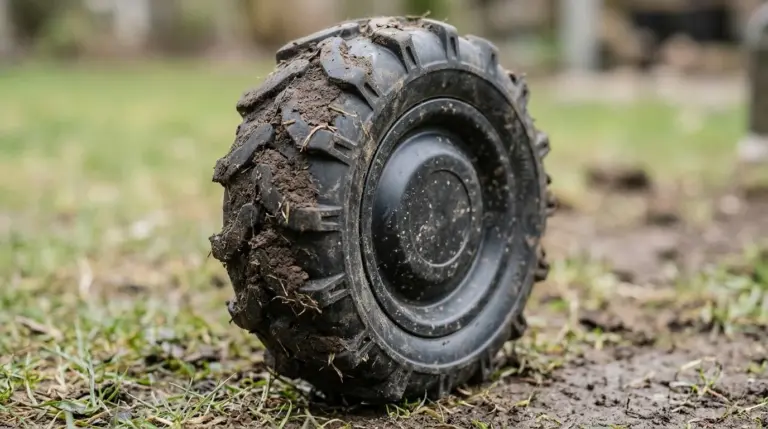
A robot mower stays put when all of its drive wheels touch firm ground. When one wheel drops into a hole, the chassis tilts and the opposite wheel can lose grip. Eufy’s stuck guide describes the same pattern with exposed tree roots, which can lift one side of the mower while the other wheel loses grip. In Eufy’s description, a mower caught in a rut or over a drop stops and needs manual help.
Robomow says its larger wheels can maneuver over small holes and depressions, and that its pendulum-suspended deck keeps adjusting to the ground. Its lift and tilt sensors are meant to cut the blade when ground contact is lost. Those features reduce the chance of a stop on small irregularities, but none of the sources gives a wheel size or a hole depth that guarantees the mower will clear a particular dip. Raised mounds are a related problem, covered in our guide to mole hills and robot mowers.
Soft soil and wet grass make dips worse
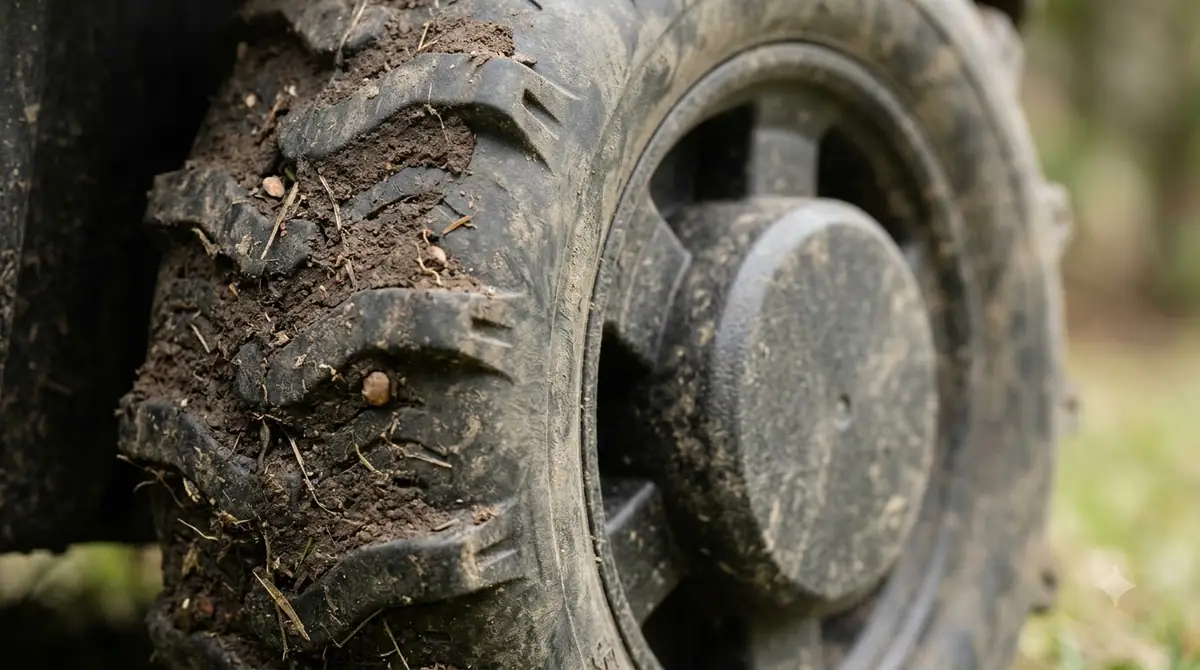
Wet ground changes the picture, and lawns on clay soil that stays wet are the extreme case. Eufy notes that clay and worn turf can turn soft after a summer storm or regular sprinkler use, and that a wheel can sink near a garden edge or a path that gets frequent use. Robomow warns that its robot can slip, especially in wet weather. Ecovacs advises mowing when the lawn is dry, because wet lawns can trap the robot.
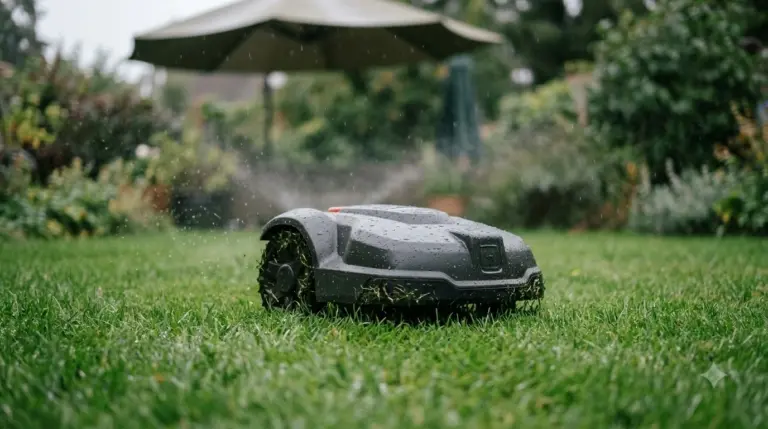
Will a robot mower get stuck on a lawn with holes and dips after rain? It is more likely. In practice, a dip that the mower handles on a dry morning can become a stop after a heavy rain. Our reading is that the first few weeks after installation are the best time to watch for these spots, because the mower’s routine will reveal where the ground gives way. Ecovacs suggests turning on the rain sensor and setting a delay, so the mower waits for the lawn to dry before it starts.
Fill and firm the spots before the first mow
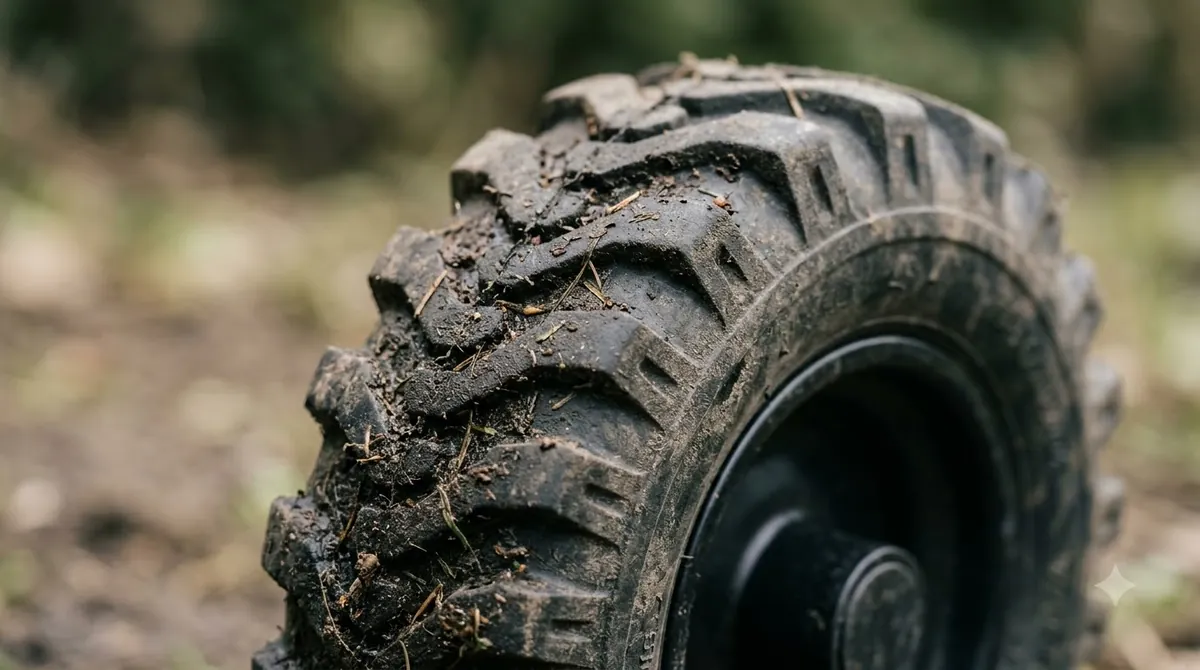
Preparation is cheaper than rescuing a stuck mower, and our guide to preparing your yard for a robot mower covers the wider checklist. The sources agree on a short sequence, and none of the steps requires a specific brand of mower.
- Walk the lawn. Mark every hole, dip and rut you can see, and measure the deepest ones so you can compare them with the 2-inch figure above.
- Fill holes with topsoil or a soil-and-sand mix. Anker and Yarbo both recommend this for dips. Pack the fill down so that the surface matches the turf around it.
- Firm loose soil and repair ruts. Eufy’s guide covers filling shallow holes and firming loose soil. Where a rut has formed, let the area dry first and then repair the surface before the next run.
- Aerate compacted areas. Anker recommends aerating compacted soil, which helps water drain and reduces the sinking that wet soil causes.
- Cut the grass lower before the first run only if the manual allows it. Ecovacs asks for a trim to below 10 cm before its robot starts, and Husqvarna lists grass that is too long among the causes of a trapped mower. Check your manual rather than assuming a single height.
Clear stones, branches and loose wires at the same time, because they can trap the mower in the same spots. Once the surface is level, run the mower on a short schedule and watch the first few cycles.
When a no-go zone is the better fix
Some spots cannot be filled, such as a drainage channel or a retaining wall edge. Eufy’s guide says a drop that keeps catching the mower should be levelled or marked as a No-Go Zone. Husqvarna’s support article takes the same approach for repeat trap spots: create a stay-out zone or an island around the spot, and if collisions continue, enlarge the isolated area. Ecovacs suggests setting recurring problem spots as restricted areas and mowing them by hand. Marks left by the mower’s own wheels are a separate topic, covered in wheel ruts and brown patches.
Our reading is that a no-go zone is a practical choice, not a failure. It keeps the mower away from the drop, and the area can be cut by hand. Check your model’s app or manual for how it defines no-go zones, since the setup steps differ between brands.
What to check before you buy or set up
If your lawn has a lot of holes and dips, the spec sheet will not tell you whether a robot mower will get stuck on a lawn with holes and dips like yours. These are the points our reading of the sources suggests you check:
- Your deepest hole and where it sits. Walk the lawn and measure, because the manufacturer pages read for this guide give no depth limit apart from one vendor’s 2-inch figure.
- Drive type and wheel design. Robomow names large wheels as the feature that helps with small holes and depressions.
- Whole-lawn levelness. If bumps cover most of the lawn, work out whether you should level the lawn before getting a robot mower instead of patching single holes.
- Deck design. A floating or pendulum deck follows the ground better than a fixed one, according to Robomow.
- Sensors. Lift and tilt sensors help the mower stop the blade when a wheel leaves the ground.
- Boundary and no-go options. Confirm the app can mark drops and repeat trap spots before you commit.
Frequently asked questions
Will a robot mower get stuck on a lawn with holes and dips that are small?
Usually not. Anker’s guide says modern models can handle mildly uneven lawns, although results depend on the model and the bump’s severity.
How deep is too deep for a robot mower hole?
Yarbo advises filling holes deeper than 2 inches before mowing. That is a vendor recommendation, and the other manufacturer pages read for this guide give no depth limit, so check your model’s manual.
Does rain make holes and dips a bigger problem?
Yes. Eufy notes that soft soil can let a wheel sink, and Ecovacs advises mowing only when the lawn is dry because wet lawns can trap the robot.
Should I fill holes or set up a no-go zone?
Fill and firm holes you can reach with topsoil. Use a no-go zone for drops and repeat trap spots that cannot be levelled.
Sources
- Anker (Eufy) blog: Do robot mowers work on uneven lawns (brand): mild unevenness, problem conditions, lawn preparation.
- Yarbo blog: Do robot mowers work on uneven lawns (vendor): holes deeper than 2 inches to fill.
- Robomow blog: robotic lawnmower on uneven surfaces (brand): wheels, deck, lift and tilt sensors, wet-weather slip.
- Honda: can robotic lawn mowers handle slopes and uneven gardens (brand): exclusion of steep, heavily rutted areas.
- Eufy blog: robot lawn mower stuck causes and fixes (brand): soft soil, roots, drops, ruts, no-go zones.
- Ecovacs support FAQ (id 44) (brand): trim below 10 cm, fill small holes, mow when dry.
- Ecovacs support FAQ (id 841) (brand): filling holes, enclosures higher than 15 cm.
- Husqvarna support: trapped Automower error (brand): repeat trap spots and stay-out zones.
 Up next8 min readBy YardWill a Robot Mower Get Stuck on a Newly Sodded Lawn?Updated Nov 11, 2026
 7 min readBy YardWill a Robot Mower Get Stuck on a Lawn with Mole Hills?Updated Nov 11, 2026
 9 min readBy YardWill a Robot Mower Get Stuck on a Soggy Lawn?Updated Nov 11, 2026
 9 min readBy YardWill a Robot Mower Get Stuck on a Lawn with Mulch Beds?Updated Nov 11, 2026
 8 min readBy YardWill a Robot Mower Get Stuck on a Lawn With Gravel Edges?Updated Nov 11, 2026
 8 min readBy YardWill a Robot Mower Get Stuck on a Newly Seeded Lawn?Updated Nov 11, 2026