
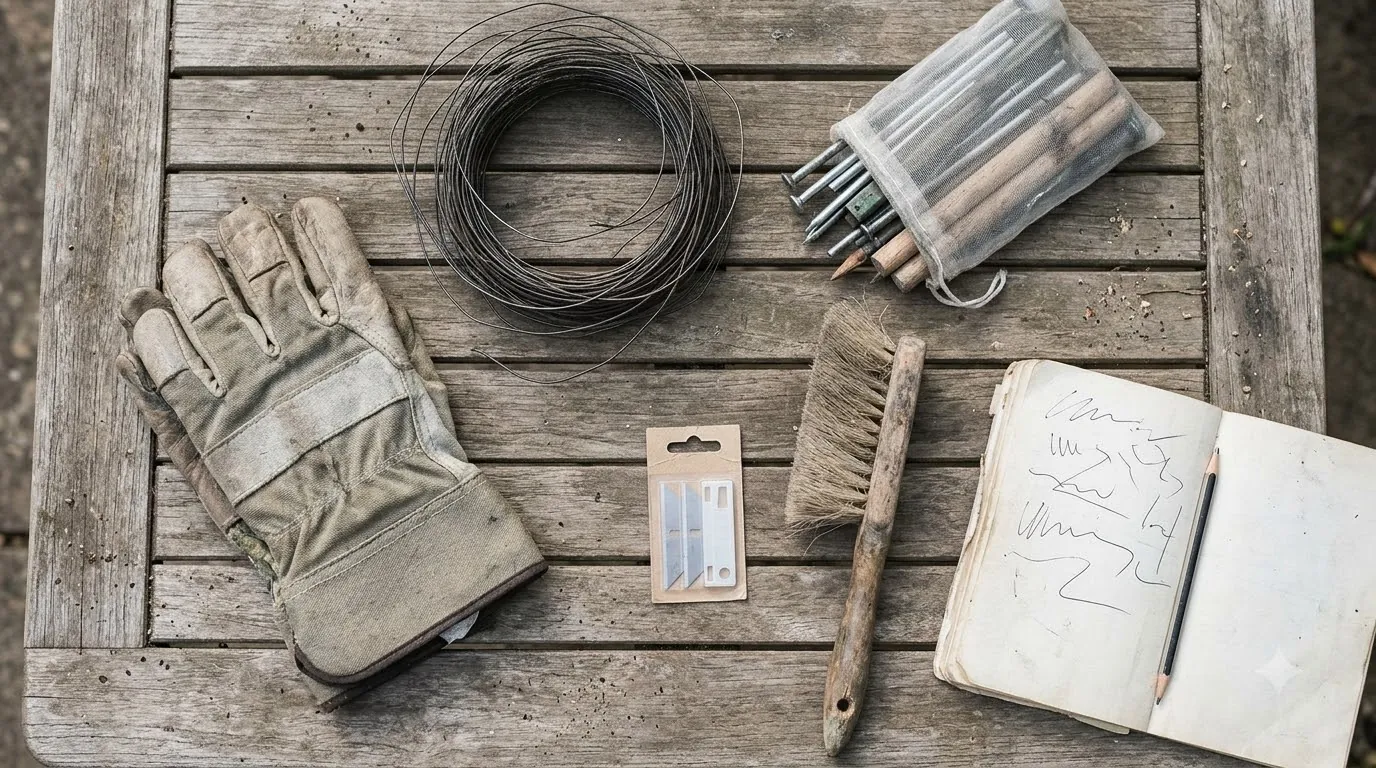

A robot mower lawn care calendar follows grass growth and temperature, not fixed dates. Start the first cut when the grass reaches about 4.5 to 5.25 inches, raise the deck for summer, keep mowing through autumn, and store the mower above freezing for winter.
The short answer
- Spring: start mowing when the grass reaches about 4.5 to 5.25 inches, then cut at 3 to 3.5 inches.
- Summer: mow as needed on growth, with the deck at its highest safe setting.
- Autumn: keep mowing while grass grows, and leave a final length of 6 to 8 cm (about 2.4 to 3.1 inches).
- Winter: store the mower indoors above 0°C (32°F) and leave the boundary wire in the ground.
How a robot mower lawn care calendar works
A robot mower lawn care calendar is built on growth, not on a date. Iowa State University Extension states that there is “no set date to start mowing.” A calendar should therefore tell you when to act, and the lawn itself should tell you when that moment has arrived.
Our reading: robots cut small amounts often, which makes them a good fit for a growth-based plan. The mower runs on its schedule, but the schedule still needs seasonal changes. Husqvarna’s seasonal guide mentions the Scheduler Tool for reducing mowing frequency in mild climates late in the season, so the calendar is a set of settings you review a few times a year, not a fixed weekly routine.
Spring: start on growth, not the date
Spring starts once the grass is growing again and the ground has dried out. Iowa State recommends starting mowing once the grass reaches 4.5 or 5.25 inches, and Husqvarna advises waiting until the grass reaches 5 to 7 cm (about 2 to 2.75 inches) before the first mow. The two figures differ, so check your mower’s manual for its own start height. Husqvarna’s spring checklist says to start with a high cutting height and lower it gradually.
After the first cut, Iowa State guidance sets the standard height at 3 to 3.5 inches and says most gardeners mow every 5 to 7 days in spring. For a robot mower, that frequency translates into a schedule that runs often enough to keep up with growth. The one-third rule still applies: never remove more than one-third of the leaf blade in a single mowing.
Husqvarna’s spring checklist for the mower itself is useful before the first run. Reinstall the charging station, walk the boundary wire to look for breaks, loose stakes, or damage, download any available firmware, and confirm a solid green LED on the charging station before you start. The UW-Madison Extension calendar adds a note on the lawn: rake up leaves and winter debris as snow melts and the ground dries.
Heads up
Do not start lawn work too early. UW-Madison Extension warns against starting before the grass is actively growing, and it also advises against a very short first mowing.
Summer: raise the deck and mow on growth
In summer, the calendar shifts from speed to height. UW-Madison Extension advises raising the mower to its highest setting before the warm weather of summer, and it says to mow as needed based on growth rather than on a fixed number of days. For height by grass type, see the best mowing height for a robot-mowed lawn.
Husqvarna gives a minimum cutting height of 2 cm (about 0.8 inches) and notes that TargetHeight lowers the mower to your chosen setting over 10 days. That slow change is useful when you move from spring height to summer height, because it avoids a sudden scalp. The same guide says to keep the charging station in a shaded spot, clean the charging contacts regularly, and use the Scheduler Tool to avoid unnecessary mowing in hot spells. If the mower stops charging, the robot mower not charging fix lists other causes.

Blades are the main summer maintenance item. According to Husqvarna, main cutting disc blades typically last 3 to 6 weeks, while EdgeCut disc blades last 9 to 12 weeks. Replace blades when the grass tips look frayed or whitened, or when the blades are damaged. Our reading is that a blade change on a set date can miss a damaged blade, so check the blade edge at the same time you check the lawn. More habits are in how to make a robot mower last longer.
Autumn: keep mowing until the lawn goes dormant
Autumn mowing continues as long as the grass is actively growing. UW-Madison Extension says to continue mowing throughout fall until lawns go dormant, and to avoid letting the lawn enter winter excessively tall. Husqvarna recommends a final grass length of 6 to 8 cm (about 2.4 to 3.1 inches) before winter, so the lawn is left slightly longer as the season ends.
The schedule should keep the mower running while growth continues, but it should stop when growth stops. Husqvarna’s Frost Guard feature parks the mower when temperatures are at risk. The Smart Routine version parks it when forecast temperatures fall below 5°C (41°F), and the sensor version parks it when the sensor reads 5°C or below at the scheduled start time. In mild climates, Husqvarna says to stay on the regular schedule and reduce frequency with the Scheduler Tool if needed. Operating limits are covered in what temperature a robot mower can work in.
Winter: store the mower and leave the wire
Winter is the storage season, so the plan moves from mowing to care. Husqvarna’s guide gives a clear sequence for the mower and its parts, and each step has a reason.
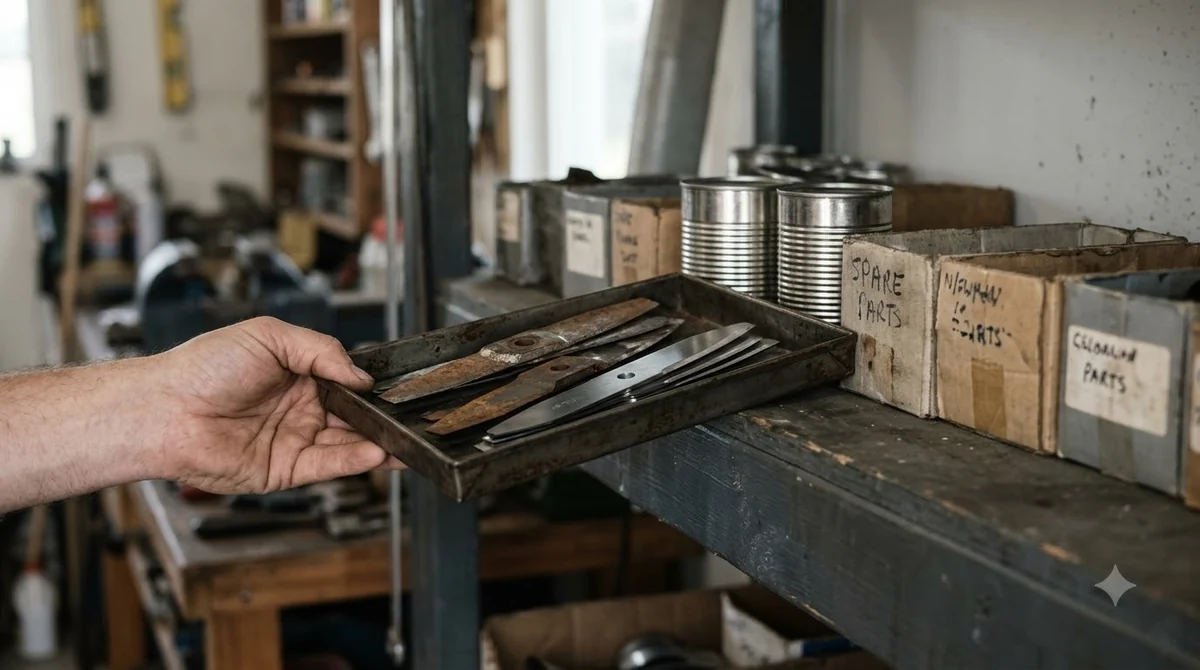
- Replace the blades and screws. Do this before storage to prevent rust.
- Clean the mower. Remove clippings from the chassis, wheels, and disc, and clean the charging contacts on the mower and the station.
- Charge fully. Fully charge the battery before you turn the mower off.
- Store indoors. Keep the mower in a dry, frost-free place above 0°C (32°F), resting on all wheels or on a wall hanger.
- Leave the wire in place. Boundary and guide wires can stay in the ground. Label them before you disconnect anything.
The charging station also goes indoors, while the power supply should be disconnected and stored in a dry, frost-free place. Husqvarna notes that NERA baseplates can stay outdoors, so check your model before you move parts. Settings are saved in both the app and the mower during storage, so the mower should be ready for spring. A fuller checklist is in robot mower winter storage.
Season-by-season table for your robot mower lawn care calendar
The table below sums up the seasons. The mowing triggers come from Iowa State, UW-Madison, and Husqvarna, and the mower tasks come from the Husqvarna seasonal guide.
| Season | When to mow | Cut height | Mower task |
|---|---|---|---|
| Spring | Once grass reaches about 4.5 to 5.25 inches, then every 5 to 7 days | First cut high, then 3 to 3.5 inches | Check the boundary wire, charging station LED, and firmware |
| Summer | As needed, based on growth | Highest safe setting; minimum 2 cm | Main disc blades typically last 3 to 6 weeks; clean contacts |
| Autumn | While grass is actively growing, until dormant | Final length 6 to 8 cm (about 2.4 to 3.1 inches) | Use Frost Guard; reduce frequency with the Scheduler Tool in mild climates |
| Winter | No mowing once grass is dormant | Not applicable | Store above 0°C (32°F); replace blades before storage |
Warm-season and cool-season grasses slow down at different times, so this robot mower lawn care calendar is a starting point. Use the lawn to confirm the timing before you change the schedule.
Build your own calendar from triggers
A workable robot mower lawn care calendar uses three triggers: grass height, daytime temperature, and mower alerts. Start a mowing run when the grass reaches the spring trigger height, and check the calendar again when the grass stops growing. Our reading is that this approach is more reliable than a fixed monthly plan, because a wet spring can speed growth and a dry spell can slow it.
Keep your calendar as a short list of decisions, not a long schedule. Note the first-cut date, the summer height change, the date you last mowed in autumn, and the date you stored the mower. Those four dates give you a record to compare from year to year.
Frequently asked questions
When should a robot mower start in spring?
Start when the grass is actively growing and reaches about 4.5 to 5.25 inches, according to Iowa State University Extension. Husqvarna suggests 5 to 7 cm for the first mow. Wait until the conditions have dried out, as UW-Madison Extension advises for the spring lawn.
How high should a robot mower cut in summer?
UW-Madison Extension advises raising the mower to its highest setting before summer heat. Husqvarna lists a minimum cutting height of 2 cm, and its TargetHeight setting lowers the deck gradually over 10 days when you change the height.
When should a robot mower stop in autumn?
Keep mowing until the lawn goes dormant, according to UW-Madison Extension. Husqvarna recommends a final length of 6 to 8 cm before winter, and Frost Guard parks the mower when temperatures are at risk.
Should a robot mower run in winter?
Husqvarna’s winter guidance focuses on storage, not mowing. Where grass keeps growing late in the season, it suggests staying on the regular schedule and reducing frequency with the Scheduler Tool. In colder areas, store the mower above 0°C (32°F) and leave the boundary wire in the ground.
Sources
- Mowing tips for spring (Iowa State University Extension): first-cut height trigger, standard cut height, mowing frequency, and the one-third rule.
- Wisconsin lawn care calendar (UW-Madison Extension): raised summer height, mowing as needed, and mowing until dormancy in autumn.
- Automower support guide by season (Husqvarna): spring checks, summer blade life and height, autumn final length, Frost Guard, and winter storage.
 Up next9 min readLearnHow to Make a Robot Mower Last Longer: Battery, Blade, and Winter CareUpdated Nov 11, 2026
 9 min readLearnWorx Landroid No Wire Signal: Causes and FixesUpdated Nov 11, 2026
 9 min readLearnAnthbot M5 RTK Station Setup Problems: Causes and FixesUpdated Nov 11, 2026
 8 min readLearnHusqvarna Automower No Loop Signal: Causes and FixesUpdated Nov 11, 2026
 9 min readLearnRobot Mower Buying Guide 2026: What to Check Before You BuyUpdated Nov 11, 2026
 8 min readLearnSegway Navimow Vision Fence Not Working: Causes and FixesUpdated Nov 11, 2026