
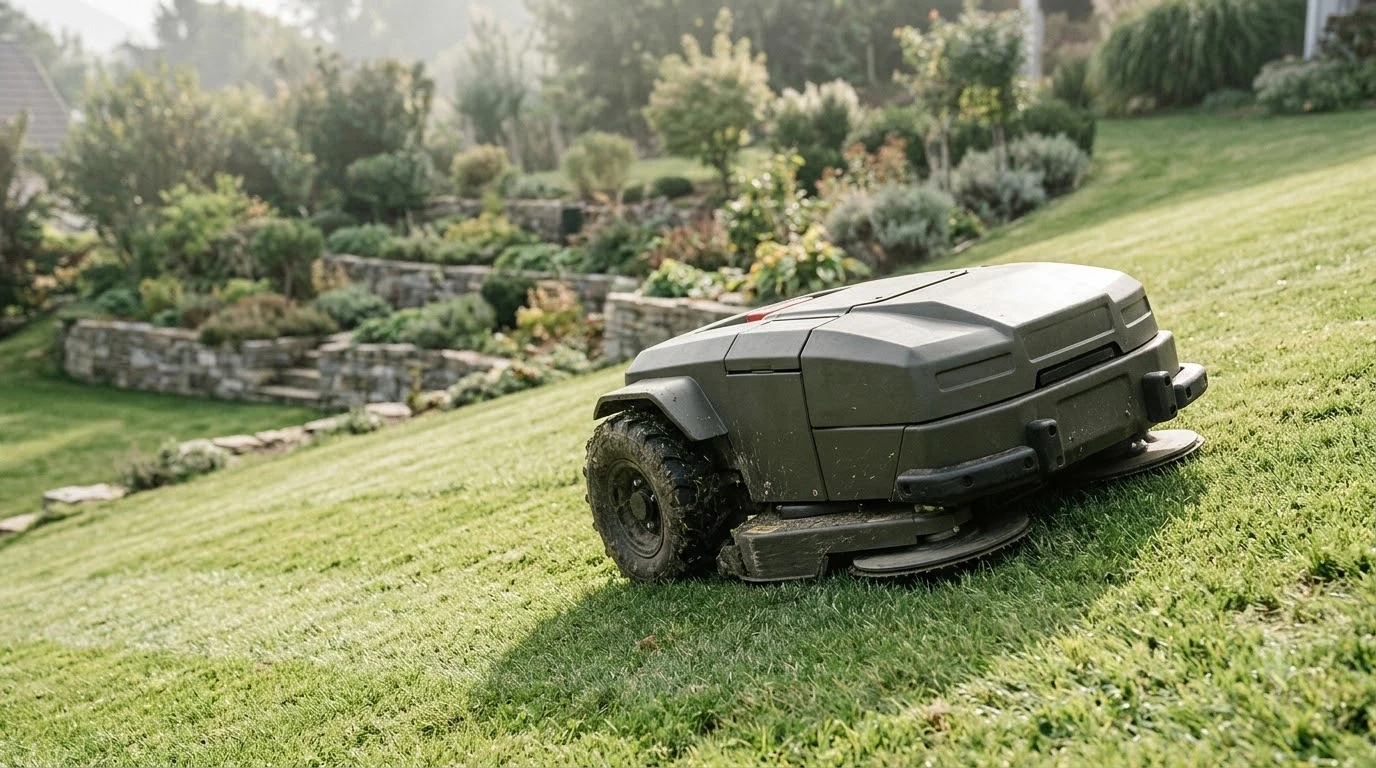

There is no single most powerful robot lawn mower. “Power” in a robot mower means four different things: how steep a slope it can climb, how large a lawn its rating covers, how long one battery charge lasts, and how wide its cutting deck is. A mower that leads on one of these can trail on another, so the right question is which of these matters for your yard. Manufacturer figures are rated under stated conditions, so check them against your own lawn before you buy.
The short answer
- Slope ability: standard Husqvarna Automower models are rated for slopes of 25% to 50%, and the all-wheel-drive 435X AWD is rated up to 70%.
- Lawn size: a rating such as 0.8 acre for the Husqvarna Automower 430X describes the area the mower is built for, not the largest area it could ever cover.
- Runtime: sourced robot mower figures range from 60 to 250 minutes per charge, with the higher end on high-end models.
- Cutting width: wider decks cover more ground per pass. They do not add climbing or cutting strength.
Why there is no single most powerful robot lawn mower
Robot mowers are built for different jobs. A compact model with a narrow deck can be the right pick for a small, flat, fenced backyard, while a large lawn with hills and tight corners calls for a different set of specs. Calling one model the most powerful would hide these tradeoffs, so this guide explains what each spec measures and what it does not.
Our reading is that buyers should first decide which constraint is hardest in their yard: steepness, size, grass thickness or a complicated shape. The spec that matches that constraint is the one to compare first, because the most powerful robot lawn mower for one yard can be a poor fit for another.
Slope ability is the spec that decides hard yards
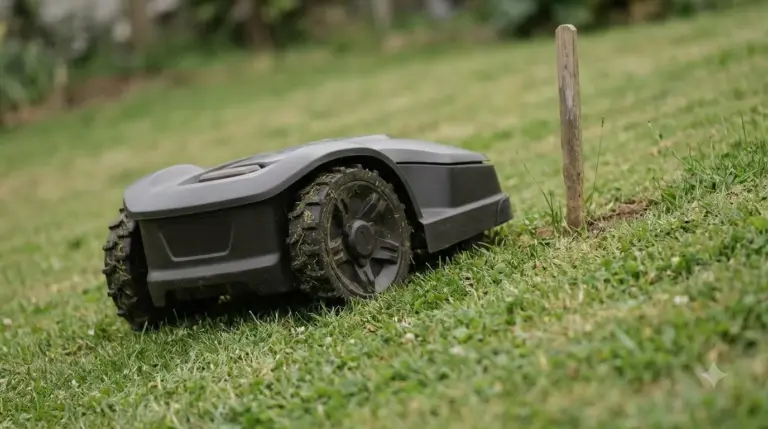
For hilly ground, our reading is that slope rating and drive type matter more than any other spec when you look for a powerful machine. Slope is the most common limit that stops a robot mower from working a lawn. Husqvarna’s support guidance says standard Automower models can handle slopes of about 25% to 50%, depending on the model, which is roughly 14 to 26 degrees. Our explainer on how slope ratings work covers the terms. The 435X AWD is listed for slopes up to 70%, or 35 degrees, and Husqvarna notes that slope capacity is different from the limit that applies at the boundary wire.
Slope is measured as rise over run. A 15 cm rise across 100 cm is 15%. Iowa State University Extension gives a similar conversion for hillsides, where 1:12 equals 8.33%. Its gardening guidance treats slopes of 20% or more as steep, and says slopes of about 30% are too steep to mow with turf, although that statement is about planting, not robot mower ratings.
The rating that matters most is often the work-area figure, not the boundary figure. Husqvarna’s table shows the difference clearly for several models. The examples below come from the Husqvarna steep-slope guidance.
| Husqvarna model group | Work-area slope limit | Slope limit at boundary wire |
|---|---|---|
| 305 and 310 | 40% | 15% |
| 320 NERA, 430X NERA, 450X NERA | 50% | 25% |
| 435X AWD and 435X AWD NERA | 70% | 50% |
Husqvarna also says to fence off any area steeper than the model’s limit, and to keep about 1.5 m (5 ft) between the bottom of a 50% to 70% slope and the boundary wire. On steep ground, the risk of slipping rises, especially when grass is wet. A steep but short bank may need a stay-out zone rather than a more powerful mower.
Lawn size rating and cutting width
Lawn size ratings tell you what a model is designed to cover, and how coverage ratings are defined is worth checking before you trust one. A most powerful robot lawn mower on a large property still needs a size rating that matches the lawn. Husqvarna lists the Automower 430X for a recommended lawn size of 0.8 acre, with a tolerance of plus or minus 20%, and gives its cutting width as 9.45 inches (24 cm). That combination shows the tradeoff: the deck width helps with coverage speed, but a larger lawn depends on the rated area and the mowing schedule, not on deck width alone.
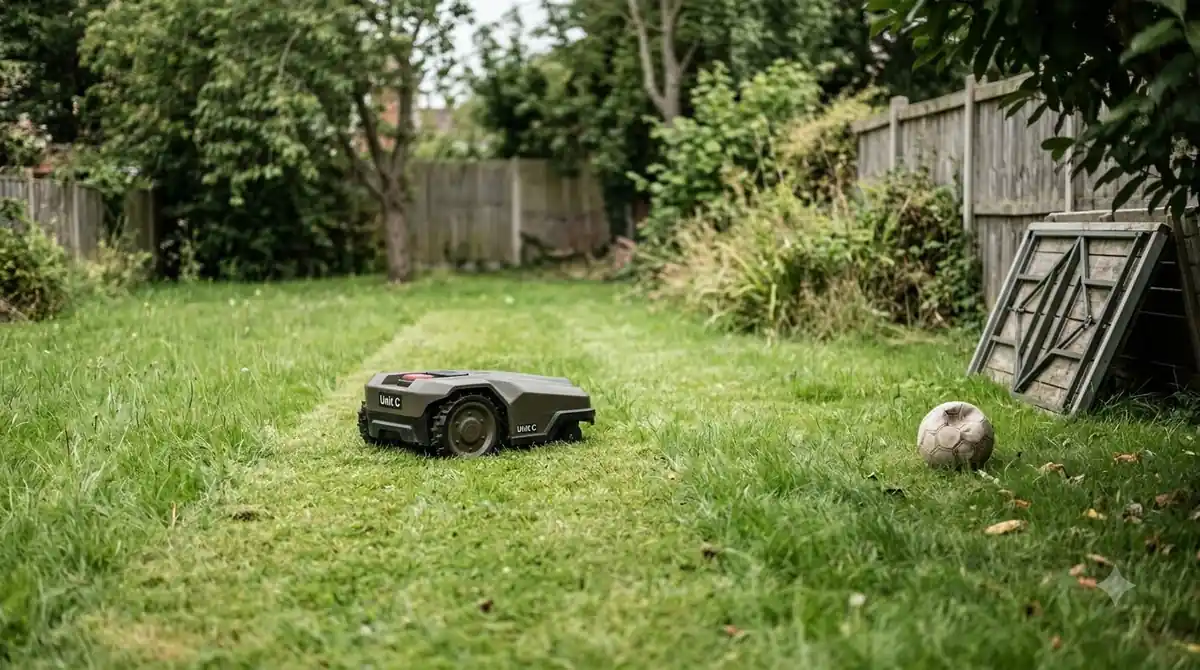
Some vendors publish larger numbers, such as a mower that “covers up to 6 acres.” Those figures are useful for comparison only if the page explains the test conditions. The Yarbo blog post we read states coverage and slope claims but does not describe the terrain, grass type or testing method behind them, so treat such figures as marketing until you can check them against an official specification.
Battery runtime and thick grass
Runtime is the spec that most affects whether a mower can finish a large lawn in one day, and what affects robot mower battery life goes deeper on the causes. Mammotion’s battery guide says robot mowers are designed for endurance, usually ranging from 60 to 250 minutes per charge. Its table lists 60 to 150 minutes for entry-level robots and 150 to 250 minutes for high-end models.
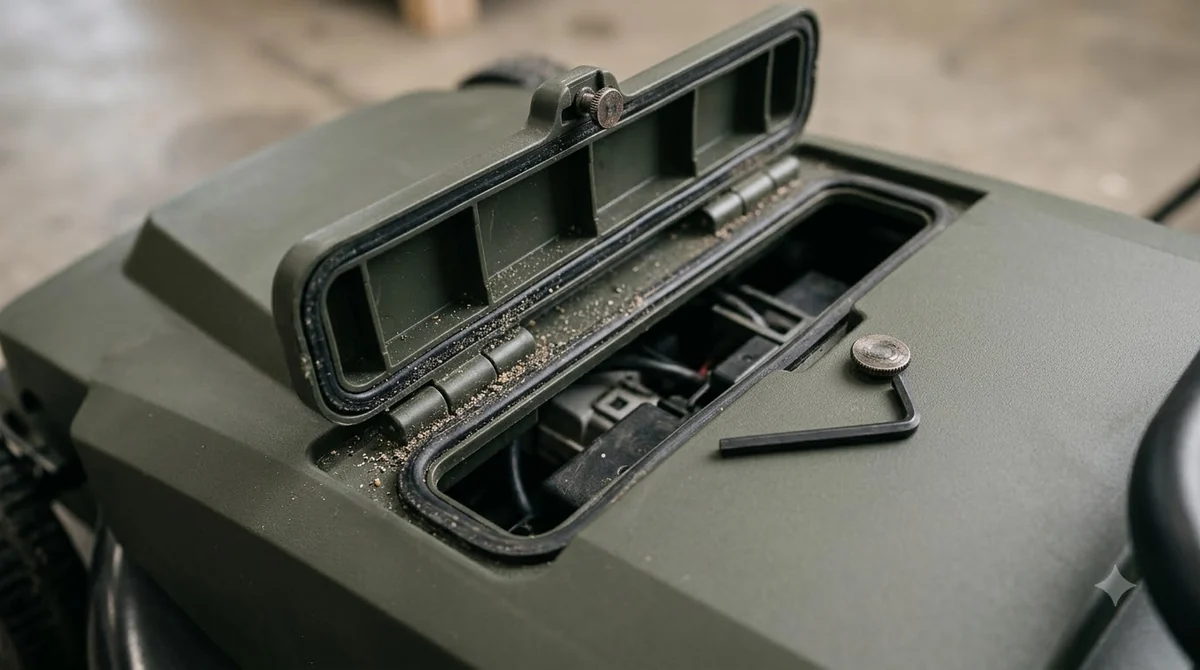
Real runtime depends on conditions, and a long rating does not guarantee a full day of mowing on every lawn. The same guide says low temperatures reduce performance, and recommends charging within a 10 to 25 °C range (50 to 77 °F). It also advises replacing a battery when its capacity drops below 70% of the original, and suggests keeping the charge between 20% and 80% to slow capacity loss. Thick, tall grass draws more power than a light trim, so a mower with a long rating may still need shorter sessions on a neglected lawn.
Heads up
Runtime figures are generic ranges from a vendor guide, not a test of any single model. Check the manual for the exact model you are considering.
Traction, wheels and all-wheel drive
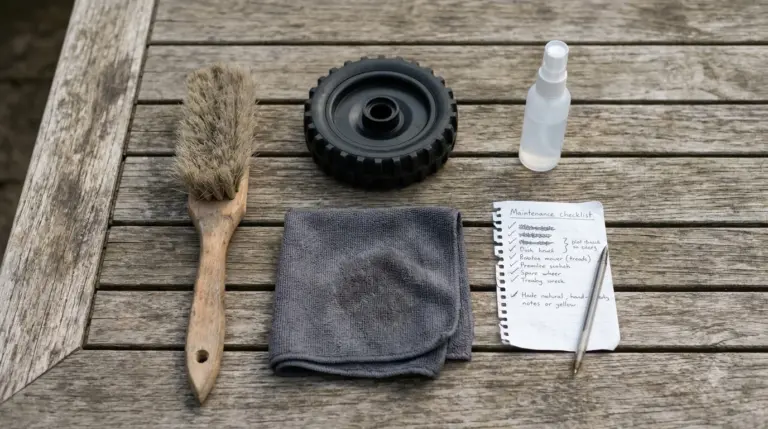
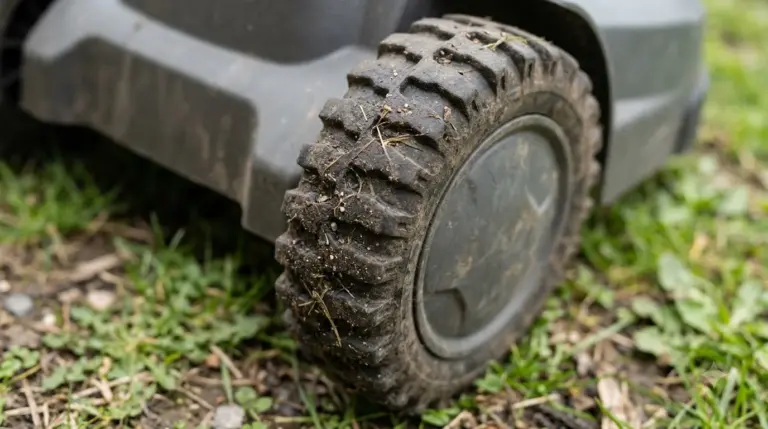
Traction decides whether a mower can climb a slope it is rated for, especially on damp grass. Husqvarna advises cleaning clogged wheels, because grass build-up makes slopes harder to climb, and add-ons such as traction spikes for slopes exist for the same problem. Many Husqvarna models offer an optional Terrain Kit with heavier rear wheels and wheel brushes for better grip.
Traction and wheels also explain why a most powerful robot lawn mower on paper can still struggle on a damp slope. All-wheel drive is what sets the 435X AWD apart in Husqvarna’s slope table, where it is the only group listed at up to 70%. Our reading is that AWD matters most on hills and uneven ground, while a flat, even lawn may not need it. See what all-wheel drive does on a robot mower for the wider picture.
What to check before you buy
- Measure the lawn. Count only grass, and leave room for obstacles, beds and tight corners. Our reading is to size up rather than buy at the edge of the rating.
- Find the steepest slope. Convert it to percent if needed, using rise over run. Then compare it with the work-area figure, not only the boundary figure.
- Read the battery rating against your lawn. Runtime of 60 to 150 minutes suits a smaller, simpler lawn, while larger or thicker lawns need a longer-running model or more sessions.
- Check the cutting width and height. A wider deck covers more per pass, but it does not change slope or traction.
- Confirm the source. Look for a manufacturer manual or support page for the exact model, and treat coverage claims with no test conditions as marketing.
Frequently asked questions
Is there one most powerful robot lawn mower?
No single model is the most powerful for every yard. Slope ability, lawn size rating, runtime and cutting width each measure a different kind of strength, so the best match depends on which constraint is hardest on your lawn.
What slope can a robot lawn mower climb?
Husqvarna lists standard Automower models at about 25% to 50% (14 to 26 degrees), depending on the model, and the 435X AWD at up to 70% (35 degrees). Check the work-area figure for your exact model, because boundary-wire limits are lower.
Does a wider cutting deck mean a more powerful mower?
Not in the sense of climbing or cutting strength. A wider deck covers more ground per pass, which helps with larger lawns. Slope ability and traction depend on drive system, wheels and motor design.
How long does a robot mower battery last on one charge?
A vendor battery guide gives a usual range of 60 to 250 minutes per charge, with entry-level models at 60 to 150 minutes and high-end models at 150 to 250 minutes. Cold weather reduces performance, and thick grass draws more power.
Sources
- Husqvarna support: optimizing an Automower installation for steep slopes (manufacturer): slope limits, work-area and boundary figures, slope formula, stay-out guidance and traction tips.
- Husqvarna Automower 430X product page (manufacturer): recommended lawn size and cutting width.
- Iowa State University Extension: Gardening on Slopes and Hillsides (university extension): slope as rise over run, percent conversion and steepness thresholds, used for context only.
- Mammotion: how long does a lawn mower battery last (manufacturer guide): runtime ranges, temperature effect, battery replacement and charge window.
- Yarbo blog: can a robot lawn mower go uphill (manufacturer blog): vendor slope and coverage claims, noted as marketing without test conditions.
 Up next9 min readBest Robot MowersBest Robot Lawn Mower for 3 Acres: What the Ratings Really CoverUpdated Nov 11, 2026
 8 min readBest Robot MowersBest Robot Lawn Mower for Texas Lawns: 4 Specs to CheckUpdated Nov 11, 2026
 8 min readBest Robot MowersMost Accurate Robot Lawn Mower Navigation for Your YardUpdated Nov 11, 2026
 8 min readBest Robot MowersMost Popular Robot Lawn Mower in the US: What Sources Can ConfirmUpdated Nov 11, 2026
 8 min readBest Robot MowersWhich Wireless Robot Mower Is the Most Reliable? How to Judge ItUpdated Nov 11, 2026
 8 min readBest Robot MowersWhich Robot Lawn Mower Is Best for Uneven Ground: 3 SpecsUpdated Nov 11, 2026