
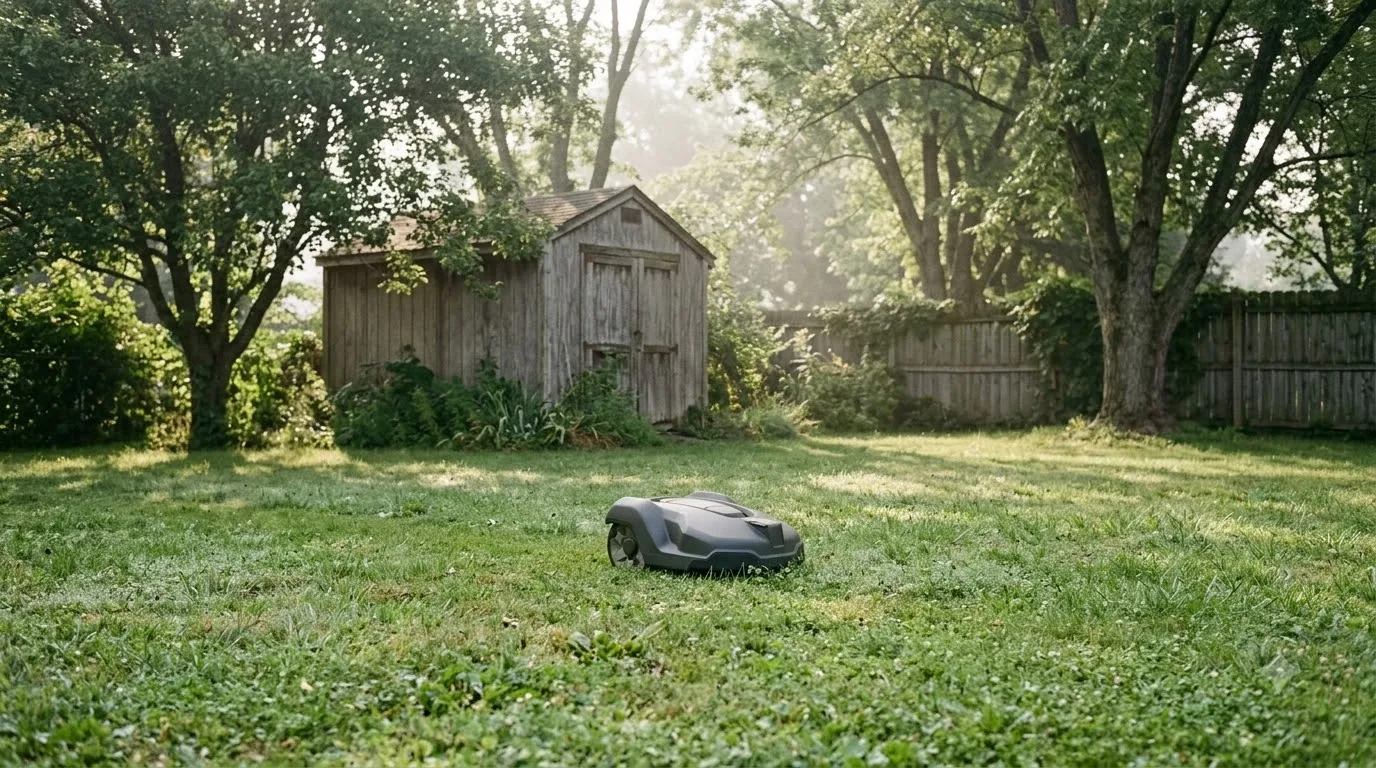

A robot mower for a desert landscaping with small lawn works best when its temperature limits, the grass type and the mowing height all match the heat. Desert lawns are often small, sun-exposed and irrigated, so the mower’s operating and charging range matters as much as its cutting system. This guide uses manufacturer and University of Arizona Extension sources, as of November 2026.
The short answer
- Check temperature first. The Husqvarna Automower support article lists operation at 0 to 50 °C (32 to 122 °F) and charging at 0 to 45 °C (32 to 113 °F).
- Shade the charging station. Husqvarna advises placing the charging station in an area with protection from the sun.
- Raise the cut in heat. University of Arizona Extension recommends raising the height of cut during summer heat stress, and never removing more than one-third of the lawn height in one mowing.
- Mow at least weekly in summer. The UA low-elevation guide sets a minimum of one mowing per week for bermudagrass.
Why desert yards change the decision
Heat, dry soil and short cool seasons change how often grass needs cutting and how tall it should stay, so a mower spec sheet alone does not answer the question for a desert lawn.
University of Arizona Extension treats summer heat stress as a reason to adjust the height of cut, not only the schedule. A robot mower runs on a timer rather than on a weekly walk with a push mower, so its heat limits and dock placement affect the lawn every day the timer runs. Our reading: for a small desert lawn, check those two points before comparing blade systems or battery size. For more on cutting in heat, see mowing a lawn in heat and drought.
Temperature limits to check first
The Husqvarna support article gives the operating, charging and storage ranges for the Automower. According to the page, the mower will not start when temperatures fall outside its limits, which prevents damage from extreme temperatures.
| Limit (Husqvarna Automower) | Range |
|---|---|
| Operation | 0 to 50 °C (32 to 122 °F) |
| Charging | 0 to 45 °C (32 to 113 °F) |
| Storage | 0 to 50 °C (32 to 122 °F) |
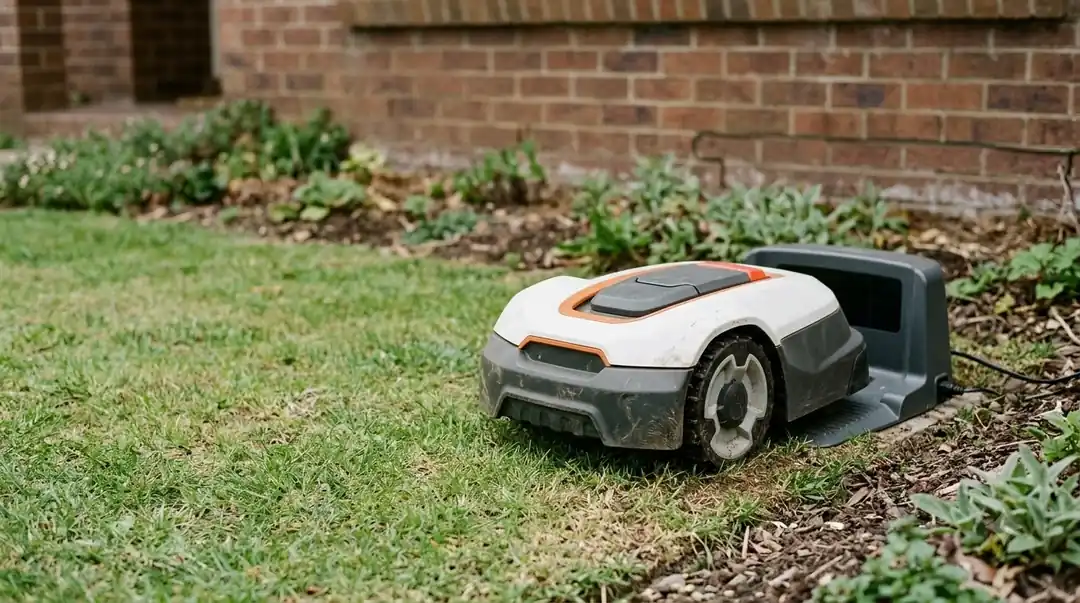
The charging range is narrower than the operating range, so a mower that can run at a given temperature may still be unable to recharge there. The support page also advises placing the charging station where it has protection from the sun, so the mower does not overheat while docked and charging (where to put the charging station covers placement).
Heads up
These figures come from one manufacturer’s support article. This review did not read temperature limits for other brands, so check the owner’s manual for the model you are considering.
Mowing height for desert grass
Desert grass height depends on the species and the maintenance level. The University of Arizona bulletin on mowing desert turfgrass gives a base height for each grass and says the next mowing should happen when the grass is about one-third taller than that base height.
| Grass | High maintenance: base height / mow at | Low maintenance: base height / mow at |
|---|---|---|
| Common bermudagrass | 1 in / 1 1/3 in | 2 in / 2 2/3 in |
| Zoysiagrass | 1 in / 1 1/3 in | 2 in / 2 2/3 in |
| St. Augustinegrass | 1 in / 1 1/3 in | 2 1/2 in / 3 1/3 in |
| Buffalograss | 1 1/2 in / 2 in | 3 in / 4 in |
| Perennial ryegrass | 1/2 in / 2/3 in | 2 in / 2 2/3 in |
The same bulletin says the maximum height before mowing is the base height multiplied by 1.33. Fine-textured grasses that tolerate a cut of 1 inch or shorter must be mowed more often than coarse, upright grasses. In summer heat, raise the height of cut if possible, and under trees or on the north side of a building, let the grass grow taller.
The bulletin also says to avoid mowing wet turfgrass, which balls up and clogs the blades and deck, and that dull blades cause scalping and torn leaves, so blades should stay sharp and properly adjusted. Our reading is that a robot mower for a desert landscaping with small lawn should have its run windows kept clear of irrigation times, and its blades checked on a schedule.
Our reading: when you set a robot mower, pick a height inside the species range rather than the lowest setting the mower allows, and raise it during heat. Confirm the mower’s height range covers the mow-at value for your grass before you buy, and see how to read robot mower specs if the spec sheet is unclear.
Irrigation and mowing frequency
For established summer bermudagrass, University of Arizona Extension recommends deep, infrequent irrigation every three days rather than several short sessions each day, and mowing at least once per week.
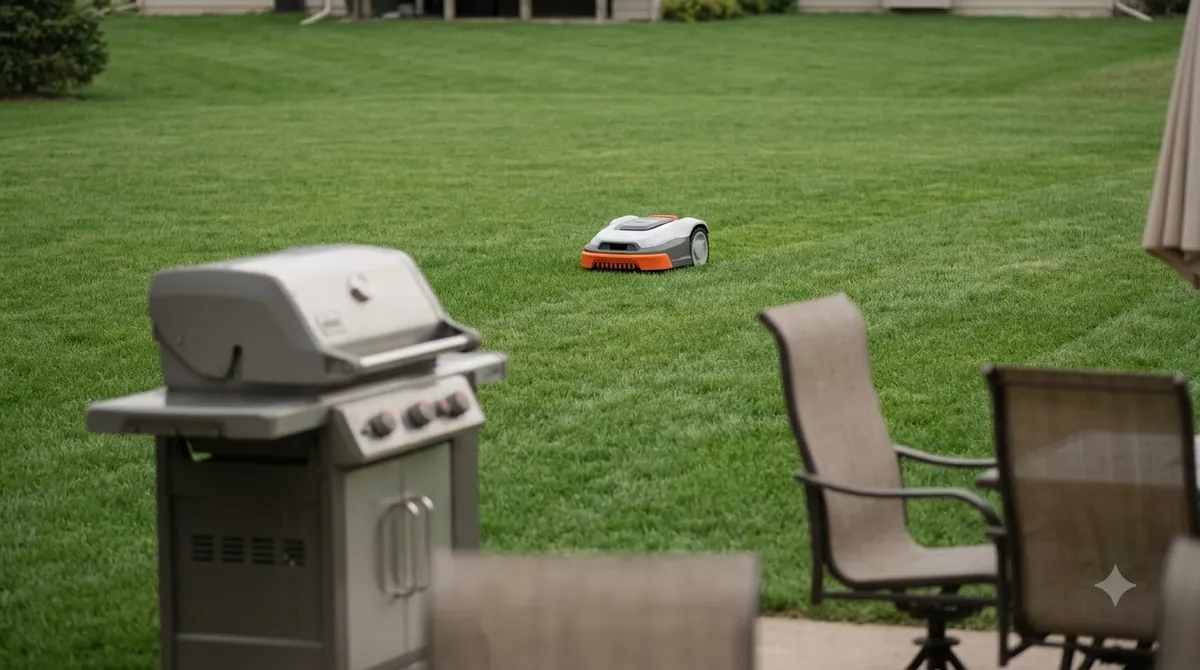
The UA low-elevation guide names common bermudagrass as the best adapted turfgrass for heat and water needs in Phoenix, Tucson, Casa Grande and Yuma. It also says to aerify in June through August to reach deep roots. For schedule detail on this grass, see how often to mow bermuda grass. In winter, dormant, non-overseeded bermudagrass generally needs no supplemental water, while overseeded winter turf may need about ½ to 1½ inches of water per week from November through May, depending on soil, temperature and rainfall.
Our reading: a robot mower that runs more often than once a week does not break the one-third rule by itself. The risk comes from cutting too low in heat, so the height setting matters more than the schedule.
Small lawn layout
A robot mower for a desert landscaping with small lawn has little room to turn, and a small lawn leaves little room for the mower to turn, so edges, planting beds and paving decide how much of the grass gets cut.
This review did not find a readable manufacturer or extension source on dust, fine sand or UV exposure for robot mowers in desert conditions, so this guide cannot say how a given model handles them. If the small lawn borders gravel, paving or beds, ask the brand how its edge handling works and where the boundary wire should sit.
What to check in a robot mower for a desert landscaping with small lawn
Four checks cover most of the desert-specific risk: temperature range, cut height range, dock shade and written limits from the brand.
- Temperature range. Compare the operating and charging limits with the hottest days where you live.
- Cut height range. Confirm the minimum and maximum height reach the mow-at value for your grass.
- Dock shade. Plan a spot with protection from the sun for the charging station.
- Written limits. Ask the brand for dust, sand and UV guidance in writing before you buy.
Frequently asked questions
Can a robot mower work in desert heat?
It depends on the model. The Husqvarna Automower support article lists operation up to 50 °C and charging up to 45 °C, and says the mower will not start outside its limits. Check the manual for the model you are considering.
What mowing height should desert grass use?
For common bermudagrass, University of Arizona Extension lists a base height of 1 inch for high maintenance and 2 inches for low maintenance. Raise the cut during summer heat stress.
How often should a desert lawn be mowed?
The UA low-elevation guide for bermudagrass says to mow at least once per week. Mowing more often is fine as long as no more than one-third of the lawn height comes off at a time.
Should the robot mower charging station sit in full sun?
Husqvarna advises placing the charging station in an area with protection from the sun, so the mower does not overheat while charging.
Sources
- Husqvarna support: at what temperature can I use, charge and store my Automower (manufacturer): operating, charging and storage ranges, and charging station shade advice.
- Mowing Turfgrasses in the Desert, AZ1681 (University of Arizona Cooperative Extension): base mowing heights, one-third rule, summer heat and shade advice.
- Mowing Turfgrasses in the Desert (University of Arizona Cooperative Extension): mowing height and frequency relationship.
- Turfgrass maintenance guide for low-elevation Arizona lawns (University of Arizona Cooperative Extension): adapted bermudagrass, weekly mowing, irrigation and overseeding guidance.
 Up next9 min readBy YardBest Robot Mower for a Small Backyard in the City: What to Check FirstUpdated Nov 11, 2026
 8 min readBy YardHow Small Can a Yard Be for a Robot Mower?Updated Nov 11, 2026
 9 min readBy YardCan a Robot Mower Cut Thick Southern Grass?Updated Nov 11, 2026
 8 min readBy YardBest Robot Mower for a Coastal Yard With Salty Air: What to CheckUpdated Nov 11, 2026
 7 min readBy YardBest Robot Mower for a Postage Stamp Lawn: What FitsUpdated Nov 11, 2026
 8 min readBy YardWill a Robot Mower Get Stuck on a Newly Seeded Lawn?Updated Nov 11, 2026