
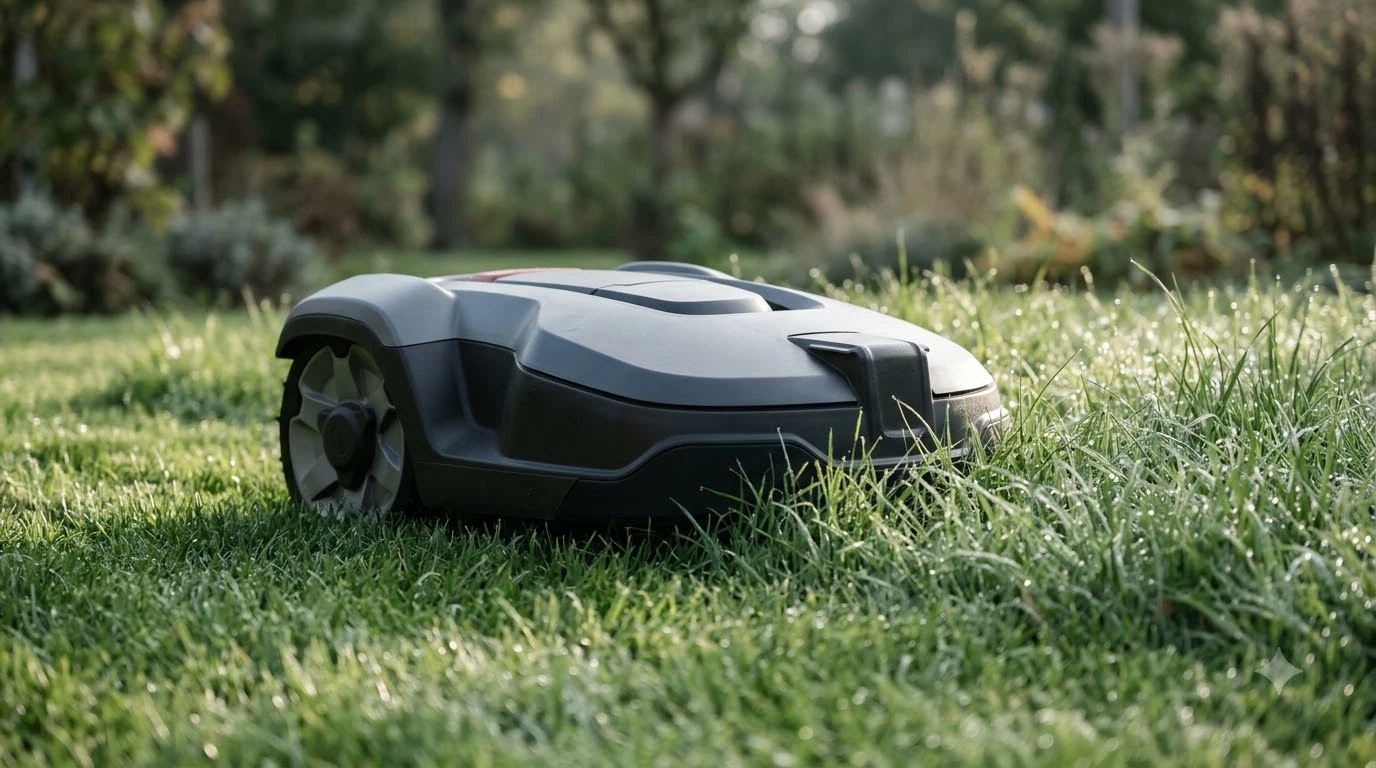

When you look for the best lawn aerator for robot mower lawns, start with a core aerator that pulls soil plugs about 2 to 3 inches deep. A robot mower does not tow an aerator, so the tool is a hand-operated or walk-behind machine, and the main risk is the boundary wire that the robot follows. We could not find an independent test that ranks aerators for robot lawns, so this guide explains what to check instead of naming a winner.
The short answer
- Pick core over spike for compacted or clay soil, because core tines remove plugs of soil.
- Aim for 2 to 3 inches of hole depth, spaced 2 to 4 inches apart.
- Mark the wire first. Robomow warns that wire laid only 1 to 2 cm deep can resurface when you scarify the lawn.
- Aerate in spring or fall for cool-season grass, and in summer for warm-season grass in hot regions.
Core aerators fit most compacted robot mower lawns
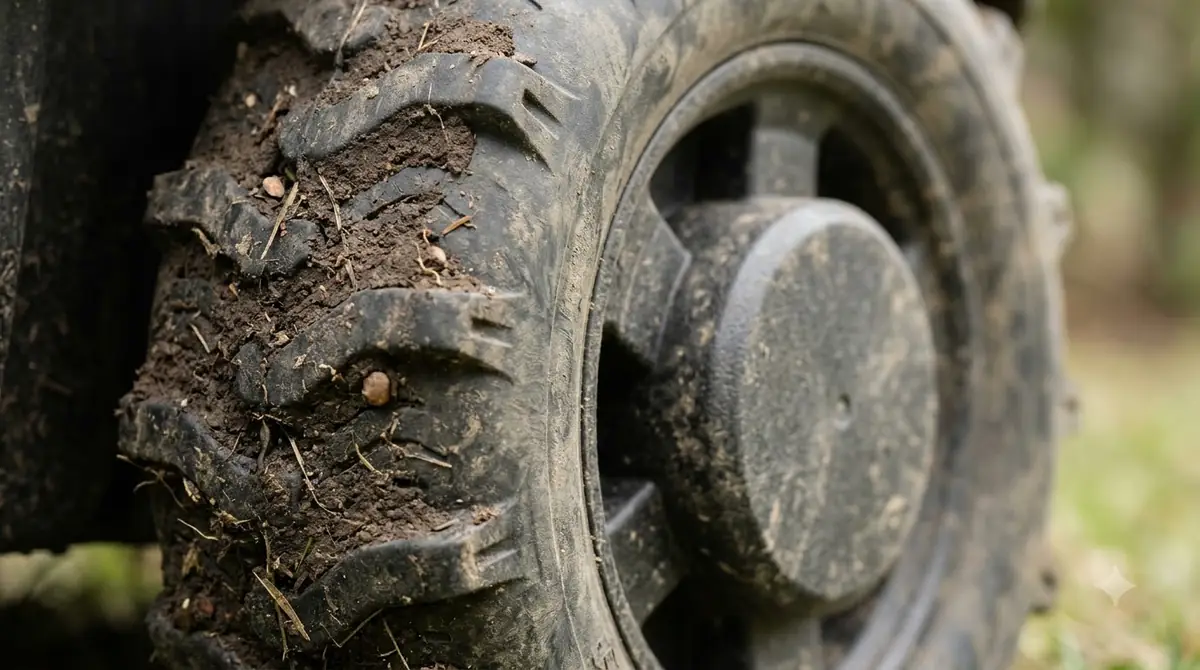
A core aerator pulls out small plugs of soil, while a spike aerator only pushes holes into the turf. Mammotion’s aeration guide says core aeration suits severely compacted and clay soils, and rolling spike tools suit loose soil that is monitored and only needs light maintenance. Colorado State University Extension notes that aeration works best when real cores or plugs of soil are pulled, and it describes holes two to three inches deep, no more than two to four inches apart, as the target for a healthy lawn.
Our reading is that robot mowers run often over similar paths, so compacted soil under the wheels is a likely problem in these yards. A core aerator is the better default for these lawns, and spikes are the option to choose only when the soil is loose and the lawn is not heavily worn.
| Tool type | What it does | Best fit for a robot mower lawn |
|---|---|---|
| Core aerator | Removes plugs of soil, opening the root zone | Compacted, clay, or heavily used lawns |
| Spike aerator or spike shoes | Pushes holes into soil without removing material | Loose or sandy soil with light traffic |
Protect the boundary wire before you aerate
The boundary wire is the part of a wired system most likely to be hit by a tool that goes into the soil. Robomow’s boundary wire depth guide says wire laid only 1 to 2 cm deep risks resurfacing the next time you scarify, and that a depth of about 4 to 5 cm is optimal to protect it. Worx’s support page adds that damage to the boundary wire can cause problems with the mower’s operation.
Core tines reach 2 to 3 inches (about 5 to 8 cm), which is deeper than the 4 to 5 cm Robomow calls optimal for wire, so our reading is that the wire is within reach. The safest order is to locate the wire path, mark it on the surface, and keep the aerator’s tines clear of it. After the job, check the mower’s loop status before the next scheduled cut, so a weak or missing signal is found before the mower is left stranded on the lawn. See whether to bury or peg the boundary wire before you choose a tool.
Manual and walk-behind tools fit a robot mower yard
The best lawn aerator for robot mower lawns is usually a manual or walk-behind core model rather than a tow-behind one, because tow-behind machines are built to be pulled by a riding mower or a tractor. Our reading is that a yard maintained by a robot does not normally have a riding mower on hand, so the tow-behind design adds cost and a second machine without a clear benefit.
Lawn size is the other factor. Manual tools take longer on large areas, so for a big lawn it may be worth comparing a walk-behind model against renting a larger unit for one session each year.
When to aerate a lawn a robot mower maintains
For cool-season lawns, spring and fall are the usual windows. Colorado State University Extension says lawns can be aerated any time the ground is not frozen, but not when it is extremely hot and dry. Ask Extension, a network of university extension answers, advises that cool-season lawns should be aerated by late September, followed by compost and overseeding.
Warm-season lawns follow a different calendar. The University of Arizona low-elevation guide recommends aerifying from June to August so the roots can reach deeper moisture during the hot months. Mammotion’s guide suggests once a year for most residential lawns, twice for high-traffic areas, yearly for heavy clay, and every two to three years for sandy soil.
Prepare the lawn and the mower before you aerate
Preparation takes about a day, and it helps the tines go deeper and keeps the wire and the sprinklers safe. The steps below combine the Colorado State University and Mammotion guidance.

- Water the day before. Water the lawn thoroughly so the soil is soft enough for plugs to come out cleanly.
- Mark buried lines. Flag sprinkler heads, shallow irrigation lines, and cable TV lines before the aerator goes on the lawn.
- Mow lower first. Mammotion advises mowing to about 3 to 5 cm before aerating, so the tines reach the soil.
- Leave a rest before the next cut. Wait at least 2 to 3 days before mowing again, and fertilize within 24 to 48 hours.
If thatch is more than half an inch thick, Colorado State University advises leaving the cores on the lawn so they can work back into the grass. Otherwise the cores can be removed or left in place.
Checks before you buy the best lawn aerator for robot mower lawns
Before buying the best lawn aerator for robot mower lawns, check the hole depth it can reach, the tine type, the weight, and whether the tool needs a riding mower to pull it. The table below gives the checks that matter most for this type of yard, with the reason for each.
| Check | What to look for | Why it matters here |
|---|---|---|
| Hole depth | Reaches 2 to 3 inches | Matches the depth Colorado State University describes |
| Tine type | Hollow core tines for compacted soil | Core tines remove plugs, per Mammotion’s guidance |
| Power source | Manual or walk-behind | Tow-behind models are built for riding mowers or tractors (our reading) |
| Lawn size | Width and speed that fit your yard | Large lawns take longer with manual tools |
This guide does not list prices or model rankings. Check the current price on the seller’s page before buying, because prices change often.
Frequently asked questions
Can a robot mower pull an aerator?
No. Our reading is that a robot mower is a cutting machine, not a tow vehicle, and tow-behind aerators are built for riding mowers or tractors. A manual or walk-behind tool is the practical choice for a robot mower yard.
Is spike aeration enough for a robot mower lawn?
Spike aeration is usually a lighter option, so the best lawn aerator for robot mower lawns with compacted soil is a core tool. Colorado State University Extension says aeration works best when cores are pulled, and Mammotion’s guide recommends core aeration for severely compacted and clay soils. Spikes suit loose soil with light traffic only.
Will aerating damage the boundary wire?
It can if the wire sits shallow. Robomow says wire laid 1 to 2 cm deep risks resurfacing during scarifying and recommends about 4 to 5 cm, while core tines go deeper than that. Mark the wire path before you aerate, and check the mower’s loop status afterward.
When should I overseed after aerating?
For cool-season lawns, Ask Extension advises aerating by late September, then adding compost and overseeding.
Sources
- Lawn Aeration, Colorado State University Extension (university extension): hole depth and spacing, timing, watering, marking irrigation lines, and thatch advice.
- How to aerate a lawn, Mammotion (robot mower maker guide): core vs spike guidance, mowing height, rest period, fertilizing, and frequency.
- Locate a damaged spot in the boundary wire, Worx (robot mower maker support): how boundary wire damage affects the mower and how to locate it.
- How deep must the boundary wire be laid for robotic mowers? (Robomow): wire depth of about 4 to 5 cm and resurfacing risk when scarifying.
- Ask Extension lawn renovation answer (university extension network): late-September aeration and overseeding window for cool-season lawns.
- University of Arizona low-elevation lawn guide (university extension): June to August aeration window for warm-season lawns in hot regions.
 Up next8 min readGearBest Weatherproof Enclosure for RTK Base Station: 6 Checks Before You BuyUpdated Nov 11, 2026
 8 min readGearBest Lawn Edger to Use With Robot Mower: 6 Points to CheckUpdated Nov 11, 2026
 8 min readGearBest Mowing Strip Pavers for Robot Mower Edges: What to CheckUpdated Nov 11, 2026
 9 min readGearSmart Sprinkler Controllers and Robot Mowers: What to Check Before You Sync ThemUpdated Nov 11, 2026
 8 min readGearBest Garage for Dreame Robot Mowers: 5 Checks Before You BuyUpdated Nov 11, 2026
 10 min readGearRTK Base Station Power Cable Outdoor: What to Check FirstUpdated Nov 11, 2026