
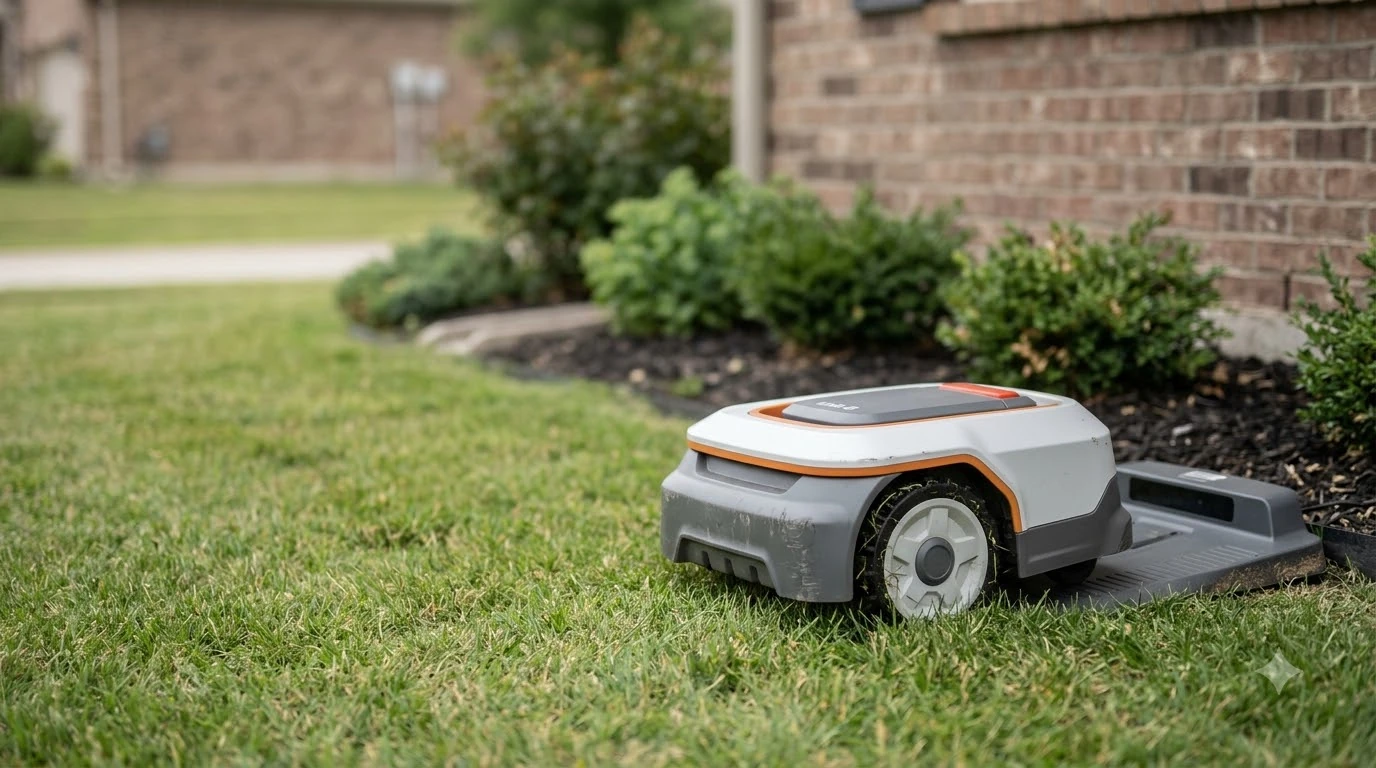

The answer to what is the best robot lawn mower for St. Augustine grass is the model that matches your lawn, not one winner. Start with the cutting height range, since UF/IFAS tested a robot cut of 2.4 inches on St. Augustinegrass, while several extension guides recommend 2.5 to 4 inches.
Each model publishes its own height range, lawn capacity, and slope rating. The decision comes down to matching those specs to your yard, not picking a winner from a roundup.
The short answer
- Cut height: the mower’s lowest and highest settings must cover your target, which Clemson lists as 2.5 to 4 inches for St. Augustinegrass.
- Lawn size: match the rated acreage to your yard with some margin, because published capacities carry a tolerance.
- Slope: check the model’s own slope rating, not a general filter band.
- Boundary: choose physical wire, virtual wire, or both, based on the shape of your yard.
What the UF/IFAS robot study shows
UF/IFAS reported in June 2026 that robot mowers ran a 2.4-inch cut on St. Augustinegrass and produced denser turf than conventional mowing. The article is the most direct robot-specific evidence for this grass, so it anchors the cut height discussion below.
The study comes from the UF/IFAS West Florida Research and Education Center. A UF/IFAS researcher described the turf as spectacular and quite healthy. The article reports denser, healthier turf that resisted pests and disease better, along with lower labor and emissions. It gives no numbers for turf density, pest rates, or disease rates, so the claims cannot be checked against data in the piece.
Read the limits before you rely on it. The article gives no sample size, plot count, trial length, or grass cultivar. It also says these mowers were designed for European lawns and cool-season grasses, so testing on warm-season turf was a departure from their intended use. The research found no negative effects when the mowers ran in rainy conditions.
In our reading, the study shows that a robot mower can hold a low cut on St. Augustine. It does not prove that any specific model will perform the same way on your lawn. Florida readers can also see our best robot lawn mower for Florida lawns guide.

Cut height range the mower must reach
Extension sources give different ranges for St. Augustinegrass, so the mower’s minimum and maximum settings need to cover the height you plan to keep. A model that cannot go as low as your target will never deliver it, however good the rest of its specs look, and so cannot be the best robot lawn mower for St Augustine grass on your lot.
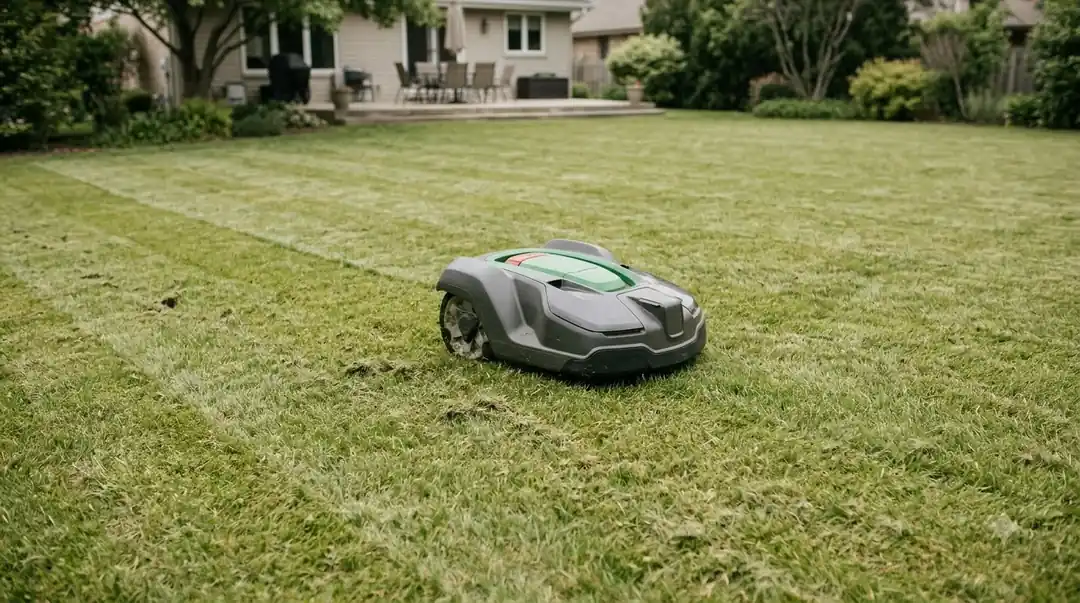
Clemson HGIC’s mowing guide lists 2.5 to 4 inches for St. Augustinegrass. The other sources differ, as the table shows.
| Source | Stated range for St. Augustinegrass | Note |
|---|---|---|
| Clemson HGIC | 2.5 to 4 inches | Cut higher under heat, drought, or shade |
| LSU AgCenter | 2.5 to 3 inches | Mowing-rule guidance |
| UC IPM | 1 to 2 inches set height | Cut higher when the turf is stressed |
| UF/IFAS news, June 2026 | 3 to 4 inches for most warm-season grasses | General warm-season figure, not St. Augustine specific |
The 2.4-inch robot cut from the UF/IFAS study sits below the 2.5-inch floor that Clemson and LSU give, and above UC’s 2-inch top. That gap is why the minimum setting matters more than the maximum for a robot mower. Our guide to what cutting height a robot mower should use for St. Augustine grass goes deeper. Two rules hold across the sources. Never remove more than one-third of the blade height in one cut, and cut higher when the turf is under stress.
How dwarf cultivars and stress change the choice
UF/IFAS names dwarf St. Augustine types, including Seville, Jade, Palmetto, and Delmar, and advises mowing them below 3 inches. A mower whose lowest setting stays above 3 inches may not suit a dwarf lawn, so confirm the cultivar on the sod label or with the installer before you compare models.
Stress changes the target too. UF/IFAS notes that St. Augustine is dormant in many parts of Florida, when watering and fertilizer should be reduced during cooler months. Clemson advises a higher cut for turf stressed by shade or drought. In our reading, a mower with a wide height range gives you room to make that change without buying a second machine. For mowing frequency, see how often to mow St. Augustine grass. So when you ask what is the best robot lawn mower for St Augustine grass, look first at the height range.
Slope, lawn size and boundary type
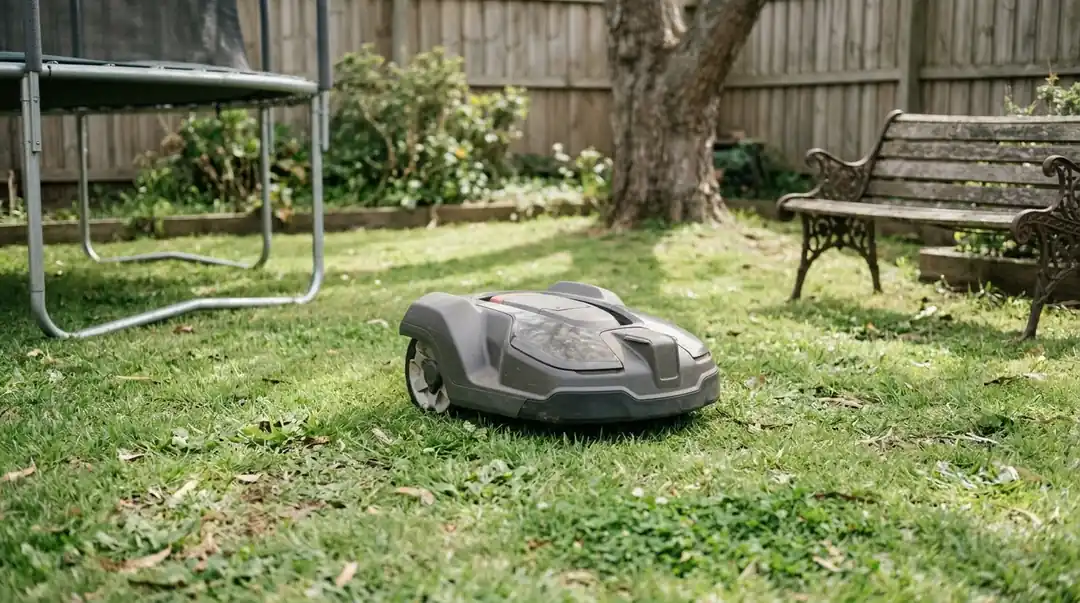
Published specs for robot mowers cover lawn capacity, slope rating, and boundary type, and these differ by model, so compare the exact model number rather than the product line. Husqvarna’s US robotic mower page shows how these figures are published. As of November 2026, its capacity figures carry a plus or minus 20 percent tolerance, its slope filter runs from 45 to 68 percent, and one model is described as navigating slopes up to 70 percent. Those are brand figures, not independent tests.
| Spec | What to check | Examples from the Husqvarna page |
|---|---|---|
| Lawn capacity | Acres the model is rated to mow | 410 iQ 0.5 acre; 440 iQ 2 acres; CEORA 6 acres |
| Slope rating | The model’s stated maximum slope | 435 iQ AWD described as up to 70 percent |
| Boundary | Physical wire, virtual wire, or both | 435X AWD physical wire only; 560 EPOS virtual wire only; 420 iQ both |
Match capacity to your lawn with margin. A yard near a model’s rated acreage leaves little room for an awkward shape or extra zones. Pick the boundary type that fits the yard, and read the installation steps in the model manual before you buy, because the setup effort differs between wire types. See how robot mower slope ratings work for the slope side.
Docking station, fire ants and lightning
UF/IFAS advises a routine insecticide for fire ants around the docking station, and grounding or surge protection against lightning. The docking station is where many of the outdoor risks concentrate, so plan its location before the mower arrives, using our guide to where to put a robot mower charging station.
The study notes that fire ants are drawn to electrical equipment and can build mounds around or near docks. A routine insecticide treatment is recommended. Lightning is a concern too, and UF/IFAS suggests grounding the docking station or at least connecting it to surge protection.
Heads up
A routine insecticide is a precaution the study recommends, not a guarantee. Check the label before you apply it near the dock and any pets or children.
What is the best robot lawn mower for St Augustine grass? Check these six specs
Before you buy, confirm the cut height range, lawn capacity, slope rating, boundary type, and dock setup against the model’s own spec sheet. These are the checks that decide whether a model fits St. Augustine grass on your property.
- Minimum and maximum cut height. The lowest setting must reach your target, and Clemson lists 2.5 to 4 inches for St. Augustinegrass.
- Lawn capacity with margin. The rated acreage should sit above your yard size, not at it.
- Slope rating from the spec sheet. Use the model’s stated maximum, not a general filter band.
- Boundary type and installation effort. Physical wire and virtual wire set up differently.
- Blade replacement. Clemson notes that a dull blade turns leaf tips brown, so confirm how blades are replaced and how often.
- Dock placement. Plan for fire ant control and surge protection at the docking station.
So what is the best robot lawn mower for St Augustine grass? This guide does not rank models, because the study, the extension sources, and the brand pages do not agree on one winner. Start with the cut height your lawn needs, then compare only the models that reach it.
Frequently asked questions
What is the best robot lawn mower for St Augustine grass?
No. The sources reviewed do not name a single winner, and the UF/IFAS study names no model. The best fit depends on whether the mower’s cut height range, lawn capacity, slope rating, and boundary type match your yard.
What cut height should a robot mower use for St. Augustine grass?
Clemson HGIC lists 2.5 to 4 inches, LSU AgCenter lists 2.5 to 3 inches, and UC IPM lists a set height of 1 to 2 inches. Cut higher when the lawn is stressed by heat, drought, or shade. The UF/IFAS robot test used a 2.4-inch cut.
Does the UF/IFAS study prove robot mowers are better for St. Augustine?
Not in the way a controlled trial would. The article reports denser, healthier turf, but it gives no sample size, trial length, or numbers for pests or disease. Treat it as a useful signal, not a verdict on any specific model.
Do I need a boundary wire for a robot mower?
Not every model uses one. Husqvarna’s US page lists physical wire only, virtual wire only, and both options across its lineup. Choose the boundary type that fits your yard, and read the installation steps in the model manual before buying.
Sources
- UF/IFAS News, robot mowers (University of Florida): the 2.4-inch test, study limits, fire ant and lightning advice.
- Clemson HGIC, mowing lawns (Clemson University): 2.5 to 4 inch range, stress advice, dull blade effect.
- LSU AgCenter, mowing rule (LSU): 2.5 to 3 inch range and the one-third rule.
- UC IPM, mowing warm-season turf (University of California): 1 to 2 inch set height and cutting higher under stress.
- UF/IFAS Extension, mowing your Florida lawn (ENH10): one-third rule and dwarf cultivar mowing height.
- Husqvarna US, robotic lawn mowers (manufacturer): published capacity, slope band, and boundary options.
 Up next8 min readBest Robot MowersBest Robot Mower That Handles Tall Grass: 5 Things to CheckUpdated Nov 12, 2026
 9 min readBest Robot MowersBest Robot Lawn Mower for Thin Patchy Grass: What to Check FirstUpdated Nov 16, 2026
 8 min readBest Robot MowersBest Robot Mower for Thick Grass: 5 Things to CheckUpdated Nov 11, 2026
 8 min readBest Robot MowersDo You Need a Grass Collector on a Robot Mower?Updated Nov 11, 2026
 6 min readBest Robot MowersBest Robot Mower for the Carolinas: Match the GrassUpdated Nov 14, 2026
 9 min readBest Robot MowersBest Robot Mower for Oklahoma Lawns: Grass and Heat GuideUpdated Nov 18, 2026