
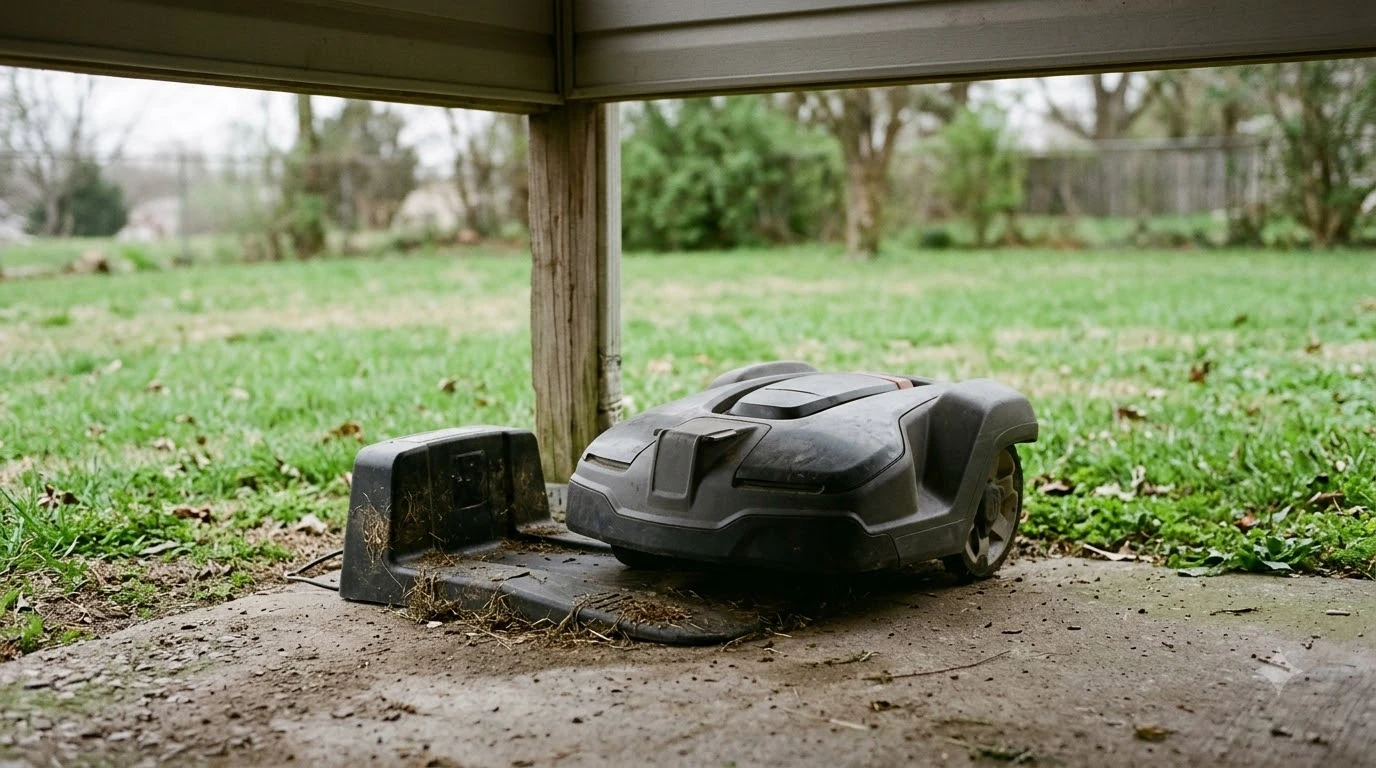

Which Gardena robot mower should I buy depends on three published limits: lawn area, slope and passage width. Gardena lists each limit for every SILENO model on its support pages, as of November 2026. Match your yard against those numbers first, then compare features such as cutting height and app control.
The short answer
- Small lawn, gentle slope: a SILENO minimo (250 or 500 m2, 25% slope) is the lowest-limit option.
- Larger or steeper yard: SILENO city and life models are rated to 35% slope and up to 1,250 m2.
- Narrow gaps: plan for at least 60 cm with a guide wire, or 1.5 m without one.
- Before you buy: measure the grass area, the steepest section and the charging station spot.
What each SILENO model is rated for
Gardena publishes a maximum lawn area and a maximum slope for each model in its robotic mower FAQ. The area figures carry a tolerance of plus or minus 20%, so treat each number as approximate, with little margin at the limit. Gardena publishes these figures in metric units on its international and Australian support pages, so confirm that a given model is sold and supported where you live. The table lists the limits stated on those pages.
| Model (Gardena article) | Max lawn area | Max slope in working area |
|---|---|---|
| SILENO minimo 250 | 250 m2 | 25% |
| SILENO minimo 500 | 500 m2 | 25% |
| SILENO city 250 | 250 m2 | 35% |
| SILENO city 500 | 500 m2 | 35% |
| SILENO life 750 | 750 m2 | 35% |
| SILENO life 1000 | 1,000 m2 | 35% |
| SILENO life 1250 | 1,250 m2 | 35% |
| SILENO+ 1600 | 1,600 m2 | 35% |
| SILENO+ 2000 | 2,000 m2 | 35% |
For a concrete check, take a 600 m2 grass area. It is above the 500 m2 limit of every minimo and city model, so it points to a life 750 or a larger SILENO. If that lawn also has a slope above 25%, the minimo models are ruled out on slope alone. This is the kind of quick test that answers which Gardena robot mower should I buy for a given yard.
The pattern is simple. Minimo models stop at 25% slope, while city, life and SILENO+ models go to 35%. Smart versions of the same models carry the same limits on the page.
Lawn area: measure the grass, not the property
For anyone deciding which Gardena robot mower should I buy, the rule is to choose the smallest model whose area limit clears your grass area with room to spare. Gardena’s figures are maximums, and the stated tolerance means a lawn sitting right at a limit has little margin. Our reading is that the mower should be rated above your measured grass area, not just equal to it.
Measure only the grass. Patios, planting beds, driveways and decks are not mowing area, so subtract them before you compare numbers. Sketching the lawn into rectangles and triangles and adding the areas is the simplest method.
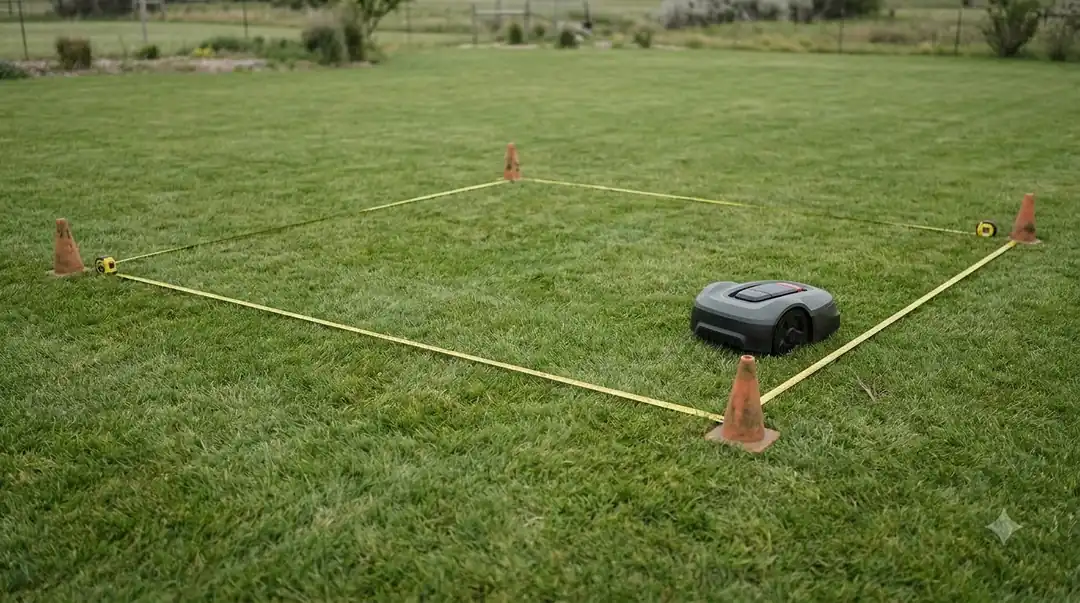
Use the area column as your first filter, then the slope column, then the passage check. If the lawn passes all three, the smallest model that clears them is the sensible starting point for most readers who ask which Gardena robot mower should I buy. Our robot mower buying guide explains how this sizing logic applies to other brands.
A common mistake is buying the largest model for a small lawn. The extra capacity is paid for but unused, and a mower rated for 250 m2 is the right choice for a 200 m2 lawn with a gentle slope.
Slope: 25% or 35% and what the degrees mean
Gardena rates minimo models for a maximum of 25% inside the working area, and city and life models for 35%. Gardena’s Australian FAQ converts these to angles: 25% is about 14 degrees, and 35% is about 19 degrees.
The rating applies to the working area, not to the whole property. A lawn that averages 20% but has one steep bank at 30% is still a 35% problem, so check the steepest section you plan to mow. Slope is therefore the second filter when you decide which Gardena robot mower should I buy.
Narrow passages, guide wire and the 130 cm rule
A narrow passage needs at least 60 cm when the mower uses a CorridorCut guide wire, which runs from boundary wire to boundary wire. Without a guide wire, Gardena’s Australian FAQ says a long narrow passage should be at least 1.5 m wide.
Obstacles add to that width. Gardena’s FAQ works through an example: a wall 35 cm from the boundary wire on each side needs 35 cm + 60 cm + 35 cm, which is 130 cm of clear space. Plan the total width before you buy the wire kit, because a gap that looks wide enough by eye often fails this sum. For the installation steps, see our guide on how to install a robot mower boundary wire.
The two Gardena pages describe the 60 cm minimum differently. The international FAQ measures it wire to wire, while the Australian FAQ says wall to wall. Our reading is to plan with the full clearance sum, not the bare 60 cm figure, and confirm the exact distances for your model in its operation manual.
Charging station placement
Gardena’s Australian FAQ says the charging station should sit outside the lawn, such as in a garden bed level with the grass, with 2 m of clear space in front of it. The station is often the hardest part to place, so choose its spot before you lay the wire.
Docking stations are electrical equipment. The University of Florida’s IFAS extension notes that fire ants are drawn to them and can build mounds nearby, and it recommends a routine insecticide treatment. The same article recommends grounding the docking station or connecting it to surge protection, which matters in lightning-prone areas.
Upkeep: blades, wire kits and mowing height
Gardena says the blades need changing about every 6 to 12 months, depending on use. All three blades must be replaced at the same time, so budget for the full set rather than one blade.
The wire kit depends on the model. The minimo 250 and 500 kits include 150 m of loop wire, 150 pegs, 5 connectors and 4 couplers. The city 500 kit adds 200 pegs, and the life 750 kit includes 200 m of loop wire and 300 pegs. Check the kit against your perimeter before ordering, since a loop that comes up short means ordering extra wire. Our guide to how much boundary wire you need shows how to estimate the length, and whether to bury or peg the boundary wire compares the two installation methods.
For the first weeks after installation, Gardena advises starting at the maximum cutting height and lowering it one step every second week until you reach the height you want. Mowing too low straight after installation can damage the wire insulation.
Grass height matters too. The University of Florida IFAS article gives an average of 3 to 4 inches as the recommended height for most warm-season grasses. Its research also found that robotic mowers could keep St. Augustine grass at a lower 2.4 inch cut, so the right height depends on your grass type.
Which Gardena robot mower should I buy: a short checklist
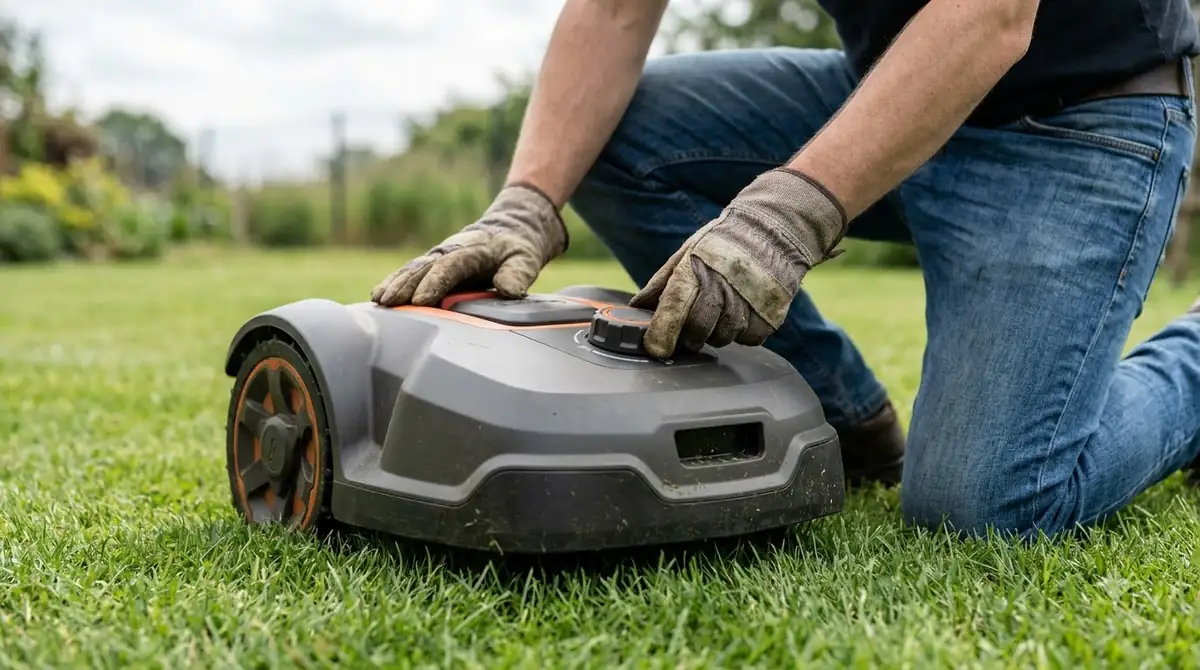
Work through these four checks before choosing a model. Each one uses a number from Gardena’s pages or the manual, so you are comparing like with like.
- Measure the grass area. Subtract patios, beds and driveways, then find the smallest SILENO model whose area limit is above it.
- Measure the steepest slope. Use 25% for minimo models and 35% for city and life models, and check the steepest section.
- Measure the narrowest gap. Add the clearance from each obstacle to 60 cm, and buy the guide wire if the total is under 1.5 m.
- Plan the dock and wire. Confirm 2 m of clear space in front of the station and a wire length that covers the perimeter.
Some features are not covered on the pages we could read. Gardena’s FAQ does not give blade noise, cutting height ranges, rain behavior or lift and tilt sensor details for these models, so check the operation manual for those specifics before you buy. If you are weighing brands, see our Gardena versus Husqvarna robot mower comparison.
Frequently asked questions
Which Gardena robot mower is the smallest?
The smallest listed model is the SILENO minimo 250, rated for up to 250 m2 with a 25% slope limit. Gardena’s FAQ lists it alongside the minimo 500. Check the operation manual for model-specific distances before you buy.
Can a Gardena robot mower handle a 30% slope?
Only city and life models are rated for 35% inside the working area. Minimo models stop at 25%, so a 30% section would be outside their limit. Measure the steepest part of the lawn, not the average, before deciding.
Do I need a guide wire for a narrow path?
A guide wire lets the mower use a passage of 60 cm, measured from boundary wire to boundary wire. Without one, Gardena’s Australian FAQ says a long narrow passage should be at least 1.5 m wide. Obstacle clearance adds to both figures.
How many days a week should a Gardena mower run?
Gardena’s FAQ recommends running the mower five working days per week. That schedule is a manufacturer recommendation, not a rule, and the right pattern can depend on grass growth and lawn size.
Sources
- Gardena robotic mower support FAQ (international) (manufacturer): maximum lawn area, slope limits, 60 cm passage, 130 cm clearance example, wire supplied, five-day recommendation.
- Gardena robotic mower FAQ (Australia) (manufacturer): degree conversion of slope limits, 1.5 m passage without guide wire, charging station placement, blade replacement interval, mowing height after installation, kit contents.
- UF/IFAS News, robot mowers and warm-season turf (university extension): 3 to 4 inch recommended height for most warm-season grasses, St. Augustine research at 2.4 inches, fire ant and surge protection advice.
 Up next7 min readBest Robot MowersWhich Dreame Robot Mower Should I Buy? Limits to Check FirstUpdated Nov 13, 2026
 8 min readBest Robot MowersWhich Bosch Robot Mower Should I Buy? A Decision Guide by Lawn Size and SlopeUpdated Nov 14, 2026
 10 min readBest Robot MowersBest Robot Lawn Mower for First-Time Homeowners: What to Check Before You BuyUpdated Nov 10, 2026
 8 min readBest Robot MowersWhich MOVA Robot Mower Should You Buy? A Sourced Guide by Lawn Size and SlopeUpdated Nov 13, 2026
 7 min readBest Robot MowersWhich Greenworks Robot Mower Should You Buy? A Checklist by Lawn TypeUpdated Nov 14, 2026
 8 min readBest Robot MowersDo Robot Mowers Work in the Rain? Sensors, Delays and LimitsUpdated Nov 11, 2026