
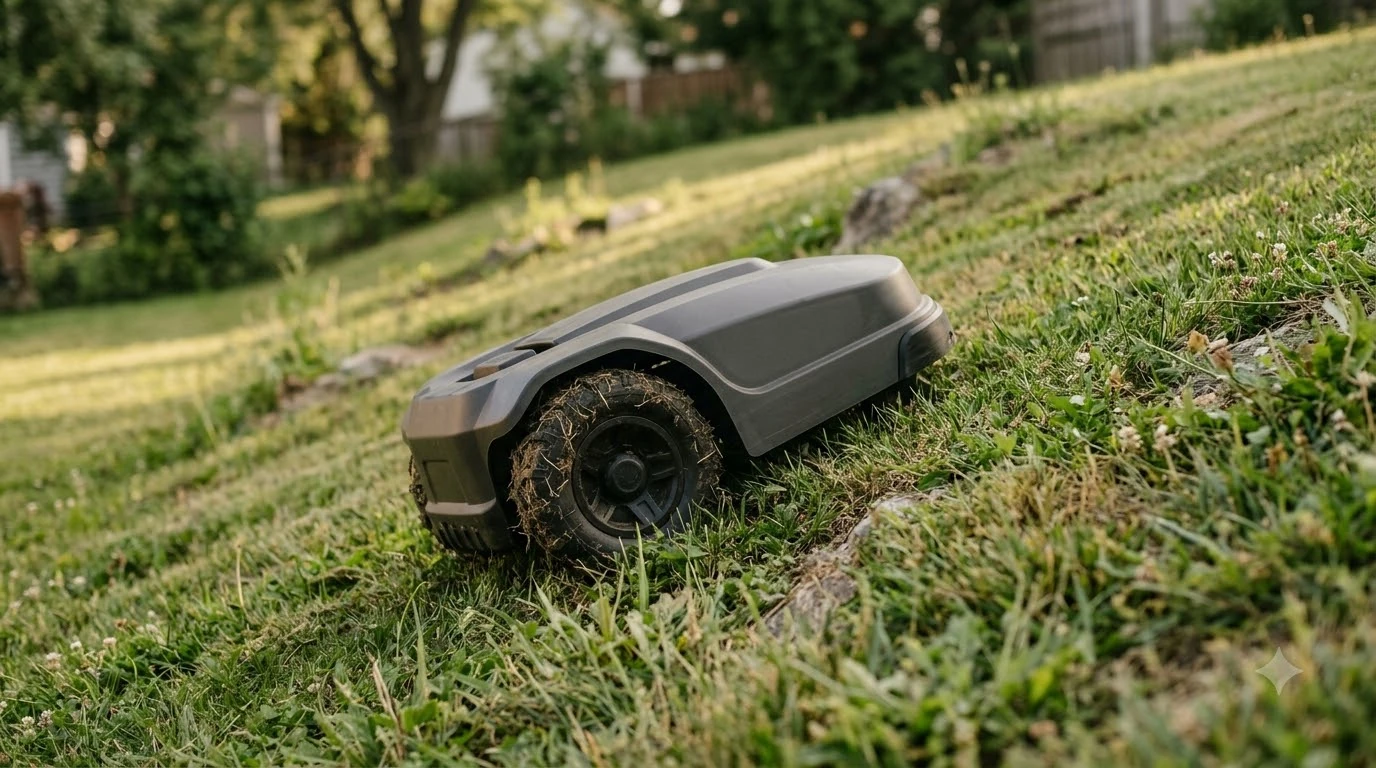

A robot mower on uneven lawn can handle gentle, wide bumps, but deep ruts, sharp drops and wet grass cause wheel slip. The mower’s rated slope and the condition of the ground both decide how well it copes, and the ground is usually the part you can fix. This guide explains where the limits sit and what to repair first.
The short answer
- Gentle, wide bumps: usually manageable, since Eufy says wide rolling bumps cause few problems.
- Ruts and sharp drops: the front casters can drop in, and the drive wheels can lose contact with the ground.
- Wet grass: reduces grip, so a robot mower on uneven lawn can slide even on a slope inside its rating.
- The first fix: fill low spots with thin layers of matching soil, and never bury the grass.
Robot mower on uneven lawn: how much bumpiness is too much
Gentle, wide bumps are usually fine, while dips deeper than about 3 cm are where trouble tends to start. Ask Extension notes that if the lawn is bumpy without localized low spots, rolling may help. Eufy says soil dips greater than 3 cm or exposed tree roots need filling in or marking out. Our reading is that the real problem is the narrow, deep change in level, not the overall roughness of the yard.
Before you buy, lay a straight board across the worst dip and measure the gap underneath with a tape, which is a quick way to compare your lawn with a manufacturer’s threshold. If the gap is large on a hillside, measure it first with our guide to how steep a hill a robot mower can handle.
Eufy’s guidance on uneven ground uses a surface variation of about 3 cm as its threshold. Eufy presents that figure as best practice rather than a manufacturer specification, so check your own model’s manual before you rely on it.
Heads up
Most of the bump and slope figures in this guide come from robot mower makers’ support pages, not from independent lab tests. Treat them as starting points and confirm them against your model’s manual.
Why wheels slip on bumps, ruts and wet grass
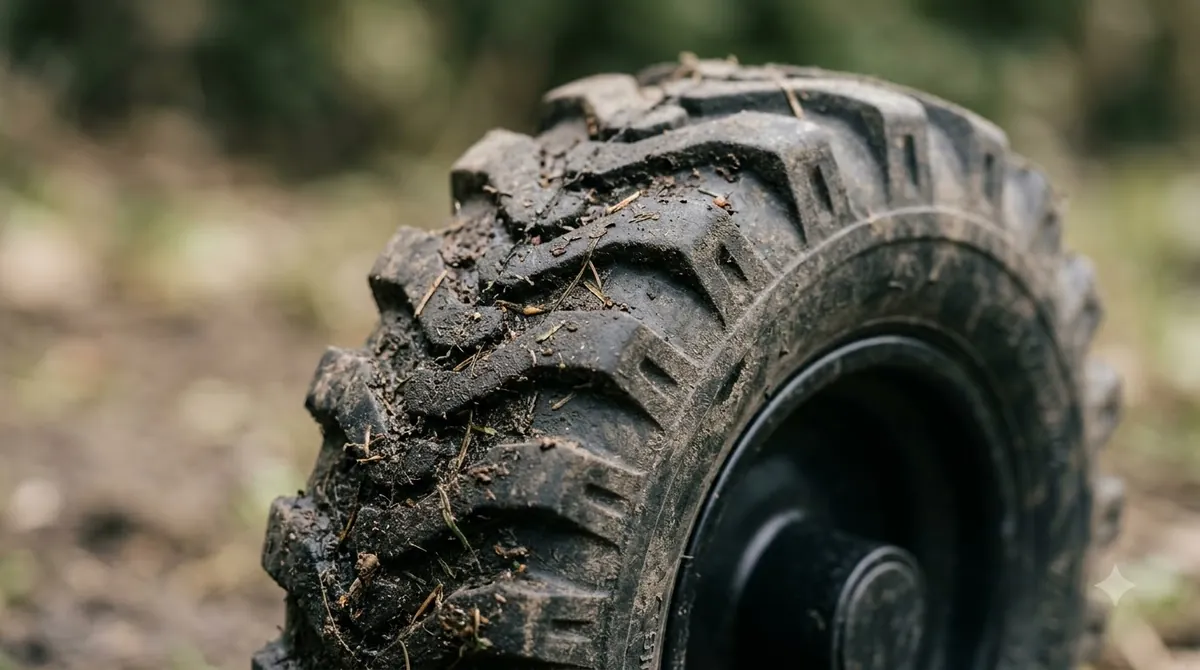
A robot mower on uneven lawn slips when its wheels lose firm contact with the ground or when the grass is wet, and it stops with an error alert when its drive wheels leave solid ground. Eufy says small front casters can drop into narrow gaps or catch on raised tree roots, and that sudden vertical shifts make the front wheels drop into holes. Severe bumps cause spinning tires, uneven cuts and scalped patches, which are the marks a rough lawn leaves first.
Wet grass is the other main cause. Eufy warns that slippery grass makes the drive wheels spin and dig holes in the lawn, and that a mower may slide sideways or downhill even when the incline falls within its rated limit.
Slope ratings on rough ground
A slope rating is an absolute limit, and Eufy’s published ranges run from 10 to 25 percent on basic models up to 70 percent on advanced all-wheel-drive units. Eufy describes the rated maximum as an absolute limit rather than a target for daily mowing. Its FAQ also notes that slopes and rough turf draw more power and shorten runtime, so a lawn that is both steep and bumpy leaves less margin.
Percent and degrees describe the same hill in different ways. The table converts the percent figures into degrees using the tangent of the angle. This is our calculation, not a figure from the vendor.
| Slope (percent) | Angle (degrees, our conversion) |
|---|---|
| 10 percent | 5.7 degrees |
| 25 percent | 14.0 degrees |
| 35 percent | 19.3 degrees |
| 40 percent | 21.8 degrees |
| 70 percent | 35.0 degrees |
The same Eufy page equates 18 degrees with 40 percent, which does not match the math. 18 degrees is about 32 percent, so check the unit on any spec sheet before you compare two mowers (see how to read a robot mower spec sheet).
Filling low spots before you mow
Fill low spots with thin layers of soil that match the lawn, and never cover the grass plants completely. Ask Extension advises adding thin layers every week or two for small or numerous low spots, because completely covering the crowns will smother them. For a large, low area, the method is to cut the grass in uniform strips, fill to the strip thickness and replace the strips.
Match the material to the ground, because a repair only stays level if the soil underneath agrees with it. Ask Extension says sand should only be used if the underlying soil is also sandy, and the topping should be the same as the substrate soil. Another answer about a low area of about 6 feet by 6 feet suggests equal parts dry topsoil and sand, spread thinly and watered in. Treat that as one example rather than a universal rule. If you are choosing a model for rough ground, compare picks in which robot lawn mower is best for uneven ground.
Timing matters if you want the mower to run cleanly all season. Ask Extension says mid-to-late August is an acceptable time to start topdressing, and that by late September you should stop, core aerate, top dress with compost and overseed, then resume the following spring. Deep low areas may take the rest of the growing season and into the next one to correct. Clemson’s lawn renovation factsheet uses a quarter-inch layer of soil over seed, which gives a sense of how thin each topdressing pass should be.
Setup tips for a rough lawn
Setting up a robot mower on uneven lawn starts with dry grass, clean drive wheels and a tread check before you buy. Eufy says deep tread and heavy-duty rear wheels give grip on dry grass, loose soil and damp sections, so tread is worth comparing for a bumpy yard. Our reading is that a clogged wheel is the easiest slip to fix, and that the rest depends on the terrain. Wheel ruts and brown patches are covered in robot mower wheel ruts and brown patches.
- Mow dry grass when you can. Eufy says wet grass reduces grip, which is when the drive wheels spin.
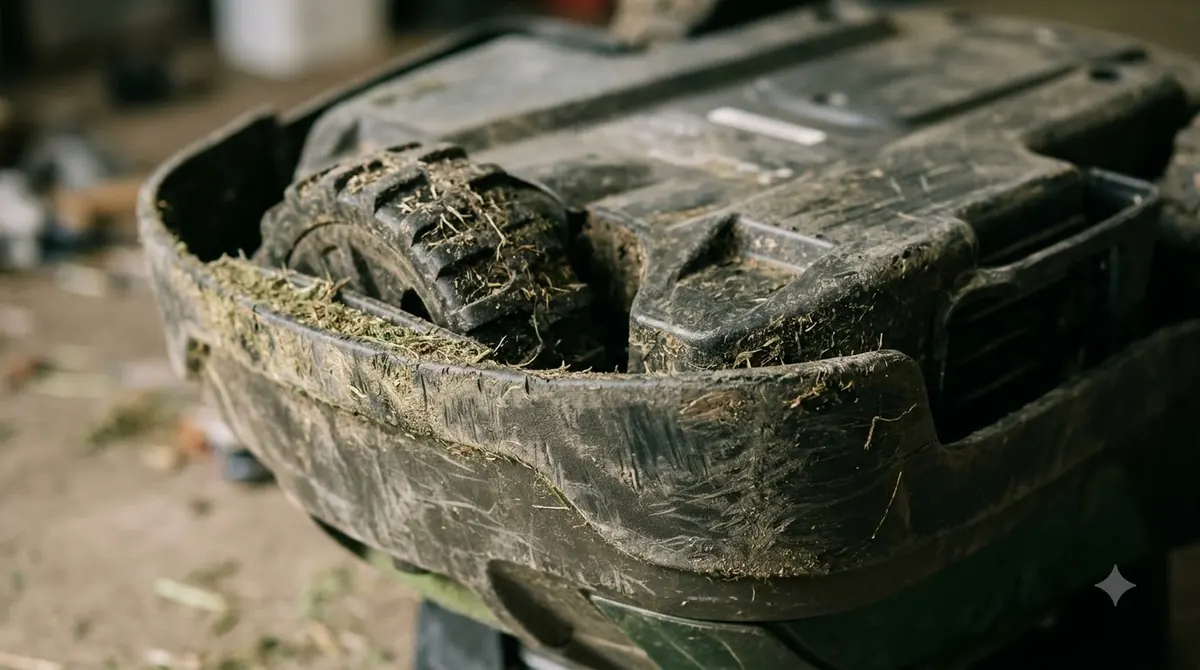
- Clear the wheel path. Our reading is that sticks, stones and wet clippings in the wheel path cause the same spinning.
- Repair holes before the mower digs them deeper. Spinning drive wheels dig holes, so one fix now avoids repeated damage.
- Read the error alerts. A stop with a drive-wheel alert usually means the wheels lost contact with solid ground, so check that spot first.
- Raise the height on the roughest zones. Eufy links severe bumps with scalped patches, so a slightly higher setting is our reading of the safer choice there.
Frequently asked questions
Can a robot mower on uneven lawn handle bumps?
Yes, if the bumps are gentle and wide, since the mower copes best with a gradual change in level. Eufy says gentle, wide rolling bumps cause few problems, while sudden vertical shifts can drop the front wheels into holes. Narrow, deep changes in level are the cases to fix before you mow.
How deep a dip is too deep for a robot mower?
Eufy’s guidance treats a surface variation of about 3 cm as the threshold, but it presents this as best practice rather than a specification. Check your model’s manual, and fill any deeper spot before you rely on the mower to cross it.
Does wet grass make a robot mower slide on a slope?
It can, and the risk is highest when wet grass meets a slope. Eufy says wet grass reduces grip, so a mower may slide sideways or downhill even when the incline falls within its rated limit. On a damp lawn, our reading is to wait for drier grass before running the steepest zones.
How long does it take to fix low spots in a lawn?
Thin-layer topdressing is slow, so fixing the lawn takes time. Ask Extension says deep low areas may take the rest of the growing season and into the next one, so start in mid-to-late August and plan for several passes.
Sources
- Ask Extension answer 881570: filling low spots and leveling (extension.org network): strip method, thin layers, sand rule, timing, rolling for bumps.
- Ask Extension answer 877901: leveling a lawn with soil (extension.org network): sand only on sandy soil, reseeding fully filled spots.
- Ask Extension answer 870648: low spot in a lawn (extension.org network): topsoil and sand example, compaction and aeration.
- Lawn Renovation, HGIC 1204 (Clemson Cooperative Extension): quarter-inch soil layer over seed.
- Robot lawn mower slope limits (Eufy, vendor page): slope ranges, rated limit as absolute, wet grass, 3 cm threshold.
 Up next8 min readBy YardRobot Lawn Mower for Bumpy Uneven Lawn: What to Check FirstUpdated Nov 11, 2026
 8 min readBy YardRobot Mower for Front and Back Yard: What WorksUpdated Nov 11, 2026
 8 min readBy YardRobot Mower and Moles or Gophers: What Actually WorksUpdated Nov 11, 2026
 8 min readBy YardOne Third Rule for Mowing Grass: How It Works and Why It MattersUpdated Nov 11, 2026
 7 min readBy YardCan a Robot Mower Work in a Long Narrow Yard?Updated Nov 11, 2026
 9 min readBy YardHow Do I Know If a Robot Mower Will Work in My Yard?Updated Nov 11, 2026