
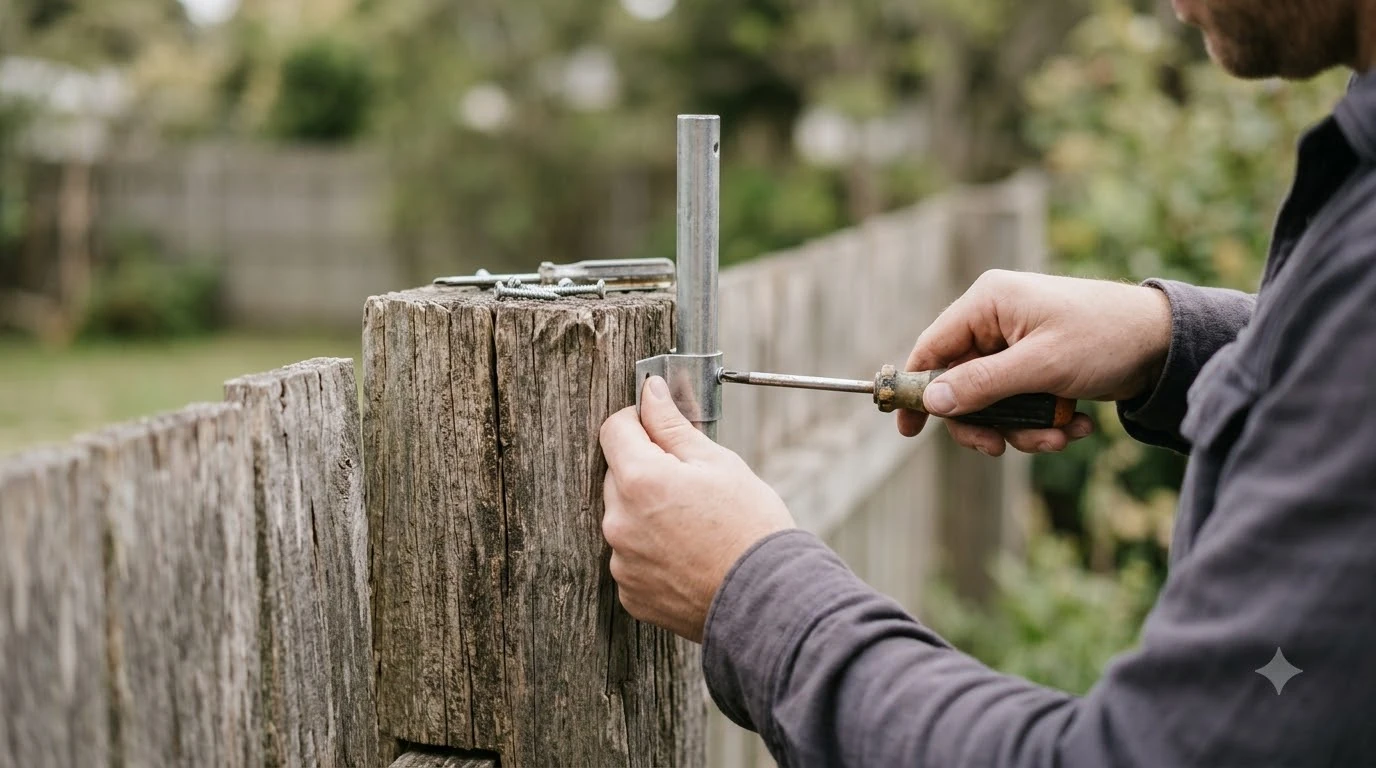

Choosing the best RTK antenna mounting pole for robot mower comes down to how high the base station has to sit and whether the sky above it is clear, because no single pole suits every yard. In the manufacturer guidance we read as of November 2026, Yarbo asks for the base station to sit at least 2 m (about 6.5 ft) off the ground, and Mammotion’s install uses two poles and a trident ground stake. Pick the pole by those rules, not by brand claims.
The short answer
- Height: Yarbo’s guide says to mount the base station at least 2 m (about 6.5 ft) off the ground, and suggests a pole mount or tripod to reach it.
- Sky view: Emlid’s receiver guide asks for a clear view 30 degrees above the horizon. Yarbo asks for at least 120 degrees of clear sky but does not explain how that angle is measured.
- Stability: Raymarine’s marine guidance warns that a mast that moves makes the antenna swing and causes position errors, so a steady pole matters as much as height.
- Fit: Mammotion’s install uses its own two poles and a trident stake, so check that any third-party pole matches your mower maker’s mount.
- Placement: Mammotion advises against the corner of an L-shaped building, a narrow path between two structures, or a spot under a tree.
Best RTK antenna mounting pole for robot mower: what decides the choice
A robot mower that uses RTK depends on a base station that receives satellite signals and sends correction data to the mower. The station needs an open view of the sky to do that job well (for the basics, see how an RTK robot mower works). A pole matters because it lifts the antenna above ground-level obstacles such as fences, garden furniture and low walls, which block part of the sky from a ground-level spot.
Yarbo’s article on RTK signal in yards says to keep the base station above surrounding obstacles such as sheds or garden furniture, and to avoid reflective surfaces nearby, including glass, water features and metal sheds. Those two rules shape the pole choice more than any single product feature.
Heads up
A pole does not fix a bad site. If the spot sits under a tree or against a building, a taller pole may not restore the sky view. Mammotion’s install page warns against placing the station under a tree or at the corner of an L-shaped building, so move the station before you buy a taller pole. Our guide to where to place an RTK antenna in a yard with trees covers that case.
Pole, tripod, or wall: how the options compare
Each mounting style fits a different yard, and the manufacturer pages we read name three of them. The table below lists what each source says, not a ranking.
| Option | What the sources say | Watch for |
|---|---|---|
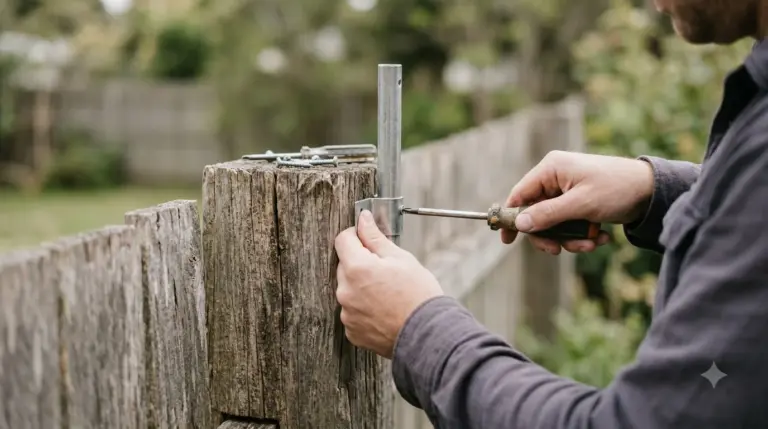
| Ground pole with a stake | Mammotion assembles two mounting poles with a trident ground stake, then pushes the pole into the ground close to the charging station, with the station mounted vertically on the pole. | The page shows the layout but gives no pole height, so check the height figure separately. |
| Tripod | Yarbo lists a pole mount or tripod as ways to get the station higher. | Yarbo gives no tripod specification, so confirm that the legs stay steady and level on your lawn. |
| Wall or roof mount | Mammotion recommends a wall or roof rather than the ground when the lawn is O-shaped or U-shaped, or when there are several lawns. | The mount needs a fixed structure. A pole that flexes is a problem in any setup. |
| Mast on a moving base | Raymarine’s marine guidance lists “up a mast” under places not to mount a GNSS antenna, because movement causes errors. | This is marine guidance, not a robot mower test, so treat it as a stability principle. |
Our reading is that the best RTK antenna mounting pole for robot mower setups on an open, single-area lawn is a ground pole, because it is the simplest option. It works only if the pole stays upright in wet soil, which is the first thing to check on site. If the layout calls for a fixed structure instead, compare an RTK antenna wall mount bracket first.

Height and clearance around the pole
The one height figure in the sources we read is Yarbo’s: at least 2 m (about 6.5 ft) off the ground. That is a manufacturer’s figure for its own system, so check the mower maker’s manual for the number that applies to your model before you buy a pole of that length.
Emlid’s receiver guide lists buildings, trees, cars, people and laptops as things that must stay out of the sky view. It also says to keep other electronics as far as possible from the receiver, because electronic devices can produce radio noise that affects GNSS reception. The same page rules out indoor, urban and forestry locations, and lists fields, hilltops and rooftops as suitable.
Yarbo also warns against reflective surfaces near the station, such as glass, water features and metal sheds. Keep those in mind when you pick the spot, because even the best RTK antenna mounting pole for robot mower use cannot make up for a station beside glass or a metal shed. Our guide on where to mount an RTK base station goes through the spot itself.
Sky view numbers differ by source
Two sources give two different kinds of number, so do not compare them as if they measure the same thing. Emlid’s figure is an elevation angle: the sky must be clear from 30 degrees above the horizon upward. Yarbo’s figure is a sweep of at least 120 degrees, and the article does not say how that angle is measured.
| Source | Figure | Context |
|---|---|---|
| Emlid (receiver maker) | Clear view 30 degrees above the horizon | Placement guide for a GNSS receiver, an elevation angle |
| Yarbo (mower maker) | At least 120 degrees of clear sky | Article on RTK signal in yards; method not defined |
Our reading is that the sky-view rule in your mower maker’s manual should win, because that is the rule the system was built around. Use the receiver figures as a sanity check on site, not as a replacement for the maker’s rule.
Cable routing and keeping the mast still
Mammotion’s install steps say to route the station cable into the mounting pole, connect it to the charging-station cable (the shorter of the two), and secure it to the pole with a cord tie. Plan that cable path before you set the pole, so the cable does not sag or pull the station out of level. If the cable runs outdoors, a cable cover for RTK antenna wire is the next thing to look at.
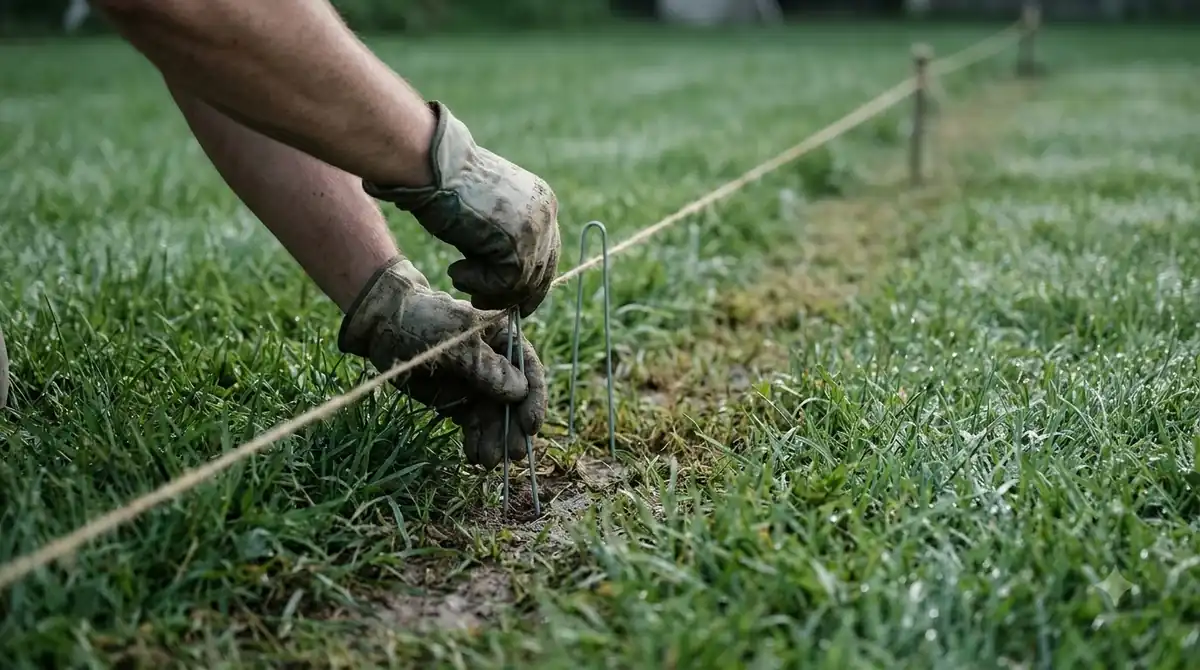
Raymarine’s marine guidance says to mount the antenna as low as possible on a steady support, and warns that a mast that moves makes the antenna swing and causes significant position errors. Raymarine also lists a 1 inch 14 TPI pole thread. That is a marine standard, so check the thread on your own kit before buying a generic pole, and treat the stability point as a general principle rather than a robot mower test.
What to check before you buy the best RTK antenna mounting pole for robot mower
Work through these checks with the station position in hand. Buy the pole after you know where the station will sit, not before.
- Get the height from your model’s manual. Yarbo’s figure is at least 2 m (about 6.5 ft). Use your maker’s number if it differs.
- Confirm the fit with the kit. Mammotion uses two poles with a trident stake. A generic pole needs a matching mount and, for marine parts, a 1 inch 14 TPI thread.
- Check the sky view on site. Compare the view with Emlid’s 30-degree rule and the 120-degree figure from Yarbo, and follow the maker’s rule if they conflict.
- Plan the cable path. Route the station cable inside the pole and fix it with a cord tie, as Mammotion shows.
- Keep electronics and obstacles away. Avoid trees, building corners, narrow passages and other electronics near the receiver.
Our reading is that a pole that meets the height rule, fits the mount and holds still is worth more than a pole chosen for its label. The sources we read do not support naming a single best RTK antenna mounting pole for robot mower owners to copy. They support a checklist.
Frequently asked questions
How tall should an RTK base station pole be?
Yarbo’s article says to mount the base station at least 2 m (about 6.5 ft) off the ground. The other maker pages we read did not give a pole height, so check your model’s manual for its figure.
Can I use a tripod instead of a pole?
Yarbo lists a pole mount or tripod as ways to gain height. Its article gives no tripod specification, so confirm that the tripod stays steady and level on your lawn before you rely on it.
Is a wall or roof mount better than a ground pole?
Mammotion recommends a wall or roof rather than the ground when the lawn is O-shaped or U-shaped, or when there are several lawns. For a single open lawn, the sources we read do not rank one mount above the other.
Is the best RTK antenna mounting pole for robot mower simply the tallest one?
No. The sources do not support that. Raymarine’s marine guidance says to keep the antenna as low as possible on a steady mount, and Mammotion warns against placing the station under a tree. Clear sky and a steady mount matter more than height alone.
Sources
- Mammotion support: How to install RTK reference station (mower maker): two poles with a trident stake, cable routing, and placement warnings.
- Yarbo: Can Yarbo get a good RTK signal in my yard (mower maker): 2 m height, pole or tripod, clearance from obstacles, and the 120-degree sky figure.
- Emlid: Reach RS3 placement (GNSS receiver maker): 30-degree clear sky view, electronics distance, and unsuitable locations.
- Raymarine: GNSS antenna location requirements (marine electronics maker): mast sway, mounting low, and the 1 inch 14 TPI thread.
 Up next10 min readGearRTK Antenna Extension Cable for Robot Mower: 6 ChecksUpdated Nov 19, 2026
 9 min readGearBest Roof Mount for RTK Antenna: What to Check Before You BuyUpdated Nov 14, 2026
 9 min readGearRTK Antenna Wall Mount Bracket: What to Check Before You BuyUpdated Nov 19, 2026
 8 min readGearCable Cover for RTK Antenna Wire: 5 Checks Before You BuyUpdated Nov 19, 2026
 9 min readGearBest RTK Antenna for Robot Mower: How to Choose the Right SetupUpdated Nov 11, 2026
 8 min readGearRobot Mower RTK Antenna Mount: What to Check Before You BuyUpdated Nov 20, 2026