
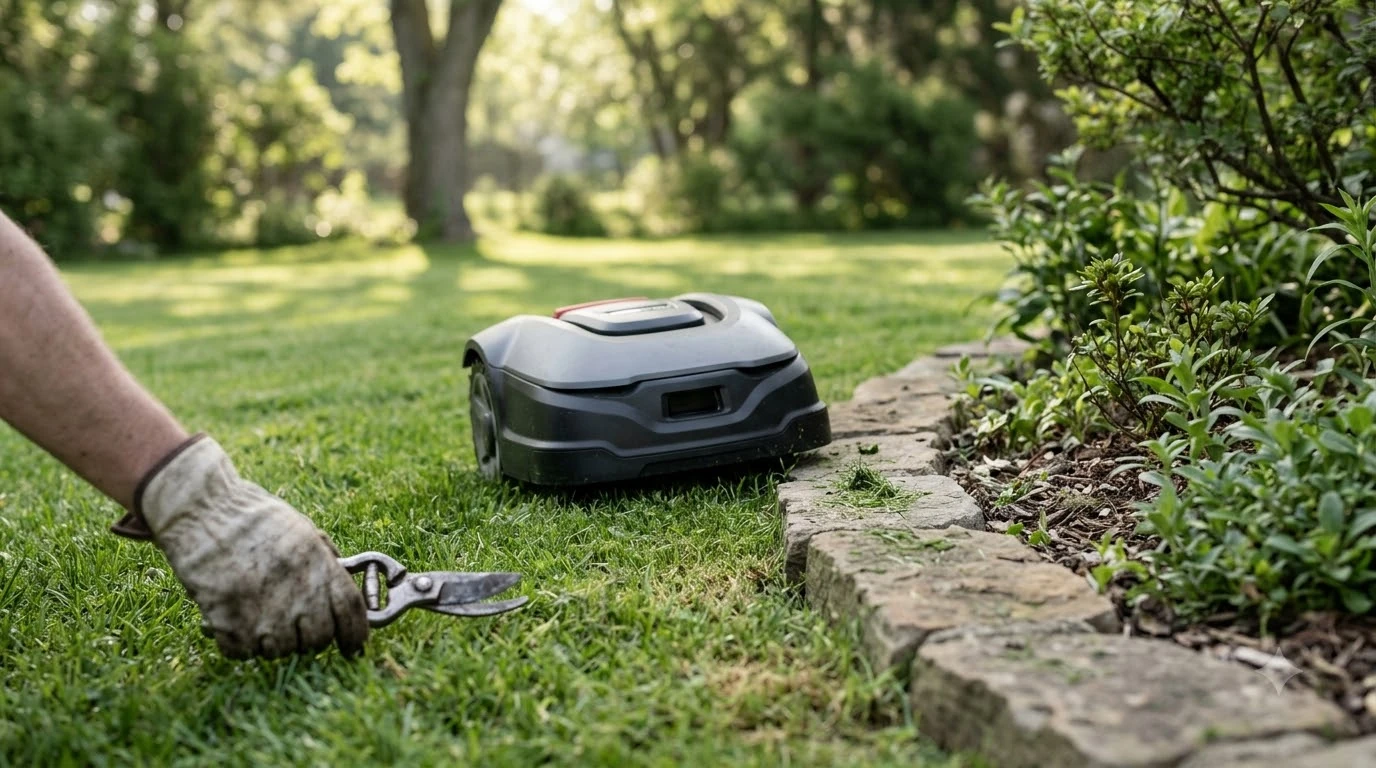

The best rubber edging for flower beds with robot mower use is a strip that sits flush with the lawn, because a robot mower cannot reliably roll over rubber that is raised, uneven or not level. Robomow’s edging guidance says plastic and rubber lawn edges are often not level, so the robot cannot simply drive over them and hand trimming may still be needed. The rules cover height, bed level and wire layout more than the material name, so setup decides the result.
The short answer
- Keep rubber flush with the ground. Robomow says edges should be at ground level so the mower can cut up to the outer lawn edge.
- Set flower beds at lawn height. The soil should match the turf and nothing should be planted right to the outer edge.
- Run the wire a small distance inside the edge. Robomow gives about 10 cm from beds and hedges and about 35 cm from walls and tall stone.
- Use a wire island for a bed that must stay out. Husqvarna’s island method wraps the wire around the bed without crossing it.
Best rubber edging for flower beds with robot mower: the flush rule
Rubber edging works with a robot mower only when the mower can roll up to it. Robomow’s guidance on lawn edges states that “lawn edges made of plastic or rubber are not usually level, so the robot cannot simply drive over them.” When the strip sits unevenly, the wheels can stop or tip on it, and the grass along the strip may need hand trimming. The same guidance asks for edges to be kept at ground level, with the perimeter wire routed so the mower cuts up to the outer lawn edge.
Our reading is that the best rubber edging for flower beds with robot mower use is a fit-or-fail choice rather than a simple material pick. A strip that lies flat with the turf and does not lift at its joints is closer to the ground-level borders Robomow describes as drivable. A strip that stands a few centimeters above the lawn acts more like a barrier. Robomow describes raised borders of a few centimeters as useful for stopping the mower near hazards such as pond embankments, so a raised strip is a stop, not a drive-over edge.
Set the flower bed level with the lawn
For the best rubber edging for flower beds with robot mower setups, the bed comes first. A flower bed works best when its soil sits at turf height and no plants are set against the outer edge of the lawn. Robomow says a bed should be “the same height as the surface of the lawn but not planted to the outer edge.” A bed that sits well above or below the grass creates a step the mower can catch on, which is the same issue covered in robot mowers around flower beds. Robomow also notes that a small slope between the lawn edge and a bed can cause snagging or uneven cutting, which is common with English-style edging.
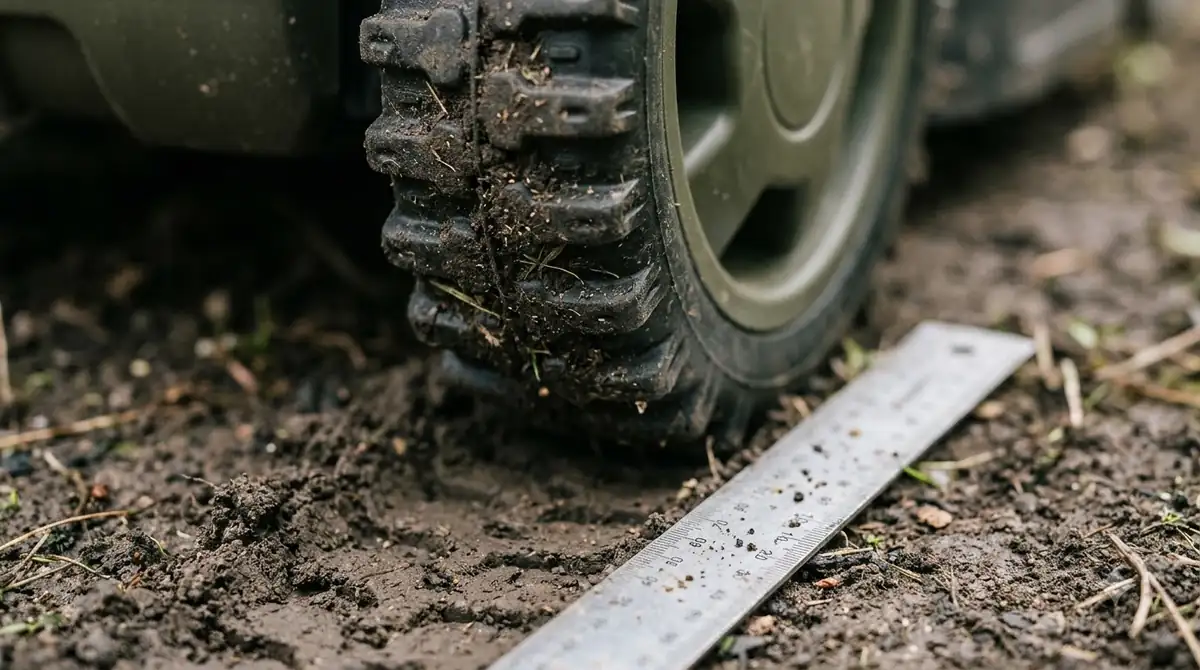
If a bed is planted right to the edge, Robomow says the wire distance should be slightly greater, so the wire needs more clearance there. The surface check is simple: lay a straight ruler across the join between lawn and bed and look for a gap or lip. Our reading is that any lip you find should be lowered or filled before you settle on a rubber strip, since a lip is what keeps a strip from sitting flush.

Place the boundary wire inside the edge
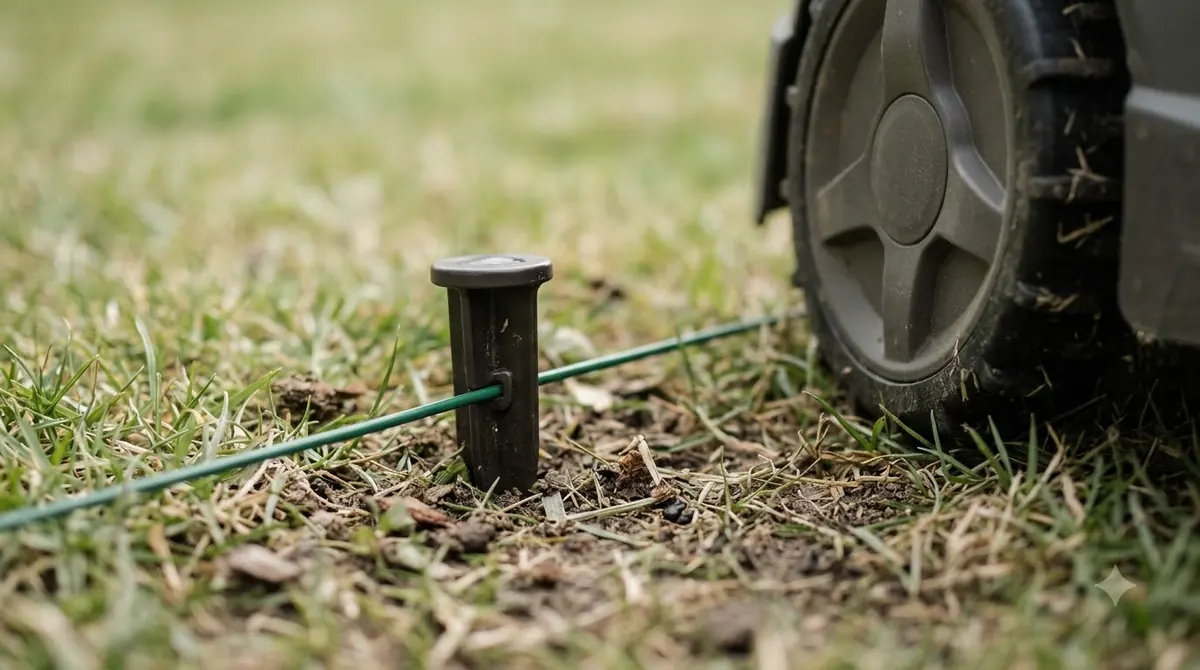
Wire placement is the second half of the setup, and what a boundary wire is gives the background. Robomow advises against laying the wire “exactly to the outer edge of the lawn” and recommends keeping it “a small distance to the inside.” Its boundary wire guide gives approximate distances of about 10 cm from beds and hedges, about 10 cm from slabs and paths that sit at or below lawn level, and about 35 cm from walls and tall stone. These are guide values, and the model’s own manual gives the final figure.
Wire depth matters too. The same guide gives a laying depth of 4 to 5 cm as optimal to protect the wire from bad weather, and says the mower can receive the signal from the wire at a depth of up to 7 cm. Those numbers describe the wire, not the edging, so keep them separate when you plan the strip; burying or pegging the boundary wire compares the two ways to lay it.
Heads up
Robomow advises against planning lawn edges where the perimeter wire runs well under a meter apart, so keep parallel runs clear of each other.
Use a wire island when a bed must stay out
A wire island is the usual way to keep a robot mower out of a bed that the edging alone does not protect. Whatever strip you choose, the island keeps the mower away from the bed itself, so it is the safer plan for a bed you do not want cut. Husqvarna’s guide to islands in an Automower installation says to “Lay the wire from the border to the obstacle and around it,” and to “Ensure you do not cross the wire.” It names flower beds and rockeries among the areas where islands are used. The guide warns that if the wires cross, “the mower will not recognise the island and will stop.”
To close the loop, the guide says to lay the two wires close together on the way back, which “cancels the signal, allowing the mower to pass over the two wires.” The page gives no distances from the bed edge, so take that figure from your model’s manual; laying wire around obstacles and beds shows the general layout. Robomow’s boundary wire guide adds that each bed, pond or gravel area inside the wire layout must be separated with cable, and that a flower bed with a border several centimeters high may not need an extra perimeter wire.
How rubber compares with other border materials
Rubber needs the same flush installation as most other edging, so it is one option among several for a flower bed, while metal and sloped borders cause more trouble near the signal and the cut line. The table below sums up the Robomow guidance for each material.
| Border material | What Robomow says | What it means for a flower bed |
|---|---|---|
| Rubber or plastic | Usually not level, so the robot cannot simply drive over it; trimming may be needed | Keep flush with the ground, or plan a trimmed strip |
| Ground-level stone or concrete | Smooth stones and concrete or dovetail stones work best; rough-hewn stones give a bumpy ride | A good drive-over edge when set level |
| Metal | Not recommended; can severely interfere with the robot’s signal | Keep it away from the wire |
| Wood | Tends to warp and create uneven surfaces, so retouching is inevitable | Lay planks parallel and secure them, and expect some trimming |
| Sloped (English) edging | A slope between lawn and bed can cause snagging or uneven cutting | Avoid where the mower must reach the edge |
What to check before you buy or install
Check the height, level, bed soil, wire offset and cutting reach before you settle on a strip for your yard. These five points decide how much hand trimming will remain along the flower bed.
- Height: the strip should sit flush with the turf, as Robomow’s ground-level rule requires.
- Level: no lifting joints and no slope between the lawn and the bed.
- Bed soil: at turf height, with no plants set against the outer edge of the lawn.
- Wire: about 10 cm from beds, with parallel runs kept well apart.
- Cutting reach: Robomow lists the blade distance from the housing edge as between 6 cm on its edge-cutting model and 20 cm on others, so check your model’s figure.
Our reading is that the best rubber edging for flower beds with robot mower use saves trimming only when the strip height and the mower’s cutting reach both fit. If either does not, keep a hand trimmer ready for the bed edge. Re-check the strip each season, because soil settling can raise or lower one side of a flush strip over time.
Frequently asked questions
Can a robot mower drive over rubber edging?
Usually not. For the best rubber edging for flower beds with robot mower installs, Robomow says plastic and rubber lawn edges are often not level, so the robot cannot simply drive over them, and hand trimming may be needed. A strip set flush with the ground is the case the guidance treats as workable.
Do flower beds need their own boundary wire?
Not always. Husqvarna’s island method is the way to keep a mower out of a bed that the edging does not protect. Robomow says a flower bed with a border several centimeters high may not need an extra perimeter wire. Check your model’s manual for the exact layout.
How far should the boundary wire sit from a flower bed?
Robomow gives about 10 cm from beds and hedges, and about 35 cm from walls and tall stone. These are approximate guide values, and the model’s own installation instructions give the final figure for your setup.
What happens if the island wires cross?
Husqvarna says the mower will not recognize the island and will stop. Lay the two closing wires close together on the way back, without crossing them, so the signal cancels and the mower can pass over them.
Sources
- Robomow, lawn edging guidance (manufacturer): rubber and plastic edging, bed height, metal, wood and stone edging.
- Robomow, laying the lawn boundary wire (manufacturer): wire distances to beds, hedges and walls, and laying depth.
- Husqvarna, how to create islands in an Automower installation (KA 01427) (manufacturer): island loop steps and the crossed-wire warning.
 Up next6 min readGearRobot Mower Ramp for Truck Bed: 3 Smart Loading ChecksUpdated Nov 20, 2026
 8 min readGearBest Lawn Edging to Bury Robot Mower Wire: What Works and What to AvoidUpdated Nov 14, 2026
 7 min readGearBest Landscape Edging for Robot Mower Borders: What Works and What to AvoidUpdated Nov 13, 2026
 6 min readGearRobot Mower Lawn Edging Strips: 3 Simple Setup StepsUpdated Nov 14, 2026
 6 min readGearRobot Mower Rubber Wheel Covers: Fit, Grip and Trade-offsUpdated Nov 20, 2026
 8 min readGearBest Rubber Threshold Ramp for Sliding Glass Door Tracks: Buyer and Fit GuideUpdated Nov 19, 2026