
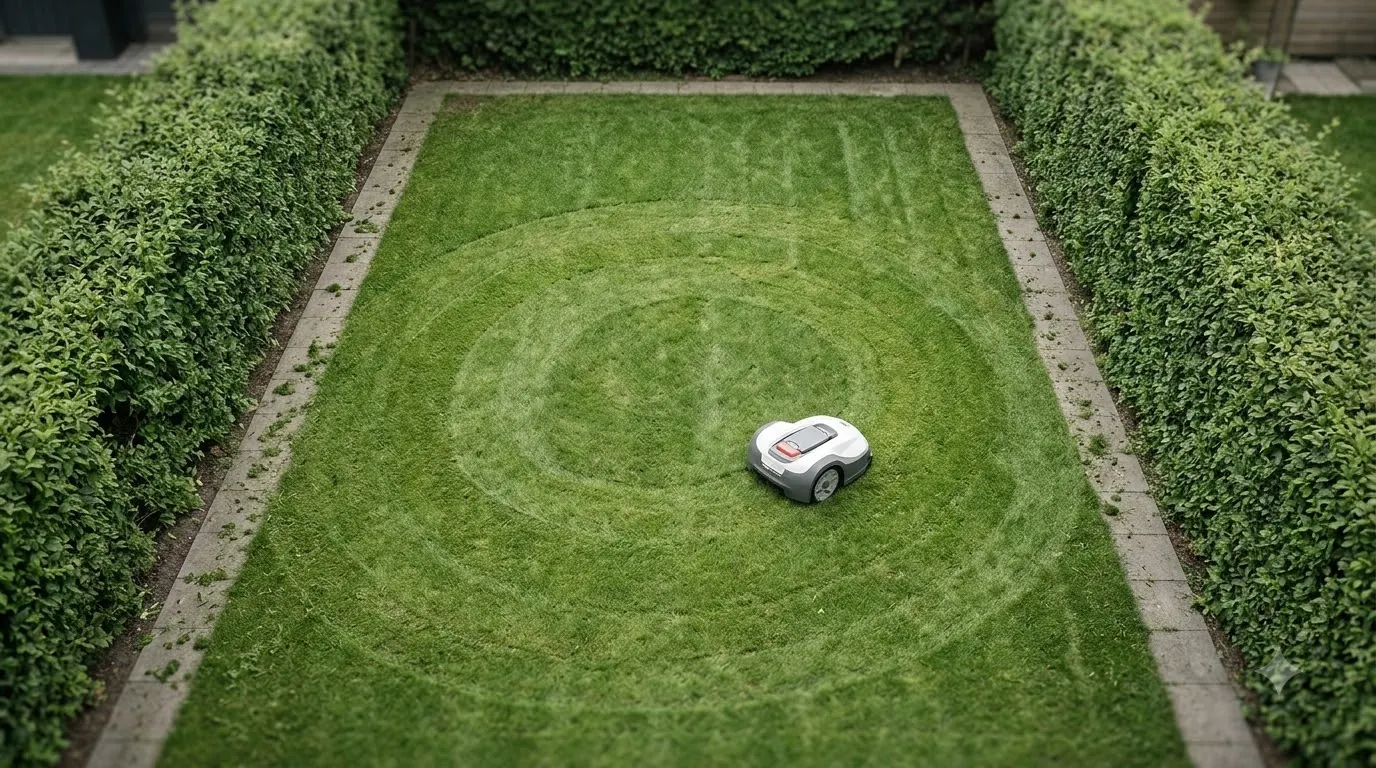

The best robot lawn mower for New Jersey lawns is the one whose cut height, slope rating and boundary setup match the grass you have. No single model fits every yard, so start with the height your grass needs rather than a brand name. As of November 2026, the height figures below come from university extension guides and research pages.
The short answer
- Cut height comes first for the best robot lawn mower for New Jersey lawns, University of California guidance sets Kentucky bluegrass and perennial ryegrass at 1.5 to 2.5 inches, and tall fescue at 1.5 to 3 inches.
- Check the lowest setting. Many robot mowers cut from about 0.8 to 2.4 inches, according to one manufacturer guide.
- Treat new research as preliminary. UConn results on autonomous mowers are still preliminary.
- Confirm local advice. The height figures here come from California, Iowa, South Carolina and Connecticut sources, so check Rutgers Cooperative Extension for New Jersey heights.
Choosing the best robot lawn mower for New Jersey lawns starts with height
Cool-season lawns are usually cut higher than many robot mowers can go, so the height range is the first filter. University of California IPM guidance lists set heights of 1.5 to 2.5 inches for Kentucky bluegrass and perennial ryegrass, and 1.5 to 3 inches for tall fescue. The same guide gives higher mow-when heights, from 2.25 to 3.75 inches for bluegrass and ryegrass and 2.25 to 4.5 inches for tall fescue. It also advises removing no more than one-third of the grass height at each mowing.
Summer ranges run higher still. Iowa State University gives 3 to 3.5 inches for Kentucky bluegrass from June to August, and 2.5 to 3 inches in spring and fall. Clemson HGIC gives 3 to 3.5 inches for tall fescue in summer. Our reading is that a mower you set once at a low height may not match these seasonal ranges, so the lowest and highest settings on the spec sheet both matter. For species-level detail, see our guides to Kentucky bluegrass cutting height and fescue cutting height.
| Grass | Source | Height guidance |
|---|---|---|
| Kentucky bluegrass | UC IPM | Set 1.5 to 2.5 in; mow when 2.25 to 3.75 in |
| Perennial ryegrass | UC IPM | Set 1.5 to 2.5 in; mow when 2.25 to 3.75 in |
| Tall fescue | UC IPM | Set 1.5 to 3 in; mow when 2.25 to 4.5 in |
| Kentucky bluegrass, summer | Iowa State | 3 to 3.5 in, June to August |
| Tall fescue, summer | Clemson HGIC | 3 to 3.5 in |
Why many robot mowers may not cut high enough
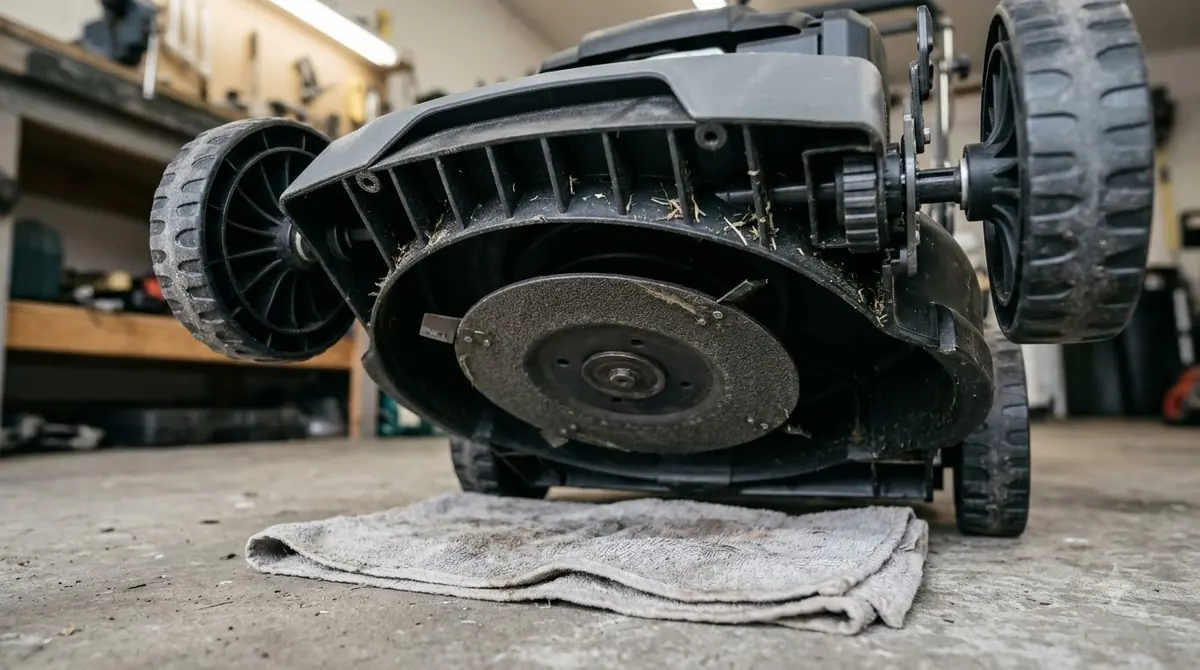
Many robot mowers cut lower than the cool-season range, so when you shop for the best robot lawn mower for New Jersey lawns, check the minimum height first. A Robomow brand guide says many robot mowers cut between 20 and 60 mm, about 0.8 to 2.4 inches. Other models in that guide reach 20 to 100 mm, about 0.8 to 3.9 inches, and the lowest cut any robot makes is 15 mm, about 0.6 inch. Those are brand figures, so confirm the exact range for the model you are considering. Our guide to the best mowing height for a robot-mowed lawn goes further on this.
A University of Florida IFAS publication makes a related point. Most autonomous mowers were developed for Europe, where cool-season grasses dominate, and their typical cut is below 2.5 inches. For a tall fescue lawn that the summer guidance keeps at 3 to 3.5 inches, that gap matters.
Heads up
Cutting too low stresses cool-season turf. UC advises cutting higher for new lawns and for drought, heat, traffic, shade or pest pressure, so a mower that cannot raise its deck far enough limits your options.
How often a robot mower should run through the season
For the best robot lawn mower for New Jersey lawns, the schedule matters as much as the blade. UC IPM advises mowing regularly in spring, less often in summer when growth slows, and more often again in fall. A robot mower can run on a schedule that follows that pattern, but the schedule does not change the height limit. For the best robot lawn mower for New Jersey lawns, our reading is that frequency and height should be checked together, since a frequent schedule at a height the grass cannot tolerate still causes stress.
For the best robot lawn mower for New Jersey lawns, a schedule you can adjust by season helps. Growth-based frequency is easier to follow when the mower runs often enough to remove small amounts at each pass. The one-third rule from UC applies here: if the grass grows fast in spring, the mower must cut more often to keep each cut within that limit.
What the UConn research shows, and what it does not
UConn researchers tested autonomous mowers at 1.25, 2.25 and 3.25 inches, and their preliminary results point to 2.25 inches as the best height for tall fescue and Kentucky bluegrass. The results are labelled preliminary, so for the best robot lawn mower for New Jersey lawns they are a direction, not a settled setting.
A later UConn report, relevant to any best robot lawn mower for New Jersey lawns shortlist, describes a finding on tall fescue: a spring fertilizer application lasted significantly longer under an autonomous mowing regime than under conventional mowing. The same report calls autonomous mowers a cost and time saving strategy, but it gives no dollar or hour figures. The articles we read do not rank mower models, so they cannot tell you which brand to buy.
What to check before you buy
Before you buy the best robot lawn mower for New Jersey lawns, check the minimum cut height, the slope rating, the boundary setup and the rated coverage against your measured lawn. Each one can rule a model out, so compare them in that order.
- Minimum and maximum cut height. Compare both ends of the range with the 2.25 to 4.5 inch mow-when heights your grass type needs.
- Slope rating. Read the rating on the manufacturer’s spec sheet; robot mower slope ratings explained shows how to interpret it. Our reading is that a steep yard needs a model rated for its steepest section.
- Boundary setup. Confirm whether the mower needs perimeter wire or uses another method, as the brand describes it (see whether robot mowers need a boundary wire).
- Rated coverage. Compare the rated area with your measured lawn and leave margin for beds, paths and the parts of the yard the mower will skip.
- Local advice. Check Rutgers Cooperative Extension turf pages for New Jersey heights, since the figures above come from other states.
Homeowners looking for the best robot lawn mower for New Jersey lawns with cool-season grass should narrow the list by height first, since a cut above what many mowers allow rules them out, then judge slope and coverage. A model that clears the height test can still be the wrong size for the yard, so do not stop at the first filter.

Frequently asked questions
Can the best robot lawn mower for New Jersey lawns cut cool-season grass?
Yes, if the model can cut at the height your grass needs. The best robot lawn mower for New Jersey lawns is simply the model that clears that height test. UC IPM lists set heights of 1.5 to 3 inches for common cool-season grasses, so compare the lowest and highest settings on the spec sheet before you buy.
What cut height works best for tall fescue?
For the best robot lawn mower for New Jersey lawns on tall fescue, UC IPM gives a set height of 1.5 to 3 inches and a mow-when height of 2.25 to 4.5 inches. Clemson HGIC gives 3 to 3.5 inches for summer. UConn preliminary results point to 2.25 inches, which should be treated as preliminary.
Do all robot mowers need boundary wire?
No, and for the best robot lawn mower for New Jersey lawns the answer depends on the model. Check the boundary setup on the manufacturer’s spec sheet, since the brand describes how the mower finds its work area and how it is installed.
Should I raise the mower height in summer?
For the best robot lawn mower for New Jersey lawns, UC IPM advises raising the height for drought, heat, traffic, shade and pests. Iowa State gives 3 to 3.5 inches for Kentucky bluegrass from June to August, so check whether your mower can reach that range.
Sources
- UC IPM, mowing cool-season turf (University of California): set and mow-when heights, one-third rule, raising height.
- Iowa State Extension, correct mowing height for lawns (Iowa State University): summer and spring/fall heights for Kentucky bluegrass.
- Clemson HGIC, mowing height (Clemson University): summer height for tall fescue.
- Robomow, ideal cutting height for a robotic lawnmower (manufacturer blog): cut ranges of robot mowers.
- UF/IFAS EP667, robotic mowers and cool-season turf (University of Florida): mowers developed for Europe, typical cut below 2.5 inches.
- UConn Today, autonomous mowers make the cut (University of Connecticut): preliminary tested heights.
- UConn Impacts, autonomous mowers make the cut (University of Connecticut): tall fescue fertilizer finding, cost and time framing.
 Up next9 min readBest Robot MowersBest Robot Lawn Mower for New Construction Homes: Setup FirstUpdated Nov 10, 2026
 8 min readBest Robot MowersBest Robot Lawn Mower for New England Lawns: 3 ChecksUpdated Nov 14, 2026
 8 min readBest Robot MowersBest Robot Mower for a New Build Lawn with SodUpdated Nov 13, 2026
 8 min readBest Robot MowersBest Robot Lawn Mower for Tennessee Lawns: What to Check FirstUpdated Nov 11, 2026
 8 min readBest Robot MowersBest Robot Lawn Mower for the Southeast Lawns: What to Check FirstUpdated Nov 11, 2026
 8 min readBest Robot MowersBest Robot Lawn Mower Under $1500: What to Check FirstUpdated Nov 12, 2026