
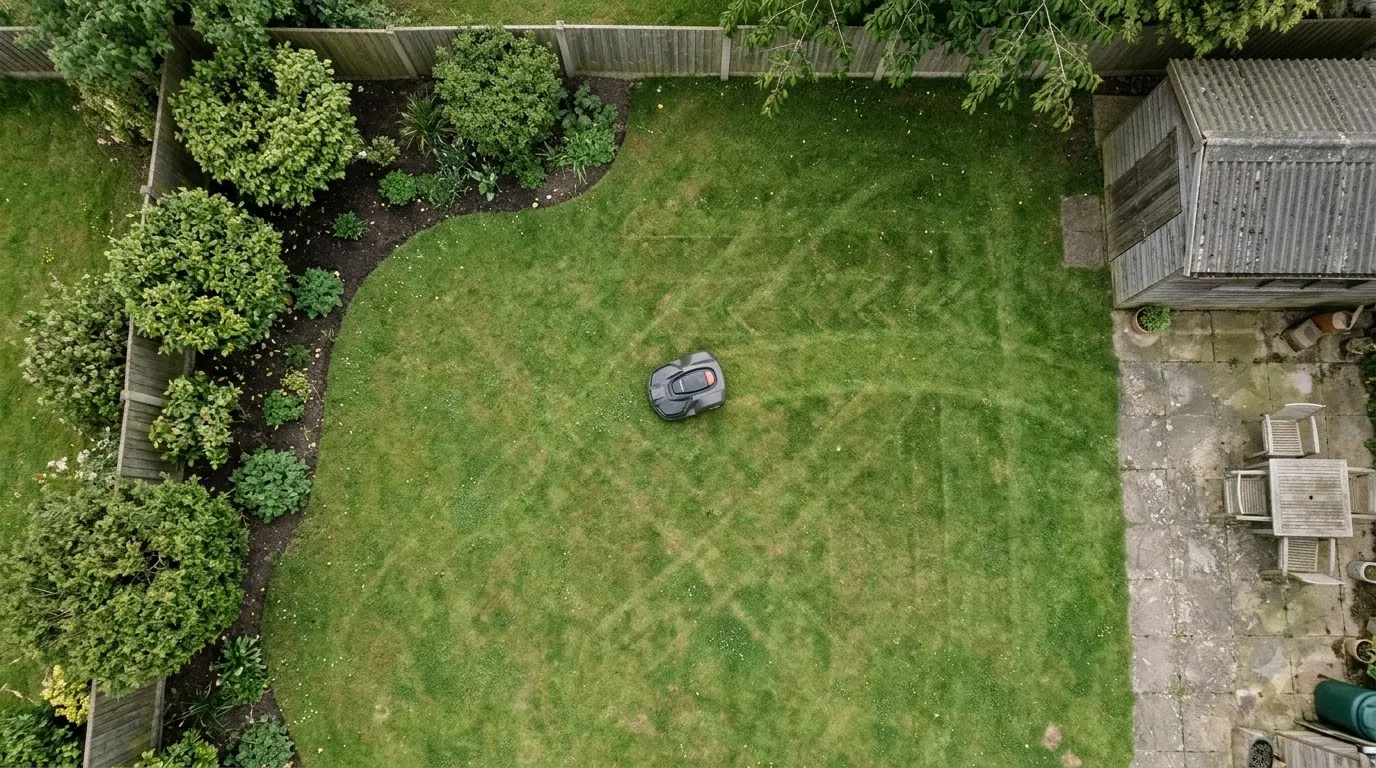

The best robot mower for a yard with solar lights is usually one with a camera or an infrared sensor, plus a marked stay-out zone around every light. Small solar garden and path lights sit low and are easy to knock over, and the manufacturer pages we read do not name them directly. The mower type matters less than the layout work you do before the first mow.
The short answer
- Look for sensing: camera or infrared models detect objects before contact, while bump-only designs find them by touching them.
- Treat lights as a risk: Husqvarna lists small items in a lower-risk class, so the mower may pass close to them.
- Mark the lights: a stay-out zone around each fixture is the practical fix, and it is our reading rather than a rule from a manufacturer.
- Check night use: some camera mowers run without vision after dark.
How robot mowers detect low objects
The best robot mower for a yard with solar lights starts with how it senses objects. Most robot mowers find obstacles in one of three ways. Bump sensors register contact when the mower taps something, ultrasonic or infrared sensors detect an object before the body touches it, and camera systems classify what they see. PCWorld describes bump sensors, ultrasonic and infrared detection, and lift and tilt sensors that alert when the mower is caught or tilted at an unsafe angle. Each method has a blind spot, and a low fixture a few inches tall is the case where the blind spot matters most.
Camera-based models are the clearest on paper. Husqvarna says its AI vision mowers “detect and avoid objects in real time,” which is useful for a solar light that stands clear of the grass. The same page makes clear that vision is not a guarantee, so a camera mower still needs help from the yard layout. PCWorld makes a similar point from the product side: it says the most common technology it has seen is a camera mounted at the front of the mower. Lift and tilt sensors act as a backup, since they alert when the mower is caught on an object or operating at an unsafe angle, which is a different job from seeing the object first.
Brand claims need the same care. Anker describes 3D obstacle avoidance on its eufy models as making the mower “less likely to run into garden furniture, toys, tree roots, or awkward corners.” That is a claim about its own models, and it does not mention lights, so it is useful as a direction to check rather than proof of how a particular fixture will be handled.
Why solar lights are the hard case
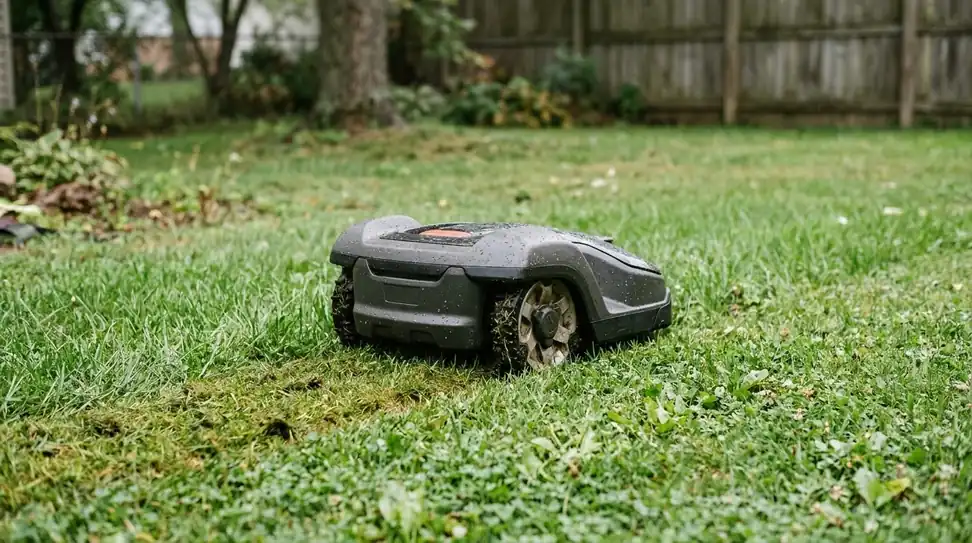
Solar lights are thin, low, and often placed right at the edge of a path or bed, which is where a mower turns sharply. Husqvarna’s NERA models class toys, garden furniture and flowerpots as lower risk, and the mower “approaches these objects more closely before changing direction” in order to cut more grass. A solar light probably falls in the same family of small, low items, although the manufacturer pages we read do not list lights by name.
Damage is the other concern. PCWorld warns that a mower run amok can damage hoses, sprinklers, toys and other things left on the grass. A loose or broken light part can also end up in the cutting path. Anker’s maintenance guidance says grass, mud and small stones can become trapped around the wheels and affect traction, and it advises inspecting blades at least once a month during the mowing season. Our reading is that a cracked light cap or a loose stake is a real hazard for both the light and the mower, and that the monthly blade check is also a good time to look at the fixtures.
Debris also affects the mower itself. Our reading is that a mower losing grip on a slope is harder to keep clear of a light there, so a yard with solar lights on a slope needs extra care when you pick a mower.
Mower types to compare
When you shortlist the best robot mower for a yard with solar lights, compare detection methods first. The table below compares the detection methods that appear in the manufacturer and press sources we read. It does not rank brands, and it does not say how any single model handles a particular light.
| Detection method | How it finds an object | Main limit for low lights |
|---|---|---|
| Bump sensor | Registers contact after the mower touches the object | Light can be nudged or knocked over before the mower reacts |
| Ultrasonic or infrared | Detects the object before contact | Small or low fixtures may be near the detection edge; check the model spec |
| Camera (AI vision) | Classifies objects in real time and keeps a set distance | Needs daylight or good light; heavy rain or a dirty lens can limit it |
| Camera without night vision | Works by day, runs without vision after dark | Husqvarna Aspire models “may collide with objects on the lawn” at night |
Two Husqvarna families show the difference. The NERA models use an object-risk approach, while the Aspire models use one safety distance for every object. For a yard full of small fixtures, the NERA logic gives more control over how close the mower gets, and the Aspire logic is simpler to predict.
Stay-out zones and layout checks
Husqvarna advises creating stay-out zones for permanent objects so the mower operates well, and for objects hidden in high grass. For a solar light, the same idea applies: mark the area around each fixture so the mower never has to decide whether to pass close to it. Our reading is that a clear margin of a foot or more around each light is a sensible starting point, but the manufacturer pages do not give a distance for lights, so check your model’s manual for its minimum clearance. For fences and barriers, see the best garden fence for a robot mower no-go zone.
Walk the yard before setup, because the best robot mower for a yard with solar lights still needs a clean layout. Look for lights that sit on a slope, at the base of a fence, or on a corner where the boundary wire runs close. Those are the spots where a mower is most likely to get stuck or push a fixture into a bed, and the best robot mower for a yard with flower beds raises similar edge questions. The garden furniture guide covers a similar low-clearance layout problem.
Night, rain and dirty lenses
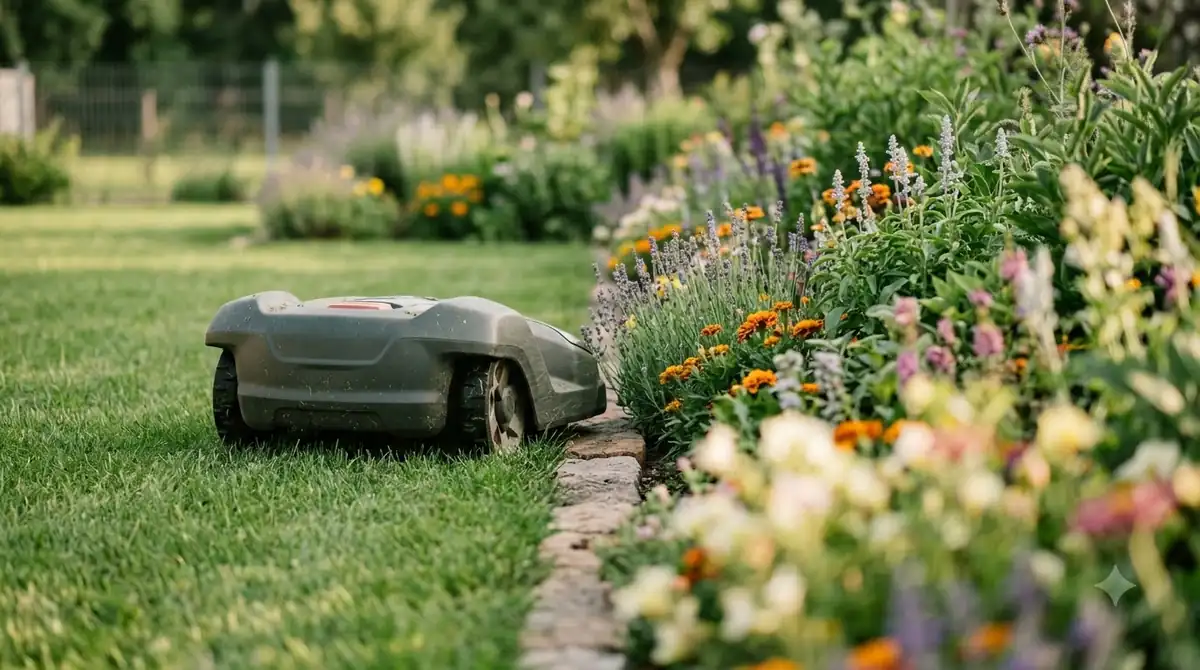
Lighting is the weak point for camera systems, and it works in both directions. Husqvarna says NERA models use infrared sensors to detect and avoid objects at night. The Aspire models have no vision support after dark. Heavy rain or dirt on the camera lens can also limit visibility, and the NERA app lets you choose between “Keep mowing” and “Pause” in that case.
For a yard with solar lights, the practical step is to match the mowing schedule to the detection you have. A mower that cannot see after dark should not run when the lights are on, and a camera should be kept clean if the yard gets a lot of rain. If you are weighing the best robot mower for a shaded lawn, the same night and light limits apply.
Best robot mower for a yard with solar lights: what to check
Use the manufacturer’s own pages and the manual, not a marketing summary. These points are worth confirming for any model you consider as the best robot mower for a yard with solar lights:
- Sensor type. Confirm whether the model uses bump, ultrasonic or infrared, camera, or a mix, and whether it works at night.
- Object handling. Check whether the manual says how close the mower approaches small or low objects.
- Stay-out zone support. Confirm the app or boundary setup can mark zones, and how big a zone can be.
- Lens and sensor care. Find the cleaning steps for the camera or sensor window, since dirt limits detection.
- Blade and debris check. Clear loose stones, stakes and light parts before each mow, since debris can jam the blades.
Heads up
No manufacturer page we read names solar lights. The guidance above is general obstacle guidance applied to a small fixed object, and it is our reading, not a product claim.
Frequently asked questions
Will a robot mower run over a solar light?
Some models avoid objects they detect, but the mower may still pass close to small low items. Husqvarna lists toys, garden furniture and flowerpots as lower-risk objects for its NERA models. No source we read confirms how a solar light is handled, so mark the lights and check the model’s manual.
Is a camera robot mower better for a yard with solar lights?
For a yard with solar lights, a camera or infrared model can detect objects before contact, which is an advantage over bump-only designs. Vision still depends on daylight, a clean lens and good weather, so it does not replace stay-out zones.
Should I fence off solar lights?
Husqvarna recommends stay-out zones for permanent objects and objects a mower could get stuck under. Marking each light with a zone is a reasonable step. It is our reading for lights, not a manufacturer rule.
Can a robot mower damage a solar light?
PCWorld warns that a mower run amok can damage hoses, sprinklers, toys and other things left on the grass. A light that is knocked loose can also become debris for the blades, so check the yard before each mow.
Sources
- Husqvarna object detection and avoidance support (manufacturer): NERA and Aspire object handling, stay-out zones, night and rain limits.
- Husqvarna object detection and avoidance support (CA) (manufacturer): camera detects objects in real time.
- PCWorld, how robot lawn mowers cut grass without whacking off your toes (press): bump, ultrasonic, infrared, lift and tilt sensors; damage warning.
- Anker robotic lawn mower maintenance (manufacturer blog): obstacle avoidance and blade or stone checks.
 Up next9 min readBy YardHow Does a Robot Mower Handle Solar Lights?Updated Nov 11, 2026
 7 min readBy YardRobot Mower for a Lawn Under Solar Panels: Signal and Shade FixesUpdated Nov 14, 2026
 8 min readBy YardBest Robot Mower for a Yard with Bare SpotsUpdated Nov 12, 2026
 7 min readBy YardBest Robot Mower for a Yard With Fallen Branches: What to CheckUpdated Nov 12, 2026
 8 min readBy YardBest Robot Mower for a Yard With a Dry Creek Bed: What to CheckUpdated Nov 12, 2026
 9 min readBy YardBest Robot Mower for a Yard With Garden FurnitureUpdated Nov 12, 2026