
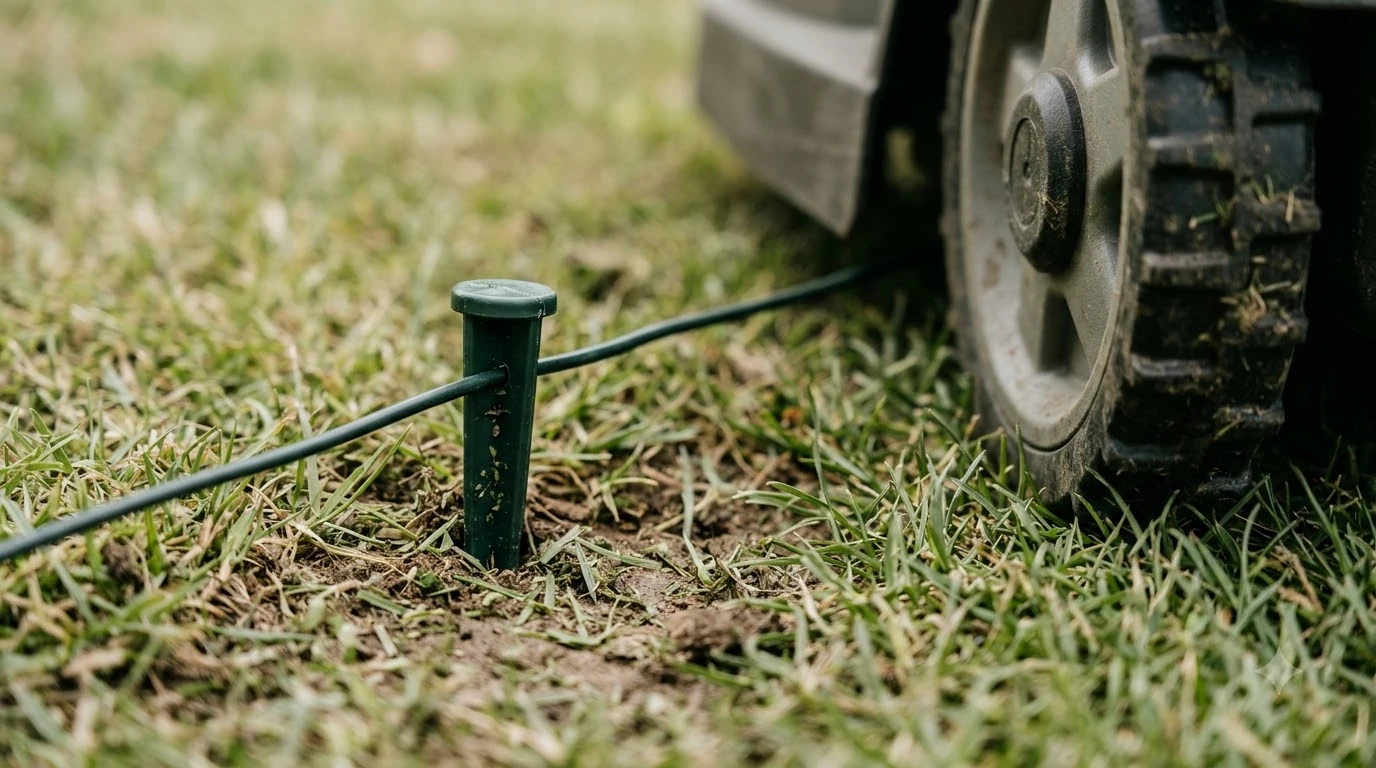

Can a robot mower cut a lawn with metal edging strip? Usually yes, but the metal can disturb the boundary signal. Robomow warns that metal bed edging can interfere with a robotic mower’s signal, so the wire position and the edge height matter more than the cutting itself. Below: how the metal affects the signal, how far to keep the wire from it, and what to do if the mower stops at the edge.
The short answer
- Cutting: the blades trim the grass up to the edge, and a level metal strip does not block the cut on its own.
- Signal: metal bed edging can interfere with the robot signal, according to Robomow.
- Wire distance: start with about 30 to 35 cm from solid obstacles, then confirm the figure in your model manual.
- Edge: Robomow recommends level edging stones about 10 to 24 cm wide that the mower can drive over, which makes the edge easier to mow.
- Before you bury the wire: test the layout against the strip, because the wire is the part that usually needs to move.
Can a robot mower cut a lawn with metal edging strip without trouble?
Usually, yes, but the trouble is more likely to come from the boundary signal than from the cutting. Robomow notes that metal bed edgings pose a risk of interfering with the signal of a robotic lawnmower, and the boundary wire is what the mower follows, so a clean signal matters right at the border.
Our reading is that a strip sitting level with the lawn does not block the cutting path on its own. The problem usually appears when the wire runs close to the metal. Plan the wire first, then check how the strip sits against it, because that order keeps the fix cheap.
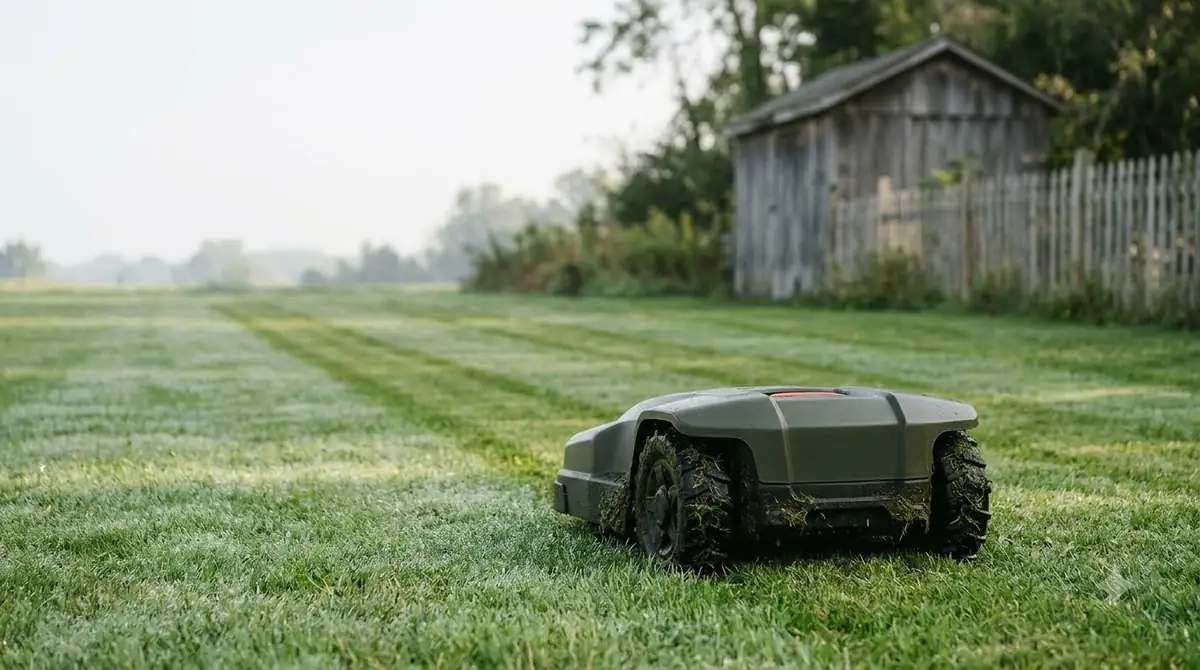
How far should the boundary wire sit from metal edging?
Keep the wire clear of metal by the margin your manual gives, and use about 30 to 35 cm as a starting point for solid edges. The sources give different figures for different edges, so the table below separates them.
| Edge type | Distance from the wire | Where it comes from |
|---|---|---|
| Walls and tall stones | About 35 cm | Robomow wire guide |
| Solid obstacles, fences, raised beds | 30 to 35 cm | Anker boundary wire guide |
| Flower beds, hedges, paths level with the grass | About 10 cm (Robomow) to 15 cm (Anker) | Robomow and Anker guides |
| Metal strip that stands tall | Use the solid-obstacle figure | Our reading, confirm in your manual |
A metal strip is a solid edge, so the wider figure is the safer starting point for a robot mower on a metal-edged lawn. Our reading is to start wide, watch where the mower turns back, and move the wire closer only if your model manual allows it.
Robomow’s guide also says the mower can go past a wire laid right at the edge, by as much as 30 cm on some models, so the wire position sets where the cut stops. Can a robot mower cut a lawn with metal edging strip right up to the metal? Only as far as the wire placement allows. Our notes on burying or pegging boundary wire and on installing a boundary wire cover the wire side in more detail.
What edge height and strip width should you check?
Edge height and strip width decide whether the mower can reach the grass right next to the metal, which is where a lawn with metal edging strip most often shows a problem. Robomow recommends level edging stones about 10 to 24 cm wide that the mower can drive over, and it advises edging the lawn with a margin of about 6 cm to the outermost edges.
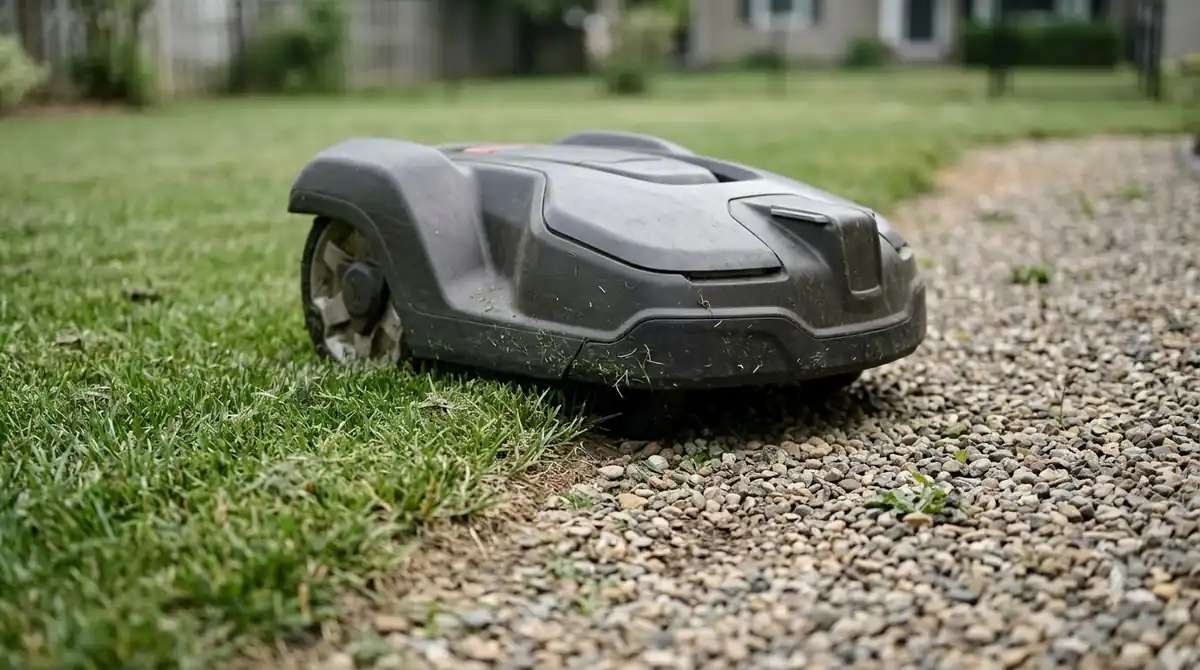
- Strip width: a narrow metal strip leaves less room than stones of 10 to 24 cm, so the grass beside it may need a hand trim.
- Edge margin: about 6 cm from the outermost edge keeps the cut tidy, per Robomow.
- Grass height: Eufy says grass above about 9 cm can be read as an obstacle, so keep the cut height in mind near the border.
- Edge setting: Worx says its cut-to-edge disc depends on the model, so check your own manual for what your mower offers.
Eufy’s support page for its E15 and E18 mowers advises keeping about 10 cm from walls and fences. That differs from the wire figures above, which is another reason to treat every number here as a starting point and confirm it in your own manual, especially where a metal strip runs along a fence. Our guide to robot mowers and flower beds covers the border side of the same layout.
What to do if the mower stops or misses the edge
Can a robot mower cut a lawn with metal edging strip and still stop at the edge? It can, so recheck the wire position and run a test before you bury the wire against the metal. A stop at a strip usually points to the wire layout rather than the blades, so start there.
- Measure the gap. Check the distance from the wire to the metal and compare it with the figures in the table above.
- Move the wire. Shift the wire away from the metal, then test the path again, because the signal changes when the wire moves.
- Set the depth. Robomow gives 4 to 5 cm as the optimal laying depth, and says the signal can be detected up to about 7 cm deep.
- Trim the edge. If a strip of grass is still missed, trim it by hand or use the edge setting where your model has one.
Heads up
The distances above are guide values from manufacturers, not a test on any single mower. Worx notes that its edge cut varies by model, so read the manual for your model before you finalize the layout for a robot mower and a metal edging strip.
Frequently asked questions
Can a robot mower cut a lawn with metal edging strip without problems?
Usually, yes. Robomow says metal bed edging can interfere with the signal, which is a risk to check rather than a guaranteed failure. Test the layout before you bury the wire, and keep the wire clear of the metal.
How far should the wire sit from metal?
Start with about 30 to 35 cm, the figure Anker gives for solid obstacles such as walls, fences and raised beds. Robomow gives about 35 cm for walls and tall stones. Confirm the exact figure in your model manual.
Is stone edging easier than metal for a robot mower?
Robomow recommends level edging stones about 10 to 24 cm wide that the mower can drive over. Its warning about metal bed edging does not describe stone. Our reading is that stone is the simpler choice, but the wire clearance still needs checking. Our guide to landscape edging for robot mower borders covers edging options for borders.
Can I cut closer to the metal by setting the mower lower?
Not safely as a general rule. Lowering the cut does not change the wire clearance from the metal. Worx says its edge cut depends on the model, so check the edge setting in your manual before you change the cutting height.
Sources
- Robomow, how cleanly a robotic mower cuts the lawn edge (manufacturer): metal bed edging interference, edging stone width, edge margin, wire placed at the edge.
- Robomow, laying the lawn boundary wire (manufacturer): wire distances to walls, beds and paths, laying depth.
- Eufy support, edge cutting on E15 and E18 mowers (manufacturer): clearance from walls and fences, grass height note.
- Anker, robot lawn mower boundary wire installation (manufacturer blog): 30 to 35 cm from solid obstacles, 10 to 15 cm from beds.
 Up next10 min readBy YardChoosing a Robot Mower for a Yard with a Metal Chain-Link Gate GapUpdated Nov 19, 2026
 7 min readBy YardCan a Robot Mower Cut Seashore Paspalum?Updated Nov 12, 2026
 6 min readBy YardCan a Robot Mower Cut Carpet Grass?Updated Nov 12, 2026
 6 min readBy YardBest Robot Mower for Cool Season Grass: Match Your Cut HeightUpdated Nov 14, 2026
 7 min readBy YardDoes a Robot Mower Cut Clover Flowers? Simple Height TipsUpdated Nov 14, 2026
 6 min readBy YardBest Robot Mower for Fine Fescue: 1.5 Inch Low Cut GuideUpdated Nov 17, 2026