
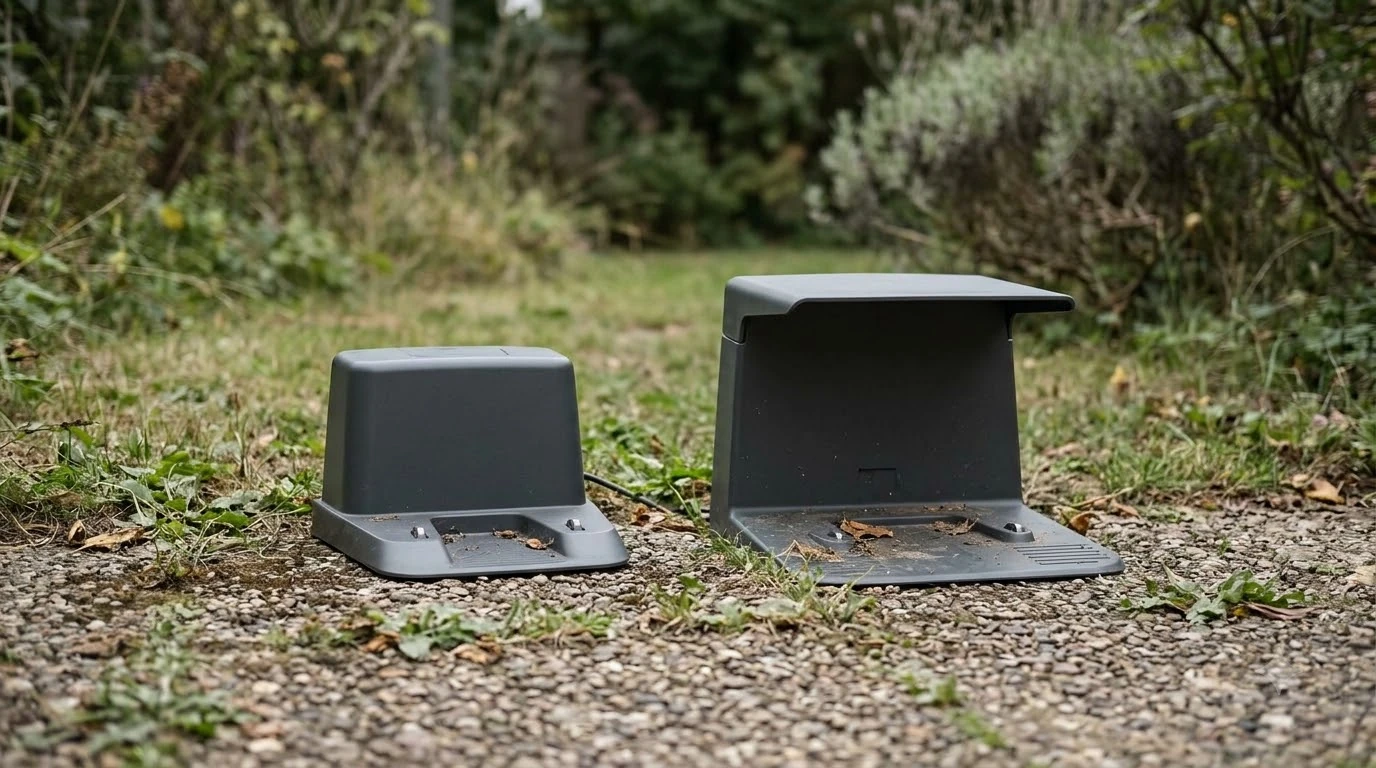

Robot mower charging station power requirements come down to a nearby outdoor outlet, a short low-voltage cable, and GFCI protection. The base works on low voltage, but the wall power supply and the outlet behind it have to be right. Exact ratings vary by brand, so check the manual for your model before you plan the circuit.
The short answer
- Outlet: a weatherproof outdoor socket close to the base, so the low-voltage cable stays short.
- Cable: keep the low-voltage cable short, and do not extend it.
- Protection: GFCI protection on the outdoor circuit, as the U.S. Consumer Product Safety Commission recommends.
- No extensions: Toro says its charging station must not be plugged into a power strip or an extension cord.
Robot mower charging station power requirements at a glance
A home charging station runs from a wall power supply, which plugs into an outlet, and a low-voltage cable that runs out to the base. Robomow describes the setup this way: the station is operated through a low-voltage cable, and the transformer plugs into the socket. Husqvarna’s placement guide starts from the same basic requirement, that the station should sit near a power outlet.
Professional systems are wired differently. Toro’s Turf Pro charging station is a hardwired unit fed from an AC supply, and its manual is written for installers. It is a useful reference for what a station demands from the building side, even if your home model is smaller.
Where the outlet should be and what it must be rated for
Choose the outlet first, then place the base (see charging station placement for the lawn side of that decision). The outlet should be close enough that the cable never has to stretch. Husqvarna’s placement guide says to place the charging station near a power outlet, and Robomow adds that the socket should be an outdoor type that is weatherproof.
- An outdoor-rated socket with a weatherproof cover.
- A spot near the base, so the low-voltage cable stays short.
- Ground that does not flood, and a place clear of sprinkler spray.
- Room for airflow around the power supply, not a sealed box.
Robomow also says that the transformer needs the same sun and water protection as the station itself. Sunlight and splashing water are the two conditions to plan around, so the outlet and the adapter should both sit in a protected position.
How much power the station draws and what that means for your circuit
The Toro Turf Pro charging station is rated at 120 VAC and 60 Hz, drawing up to 3.5 A, or 360 W at maximum. Its charge output is 32 VDC at 10.7 A, or 320 W at maximum. For what a charger adds to a household bill, see robot mower electricity cost.
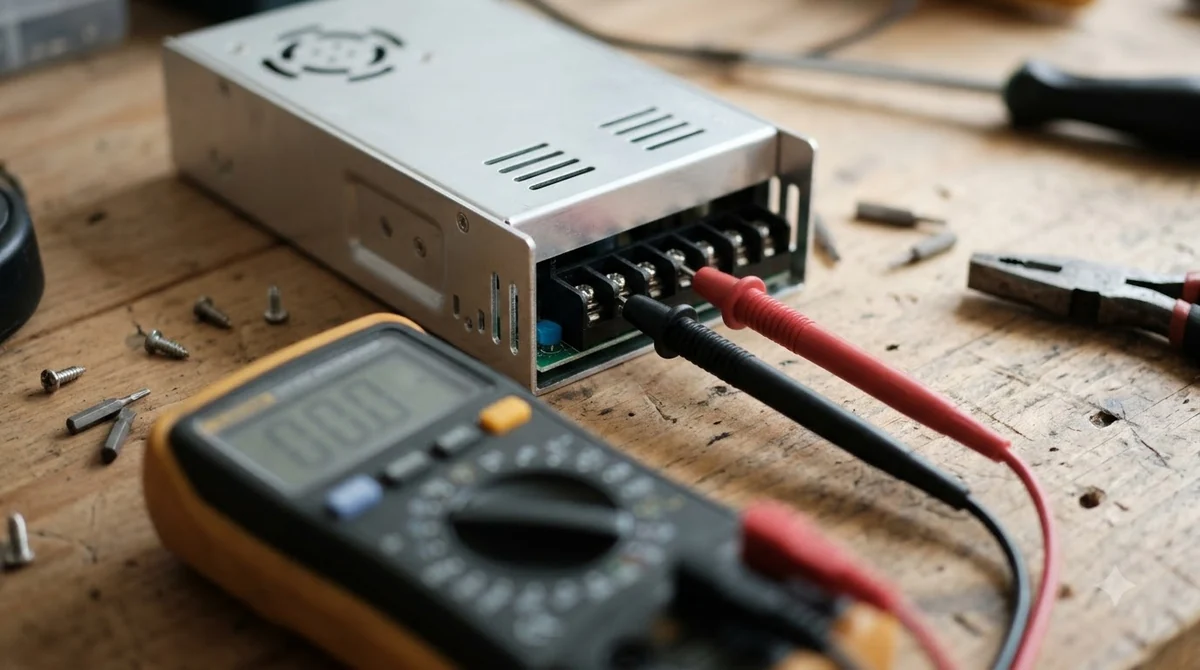
| Spec | Toro Turf Pro value | What it means for you |
|---|---|---|
| AC input | 120 VAC, 60 Hz, 3.5 A (360 W maximum) | Plan a dedicated 120 V circuit that serves only this load (our reading) |
| Charge output | 32 VDC, 10.7 A (320 W maximum) | The low-voltage side that reaches the mower’s charging contacts |
| Output circuit | Class 2 | Toro lists the output circuit as Class 2 |
| Operating temperature | 0 to 50 C (32 to 122 F) | Keep the station within this range |
Home models differ, so these robot mower charging station power requirements describe one professional unit and not every charger on the market. Read the rating label on your own power supply before you choose a circuit, and treat the manual as the final word.
Why GFCI protection matters for an outdoor outlet
A ground fault circuit interrupter, or GFCI, detects a current difference as small as 0.006 A and cuts the power faster than a blink of an eye, according to the CPSC’s GFCI fact sheet. The same fact sheet says the National Electrical Code has required GFCI protection on outdoor receptacles since 1973.
The University of Illinois Extension recommends installing GFCIs on outdoor outlets, and says to use portable GFCIs for outdoor outlets that do not have them. The CPSC also lists portable GFCIs for garden equipment such as mowers and hedge trimmers.
For a charging station, our reading is that the outdoor outlet should be GFCI protected, either at the outlet itself or with a portable unit where the outlet has none. Check it before you install the base, not after.
Why extension cords and power strips do not belong in the setup
Robot mower charging station power requirements rule out extension cords. Toro says not to plug its charging station into a power strip or an extension cord. Robomow says the low-voltage cable should not be too long or extended. Neither manual gives a safe extension length, so the safest route is a shorter run from a closer outlet.
- Toro: do not use a power strip or extension cord with the charging station.
- Robomow: keep the low-voltage cable short and avoid extending it.
- Our reading: if the outlet is too far, move the base closer or have an electrician add an outlet.
Heads up
Do not add an extension cord to make a charger reach. The manuals say not to, and a closer outlet is the safer fix.
How charge time depends on battery size
Robomow gives a charge-time formula: battery capacity in mAh, divided by charging current in mA, multiplied by 1.3, equals the charging time. The page says the 1.3 factor “denotes the electrical work.” It does not give a typical charging current, so you need that figure from your mower’s manual before you can calculate a time.
Battery size varies a lot. Robomow says smaller models sometimes have a limit of about 1,500 mAh, while robots for large lawns can have more than 4,000 mAh. Using the same formula, a larger battery takes longer to refill from the same charger.
For lithium-ion packs, Robomow says a modern battery may charge in as little as an hour, depending on its capacity. The same page says recharging can take about as long as mowing the lawn. How docking works explains how the mower finds the base to charge.
Keep the power supply dry, ventilated and away from water
Husqvarna says the power supply should not be placed in an enclosed box, and that any cover needs open sides and good airflow to prevent heat build-up. Toro’s professional unit has its own distance rules: the station should be at least 15 m (49 ft) from the water edge, with no risk of flooding after heavy rain.
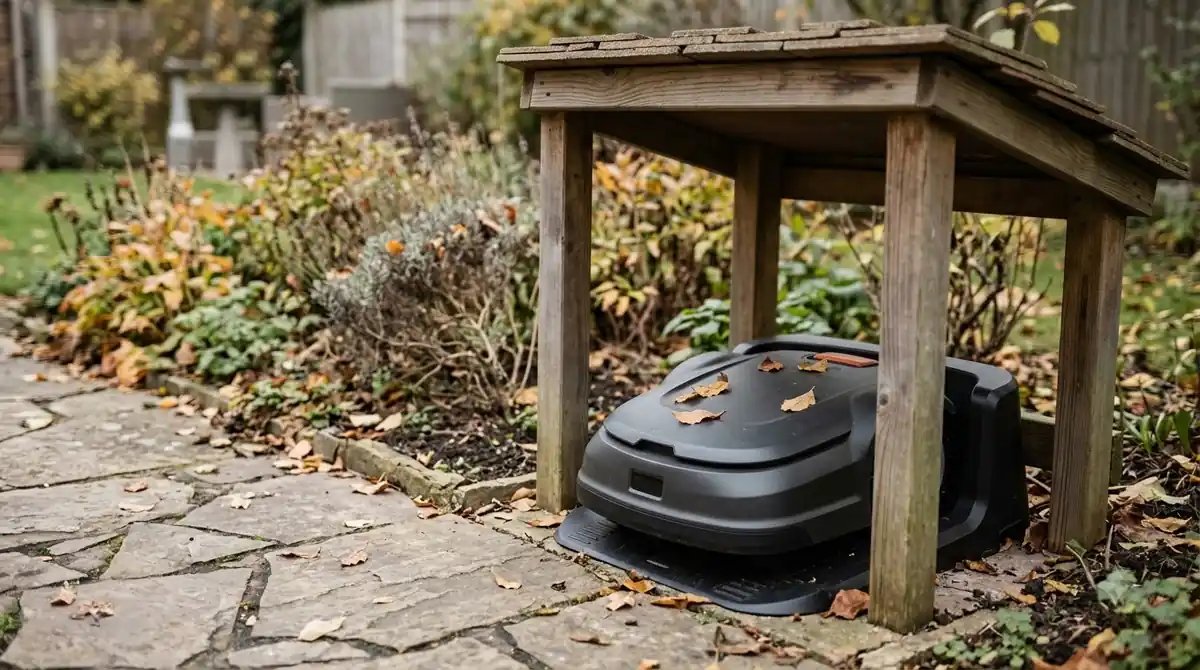
- Husqvarna: no enclosed box around the power supply, and open sides with airflow on any cover.
- Robomow: protect the station from full sunlight and from splashing water.
- Toro: keep obstacles more than 6 m (19.7 ft) from the station, and stay at least 15 m (49 ft) from water.
A shelter can help with sun and rain, but it must leave room for airflow around the supply. Husqvarna also warns that other shelters are not tested or verified by the company. Our reading is to check that the mower’s approach to the dock stays clear before you build anything.
When a professional wiring job is needed
Toro’s manual says the AC installation must be performed by a qualified professional, and that all national and regional codes must be followed. It calls for 14 AWG electrical wire and 1/2 inch liquid-tight conduit for the AC feed. Wire and conduit are not included with the station, so budget for them separately.
Our reading is that robot mower charging station power requirements are best settled by a licensed electrician, who is the right person to add a new outdoor circuit, especially where the outlet needs GFCI protection and the nearest socket is far from the lawn.
What to check before you buy
Before you buy, check the robot mower charging station power requirements: the input rating, the power supply type, the cable length and the weather protection for the outlet.
- Input rating. Read the power supply label and the manual for the voltage, current and wattage.
- Supply type. Confirm whether the unit plugs into a wall socket or needs a hardwired AC feed.
- Cable length. Make sure the outlet can sit close enough that no extension is needed.
- Outlet protection. Look for an outdoor-rated, weatherproof outlet with GFCI protection.
- One station per robot. Toro’s manual states that one station is required for each robot.
Our reading is that the power plan matters as much as the mower itself. Settle it before the base is staked into the ground, because moving a station later means re-laying wire. If the base already fails to charge, the mower not charging troubleshooting guide and the charger replacement guide cover the next steps.
Frequently asked questions
Can a robot mower charging station run on an extension cord?
No. Toro says its charging station must not be plugged into a power strip or an extension cord. Robomow also advises against extending the low-voltage cable. Move the base closer to a suitable outdoor outlet instead.
Does a robot mower charging station need a GFCI outlet?
The CPSC says a GFCI cuts power quickly when it detects a ground fault, and the National Electrical Code has required GFCI protection on outdoor receptacles since 1973. The University of Illinois Extension recommends GFCIs on outdoor outlets. Check your local code for the exact rule that applies to your yard.
How many watts does a robot mower charger use?
It depends on the model. Toro’s professional Turf Pro station is rated at 360 W maximum on its 120 VAC input. Home chargers list their own rating on the power supply label and in the manual.
How long does a robot mower take to charge?
Robomow gives a formula: battery capacity in mAh divided by charging current in mA, multiplied by 1.3. It also says a modern lithium-ion battery may charge in as little as an hour, depending on its capacity.
Sources
- Automower charging station: optimal placement and mower house guide (Husqvarna): outlet location, enclosed power supply, cover airflow, status LED meaning.
- How to install the charging station of the robotic lawnmower (Robomow): low-voltage cable, outdoor weatherproof socket, sun and splash protection for the transformer.
- How often does the robotic lawnmower need to be charged (Robomow): charge-time formula, battery size range, lithium-ion charge time.
- Turf Pro and Range Pro charging station installation instructions (Toro): input and output ratings, extension cord warning, qualified installer, conduit, water and obstacle distances, one station per robot.
- What is a GFCI? (U.S. Consumer Product Safety Commission): 0.006 A detection level, NEC outdoor receptacle requirement since 1973, portable GFCIs for garden equipment.
- Safety talks with children (University of Illinois Extension): GFCI on outdoor outlets, portable GFCIs for outlets without them.
 Up next10 min readGearRTK Base Station Power Cable Outdoor: What to Check FirstUpdated Nov 11, 2026
 8 min readGearRobot Mower Cover for Charging Station: What the Manuals SayUpdated Nov 11, 2026
 8 min readGearWhere to Mount an RTK Base Station for a Robot MowerUpdated Nov 11, 2026
 8 min readGearBest Weatherproof Enclosure for RTK Base Station: 6 Checks Before You BuyUpdated Nov 11, 2026
 8 min readGearHow to Clean a Robot Mower Safely, Step by StepUpdated Nov 11, 2026
 9 min readGearHow to Winterize a Robot MowerUpdated Nov 11, 2026