
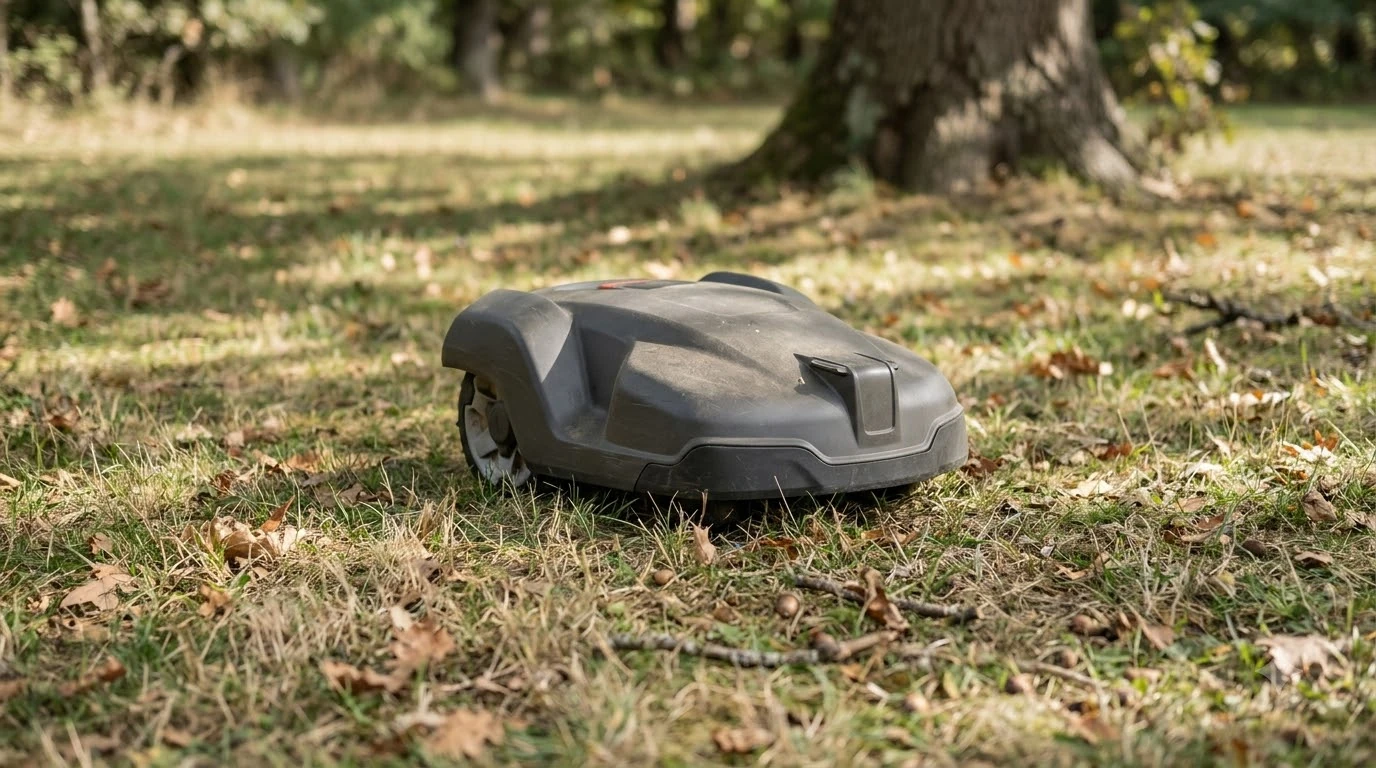

A best wire-free robot mower under $2000 is a step up in area and features, but the rated area, mowing speed and slope ratings still decide the fit. In this band, many makers offer LiDAR or vision navigation without a boundary wire, and some add a satellite positioning option. Figures below come from maker pages and guides, as of Nov 2026, and prices should be checked on the current listing.
The short answer
- Budget tier: one buying guide places mid-range mowers at about $1,000 to $2,000, so this band sits at the top of that tier.
- Coverage speed: one LiDAR model lists about 120 square meters per hour in delicate mode and about 180 in efficient mode.
- Slope: a 45 percent work-area rating is listed on some LiDAR models, with a separate, lower boundary figure.
- Headroom: keep at least 20 to 30 percent above your measured lawn, as two buying guides advise.
What the extra budget usually adds
Between $1,500 and $2,000, the common upgrades are a larger rated area, a stronger slope rating, a bigger battery and more mapping features. Sunseeker places its mid-range mowers at about $1,500 to $2,800, which means the top of this budget often sits near the lower edge of the next tier. If you are close to that line, compare the two side by side, not only the price. For a plain summary of the technology behind these mowers, read what wire-free robot mowing involves before comparing budgets. To see what a lower budget still delivers, compare wire-free options under $1200 against the tier discussed here.
Navigation is still the first question. Ecovacs describes LiDAR as a method that maps the lawn with laser pulses and can be limited by fog and heavy rain. A wire-free model in this band may be LiDAR only, or it may combine LiDAR, a camera and an optional satellite module. Read the spec sheet to see which one you are getting.
Coverage speed and lawn size
Rated area tells you the size the maker considers manageable, but coverage speed tells you how long a full mow takes. The Ecovacs GOAT O1000 LiDAR PRO page lists about 120 square meters per hour in delicate mode and about 180 square meters per hour in efficient mode, with no acreage limit given. At the efficient figure, a lawn of one acre (about 4,047 square meters) would take roughly 22 hours of mowing time before charging and overlap, which is a theoretical number, not a real schedule. Coverage speed depends on how well the mower knows its position, so see the accuracy of robot mower navigation across systems. Coverage speed depends on more than rated area, so how cutting width affects coverage is worth checking when comparing models. Coverage speed and lawn size interact on larger plots, so see what a robot mower for 1.5 acres has to cover in practice.
The same page lists 90 minutes of mowing per charge and about 70 minutes to recharge. Those two figures tell you how many charge cycles a large lawn will need, so check them against your lawn size before you commit.
Slope and boundary ratings
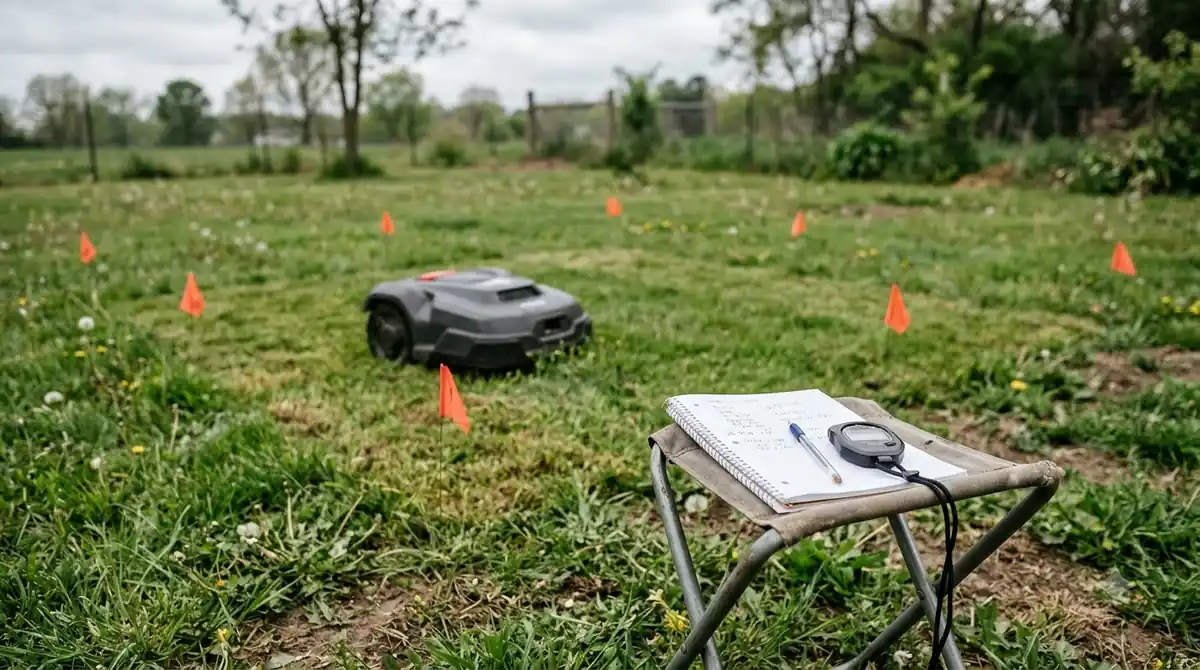
Slope is a common reason owners return a mower. The Ecovacs O1000 LiDAR PRO page lists a 45 percent work-area slope and a 17 percent virtual boundary slope. That gap is typical of the category, so the edges of a bank may be harder to cover than the open lawn. The Dreame guide suggests ruling out two-wheel drive if any section is steeper than about 35 percent, and Sunseeker suggests all-wheel drive above about 30 percent. Ratings do not guarantee traction, so read the page on mowers that avoid getting stuck before you rely on a slope figure.
Heads up
A high work-area slope rating does not mean the mower will hold the boundary on a steep edge. Ask the maker for the boundary figure and test it on your steepest spot if a return window allows.
Noise and everyday use
Noise is worth checking if the mower will run during the day. The Ecovacs O1000 LiDAR PRO page lists 61 dBA at the body, which is a maker figure, and does not describe the noise at a neighbor’s fence. Weight matters too: the same page lists about 28.7 pounds, which affects how easily you can lift it onto a lawn edge or a slope. Daily use depends on the app, so compare app control features on robot mowers.
Where the top of the band meets the next tier
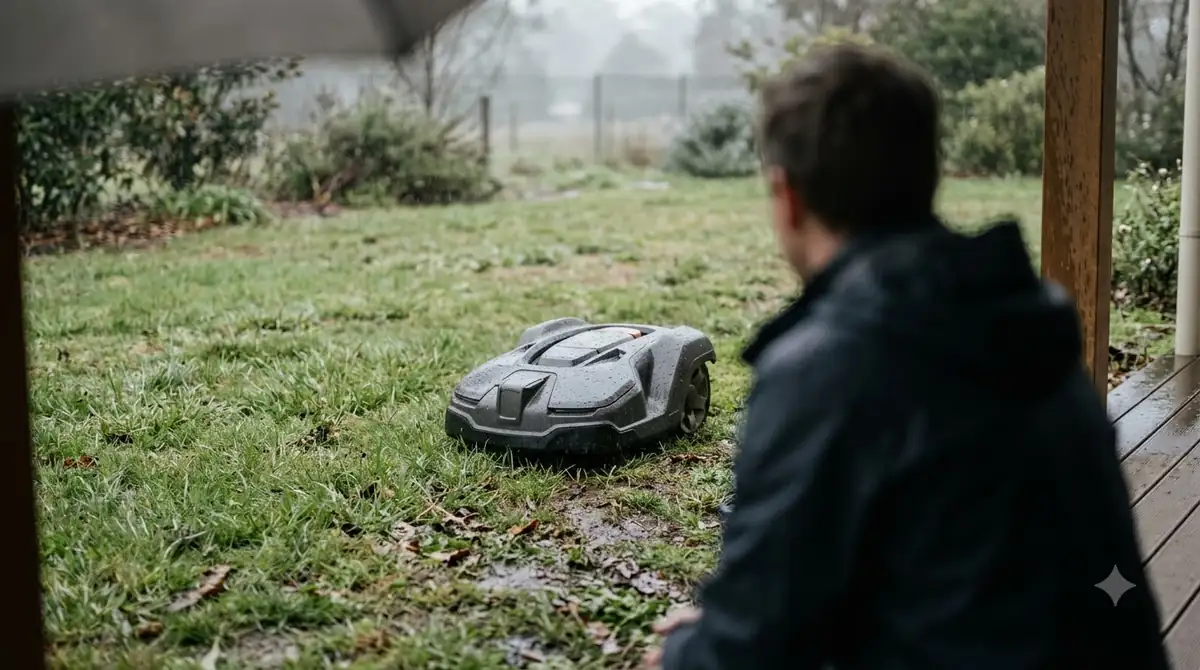
Some models just above this budget are priced much higher. The Ecovacs A3000 LiDAR PRO page lists a base price of $2,499.99. That page is undated, so treat the figure as a volatile listing, not a fixed price. If a model you like sits above $2,000, check whether the extra cost buys a bigger rated area, a stronger slope rating or a warranty you need. Readers whose budget stretches a little further can compare the next tier up in wire-free mowers under $2500.
Running costs over three to five years
The Dreame buying guide gives a rough yearly picture: blades at $20 to $40 per season, a battery at $100 to $300 after three to five years, and electricity at $15 to $25 per year. Some makers also sell a connectivity plan, so the monthly or yearly fee should go into your comparison from the start. Our reading is that a mower with a longer warranty may cost less over five years than a cheaper one with a short battery warranty.
How to choose a best wire-free robot mower under $2000
Begin with your measured lawn area, add 20 to 30 percent headroom, then check the work-area and boundary slope. Next, compare coverage speed and the charge cycle against the time you want the mower to run. Finally, confirm the dock clearance, the noise figure and the warranty terms in writing, and compare them with the cost of a subscription if one applies.
Frequently asked questions
Is a wire-free mower under $2000 accurate on slopes?
It depends on the model. Some LiDAR mowers list a 45 percent work-area slope, but the boundary rating is lower. Check both figures and consider all-wheel drive once any part of the lawn is steeper than about 30 to 35 percent.
How long does a full mow take?
It depends on lawn size, coverage speed and charge cycles. One maker page lists about 120 to 180 square meters per hour, so divide your lawn area by that figure, then add time for charging and overlap.
Does LiDAR work in the rain?
Ecovacs says fog and heavy rain can scatter or absorb the laser beams. Many mowers can operate in light rain, but check the water-resistance rating and the maker’s guidance for wet grass before you rely on it.
Should I pay more for a bigger rated area?
Only if your measured lawn plus 20 to 30 percent headroom needs it. A larger rating costs more to buy and sometimes more to run, so start from your real lawn size rather than the largest number in the band.
Sources
- ECOVACS, GOAT O1000 LiDAR PRO (manufacturer): used for coverage speed, mowing time, slope, boundary slope, noise and weight.
- ECOVACS, GOAT A3000 LiDAR PRO (manufacturer): used for the undated base price, which is a volatile listing.
- ECOVACS, LiDAR vs RTK robot lawn mowers (manufacturer): used for the fog and heavy rain limit.
- Dreame robot lawn mower buying guide (manufacturer): used for the price tier, slope threshold, headroom and running costs.
 Up next6 min readBest Robot MowersBest Wire-Free Robot Mower Under $700: What to Expect at This PriceUpdated Nov 17, 2026
 6 min readBest Robot MowersBest Wire-Free Robot Mower Under $1500: What the Spec Sheets ShowUpdated Nov 14, 2026
 7 min readBest Robot MowersBest Wire-Free Robot Mower Under $2500: How to Choose in 2026Updated Nov 14, 2026
 8 min readBest Robot MowersBest Wire-Free Robot Mower Under $5000: What to CheckUpdated Nov 17, 2026
 6 min readBest Robot MowersBest Wire-Free Robot Mower Under $800: What the Price BuysUpdated Nov 14, 2026
 7 min readBest Robot MowersBest Wire-Free Robot Mower Under $1200: What to Check Before You BuyUpdated Nov 16, 2026