
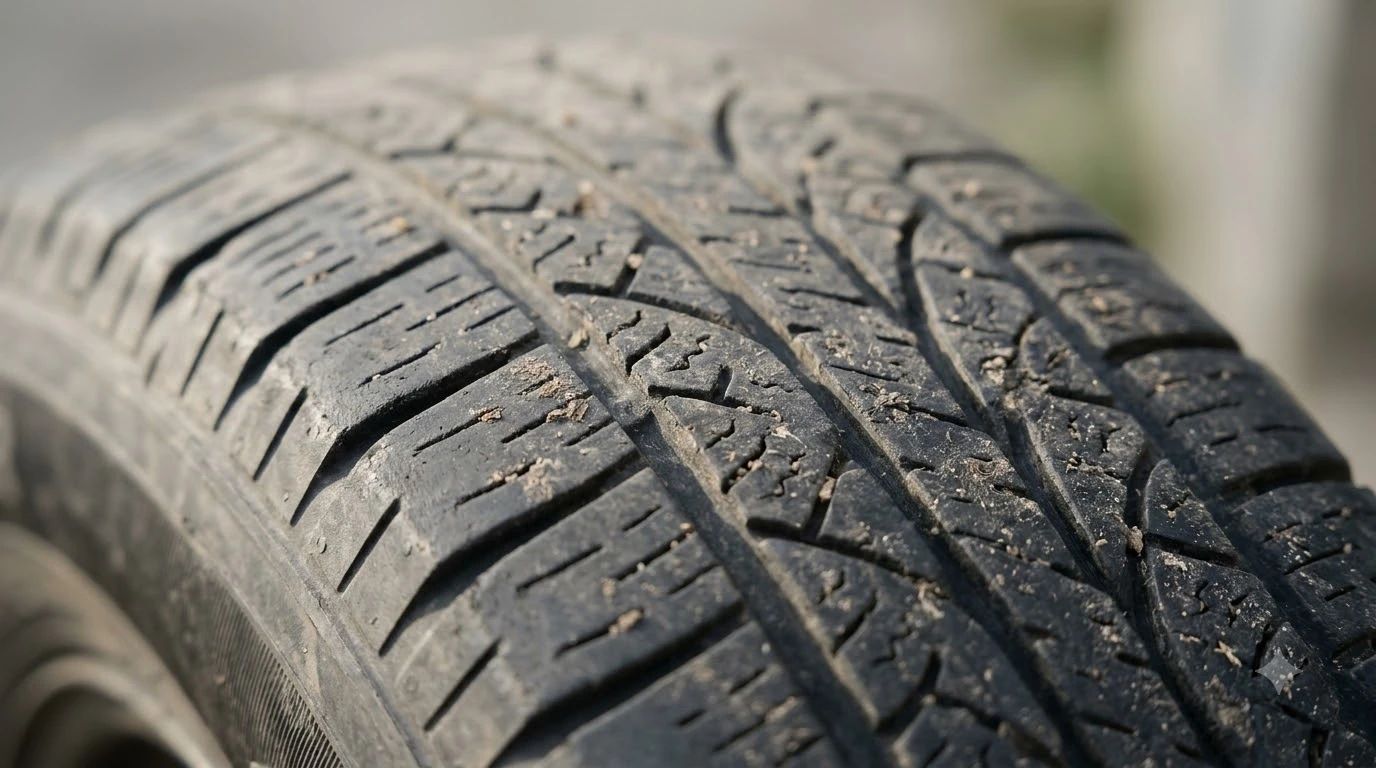

Robot mower wheel replacement is worth doing when the tread is balding, the wheel wobbles, or the bearings feel gritty. Check those signs before you order anything, because a wheel that is the wrong size can change the mower’s height-of-cut settings. Your model number and axle details matter more than how the wheel looks.
The short answer
- Replace a wheel with balding tread, cracks, side-to-side play, or gritty bearings.
- Check the bearings and front castors before you assume the tire is the problem.
- Match the wheel’s diameter, axle diameter, and mounting hardware to your model.
- Read the model manual before the swap, because parts guides do not cover every step.
When robot mower wheel replacement is due
A worn wheel usually shows up as play, poor grip, or visible wear on the tread. A parts-buying guide advises checking for play or wobble in the wheels at least once a month. It lists balding tread, cracks, and a gritty feel as reasons for robot mower wheel replacement, and says a wheel that feels gritty when spun by hand, or that squeaks, needs bearing attention.
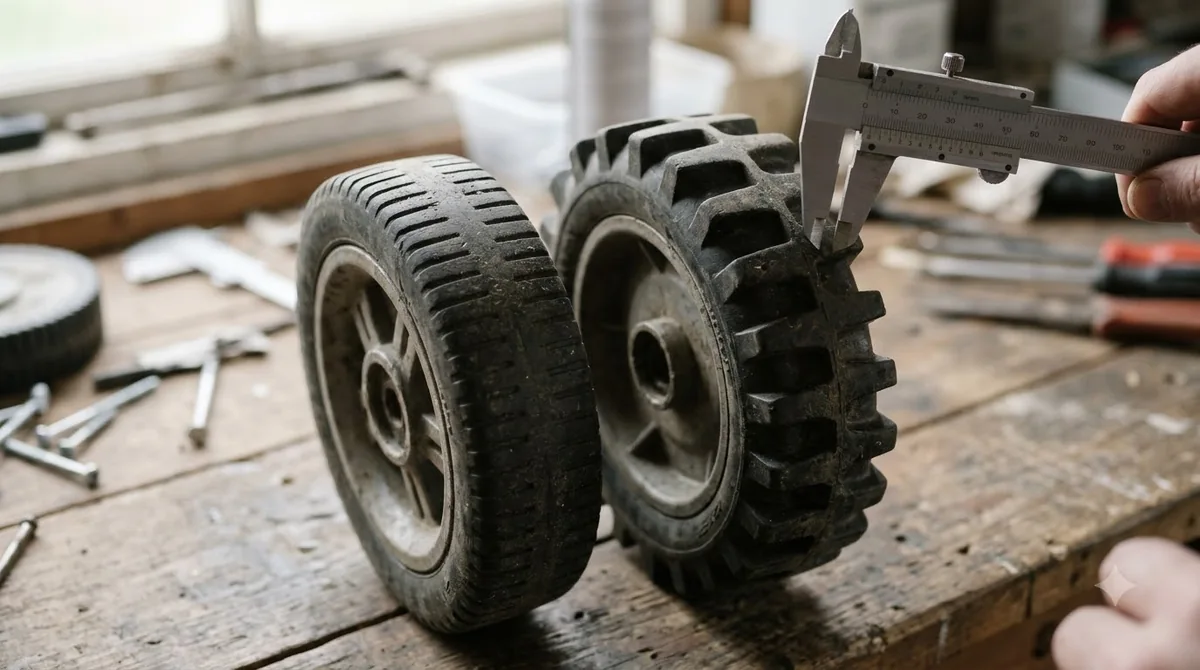
The same article says standard plastic wheels can become brittle and crack after two seasons of sun exposure. It also suggests plastic wheels with thin treads may need replacing about every two years. The article puts rubber or TPU wheels at roughly three to five seasons, depending on terrain and how often the mower runs, and says metal spikes or claws should be checked for tightness and rust once a year. Treat all of these as rough guides rather than a schedule, because wear depends on how much grass you cut and how rough the ground is. For wider habits that slow wear, see how to make a robot mower last longer.
Use the parts-buying article from Journeyman HQ as a reference for these signs. Your owner’s manual is the place to confirm wheel parts and service guidance for your model, so use it to settle any question the article leaves open.
Check the bearings and front wheels first
Not every wobble means the drive wheel is worn. Husqvarna’s Automower support center lists the lower front wheel bearings among the wear parts to check. Its guidance is to rotate the wheels and listen for any squeaking.
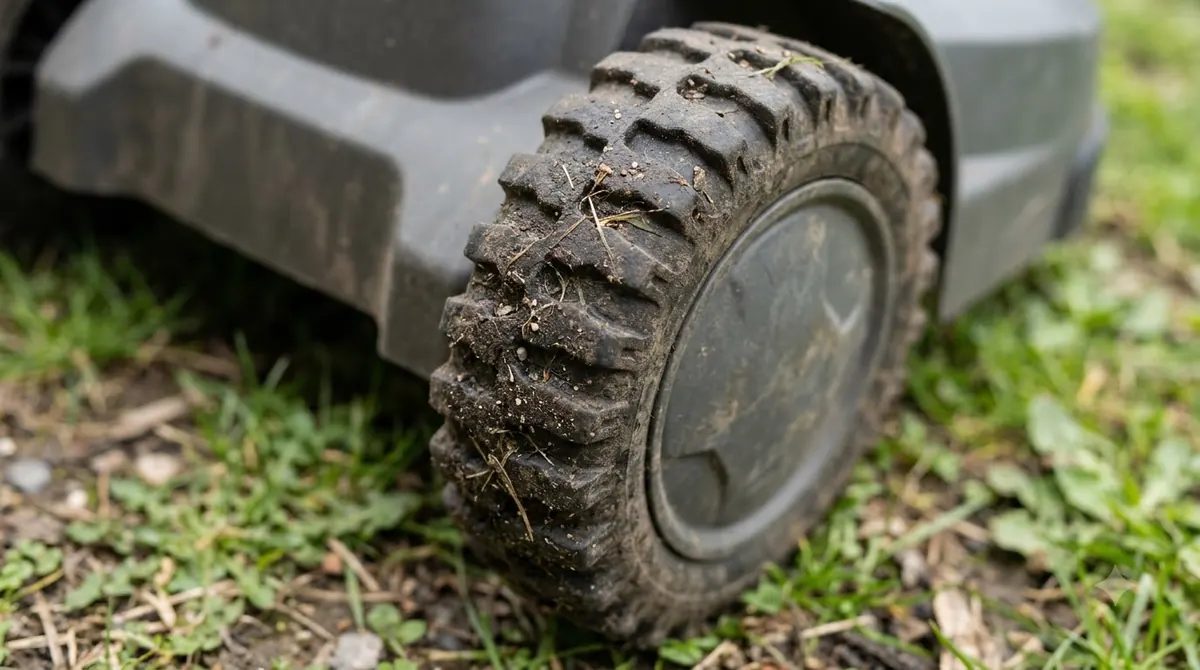
Packed mud is easy to miss, so our cleaning guide for robot mowers is a good companion to the wheel check. A simple hand test is a reasonable first step. Turn each wheel slowly and feel for grit, roughness, or play, then compare the feel with the other wheels. If the problem sits in a bearing, a new tire alone will not fix it, so check this before any robot lawnmower wheel replacement.
Husqvarna also advises keeping the mower on all of its wheels and on level ground during storage. That is useful to remember when you finish a repair and put the mower away for the season, and our guide to winterizing a robot mower covers the rest of that routine.
Match the replacement to your model
A replacement wheel has to match the original diameter and axle, or the mower’s height-of-cut settings can shift. The Journeyman HQ article says the diameter must match the original for that reason, and that you should verify the axle diameter and mounting hardware before buying.
The Worx product page for its mud-terrain drive wheels is a useful example of what to check. It describes a pack of two wheels with two elastic washers, an aggressive tread with deep lugs, and a wider profile that spreads the mower’s weight more evenly. The page does not state a wheel diameter, and its compatible model list differs between two sections, so confirm the model against your mower’s label before ordering. The Journeyman HQ article adds that not all wheels fit every hub, and that a wheel that is too heavy can strain the drive motors.
| Check | Why it matters | Where to look |
|---|---|---|
| Model number | Compatibility lists differ between product pages. | Mower label and owner’s manual |
| Wheel diameter | A different diameter can change height-of-cut settings. | Old wheel, manual, or dealer |
| Axle diameter | The article says to verify it before buying. | Axle on the mower |
| Mounting hardware | The article says to verify it before buying. | Old wheel and manual |
| Tread | The Worx page describes deep lugs; a different tread changes the grip. | Product page |
| Pack contents | The Worx pack holds two wheels and two elastic washers, with no hubs or screws listed. | Product page |
How the rear wheel swap starts
A parts guide for Automower 450x, 430x, and 420 rear wheels starts with a 24 mm spanner or socket, then the hub cap and nut. The guide we read covers only those first steps, so it cannot serve as a full procedure.
- Get the right tool. The guide names a 24 mm spanner or socket.
- Remove the hub cap, then the nut. The guide shows these two steps.
The guide does not say how to pull the old wheel off, how to fit the new one, or whether the mower’s power must be disconnected first. Follow your model’s manual for those steps, and contact the dealer if the manual calls for one. The Journeyman HQ article advises powering the mower off and removing the safety key first, and warns against over-torquing the axle bolt, which can damage the plastic hub or motor bearings.
Common mistakes when ordering parts
The most common mistake in robot mower wheel replacement is ordering from a photo alone, without the model number and axle details. Our reading is that a listing that looks identical can still fit a different model. The same article also matches tread to the ground: it suggests wide-tread wheels for soft, wet soil, aggressive narrow lugs for hard-packed dirt, and spiked or stainless claw options on slopes over 15 degrees.
- Skipping the model check. Compatibility lists can disagree, so match the part to your mower’s label.
- Ignoring the diameter. A different size can change the height-of-cut settings, per the parts article.
- Replacing without checking bearings. A gritty wheel may point to a bearing problem, which a new tire does not solve.
Where to get replacement wheels
For robot mower wheel replacement, start with your mower’s dealer, because Husqvarna directs spare-part questions to dealers for assistance. Retailers also list wheels by model, which helps if you already have the part number from the old wheel or the manual.
Prices change often, so compare listings on the same day and check the model, diameter, and pack contents on each one. Wheels are only one wear part: blades follow their own schedule in our blade swap guide, and a damaged boundary wire is a different repair, described in finding a break in the wire. Our reading is that a dealer’s parts desk is the safer choice when the model is older or a listing does not match your mower.
Frequently asked questions
How often should I check robot mower wheels?
Check for play or wobble at least once a month, according to one parts-buying guide. Turn each wheel by hand and listen for squeaking or feel for grit. Compare the feel with the other wheels.
Can I fit a wheel of a different size?
Not without checking first. The parts article says the replacement diameter must match the original to avoid throwing off the height-of-cut settings. Confirm the diameter and axle before you buy.
Do I need the model number before buying a replacement wheel?
Yes. The compatible model list on the Worx product page differs between sections, so the model number on your mower is the reliable reference. Match the part to that number.
Who should I ask for replacement parts?
Husqvarna’s support center says to contact your dealer for spare parts and assistance. For model-specific steps, the owner’s manual comes first, then the dealer.
Sources
- Husqvarna Automower support center (manufacturer): wear parts check, storage on all wheels, contact dealer for spare parts.
- Worx mud-terrain drive wheels (manufacturer): pack contents, tread description, compatible model list.
- Journeyman HQ, robot mower wheel guide (parts-buying article): monthly play check, bearing and tread signs, diameter and axle guidance.
- Mincost, Automower rear wheel guide (parts retailer): 24 mm tool and the first two steps for 450x, 430x and 420 rear wheels.
 Up next9 min readGearRobot Mower Blade Screws Replacement: When to Change ThemUpdated Nov 11, 2026
 8 min readGearDull Robot Mower Blades Signs: What to Check and When to ReplaceUpdated Nov 11, 2026
 8 min readGearRobot Mower Wheel Brushes: What to Use and What to AvoidUpdated Nov 11, 2026
 9 min readGearBest Lawn Measuring Wheel for Robot Mower SizingUpdated Nov 11, 2026
 8 min readGearGPS Tracker for Robot Mower Theft: What Works and What to CheckUpdated Nov 11, 2026
 10 min readGearRobot Mower Charger Not Working? Check These Causes FirstUpdated Nov 11, 2026