


In any wired vs wireless robot mower reliability comparison, wired models are the more dependable choice under dense trees and near buildings, because the boundary wire works the same in shade as in sun, while wireless RTK or GPS models are more reliable in open yards with a clear view of the sky. Neither type is failure-free. A wired mower fails when its cable is cut, and a wireless mower fails when it loses satellite lock. The reliability question is really which failure is easier for your yard to avoid and to fix.
The short answer
- Wired reliability: the mower stops when the loop signal is lost, usually from a cut or damaged wire. The fault is findable but can take time to track down.
- Wireless reliability: navigation depends on satellite signal and correction data. Trees, walls, and buildings can cause missed areas or a stop until the signal returns.
- Shade and tight spaces: wired models are usually the safer bet.
- Open yards: a wireless model with a clear sky view is often the less troublesome option, and its setup is quicker.
Wired vs wireless robot mower reliability: what it means
When people ask about reliability, they usually mean one of three things: how often the mower stops mid-session, how often it leaves parts of the lawn uncut, and how hard it is to get it working again. Wired and wireless systems fail in different ways on each of those counts. A wired mower’s typical problem is an interrupted loop, which halts the machine until the break is located and repaired. A wireless mower’s typical problem is weak positioning, which can leave gaps or send it to a stop near a boundary. Wireless systems can use satellites or cameras, and how RTK and vision navigation compare covers both.
No independent lab publishes failure rates for a wired vs wireless robot mower for either type that you can compare directly. Most of the evidence comes from manufacturers and retailers, who each have a reason to favour their own design. Read the figures below as a description of the failure modes, not as a ranking of brands.

Wired systems: the cable is the weak point
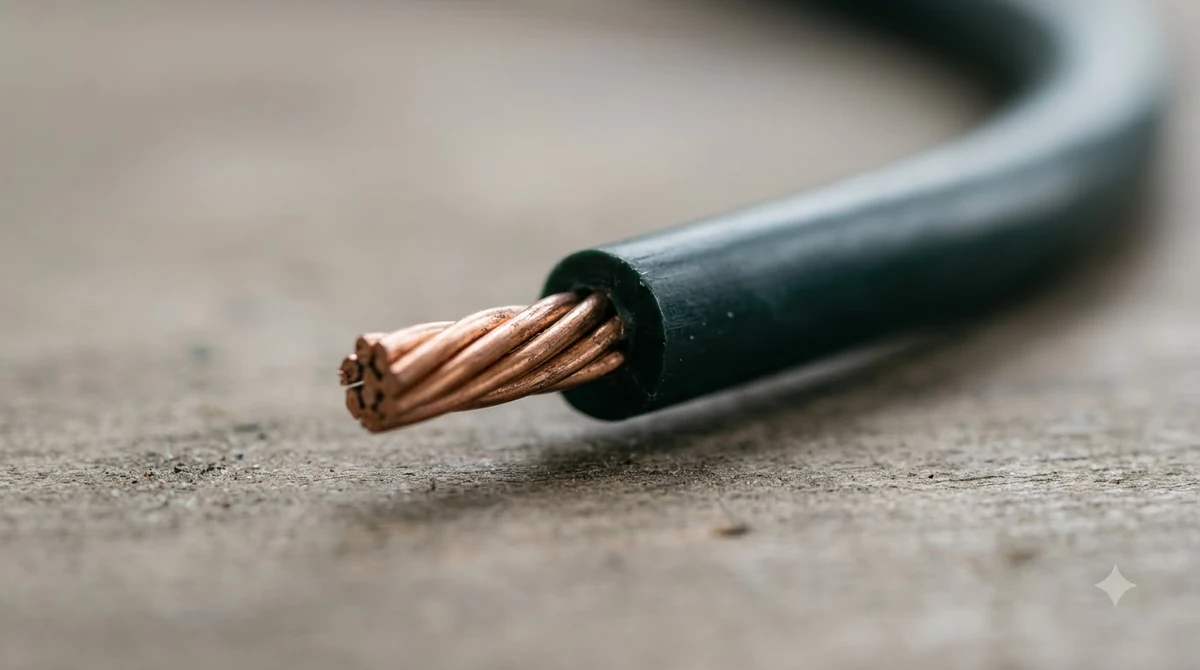
A wired mower depends on a buried or pegged boundary wire that carries a signal around the lawn. Its most common fault is a break in that cable. Garden tools, pets, burrowing animals, frost, and simple digging can all damage it. When the loop is cut, the mower usually stops and shows a wire-fault message until the break is found and joined.
The fault is not usually dangerous, and a wire never loses its signal under a tree. The cost is time. Locating a break can mean running a detector along the wire or checking sections by hand, and a careless dig can cut the wire again. Wired owners who keep the cable buried and avoid digging near it tend to have few problems, but any change to the garden, such as a new bed, can mean rerouting part of the boundary.
Wireless systems: the sky is the weak point
Wireless mowers use satellite positioning, often with a correction base station, and they do not need a wire. Their setup is quicker and they handle changes to the garden more easily, because you redraw the map rather than the cable. Their main risk is signal quality. Trees, buildings, fences, and narrow passages can block or weaken the signal, and on steep or terraced ground the receiver can briefly lose its position lock. Sky view is the weak point of wireless mowing, and satellite positioning accuracy for mowers explains why. A base station changes how robust a wireless setup is, as mowers with and without a base station explains.
Manufacturers respond by adding backup sensors, such as vision or lidar, which keep the mower moving when satellite data drops. Those backups help, but performance can still vary by location, and some models need periodic recalibration. Our reading is that a wireless mower is excellent in an open yard and needs more thought in a shaded one.
Shade, slopes, and tight corners
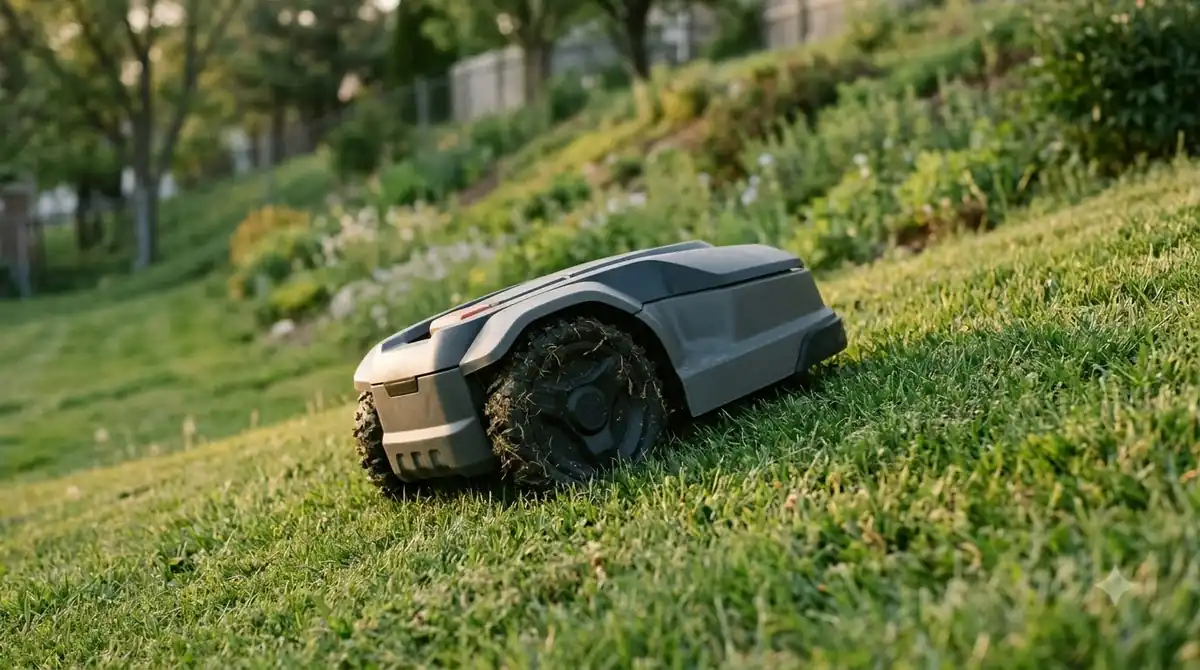
Shade is the clearest dividing line. A yard with large trees, a house that blocks the sky on one side, or a long fence line will test a satellite-based system. A wired boundary does not care about shade, so it suits those lawns well. Slopes are less clear-cut. A wire can keep the mower on course on a bank, but it does not change the mower’s grip, so the slope rating of the machine matters more than the boundary type. Corners and slopes are also affected by coverage logic, which random pattern against systematic mowing paths explains.
Narrow passages and tight corners are a practical concern for both. A wire must be laid to fit the shape, and a wireless map must be drawn accurately around obstacles. Either way, the mower will only be as good as the layout you give it.
Installation and long-term upkeep
Installation is where the two types differ most. Vendor guides describe wired setup as time-consuming, often several hours of laying and securing wire on a typical lawn, while wireless setup is usually a matter of placing a base or checking a satellite connection and drawing the zones in an app. Those figures are approximate and come from sellers, so check the manual for your model. Installation effort differs sharply between the two, as wired vs wireless mower setup explains in a head-to-head list.
Over time, wired upkeep centres on the cable. Wireless upkeep centres on software updates, occasional remapping, and keeping the base station and antenna clear of obstruction. Neither is heavy work, but each is a different kind of chore.
Who should pick which
Weigh the wired vs wireless robot mower reliability trade-off against your own yard. Choose a wired mower if your lawn is shaded, sits under large trees, or is surrounded by buildings, and if you are comfortable burying or pegging a cable. Its reliability under cover is hard to beat, and it has no subscription or satellite dependency.
Choose a wireless mower if your yard is open, you want quick setup, and you expect to change the garden often. Plan for a model with backup sensors if your yard has partial shade, and check how the machine behaves near a boundary when the signal weakens.
What to check before you buy
- Sky view: stand on the lawn’s most shaded point and check how much sky you can see. Heavy cover favours wired.
- Fault behaviour: ask what the mower does when it loses a signal near the boundary. A safe stop is better than a wandering stop.
- Repair path: for wired, plan how you will find and repair a break. For wireless, confirm how the manufacturer handles firmware and recalibration.
- Slope rating: check the machine’s stated slope limit against your steepest bank, whichever boundary system you choose.
Related reads: Another wire-free approach worth understanding is LiDAR against camera-based navigation in changing light.
Frequently asked questions
Is a wired robot mower more reliable than a wireless one?
It depends on the yard. A wired mower does not lose its signal under trees, so it is steadier in shade. A wireless mower is often more reliable in an open yard with a clear sky view.
What usually goes wrong with a boundary wire?
The most common fault is a break in the cable, caused by garden tools, pets, burrowing animals, or frost. The mower stops and shows a fault until the break is found and repaired.
Why does a wireless robot mower lose its position?
Satellite positioning can be weakened by trees, buildings, fences, and poor weather. On steep or enclosed ground the receiver can briefly lose its lock, so backup sensors and clear sky help.
Can I switch from a wired to a wireless mower later?
Usually yes, but it is a new purchase rather than an upgrade of the cable. Check whether your current mower’s dock and blades can carry over, because most wired and wireless models are sold as separate machines.
Sources
- Lymow, RTK vs wire: which robot mower setup is easier (robot mower maker): used for the wire-break causes, RTK degradation under dense canopy, and the vendor installation-time ranges. Note it is a vendor article.
- Mammotion, wired vs wireless robot mower (robot mower maker): used for the signal-interference sources, the note that wired mowers are not affected by satellite problems, and the installation comparison. Note it is a vendor article.
 Up next10 min readReviews & CompareWired vs Wireless Robot Mower Pros and Cons: Which Setup Fits Your YardUpdated Nov 11, 2026
 7 min readReviews & CompareRobot Mower vs Landscaping Company Contract: Which Costs Less?Updated Nov 13, 2026
 11 min readReviews & CompareRobot Mower Brands Ranked by Reliability: The EvidenceUpdated Nov 11, 2026
 8 min readReviews & CompareRobot Mower Reliability Ranking 2026: What the Evidence ShowsUpdated Nov 12, 2026
 6 min readReviews & CompareSingle Blade Disc vs Multi Blade Robot Mower: Cut, Upkeep and CostUpdated Nov 14, 2026
 7 min readReviews & CompareRefurbished vs New Robot Mower: Warranty, Battery and App ChecksUpdated Nov 17, 2026