
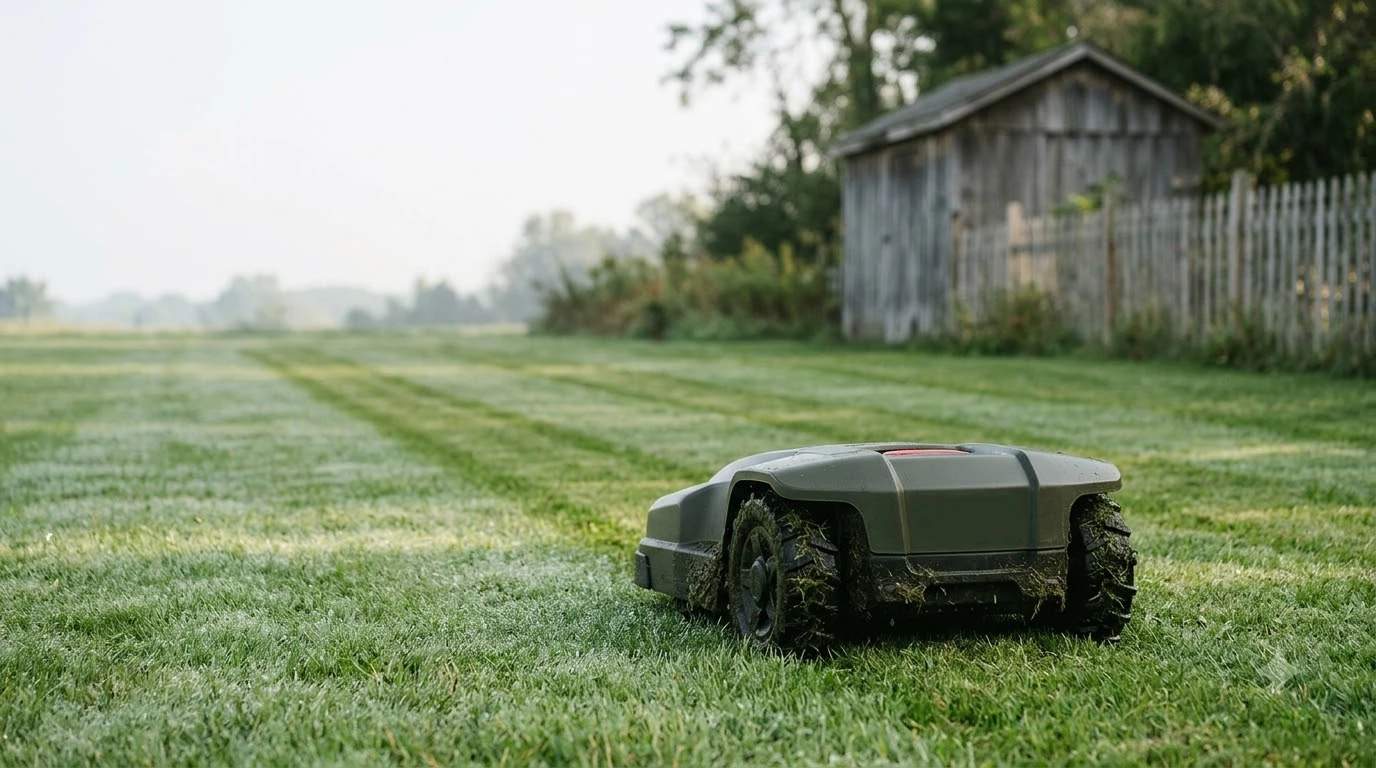

No, a robot mower does not need a perfectly level lawn, but it does work best on ground with only small bumps and shallow dips. A vendor guide says you do not need to level the whole garden. What matters is whether the bumps cause scalping, missed patches, or wheel slip. This guide explains which unevenness is a problem, how to judge your own yard, and which fixes are worth doing before you run the mower.
The short answer
- Small bumps are usually fine: a mild rise or shallow dip is normal for most yards.
- Deep low spots are the real problem: they cause missed grass, brown patches, and wheel spin.
- Raise the cutting height first: a higher setting helps the mower glide over rough patches.
- Fill low spots carefully: thin topdressing over time works better than one thick layer.
What uneven ground does to a robot mower
Uneven ground affects cutting in a few specific ways. The most common is scalping. If the blades sit too low over a raised bump, they shave the top off the grass and leave brown patches. The same bump can also leave a missed strip if the mower’s deck or wheels lift over it. Wheel slip is the other common problem. Rough or wet ground can make the mower lose traction, spin its wheels in muddy spots, or get stuck. A closely related question is answered in how flat a lawn needs to be.
The vendor guide we read from Anker says that uneven lawns rarely sit at a single level, so adjustable cutting height matters more than perfect flatness. Its advice is to start with a higher setting and lower it gradually once the lawn is more even. That approach avoids scalping while the mower learns the yard.
How to tell whether your lawn is too uneven
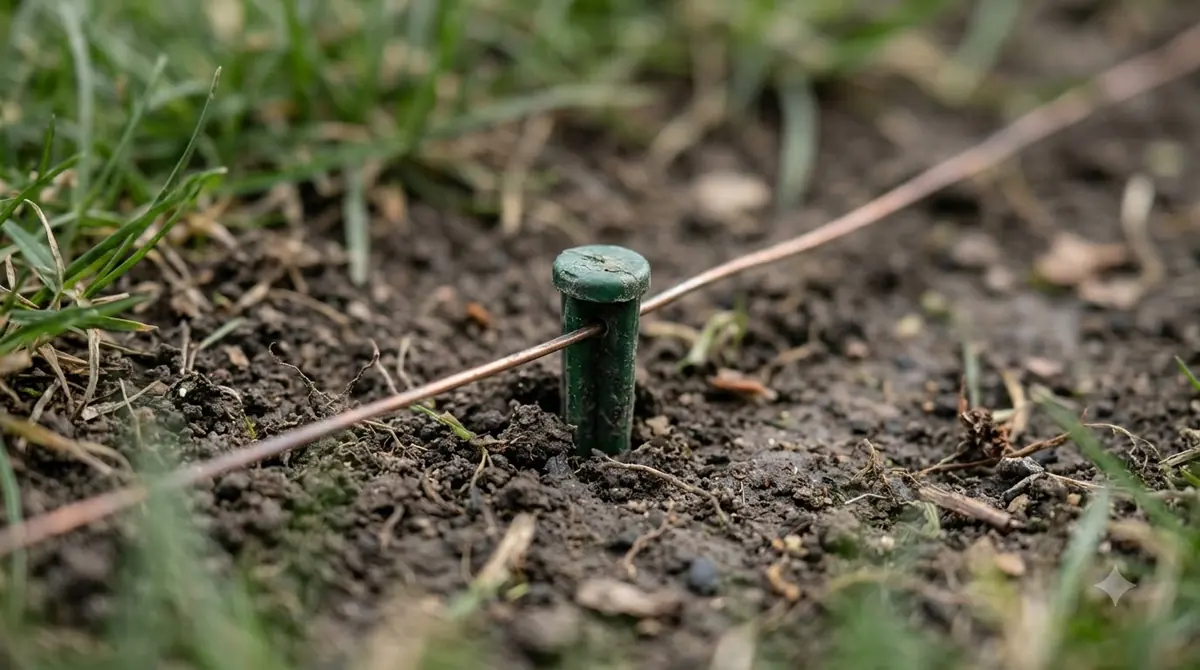
Walk the lawn after a dry spell and look for three things. Are there low spots that stay wet after rain? Are there ruts or holes deep enough to catch a wheel? Are there raised bumps that the grass is already scalped on? If the answer to all three is no, the lawn is usually fine as it is. If the answer to any one is yes, fix that spot before you rely on the mower. A model slope rating is shown in Anthbot M5 slope limit, which is a useful companion to this section.
Slope limits matter too, because a sloped yard puts extra stress on the wheels. The same guide lists typical slope ratings of about 15 to 25 percent for basic models, 30 to 35 percent for mid-range models, and 40 to 70 percent for premium all-terrain models. Check the rating for your mower against the steepest part of your lawn, not the average.
How to fix low spots without damaging the grass
The Ask Extension guidance on lawn leveling gives a clear split between large and small problems. For a large, low area, peel back strips of sod at a uniform thickness, add soil to bring the low area up to that thickness, and replace the strips. For many small low spots, apply thin layers of soil every week or two. The extension advice is to avoid covering the grass crowns, because burying them can kill the grass. Cut damage is described in scalping on bumpy lawns, which gives more context than this short overview can.
- Topdress thinly: add a light layer of soil that matches the existing substrate rather than a thick mound.
- Keep crowns exposed: do not bury the base of the grass plants.
- Reseed when a low area is filled deep: a fully buried area usually needs new seed.
- Stop at the right time: the extension guidance says to stop topdressing by late September, then core aerate and overseed.
Heads up
Sand is not a universal fix. The extension guidance says to use sand only if your underlying soil is already sandy. On other soils, match the topdressing to the soil underneath.
Use the mower settings to work around minor bumps
Before you spend a weekend leveling, try the mower’s settings. Set the cutting height higher for the first few weeks, then lower it one step at a time. Keep the blades sharp so the cut is clean over the bumps rather than torn. Trim edges that stick out, and remove loose items like stones, branches, and toys that the mower can knock aside or get caught on. Safety sensors are explained in tilt sensor limits on uneven ground, so check it if you want the details behind this point. Drive types are explained in AWD drive for uneven terrain, and it explains the reasoning in more depth. Once the lawn is judged level enough, the basic robot mower setup steps cover the station, boundary and schedule.
If one spot keeps causing trouble, mark it as a no-go zone in the app. That is often the simplest fix for a wet or deeply rutted corner that you do not want to repair right away.
A quick first-week check helps you see where the problems really are. Run the mower on a dry day at its highest setting, then walk the lawn afterward and look for brown tracks, pale patches, and any spot where the mower stopped, tilted, or spun its wheels. Those marks point to the exact places worth topdressing, which is much cheaper and less disruptive than trying to level the whole yard. Repeat the check after several weeks of mowing, because regular cutting and a healthy lawn can soften shallow dips over time, and the mower may then cut more evenly than it did at first.
When leveling is worth the effort
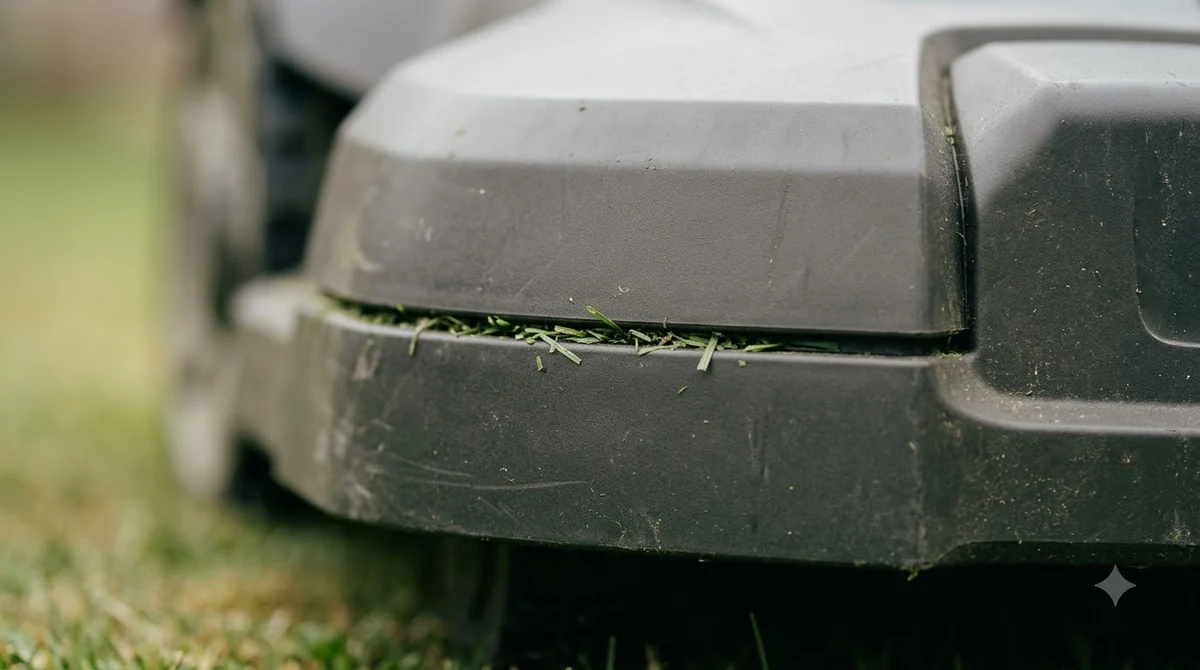
Leveling is worth doing when the same spot causes repeated problems, such as a hole that traps a wheel, a low area that stays wet, or a bump that is scalped every time. It is less urgent for a lawn with gentle, even undulation. Our reading is that most homeowners get more benefit from fixing two or three problem spots than from trying to make the whole yard flat.
Frequently asked questions
Does a robot mower need a perfectly flat lawn?
No. The Anker guide says you do not need to perfectly level the whole garden. Small bumps and shallow dips are usually manageable, while deep holes, ruts, and waterlogged ground are harder for the mower.
What height should I set on a bumpy lawn?
Start higher, then lower the setting gradually. A higher cut helps the mower glide over rough patches and reduces scalping on bumps.
Should I use sand to fill low spots?
Only if your soil is already sandy. The extension guidance says the topdressing material should match the substrate underneath, so sand on heavy soil can cause problems.
When is the best time to level a lawn?
Extension guidance says topdressing can start in late summer, should stop by late September, and then continues the following spring. Deep low areas may take a full season to level.
Sources
- Do robot mowers work on uneven lawns? (Anker, vendor guide): level-lawn requirement, scalping, wheel slip, cutting height, slope ratings, and fixes.
- Ask Extension lawn leveling answer (Extension, August 2024): large versus small low spots, topdressing rules, crown protection, and timing.
 Up next7 min readLearnDo Robot Lawn Mowers Need Lithium Batteries? What to KnowUpdated Nov 14, 2026
 9 min readLearnDo Robot Mowers Need Wi-Fi or an RTK Antenna?Updated Nov 12, 2026
 7 min readLearnHow Much Maintenance Does a Robot Mower Need?Updated Nov 13, 2026
 7 min readLearnDoes a Robot Mower Charger Need Its Own Circuit Breaker?Updated Nov 12, 2026
 7 min readLearnDo Robot Lawn Mowers Need a Permit?Updated Nov 12, 2026
 8 min readLearnWhat Tools Do You Need to Install a Robot Mower?Updated Nov 12, 2026