
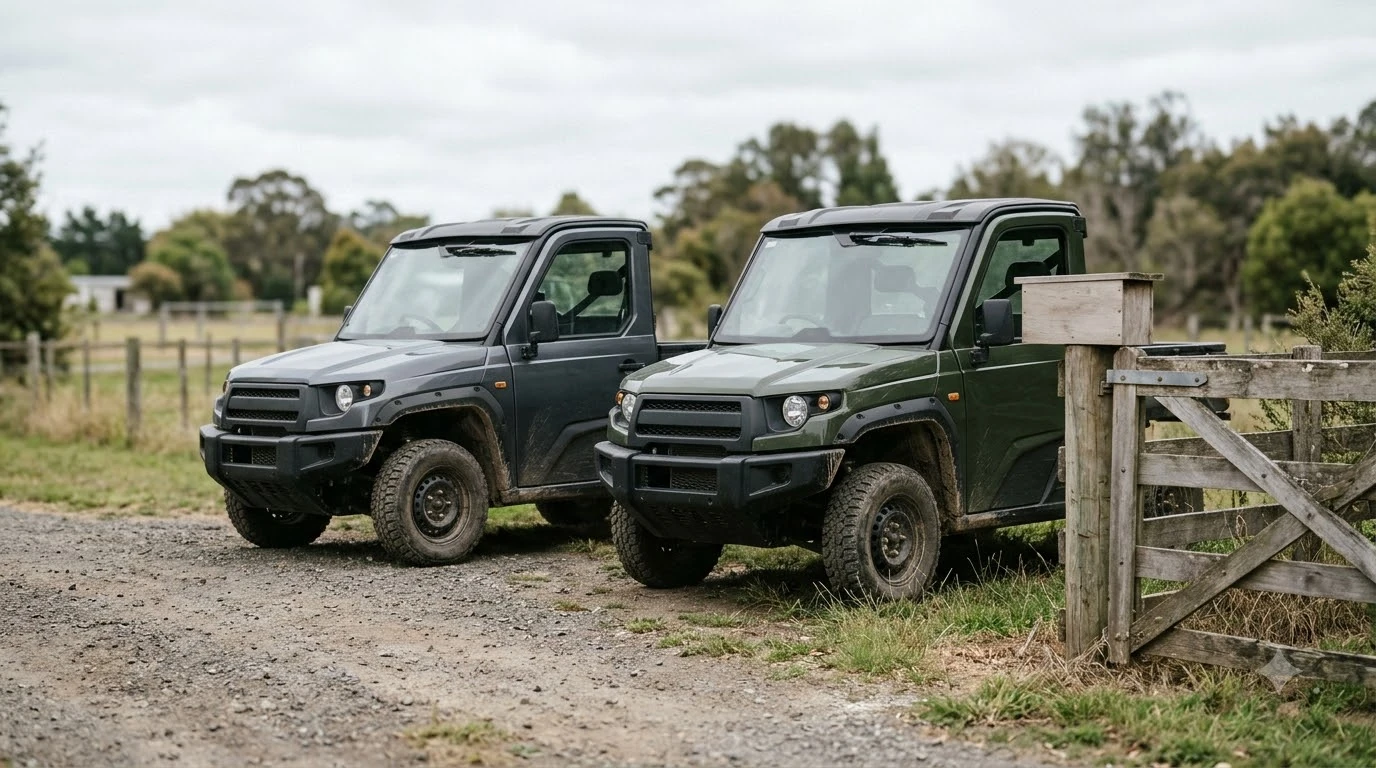

A robot mower cable conduit for driveways protects the boundary wire where it has to cross a hard surface that cars drive over. Boundary wire laid across a driveway gets crushed, cut by tyres, or lifted at the edges, and a broken loop stops the mower in the wrong place. A conduit gives the wire a protected path under the driveway, but it is not always the right answer. This guide explains when a conduit makes sense, when a passage or a separate area is the better choice, and what to check before you dig.
The short answer
- When a conduit helps: the boundary wire must cross a driveway that cars drive over, and the wire would otherwise sit on the surface.
- When it does not: if the mower can reach a separate area without crossing the driveway, a conduit adds work for no gain.
- Keep the wire spaced: Husqvarna’s passage guidance sets a minimum of 60 cm between boundary wires for a guide-wire passage.
- Test the route: the mower must find its charging station from every zone it can reach, so run supervised trips before you trust the layout.
- Check local rules: digging under a driveway may need permission, and utilities may run below it.
Why a driveway is a hard crossing for boundary wire
Boundary wire is a thin, low-voltage cable that tells the mower where the lawn ends. When the lawn is split by a driveway, the mower has to cross the hard surface, or the layout has to keep it on one side. Wire laid across the driveway is exposed to tyres, heat, and the edges of the concrete, pavers, or gravel. A cut or crushed section breaks the loop, and the mower may stop or wander. The conduit itself matters first, and the roundup of waterproof conduit for a driveway crossing shows what rated options look like.
Anker’s guidance on mowers that travel between zones says the mower must be able to find its charging station from every zone that is connected, and that the route should be tested with supervised runs in each direction. It also advises removing level changes and loose material along the path. Those points apply to a driveway crossing as much as to any passage.

Conduit or passage: which one fits the driveway
There are two common ways to handle a driveway, and they solve different problems. A conduit protects the wire where it passes under the surface. A passage keeps the mower on a route across the lawn, with the boundary wires spaced far enough apart that the mower can travel between them. Choose by the layout, not by the product. Where the crossing is gravel or paved rather than tarmac, path pavers for gravel crossings offer a flush surface the mower can roll over. If digging is not possible, cable protectors for surface crossings can shield the cable, though they are not as neat as a buried passage.
Husqvarna’s passage guidance gives a minimum of 60 cm (24 in) between the boundary wires for a passage with a guide wire, and 2 m (6 ft 6 in) without one. It also says the guide wire should be at least 30 cm (12 in) from the boundary wire. Husqvarna’s secondary-area guide adds that a secondary area not connected to the main lawn by a passage does not need one. For a driveway that splits the yard into two lawns, a separate area can remove the crossing altogether.
| Layout | Best approach | Main risk |
|---|---|---|
| Driveway splits the lawn and the mower must cross | Passage with guide wire, or a conduit under the drive | Wire damaged by tyres if left on the surface |
| Second lawn reached only by the driveway | Separate area, no crossing needed | Mower may not reach it without the passage |
| Short crossing over a gravel path | Conduit or edging to hold the wire down | Stones shifting and cutting the wire |
| Crossing a busy drive with heavy vehicles | Conduit at a safe depth, with a supervised test | Digging into utilities or failing the crossing |
Robot mower cable conduit for driveways: routing steps
A conduit is useful only when the route is planned before you dig. Our reading is that the route should be short, straight, and clear of utilities, with the wire sleeved from one side of the drive to the other. Work through these steps before you cut into the surface. A supply line has the same limits as other outdoor runs, and low voltage cable laid in conduit still has the manufacturer length limit. Do not confuse the boundary crossing with the supply line, which may be an outdoor extension cord for the dock instead.
- Plan the path on paper. Mark where the boundary wire enters and leaves the drive, and keep the crossing as short and straight as possible.
- Check for utilities and local rules. Look for buried lines and ask the local authority whether digging under a driveway needs permission.
- Choose the conduit. Use a rigid or flexible conduit rated for outdoor and buried use, sized so the wire can be pulled through without a tight bend.
- Lay the conduit. Dig a trench that keeps the conduit below the surface, then set it level, joined, and free of sharp bends.
- Run the wire through. Pull the boundary wire through the conduit from one end, keeping a loop of slack at each end for the connectors.
- Seal the ends. Use waterproof connectors and seal both ends of the conduit so water and soil cannot get in.
- Test the loop. Run the mower through the crossing under supervision, and check that it finds the charging station from both sides.


Mistakes that break a driveway crossing
Most driveway failures come from shortcuts taken during installation. The wire may test fine on the day, then fail after the first winter or the first heavy vehicle. Mistakes also happen at the supply end, so outdoor outlet covers at the supply end are worth reviewing during the same job. A crushed cable can end up damaging the unit, in which case charger replacement after cable damage is the usual repair path.
Heads up
Do not run boundary wire across a driveway on the surface and cover it with a strip of tape or a thin mat. Tyres and heat will cut it, and a repair means lifting the surface again.
- Laying the wire on the surface. A surface-laid wire is the most common cause of a broken loop at a drive.
- Using a conduit with tight bends. A sharp bend makes the wire hard to pull through and can cut the insulation.
- Skipping the supervised test. A crossing that looks right can still leave the mower lost on the far side.
- Digging without checking utilities. Hitting a buried line costs far more than the conduit.
Frequently asked questions
Can a robot mower cross a driveway at all?
Many can, when the layout includes a passage or the mower can reach a separate area. Husqvarna’s guidance says a passage needs wires spaced at least 60 cm apart with a guide wire, and it describes separate areas that avoid a crossing entirely.
Do I need a conduit under the driveway?
Not always. If the wire can be routed where cars do not drive, or the layout avoids the crossing, a conduit adds work for little gain. Use one when the wire must cross a surface that vehicles use.
How do I test the crossing before I trust it?
Run the mower through the crossing under supervision, in both directions. Anker’s guidance says the mower should find its charging station from every connected zone, so test that route before you leave the mower to run on its own.
Is it safe to dig under a driveway myself?
Check for buried utilities and local rules before you dig. If you are unsure about the depth or the route, ask a professional to lay the conduit, since a damaged line costs far more than the job.
Sources
- Husqvarna: how to create a passage in an Automower boundary wire installation (manufacturer): wire spacing for passages with and without a guide wire.
- Husqvarna: how to create a secondary area (manufacturer): a separate area does not need a passage when the mower cannot reach it through the main lawn.
- Anker: robot lawn mower cross-path guidance (manufacturer): the mower must find its charging station from every connected zone, and the route needs supervised runs.
 Up next8 min readGearBest Waterproof Cable Conduit for Robot Mower: What to CheckUpdated Nov 11, 2026
 8 min readGearRobot Mower Spare Bumper Cover: When to Buy OneUpdated Nov 20, 2026
 7 min readGearRobot Mower Dock Leveling Pad: When One HelpsUpdated Nov 20, 2026
 6 min readGearRobot Mower Spare Antenna: When You Really Need OneUpdated Nov 20, 2026
 7 min readGearRobot Lawn Mower Accessories: What Each One Does and When You Need ItUpdated Nov 13, 2026
 9 min readGearBest Battery-Powered Handheld Blower for Cleaning Mower Decks: Buying & Use GuideUpdated Nov 19, 2026