
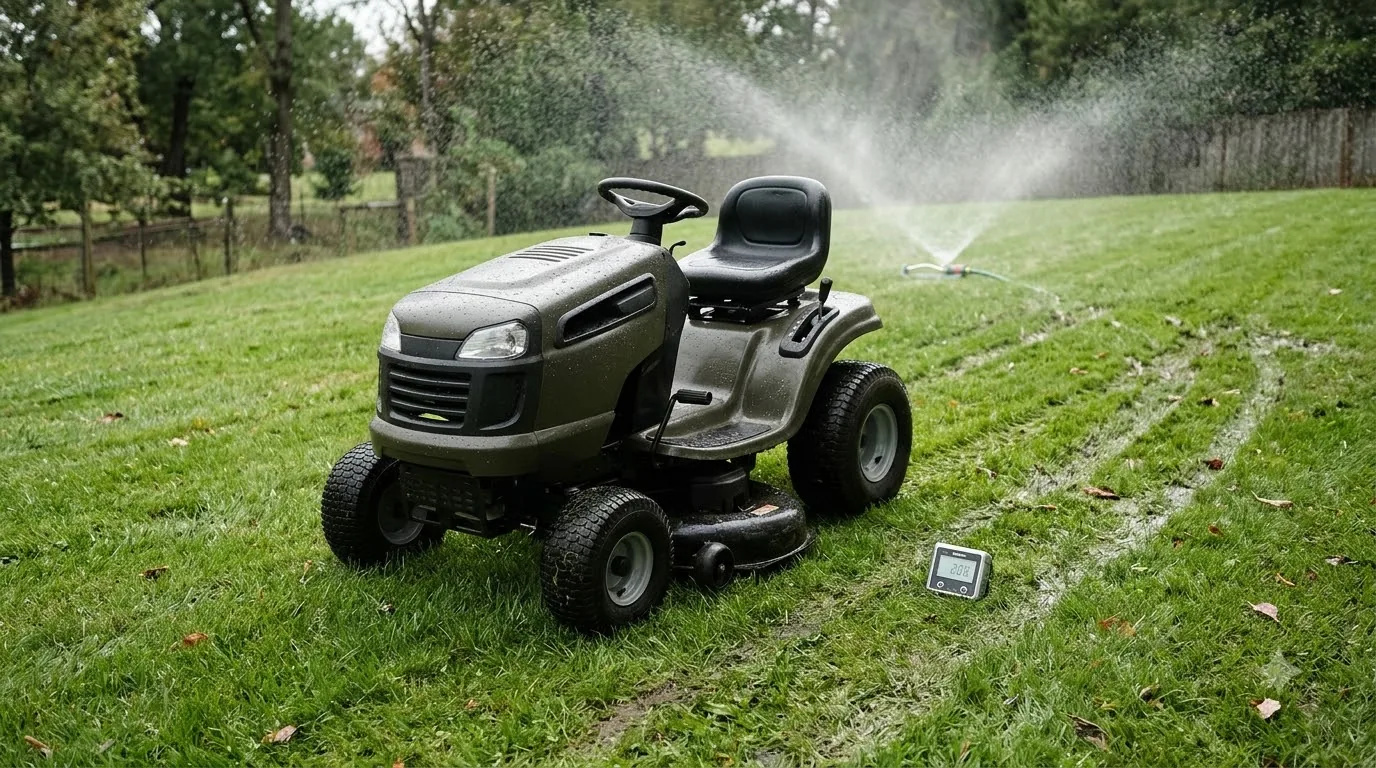

A robot mower for a lawn with heavy clay soil can work well, but clay changes how the mower moves, how the grass grows, and how easily the soil compacts. Clay holds water, packs down under weight, and can crack when dry. A robot mower is usually light enough not to cause serious compaction, but the habits you choose, such as cutting height, timing after rain, and where the boundary sits, decide whether the lawn stays healthy.
The short answer
- Wait after rain: Husqvarna advises waiting at least 24 hours, and longer after heavy rain or on overcast days.
- Use the footprint test: if footsteps leave visible marks, the soil is too soft for mowing.
- Cut higher: Husqvarna says to set the cutting height higher than usual on wet grass.
- Watch for ruts: mowing soft clay after heavy rain can create wheel ruts.
- Keep the boundary off the soft spots: low, wet areas are where the mower is most likely to rut or get stuck.
Why heavy clay is different
Clay soil has very fine particles that sit close together. That gives it good water and nutrient holding, but it also means the soil drains slowly and packs down easily. When the soil is wet, the particles slide and compress under any weight, including a small robot. When it dries, the surface can crack and harden, which leaves less room for roots. If your lawn is clay that rarely dries out, mowing a clay lawn that stays wet is the more specific read. Clay turns wet quickly, so mowing a waterlogged lawn is a useful comparison.
For a robot mower, these properties show up in three ways. The wheels can slip on soft clay, the surface can rut, and the blades can tear grass that is already stressed. The mower itself is rarely the main cause of damage, but a lawn that is mowed too often in wet clay can decline faster than one that is mowed in drier conditions.
Robot mower for a lawn with heavy clay soil: timing matters most
Husqvarna’s guidance on wet grass gives a clear rule: wait at least 24 hours after rain before mowing, and wait longer after heavy rain or on a cloudy day when the soil stays damp. Clay tends to stay wet longer than sandy soil, so the waiting period should be treated as a minimum, not a target. Timing is the main control on clay, and how rain delay timing works explains the options.
The footprint test is a simple way to check. Walk across the lawn. If your footprints leave a clear mark in the turf or the soil, the ground is too soft. Wait another day and test again. Do not rely on the sky or the forecast alone, because a sunny day can still leave clay saturated underneath.
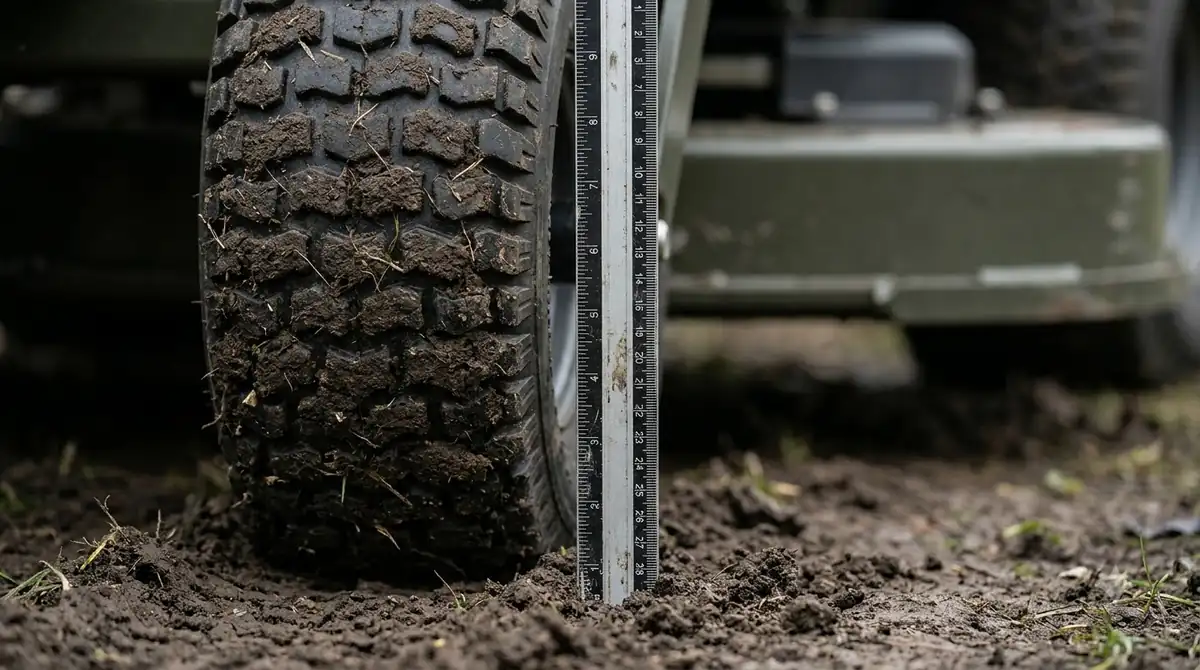
Heads up
Compaction can build up over a season of mowing in soft clay. Aeration in autumn and a dry-day schedule for the mower do more good than any single setting.
Cut higher on heavy clay
Cutting height is one of the easiest controls you have. Husqvarna advises setting the mower higher than usual on wet grass, because very short grass tears and clumps when it is wet, and it has less leaf area to recover from stress. Anker’s guidance on wet grass points the same way. A taller blade also helps the lawn keep more of its root system active in clay that is slow to drain.
Raise the height gradually, then check the lawn after a few mows. Brown tips and clumps mean the cut is still too low for the conditions. Once the soil dries, you can lower the height again in small steps.
How to avoid ruts and compaction
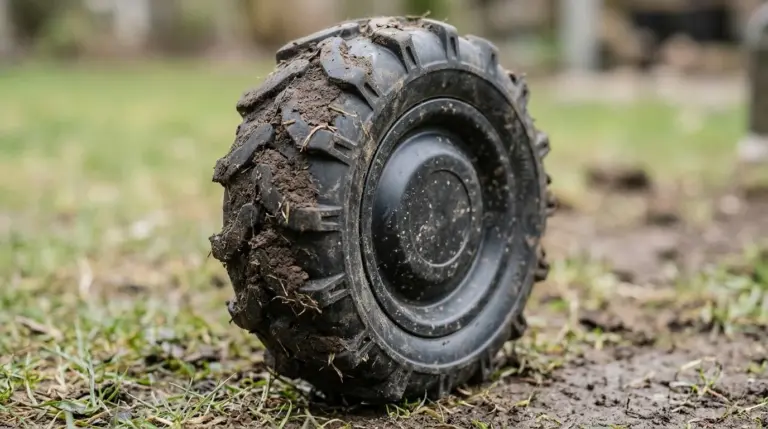
Ruts are the most visible sign of trouble. Husqvarna notes that mowing after heavy rain can leave wheel ruts in soft wet soil, and those ruts hold water and make the next pass worse. Colorado State Extension’s guidance on soil compaction explains that compacted soil has less pore space for air and water, which slows root growth. Once a lawn is compacted, it needs repair work rather than just more mowing. Repeated passes on soft clay can leave marks, as compacted soil lawn ruts explains. Ruts can deepen into traps, and getting stuck on wet clay describes how that happens.
Robot mowers have an advantage here. Husqvarna’s table rates the compaction risk from most robot mowers as low, because they are light and move on a schedule that does not repeatedly cross the same spot. The key is to keep the mower off soft spots, and to use the boundary to keep it away from the low corner where water collects.
Set the boundary and schedule around clay
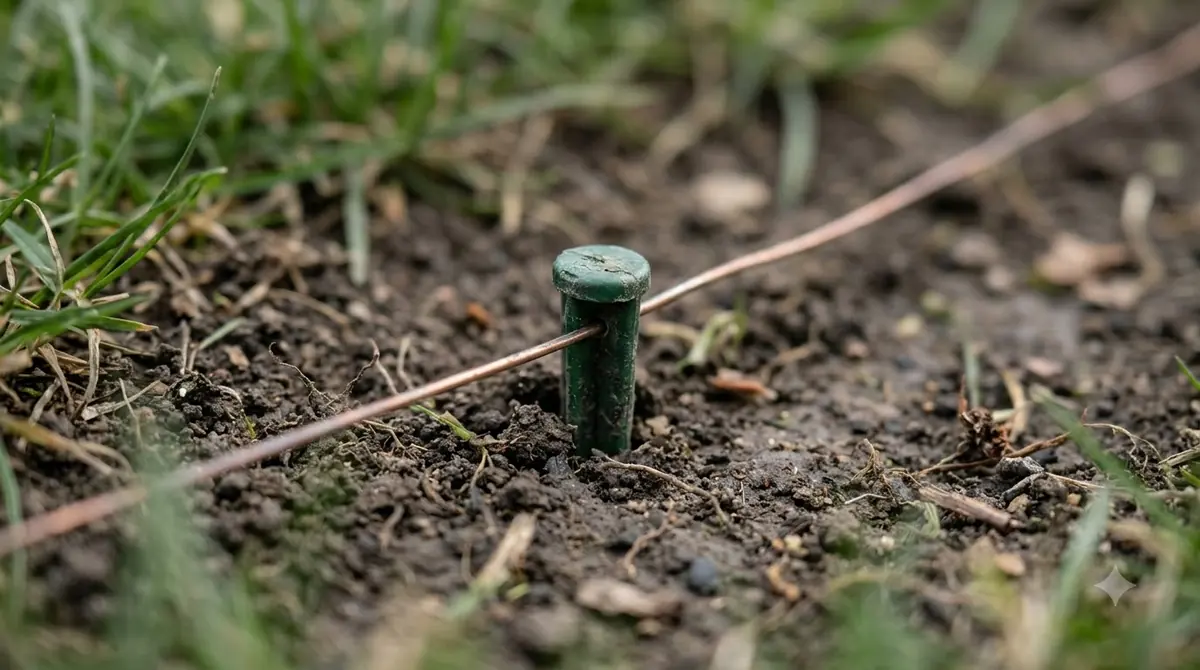
Clay often has wet corners, low spots, and shady patches that stay soft longer. Place the boundary so the mower stays on the firmer ground, and use the schedule to avoid the wettest hours. If your model has a rain sensor, make sure it is set so the mower returns to base during rain and does not start again until the lawn dries. Scheduling runs for drier hours reduces the chance of a stall, as stuck risk when the lawn stays soggy shows.
Check the boundary wire after seasonal freezing and thawing. Clay heaves as it freezes and thaws, which can pull pegs loose and move the wire out of place. A quick walk along the wire after winter avoids a mower that suddenly drives across the wrong area.
A quick check for a heavy clay lawn
- Test the surface. Use the footprint test before mowing after any rain.
- Wait for drying. Allow at least 24 hours after rain, and more after heavy storms.
- Raise the height. Set the cut higher during wet periods, then lower it in steps when the soil dries.
- Check for ruts. Look for tracks after each run and move the boundary away from any spot that rutting keeps returning to.
- Plan autumn care. Aerate and top-dress clay lawns in the cooler months, when grass recovers best.
Related reads: Surface damage often starts as small dips, which ruts, holes and dips on soft ground covers. Some clay lawns add a drain, and French drain and clay drainage explains how that changes mowing.
Frequently asked questions
Can a robot mower cut a lawn with heavy clay soil?
Yes, if you avoid cutting while the soil is saturated. Husqvarna advises waiting at least 24 hours after rain, and the footprint test helps you decide when the ground is firm enough.
How long should I wait after rain before mowing clay?
Husqvarna’s minimum is 24 hours, and it advises longer after heavy rain or on overcast days. Clay drains slowly, so many owners wait longer and rely on the footprint test rather than the calendar.
Does a robot mower compact clay soil?
Husqvarna rates the compaction risk from most robot mowers as low because they are lightweight. Wet clay is the main risk, so the timing of mowing matters more than the mower itself.
What cutting height is best for a clay lawn?
Set the height higher than usual during wet periods, because very short grass tears and clumps when wet. Lower the height in small steps as the soil dries, and check the grass after each change.
Sources
- Can you mow wet grass? (Husqvarna): wait at least 24 hours after rain, footprint test, ruts in soft soil, cutting height on wet grass, low robot compaction risk.
- Can you cut wet grass? (Anker UK): taller cut on wet turf and risks of mowing saturated lawns.
- Soil compaction (Colorado State University Extension): how compaction reduces pore space and slows root growth.
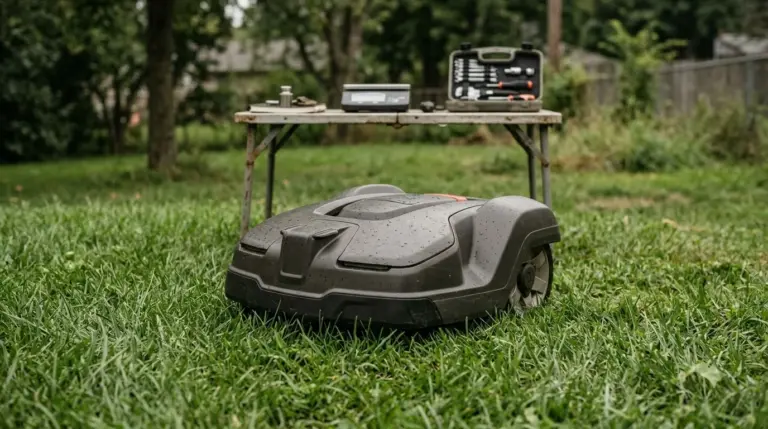
 Up next8 min readBy YardRobot Mower for a Clay Soil Lawn That Stays Wet: What to Look ForUpdated Nov 12, 2026
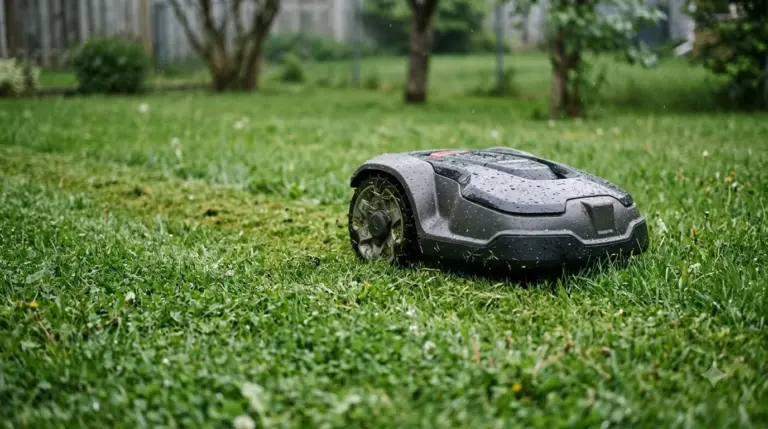
 8 min readBy YardWill a Robot Mower Get Stuck on a Clay Soil Lawn That Stays Wet?Updated Nov 11, 2026
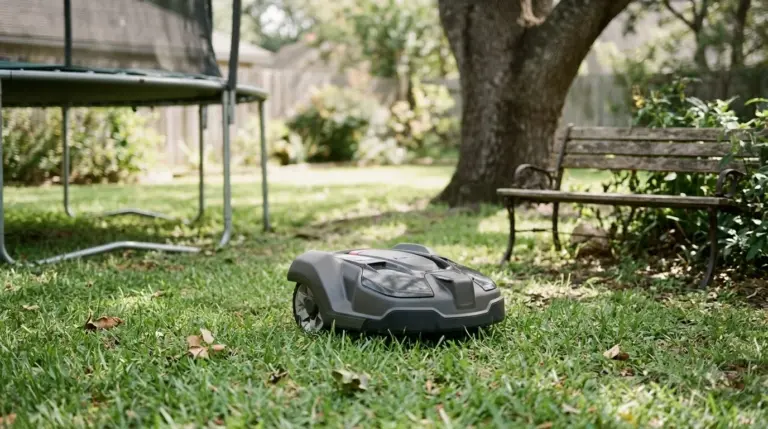
 8 min readBy YardChoosing and Running a Robot Mower for a Lawn with Heavy Morning Coastal FogUpdated Nov 19, 2026
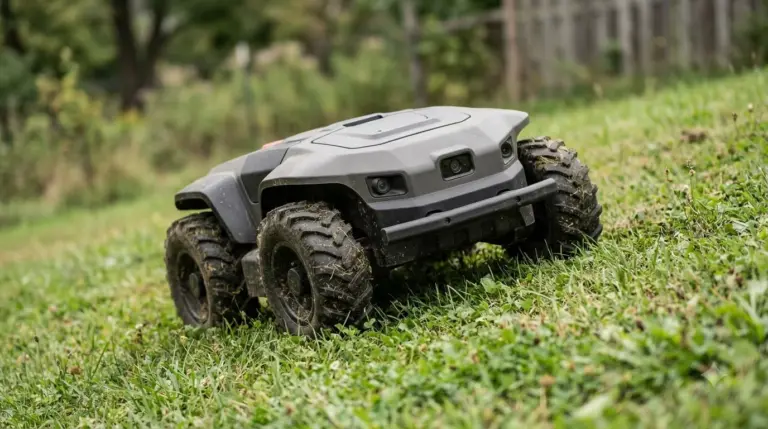
 8 min readBy YardRobot Mower for Yard With Heavy Tree Canopy: What to CheckUpdated Nov 11, 2026
 8 min readBy YardRobot Mower for Sandy Soil Lawn: What to Check FirstUpdated Nov 11, 2026
 8 min readBy YardRobot Mower for Compacted Soil Lawn: 4 Checks FirstUpdated Nov 11, 2026