
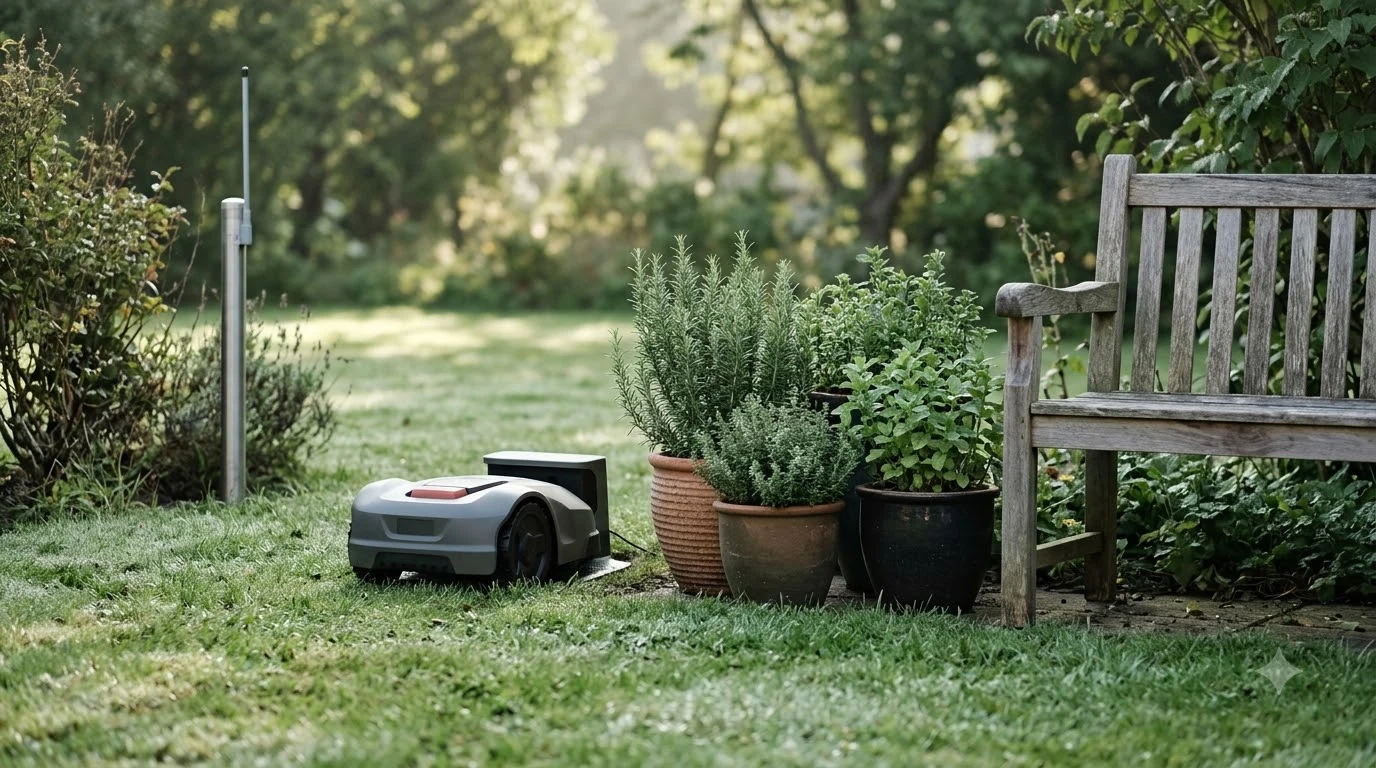

The best robot mower for a lot with no outlet nearby is one whose charging station can reach a safe power source, which usually means planning the cable route before you buy. The charger needs a protected, weatherproof connection, and a long run to the dock can be expensive or unsafe if it is done carelessly. Most of the decision comes down to where the nearest outlet is, how far the dock can sit from it, and whether the local code allows the wiring you need.
The short answer
- Measure the distance from the nearest protected outdoor outlet to the spot where the charging station can sit.
- Use a weatherproof, protected run such as a rated outdoor cable with the correct connections, and follow local electrical code.
- Put the dock where the mower can reach it easily and where the lawn edge is flat enough to line up.
- Ask about wireless or no-wire options only if the boundary can be set without a long power run, and check the cable route for the wire as well.
Why power is the real constraint
For most owners, power is the limit, not the mower. A robot mower needs to return to a dock to charge, and the dock needs power. On a lot where the house is far from the lawn, the nearest outlet may be on the other side of the yard or the garage. Some owners try to solve this with a long extension cord, but outdoor cords are not designed for permanent use, and a cord run across the lawn can be cut by the mower, damaged by the sun, or pulled loose. The safer approach is a dedicated, protected connection installed to local code. Power access is one layout constraint among many, and the yard-layout guide for robot mowers covers the others. One brand-specific option for longer cable runs is the Mammotion extension cable for docks, which lists length and rating.
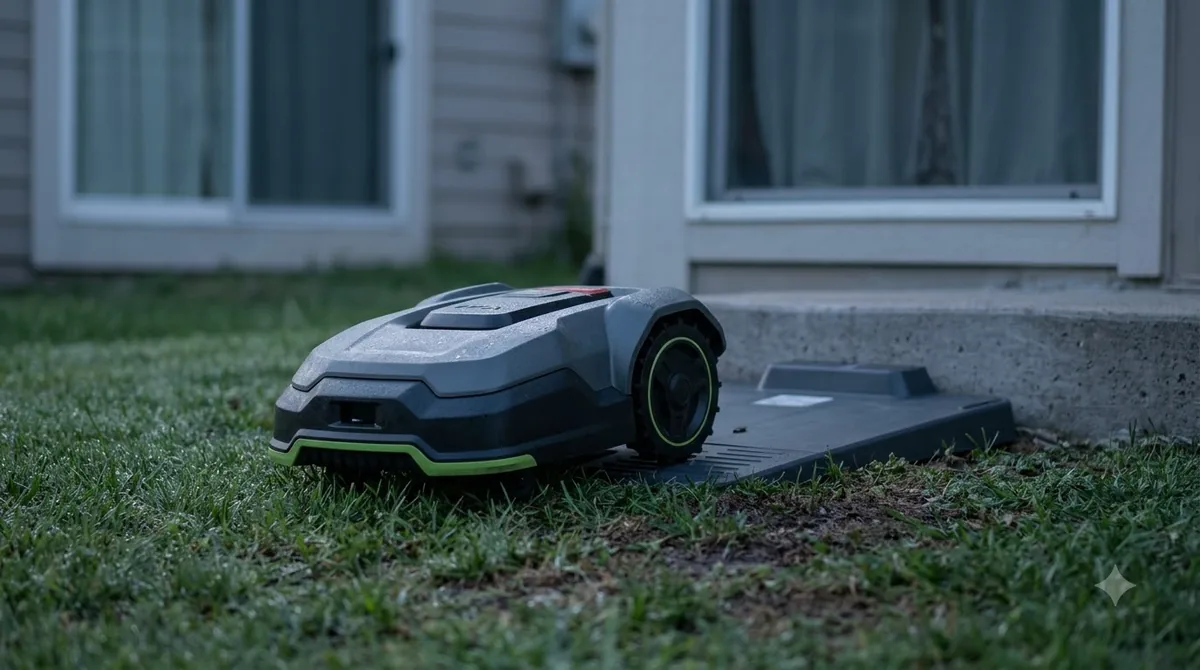
Charging-station guidance from manufacturers stresses that the station should sit where it stays dry and can be reached for service. Husqvarna’s guide to charging station placement and the mower house covers how to position the dock and protect the connection from weather, which matters more when the run is long.
Best robot mower for a lot with no outlet nearby: options to plan
The first option is a new outdoor outlet. A licensed electrician can add a protected outlet closer to the lawn, which is usually the cleanest answer for a long-term install. Ask about the cost and whether the work needs a permit in your area before you commit. If the outlet is added on an exterior wall, check that the box and cover are rated for outdoor use.
The second option is a buried or conduit-protected cable run from an existing outlet to the dock. This takes more planning, but it keeps the cable out of the way of the mower and foot traffic. Check the depth and protection rules that apply in your area, and keep the cable away from the boundary wire so the two do not interfere.
The third option is to check whether the mower itself is a good fit. A model that needs a dock may not suit a lot where power cannot reach the lawn, while a mower with a different charging arrangement may be easier to plan around. Our reading is that the power plan should come before the model choice, not after, since the wrong dock location can limit which models are practical.
Keep the boundary and the cable apart
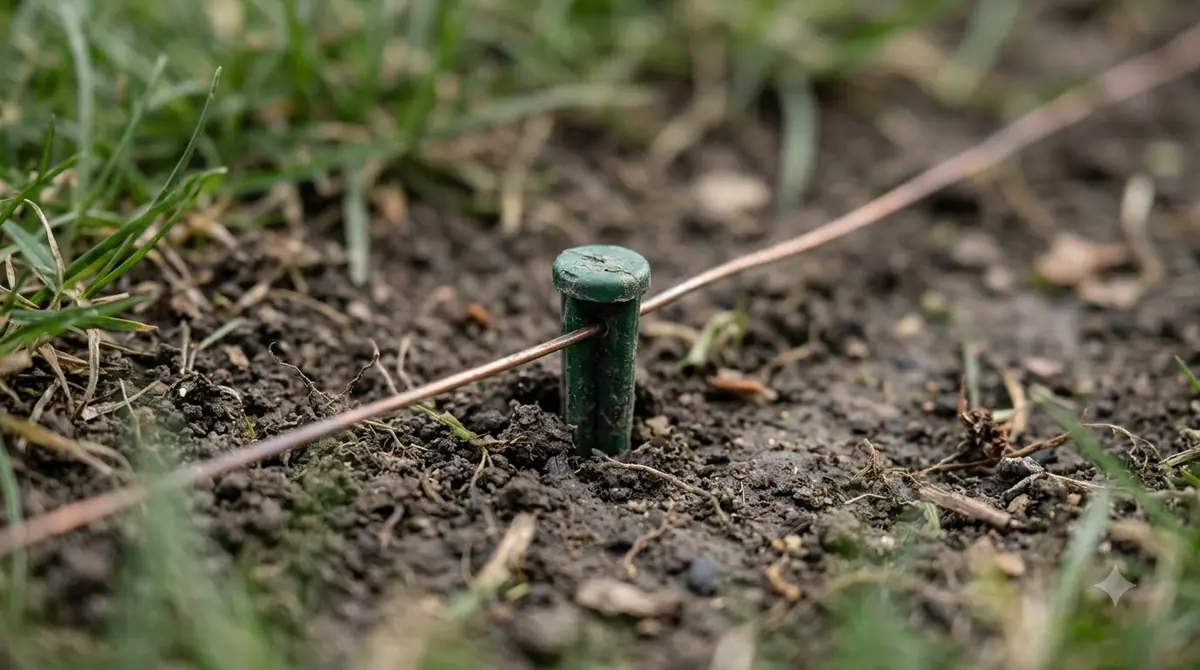
Boundary wire and power cable should not run side by side or cross each other. Crossing wires can cause signal problems, and a power run that sits inside the mowing area can be cut. Map both the boundary and the power route on paper before digging, and keep the power route along the edge of the property or under a path where the mower will not travel. Cable and boundary placement is tricky on odd shapes, and a robot mower for a long, thin lawn addresses a related layout problem with limited power access.
Husqvarna’s guidance on boundary wire installation shows how the wire is laid out around the lawn and passages, and the same planning logic applies to the power route. Plan the dock location first, then route the boundary to reach it.
Safety and weather for the dock
Water is the main risk at the charging station. Place the dock on a spot that does not collect runoff from downspouts or sprinklers, and check that the connection stays dry after heavy rain. Use a protected outlet with the correct ground fault protection for outdoor use, and keep cables clear of standing water. If you have to use a cord, keep it short, rated for outdoor use, and free from splices. Wet weather changes when mowing runs, so read rain sensor settings on mowers.
Cold and heat also matter. Batteries perform differently at temperature extremes, so the dock should sit in a place that is not exposed to the hottest sun or the coldest wind if possible. Husqvarna’s winter storage guidance is a useful reminder that the mower and dock both need attention in the off season.
Questions to ask before you buy
Ask the seller how far the dock can sit from the boundary and how the mower handles a dock that is slightly out of the usual position. Ask whether the charging station requires a specific cable gauge or length, and whether the manufacturer recommends a particular outlet type. If the mower can be monitored from a phone, ask whether it reports charging faults, since a dock with a weak connection may fail without any sign on the lawn.
If you are planning for a property you visit only sometimes, ask how the mower behaves if power is cut or the battery runs low while you are away. A dock with reliable power and a clear remote status check is worth more than a feature list.
Related reads: An unattended dock may also raise security questions, so see protecting a robot mower from theft.
Frequently asked questions
Can I run a robot mower charger on a long extension cord?
It is not a good permanent solution. Outdoor extension cords are not built for long-term use across a lawn, and they can be damaged by the mower, sun, or moisture. A protected, code-compliant outlet is the safer choice.
Should the charging station be far from the house?
It can be, but the power connection must still be safe and protected. Plan the route first, then choose a dock location that keeps the cable short and out of the mowing area.
Do I need an electrician to add an outdoor outlet?
In many areas, adding a new outlet needs a licensed electrician and possibly a permit. Check local rules before you start, since the work involves electrical connections and water exposure.
Does the boundary wire interfere with a power cable?
It can if the two run close together or cross. Keep the boundary and the power route separate, and check the layout on paper before you bury either one.
Sources
- Husqvarna support (manufacturer): charging station placement and mower house guidance.
- Husqvarna support (manufacturer): boundary wire layout around passages.
- Husqvarna support (manufacturer): off-season storage for the mower and dock.
 Up next7 min readBest Robot MowersBest Robot Mower for a Corner Lot: Wire, Passages and Charging SpotUpdated Nov 14, 2026
 8 min readBest Robot MowersWhat Is the Best Robot Mower for a Corner Lot?Updated Nov 11, 2026
 7 min readBest Robot MowersWhich No Base Station Robot Mower Is the Most Accurate?Updated Nov 18, 2026
 10 min readBest Robot MowersRobot Mower No RTK Antenna: How Navigation Works Without OneUpdated Nov 16, 2026
 10 min readBest Robot MowersBest No Base Station Robot Lawn Mower 2026: What to Check Before You BuyUpdated Nov 13, 2026
 8 min readBest Robot MowersBest LiDAR Robot Lawn Mower With No RTK Antenna: What to CheckUpdated Nov 11, 2026