
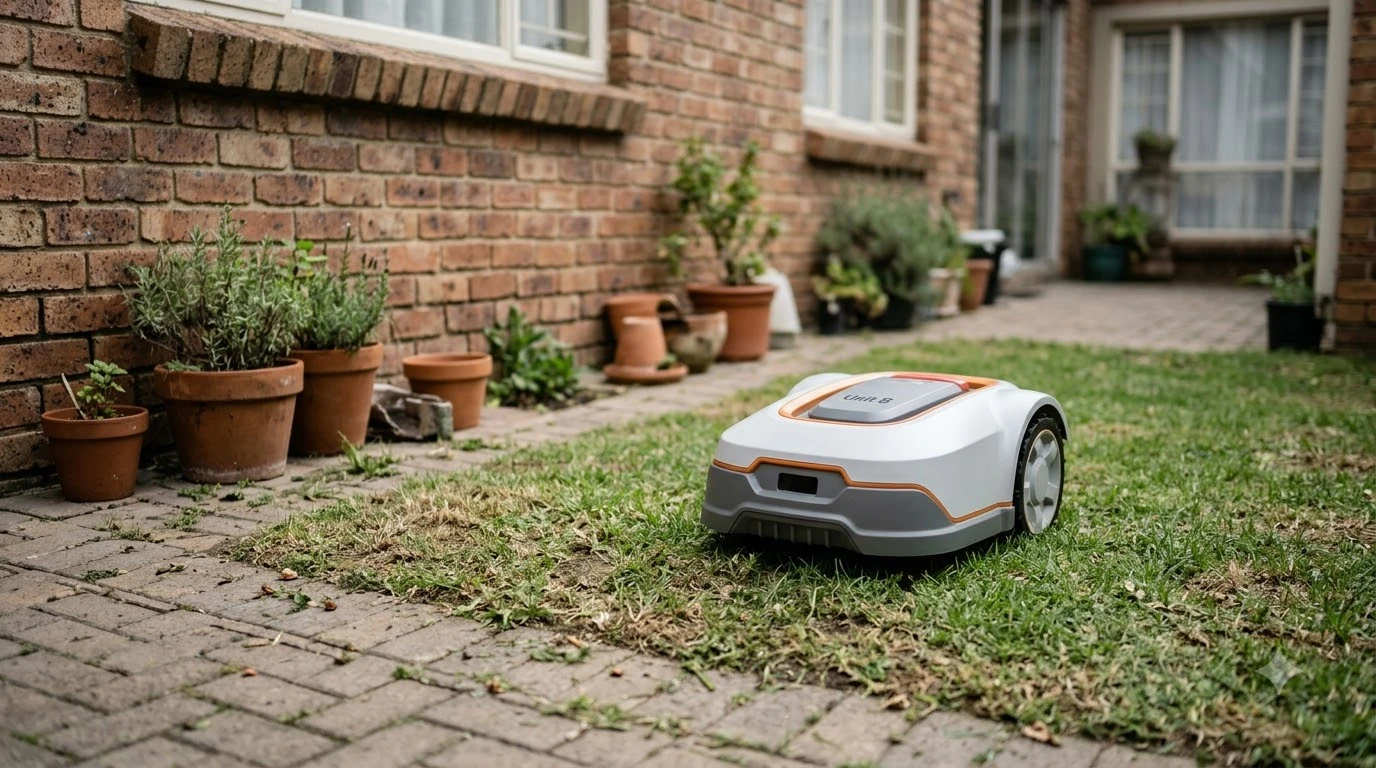

The best robot mower for a new build lawn with sod is the one whose setup suits fresh, unrooted turf: it should start at a high cutting height, avoid anything that disturbs the soil during installation, and handle the uneven, recently graded ground that new construction leaves behind. Sunseeker advises waiting until sod is fully rooted before any automated mowing, and this guide shows which specifications matter most while the lawn is still settling.
The short answer
- Height range: pick a model that can be set high, around 2.5 to 3 inches, for the first season.
- Boundary method: a wire-free model avoids digging a buried wire into new soil.
- Slope limit: check the steepest section of the build, since graded new-build yards often have banks.
- Wheel and weight: lighter machines with wide tread leave fewer ruts on soft ground.
- Timing: confirm the sod is rooted before the first automated run.
Why a new build lawn needs different criteria
A lawn that was just laid as sod is not the same surface as an established one. The roots are still anchoring, the soil underneath may have been compacted by builders and equipment, and the grade can change in small steps where the contractor brought in fill. A robot mower that works well on a mature yard can still struggle here. New sod grows quickly once established, so the guide to mowing thick grass with a robot mower is a useful companion. A freshly seeded lawn has different needs, which mowing after hydroseeding explains. A newly built property brings other issues, covered in mowing a newly built home lawn.
Sunseeker’s guidance on new sod is that sod generally needs about two to three weeks before a first mow, and that it is best to wait until the sod is fully rooted before letting automated equipment run on it. You can check rooting by gently lifting a corner. If the piece stays firmly in place and resists lifting, the roots are starting to anchor. If it lifts easily, wait a few more days. That check tells you when to start the robot, but it does not tell you which robot to buy. The criteria below do.
Best robot mower for a new build lawn with sod: cutting height
The grass should be about 3 to 4 inches tall before its first mow, and the mower should be set high, around 2.5 to 3 inches, with no more than one-third of the blade height removed in one pass. Our reading is that a robot mower is a good fit only if its height range reaches that high setting. Some compact models top out lower, which can force you to raise the grass in a way that the manual does not cover. Young turf often has gaps, so see mowers for thin or patchy grass for what to expect. If growth outpaces the schedule, mowers that handle tall grass offers a useful comparison.
Check the minimum and maximum settings in the specifications, not only the marketing claim of a wide range. Also check whether height can be changed from the app or only at the mower, because you will likely adjust it several times while the lawn fills in.
| Feature | Why it matters on new sod | What to look for |
|---|---|---|
| Cutting height range | New grass should be cut high first | A high setting near 3 inches, with a clear minimum |
| Boundary method | Buried wire must be installed into soil that is still settling | Wire-free navigation, or a wire you can lay on the surface |
| Slope rating | New grading often creates banks that the mower must cross | A stated maximum slope, checked against the steepest section |
| Weight and wheel tread | Heavy machines and narrow wheels can leave ruts and shift sod | Lighter build and wider wheels |
| Rain behaviour | Wet, soft ground is when wheel marks form | Clear guidance on operating in wet conditions |
The table is a checklist, not a ranking. The right trade-off depends on how large the lawn is and how steep it runs.
Wire-free or buried boundary wire
Many robot mowers use a buried perimeter wire. On an established yard, that is a routine installation. On a new build, it means cutting a trench into soil that has just been graded and laid with sod, which can break roots and leave a seam that settles unevenly. A wire-free model that maps the yard with a camera or satellite positioning avoids that job entirely. Wire-free or buried wire is the central choice on a new lawn, and virtual boundary robot mowers for 2026 explains how the wire-free route works.
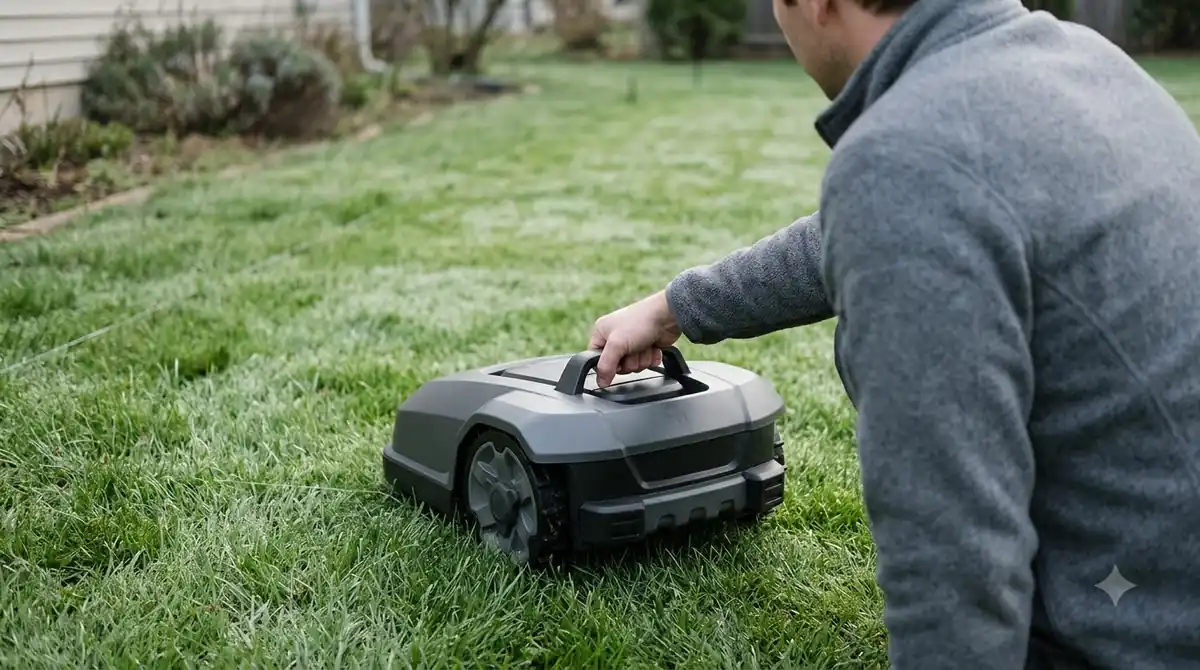
Eufy’s setup checklist notes that some models use buried boundary wires while others use cameras, satellite positioning, or other navigation systems. It also says to confirm the installation method before you buy, because it changes how the lawn should be prepared. If you choose a wire model, lay the wire on the surface and secure it only after the sod has rooted.
Heads up
Some wire-free systems still need a clear, level area to map, and they may ask you to tidy the lawn first. Check the setup steps before you buy, not after the sod goes down.
Slope, soft soil and wheel marks
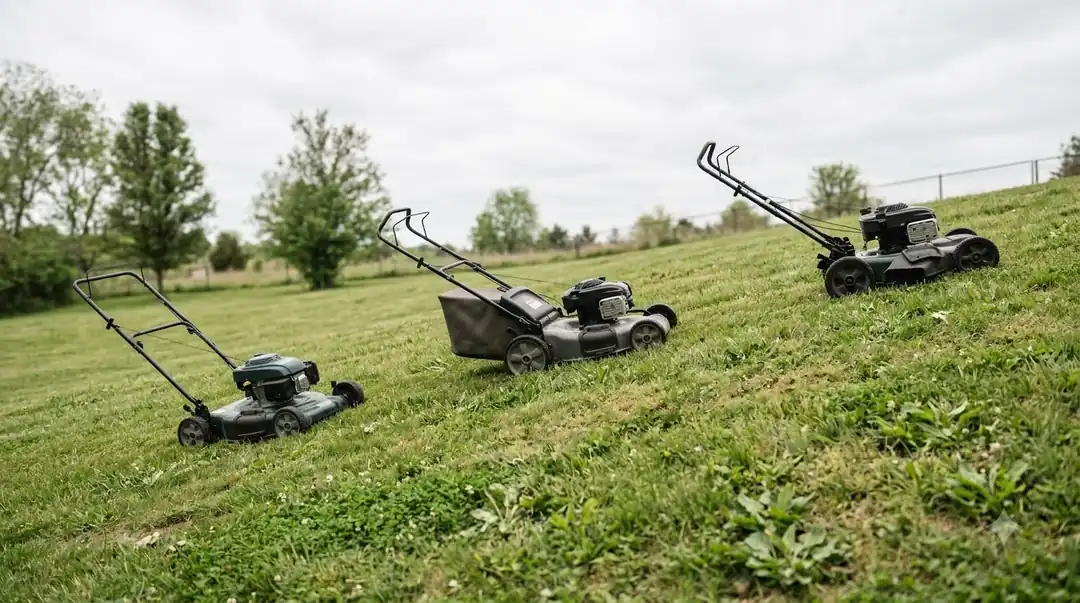
New-build yards are often the steepest and most uneven parts of a property, with banks along the driveway or raised beds near the house. Eufy’s checklist advises checking banks, raised lawns, and sloping side yards, because the steepest section can decide whether the mower covers the whole area. Compare the slope rating with the actual grade of your lawn, not with the average. Heavy ground compacts under wheels, as clay soil and robot mowers describes.
Soft, wet soil is the other concern. Sunseeker notes that mowing on soft soil can leave wheel marks, create ruts, or shift the sod while its roots are forming. Our reading is that the safest approach is to let the soil firm up, and to avoid watering for a day or two before an automated run so that the surface can bear the weight of the mower.
Charging station placement on new ground
The charging station is the one fixed object a robot mower returns to every day, so it has to sit on ground that will stay level. On a new build, that can mean a spot that looks firm but drains poorly. Eufy suggests checking how water moves across the charging station area after heavy rain, since a dry spot during setup may become wet later.
Place the station on a firm, level pad, and keep the approach strip clear of loose soil and new seed. Finish the grading and compacting before you set the station, not after.
What to check before you buy
Before you commit to the best robot mower for a new build lawn with sod, confirm four things: the minimum and maximum cutting height, the stated slope limit against the steepest part of your yard, whether it needs buried wire, and what it does in wet conditions. Those answers matter more than the number of features on the box. Then plan the first run for after the sod roots, and keep the first few cuts high. If your region has cold winters, short growing season lawns are discussed separately.
Frequently asked questions
Can I run a robot mower on new sod right away?
Sunseeker advises waiting until the sod is fully rooted before any automated mowing. Its guidance on new sod suggests about two to three weeks after installation, and a tug test helps confirm the roots have anchored.
What height should a robot mower use on new sod?
Sunseeker suggests the grass should be about 3 to 4 inches tall before the first mow, with the mower set around 2.5 to 3 inches. Never remove more than one-third of the blade height in one pass.
Is a wire-free robot mower better for a new build?
It can be, because it avoids cutting a buried boundary wire into soil that is still settling. Eufy notes that other models use cameras or satellite positioning instead, so confirm the method before buying.
Will a robot mower leave ruts on new lawn?
It can, if the soil is soft or wet. Sunseeker warns that wheel marks, ruts, and shifted sod are the usual problems, so let the ground firm up and avoid watering just before a run.
Sources
- Sunseeker, When to Mow New Sod (manufacturer): timing, rooting check, soft-soil risks, and first cutting height.
- Eufy, Robot Lawn Mower Setup Checklist (manufacturer): lawn surface, slope, boundary method, and charging station checks.
 Up next8 min readBest Robot MowersBest Robot Lawn Mower for New Jersey Lawns: What to Check FirstUpdated Nov 14, 2026
 8 min readBest Robot MowersBest Robot Lawn Mower for New England Lawns: 3 ChecksUpdated Nov 14, 2026
 9 min readBest Robot MowersBest Robot Lawn Mower for New Construction Homes: Setup FirstUpdated Nov 10, 2026
 7 min readBest Robot MowersBest Robot Mower for a Long Thin Strip Along the FenceUpdated Nov 17, 2026
 7 min readBest Robot MowersBest Robot Mower for a Lawn With a Septic MoundUpdated Nov 17, 2026
 7 min readBest Robot MowersBest Robot Mower for a Lawn With a Patio: Sensors and EdgeUpdated Nov 14, 2026