
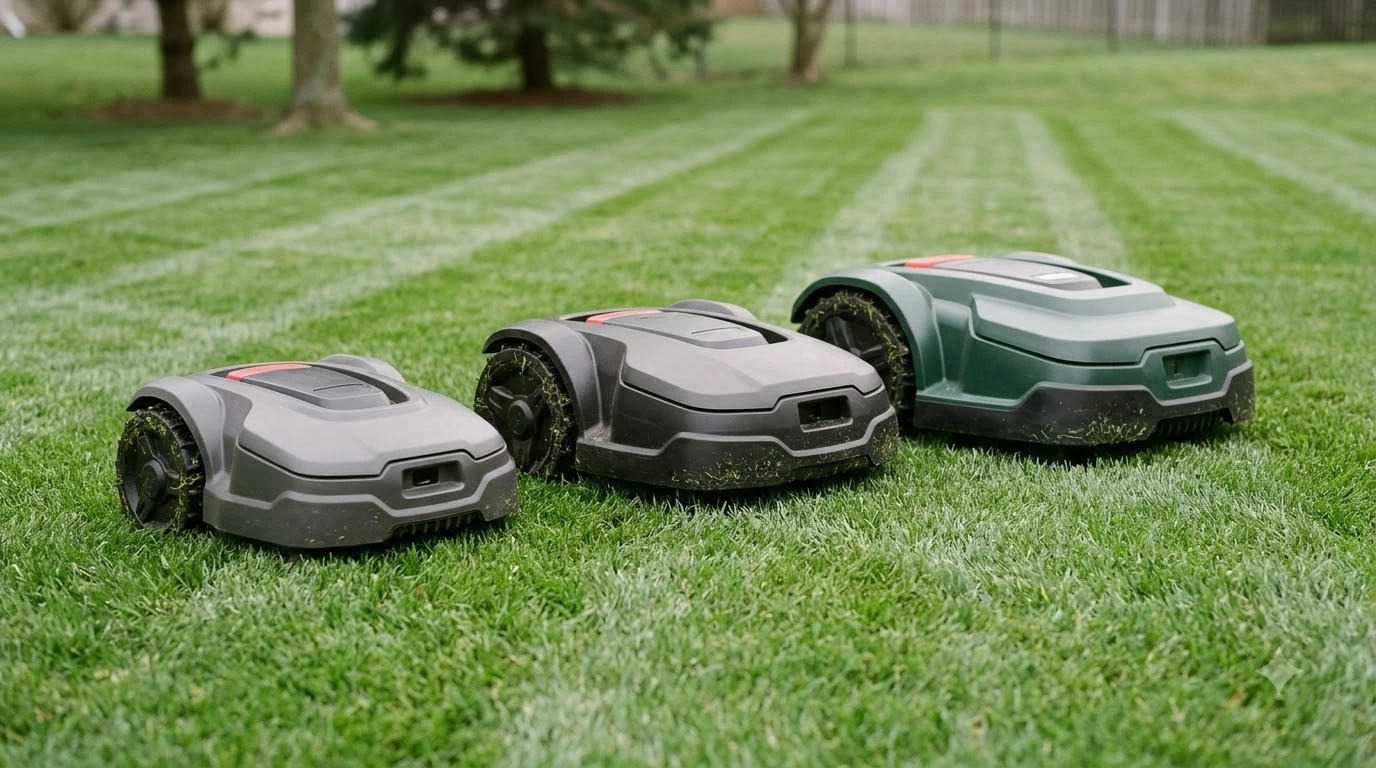

Robot mower vs riding mower comes down to lawn size, slope, and how much hands-on work you accept. Robot mowers suit smaller, fairly flat lawns where hands-off mowing matters, while riding mowers handle acreage and rougher or steeper ground.
When you weigh a robot mower vs riding mower, neither type wins in every yard. The right pick depends on how many acres you mow, how steep the ground is, and what you are willing to spend on upkeep and running costs.
The short answer
- Small, flat lawns: a robot mower usually fits, since one source puts robot coverage at roughly 0.05 to 1.73 acres depending on the model.
- One acre and up: a riding mower is the usual choice, according to Ecovacs.
- Steep ground: riding mowers are generally preferred on sustained slopes above about 30 degrees, though robot slope ratings vary by model.
- Running costs: robots run on electricity with fewer repairs, while riding mowers need fuel, oil, and annual servicing.
Robot mower vs riding mower: how they differ day to day
A riding mower needs a rider for every session, while a robot mower runs on its own once it is set up. Techwalla, summarizing a Lawn Care Center article, says a robot mower “logs more total runtime but demands zero hands-on minutes per cycle.” In practice, the robot works in many short sessions, and a rider finishes a large lawn in fewer, longer trips.
In this trade-off, speed is where riding mowers keep an edge on big properties. Ecovacs describes ride-on mowers as quicker for weekly or biweekly mowing of large yards over an acre. Our reading is that a robot is the better fit when you want the lawn kept short all season without thinking about it, even if each cut takes longer in total.
Lawn size and acreage
On lawn size, robot mowers cover roughly 0.05 to 1.73 acres depending on the model, according to a Lawn Care Center figure that Techwalla reports. Wire-free RTK models sit at the upper end of that range. Mammotion’s comparison page goes higher and says its LUBA 2 AWD can mow up to 2.5 acres. Ecovacs says riding mowers run efficiently on properties of one acre and above. If your lawn is near that line, see how long a robot mower takes on an acre.
Our reading is that a robot mower’s top-end rating is a best case. Leave room above your measured lawn for slopes, flower beds, and tight corners, because each of these cuts into real coverage.
Slopes and uneven ground: robot mower vs riding mower
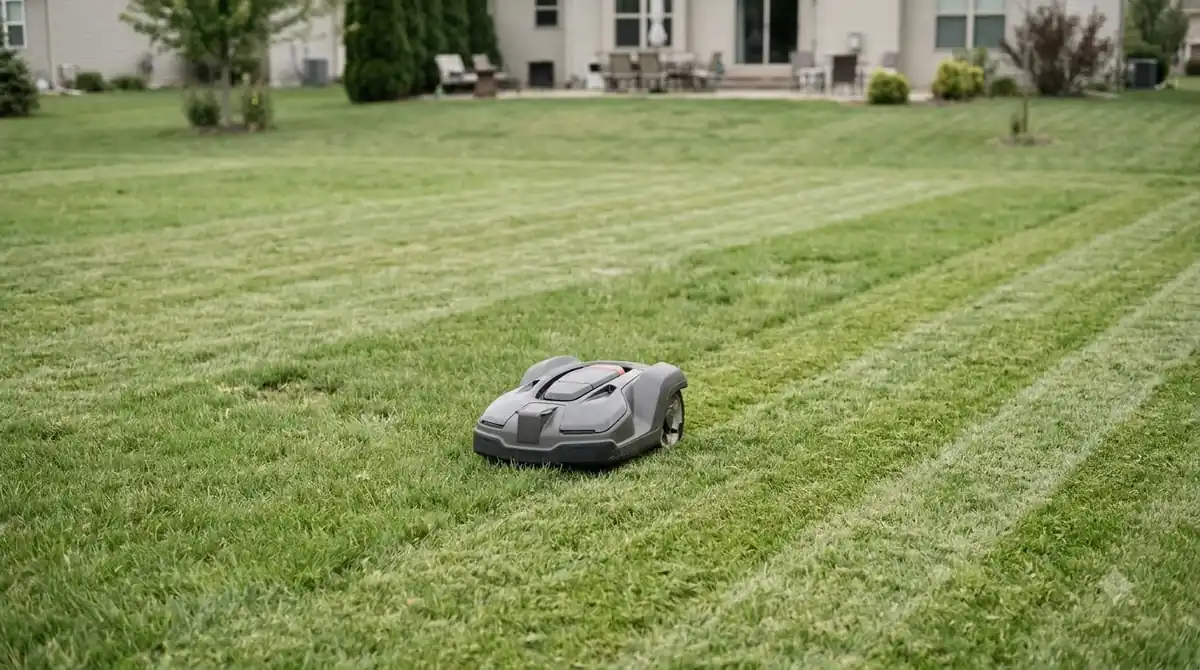
On hills, the choice often favors riding mowers on sustained slopes above about 30 degrees. Mammotion says its robots handle slopes up to 80 percent on some models, but the same page’s buying guide says steep inclines up to 35 percent need a more powerful model. Mammotion also says riding mowers handle steep slopes and uneven ground with ease. For the robot side, read how steep a hill robot mowers can handle.
Ecovacs takes the opposite view of ride-ons and says they do best on flat or gently undulating lawns, which lowers the risk of overturning. Both makers point to flat ground for their own machine type, so their claims should not be read as neutral.
Heads up
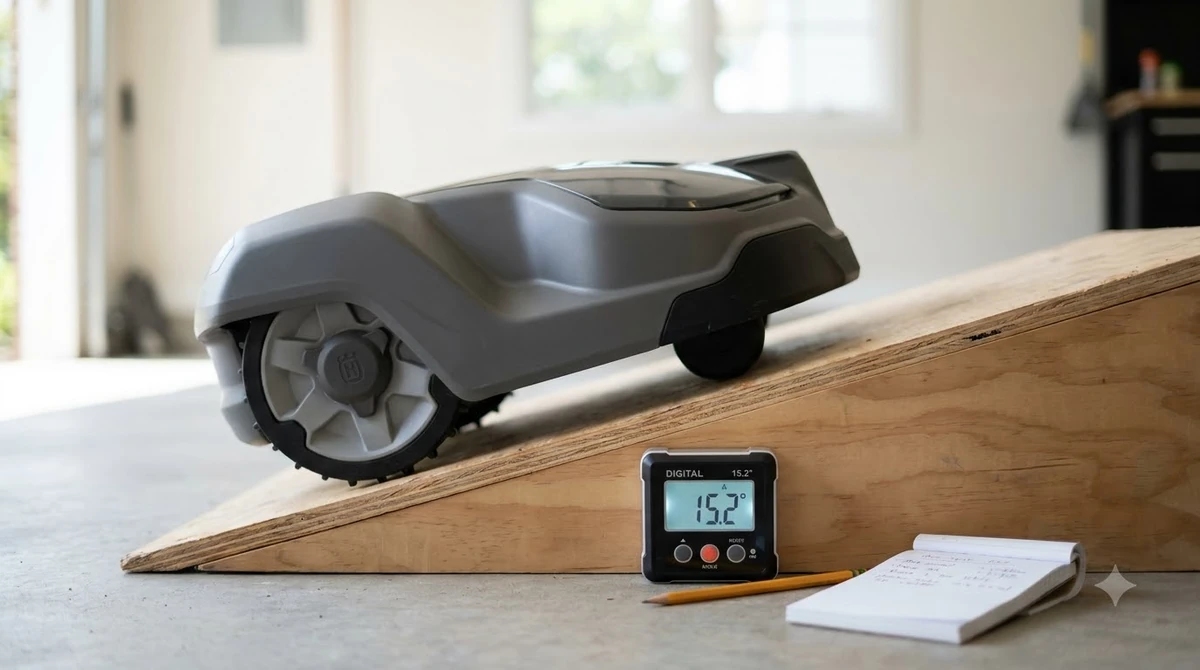
Slope specs mix two units. A 30 degree slope is about 58 percent grade, and a 45 percent grade is about 24 degrees. Check the exact model’s spec sheet for its stated unit before comparing it with a riding mower.
Purchase price and running costs
Mammotion’s comparison page puts robot mowers at roughly $700 to $5,000 upfront and riding mowers at an average of about $2,500. The page’s own table gives different ranges, $900 to $5,000 and above for robots and $1,500 to $5,000 and above for ride-ons, so treat these figures as rough. Our robot lawn mower cost guide breaks the price tiers down further.
Upfront prices overlap. Mammotion notes that ride-ons are cheaper to start with, but it also says robots save on fuel and ongoing maintenance. Ecovacs says robotic and ride-on mowers both have a higher upfront cost, though it gives no dollar figures.
Lifespan changes the math. Mammotion gives 5 to 10 years for a robot and 10 to 20 years for a ride-on with regular maintenance, and says robot batteries may need replacing after 3 to 5 years. Lawn Care Center, as summarized by Techwalla, puts robots at 7 to 10 years, with the lithium battery pack usually the limiting part. Our reading is to compare total cost over the expected life, not the sticker price alone; see how long robot lawn mowers last for the robot side.
Noise, safety, and upkeep
Mammotion puts a robot near 60 decibels and a gas ride-on above 80. Techwalla gives 90 to 100 decibels for a gas riding mower and 55 to 65 for a robot, so the gas figures differ between the two pages. Either way, in a robot mower vs riding mower matchup, the robot is much quieter, which matters for neighbors and early mornings.
Safety differs in the blades. Ecovacs says robot blades lift to stop as soon as the mower is touched or tilted. It also warns that ride-ons have powerful blades and higher speeds, so the risk of accidents is greater without careful use. Households with children or pets can read robot mower safety around kids and pets.
Upkeep is the other gap. Ecovacs lists ride-on tasks as oil changes, spark plug replacements, fuel refills, blade sharpening, and annual professional servicing. For a robot, Ecovacs lists monthly cleaning of blades, sensors, and the body, and Mammotion says blade replacement is typically needed only a couple of times a year.
How to choose: robot mower vs riding mower
Choose a robot mower for a flatter lawn under about one acre with little interest in hands-on work. Choose a riding mower for larger or steeper property, or for ground with many rough patches. The table below sums up the criteria, with each figure tied to the source it came from.
| Criteria | Robot mower | Riding mower |
|---|---|---|
| Typical lawn size | About 0.05 to 1.73 acres by model (Lawn Care Center, via Techwalla) | One acre and up (Ecovacs) |
| Slope | Up to 80 percent on some models (Mammotion, model dependent) | Sustained slopes above 30 degrees favor riding (Lawn Care Center, via Techwalla) |
| Noise | About 55 to 65 dB (Techwalla); about 60 dB (Mammotion) | Gas: 90 to 100 dB (Techwalla); 80+ dB (Mammotion) |
| Lifespan | 5 to 10 years (Mammotion); 7 to 10 years (Lawn Care Center) | 10 to 20 years (Mammotion); 15 or more years (Lawn Care Center) |
| Storage | Usually no larger than a small suitcase (Ecovacs) | Bulkier, needs a garage or shed (Ecovacs) |
Our reading for a quick robot mower vs riding mower decision:
- Under about one acre, mostly flat, with few obstacles: a robot mower is the simpler choice.
- Over one acre, or sustained slopes above about 30 degrees: a riding mower is the safer bet.
- Many trees, tight beds, or several separate zones: check the coverage rating against your own measurements before buying.
- Close neighbors or strict noise rules: the quieter robot is the better fit.

Frequently asked questions
Can a robot mower replace a riding mower on a one-acre lawn?
It is often borderline. Source figures for robot coverage run from about 0.05 to 1.73 acres by model, and some manufacturers claim more. Check the rating against your measured lawn with room to spare.
Can a robot mower handle a steep hill?
It depends on the model. On hills, Mammotion claims up to 80 percent on some robots, while Lawn Care Center, as summarized by Techwalla, favors riding mowers on sustained slopes above about 30 degrees. Check the stated slope limit for the exact model.
Which costs less over time?
On cost, Ecovacs says robotic mowers are more cost-efficient in the long run because they run on electricity and need fewer repairs. The sources give no dollar totals, so calculate with your local electricity and fuel prices.
Is a riding mower quieter than a robot?
No. The sources here put gas riding mowers at 80 to 100 decibels and robot mowers at about 55 to 65. These sources do not cover electric ride-on mowers, so their noise is not compared.
Sources
- Robot Mower vs Ride-On Mower (Ecovacs, manufacturer blog): acreage, weekly mowing time, running costs, storage, upkeep, and blade safety.
- Robot Lawn Mower vs Ride-On Lawn Mower (Mammotion, manufacturer blog): price ranges, noise, slope claims, lifespan, and battery replacement.
- Robot Mower vs Riding Mower: 5 Key Capability Differences (Techwalla, publisher): summarizes Lawn Care Center figures on coverage, slope, and lifespan, plus noise ranges.
 Up next8 min readBest Robot MowersWire-Free vs Boundary Wire Robot Mowers: Which Setup Fits Your YardUpdated Nov 11, 2026
 8 min readBest Robot MowersRobot Mower vs Push Mower: Which Fits Your Lawn?Updated Nov 11, 2026
 8 min readBest Robot MowersRTK vs LiDAR vs Vision: Which Robot Mower Navigation Fits Your YardUpdated Nov 11, 2026
 9 min readBest Robot MowersWhat Is the Best Cheap Robot Lawn Mower? How to Choose One That FitsUpdated Nov 11, 2026
 8 min readBest Robot MowersHow Do Robot Lawn Mowers Work? Wire, Sensors and Docking ExplainedUpdated Nov 11, 2026
 8 min readBest Robot MowersHow Does RTK Work on a Robot Lawn Mower?Updated Nov 11, 2026