
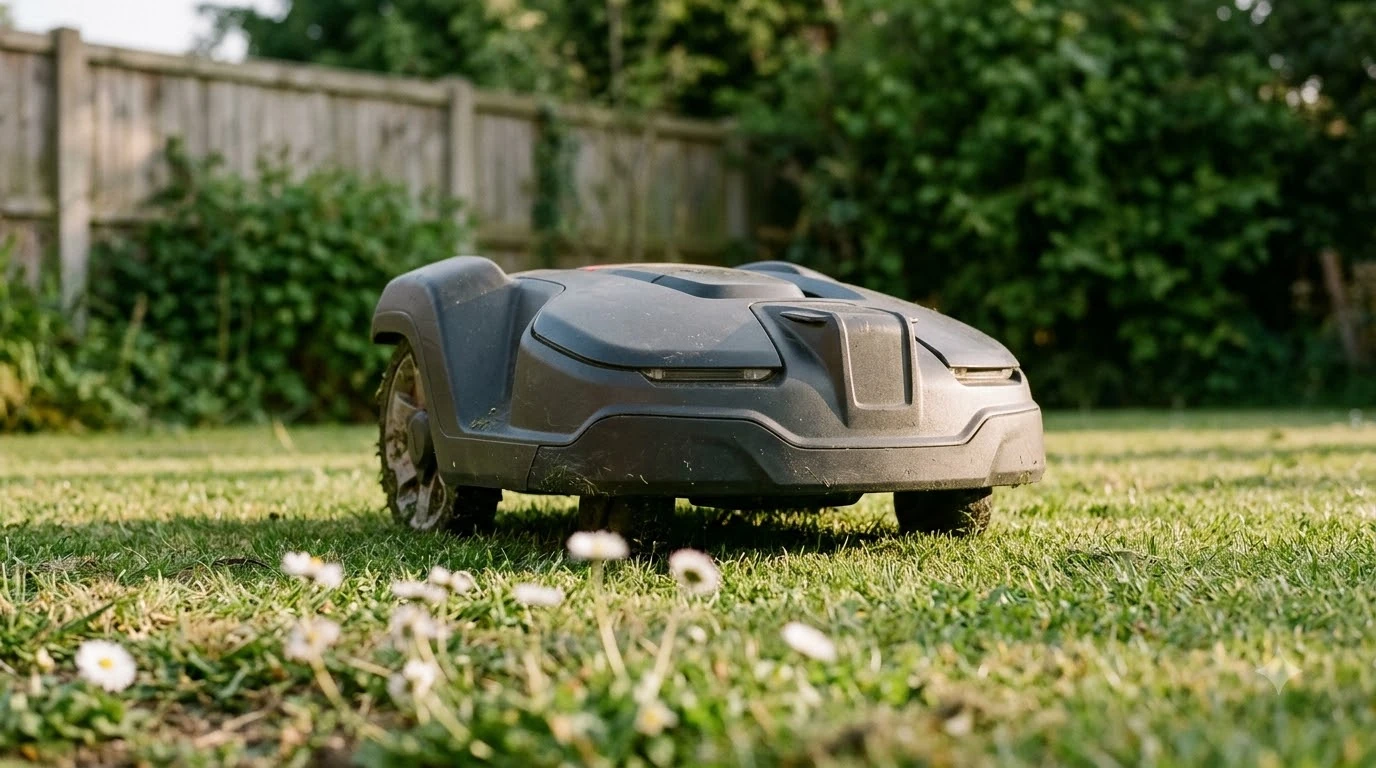

Which robot mower is safe over a septic drain field? None of the septic sources we read certifies a robot mower for drainfield use. The guidance targets cars and heavy equipment, so check your field’s location and the mower’s weight before you set a mowing route.
The short answer
- No model is certified. None of the sources we read rates a robot mower for drainfield use.
- Vehicles are the concern. Thurston County says cars and heavy equipment should not park or drive over a drainfield, because doing so can crack pipes.
- Weight is a spec, not a rule. The Husqvarna Automower 430X is listed at 28.7 pounds, but no source sets a weight limit for robot mowers.
- Confirm the layout. Ask your septic installer or local health department where the field sits before you set mower zones.
A drainfield is a shallow buried system that treats wastewater after it leaves the septic tank. The risk comes from what drives, parks or grows on top of it, so the layout matters more than the brand.
What a drainfield does and where it sits
A drainfield is a subsurface wastewater infiltration system, and it is usually part of a conventional septic system with a septic tank, according to the US EPA. Its job is to let treated liquid soak into the soil, where microbes finish the treatment.
Designs differ. In a gravel or stone system, effluent is piped to a shallow underground trench, and geofabric on top keeps out sand, dirt and other contaminants. In a drip system, the drip laterals sit in the top 6 to 12 inches of soil.
Our reading is that a shallow field makes the surface above it matter. Anything that changes how that soil holds air or water can change how the system works.
Why cars and heavy equipment are the real concern
Parking or driving vehicles on a drainfield squeezes the soil and can crack the pipes under it, according to Thurston County, Washington. The county says cars and heavy equipment should not park or drive over the drainfield, and that keeping them off prevents pipes from breaking and soil from compacting.
The University of Nebraska water program gives a flat rule: do not drive or park vehicles or farm machinery on the drainfield. Its reasoning is about air. Compaction reduces porosity, so less air reaches the soil, and aerobic bacteria need that air to treat wastewater in the soil.
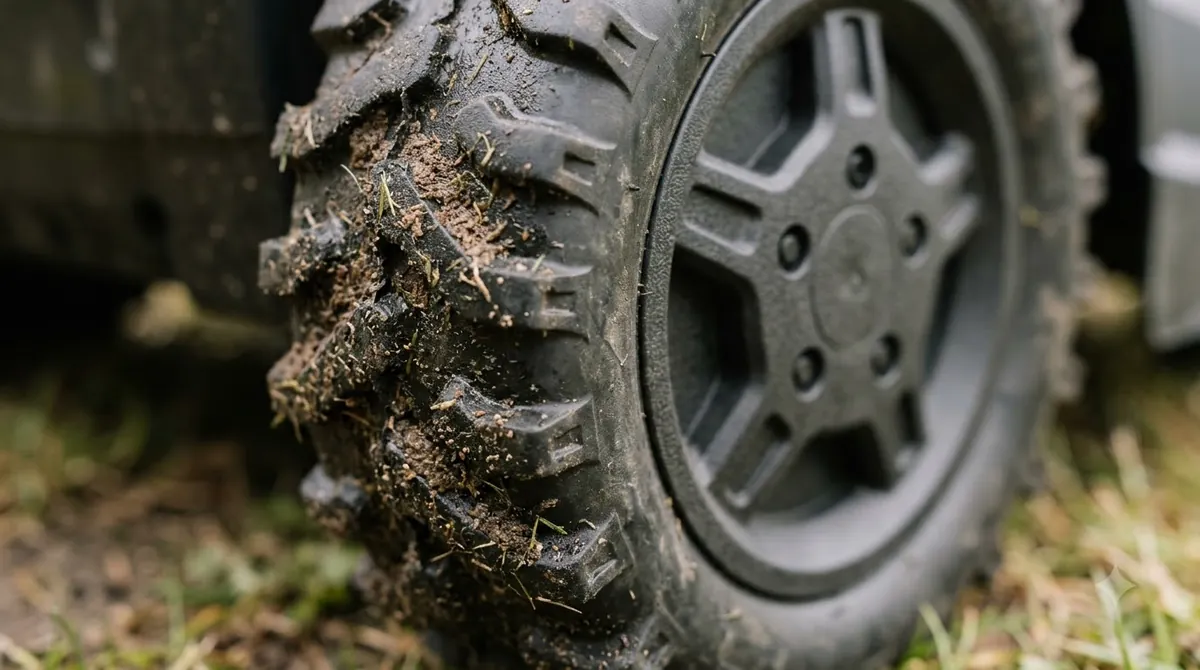
Thurston County also lists parking or driving heavy equipment over the drainfield among the things to avoid when you locate it. Find the field before any machine works in the yard, not after.
What a robot mower weighs compared with a vehicle
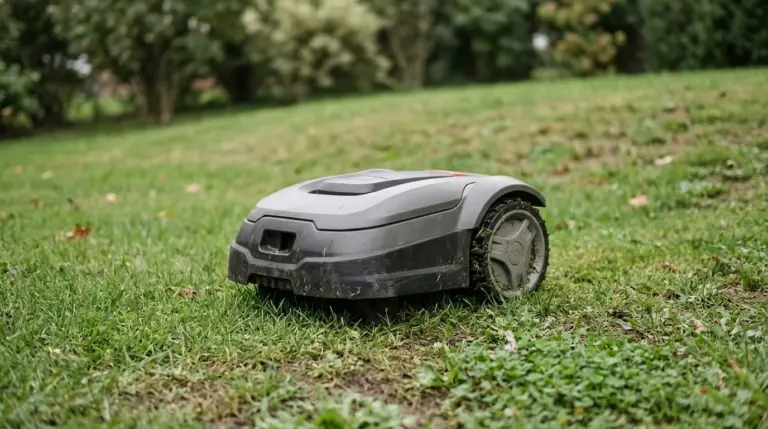
For a broader look at weights across the category, see how much a robot mower weighs. The Husqvarna Automower 430X weighs 28.7 pounds on the company’s US support page, with a width of 22 inches and a length of 28.3 inches. The same page rates it for lawns up to 0.8 acre.
| Spec | Automower 430X (Husqvarna US support page) |
|---|---|
| Weight | 28.7 lb |
| Width | 22 in |
| Height | 12.2 in |
| Length | 28.3 in |
| Lawn size | 0.8 acre (plus or minus 20%) |
| Slope at boundary | 15% |
| Slope inside installation | 45% |
These figures describe a light machine, but they are not a septic rating. None of the sources we read sets a weight limit for robot mowers, so weight alone does not settle which robot mower is safe over a septic drain field.
Our reading is that a mower this light falls well below the vehicles and equipment named in the guidance. That is an inference, not a ruling from a septic authority.
Keeping the mower off the field
Husqvarna says its AIM stay-out zones apply only to models that support the feature, and only with a physical boundary wire. A stay-out zone is a mowing control, so it does not replace a fence or a septic rule. Our guide to setting up no-go zones on a robot mower explains how the feature works across brands.
Husqvarna also warns never to use a stay-out zone to stop the mower from entering a swimming pool or the street. For those areas, it advises fencing with the boundary wire plus a barrier at least 15 cm (6 in) high.
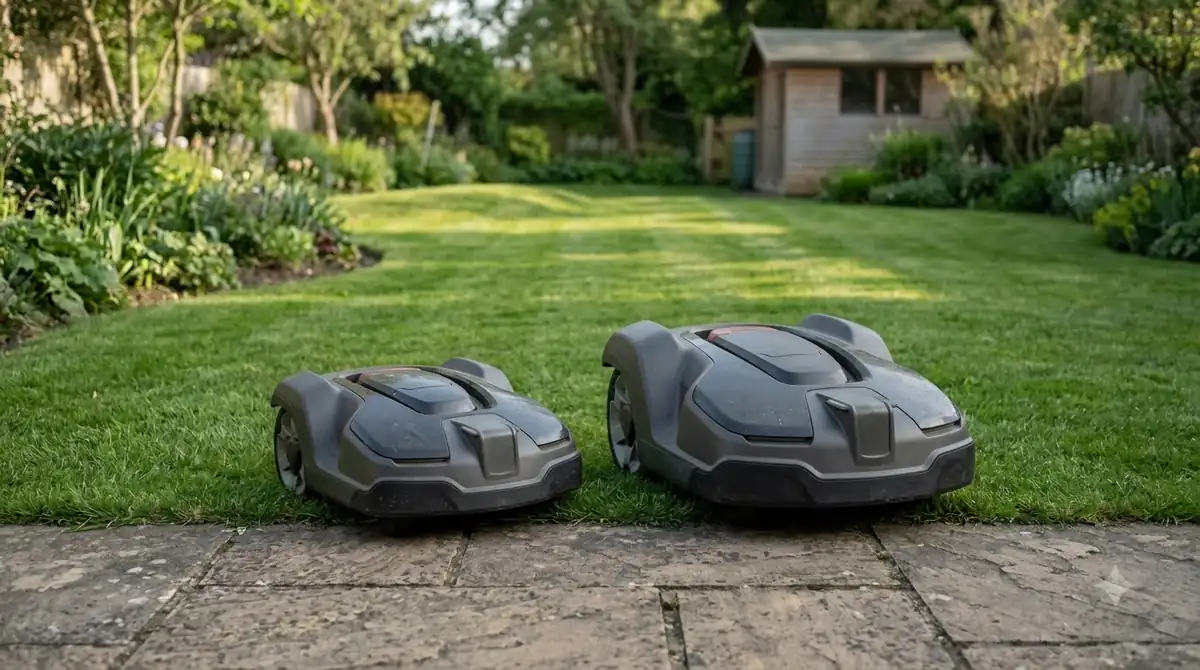
Our reading is that the same caution applies to a drainfield when you ask which robot mower is safe over a septic drain field. If you need to keep a mower off a marked area, laying boundary wire around obstacles is the usual starting point. Confirm with your installer whether the field should be fenced or marked before you rely on any mower zone to keep the machine away from it.
Which robot mower is safe over a septic drain field? What to check
Before you decide which robot mower is safe over a septic drain field, check its weight, its zone and boundary options, and the drainfield’s exact location. No source we read certifies a model for septic use.
- Weight and footprint from the manufacturer spec sheet, not a store listing.
- Whether the model supports stay-out zones, and whether it needs boundary wire, according to its manual.
- Where the charging station and base station can sit (see how a boundary wire works), kept clear of the drainfield (our reading).
- Grass cover over the field, which the University of Nebraska guidance recommends, with no trees on or near it.
- The field’s exact location and any layout drawing from your installer or health department.
Local rules can differ from the guidance quoted here. These sources cover drainfields and vehicles, not robot mowers, so they do not clear any specific model.
Frequently asked questions
Can a robot mower drive over a septic drain field?
No source we read approves a robot mower for drainfields, so the answer to which robot mower is safe over a septic drain field is still open. The septic guidance warns against cars and heavy equipment, because they can crack pipes and compact the soil. Ask your installer or health department before any machine works over the field.
Does robot mower weight matter over a drainfield?
It can, but no source we read sets a weight limit for robot mowers. The Husqvarna Automower 430X is listed at 28.7 pounds on its US support page. That is a manufacturer spec, not a septic rating, so check local guidance too.
Should I keep grass over my drainfield?
The University of Nebraska water program says to establish and maintain grass over the drainfield. It also says not to plant trees on or near it, because roots can damage it. Mowing that grass fits this advice, but the mower’s route still matters.
Who can tell me where my drainfield is?
Your septic installer, the county or health office that permitted the system, and any system drawing you have can show its location. Layouts and rules vary by county, so confirm the location before you set mower zones.
Sources
- EPA septic system types (US federal agency): drainfield definition and trench and drip designs.
- Avoid drainfield compaction (University of Nebraska water program): vehicle rule, compaction and air, grass and trees.
- Thurston County septic guidance (county government): heavy equipment, pipe damage and barriers.
- Husqvarna Automower 430X support page (manufacturer): weight, dimensions, lawn size and slope figures.
- Creating stay-out zones with AIM Technology (manufacturer): boundary wire requirement and barrier height.
 Up next7 min readBest Robot MowersBest Robot Mower for a Lawn With a Septic MoundUpdated Nov 17, 2026
 9 min readBest Robot MowersAre Robot Mowers Safe for Kids and Pets?Updated Nov 11, 2026
 9 min readBest Robot MowersBest Robot Lawn Mower for Thin Patchy Grass: What to Check FirstUpdated Nov 16, 2026
 8 min readBest Robot MowersWhich 3D LiDAR Robot Mower Is the Most Accurate? What the Numbers ShowUpdated Nov 16, 2026
 8 min readBest Robot MowersWhat a Robot Lawn Mower Under $800 Covers and What to CheckUpdated Nov 12, 2026
 7 min readBest Robot MowersBest Robot Lawn Mower 2027: What to Check Before You BuyUpdated Nov 16, 2026