
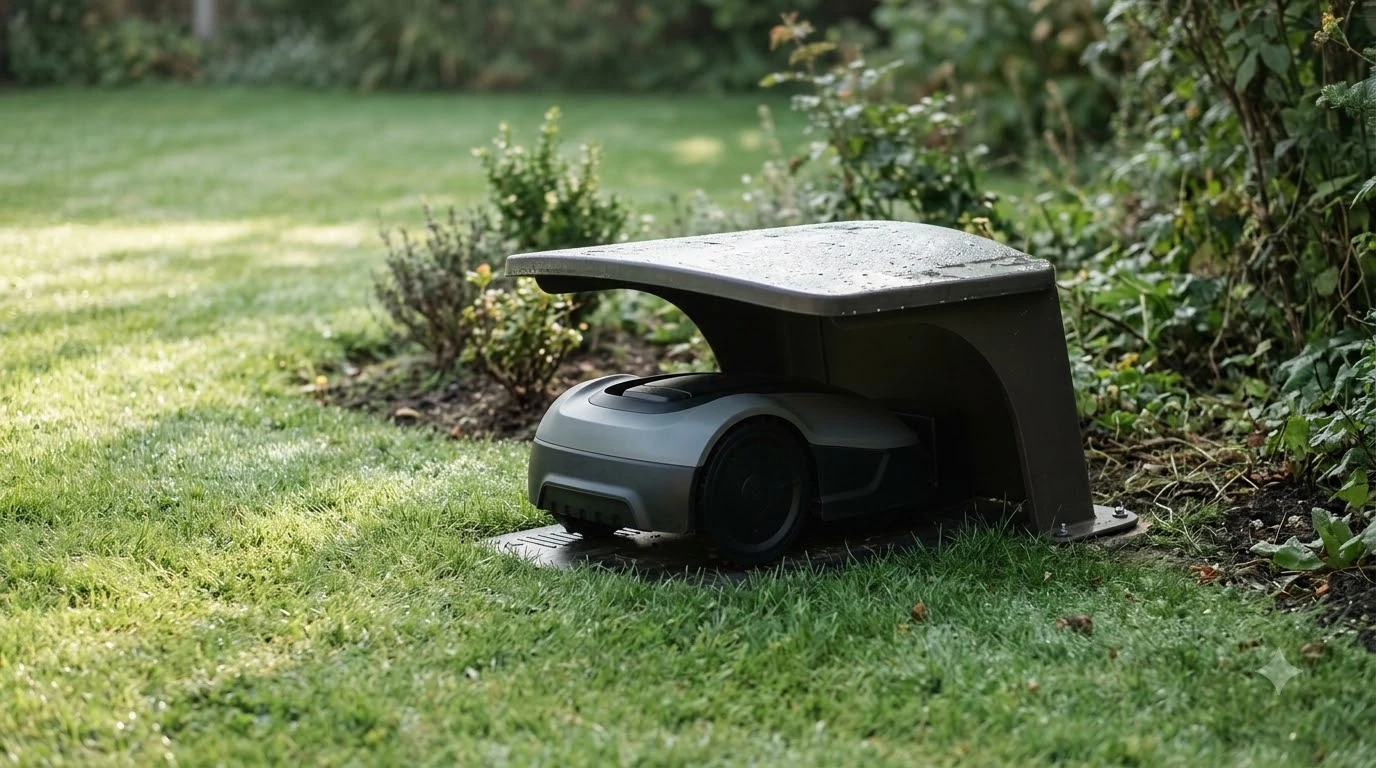

An RTK network service for robot mower without base station can give centimeter-level positioning (Topcon’s claim) without an antenna on your lawn. The mower receives correction data over the internet from a network of reference stations, so it needs a working Wi-Fi or 4G link at the dock and across the yard. Whether it works at your address depends on coverage and data signal, which you should check before you buy.
The short answer
- What it replaces: the local base station you would otherwise place on your own property.
- What the mower needs: a data connection, usually Wi-Fi or cellular, at the dock and on the lawn.
- What decides accuracy: the reference stations near your address, not the distance to a base on your yard.
- What to check first: whether your address is covered and whether the data signal holds across the whole mowing area.
- When a local base still makes sense: where the data signal is weak or the network does not cover your address.
RTK network service for robot mower without base station: what it is
A network RTK service is a set of reference stations that calculate correction data for their surroundings and send it to receivers over the internet. The mower’s receiver compares those corrections with its own satellite signals to work out its position. The idea is the same as a local RTK base station, but the reference point is a regional network instead of one antenna on your lawn.
The delivery method is standard, and our explainer on what NTRIP is for robot mowers covers it in more depth. The Bundesamt für Kartographie und Geodäsie (BKG) describes NTRIP as an application-level protocol for streaming Global Navigation Satellite System (GNSS) data over the Internet. It has three parts: a caster that hands out data to many users, a server that feeds reference station data into the caster, and a client that connects to the caster and receives the stream it needs.
Topcon, which operates reference station networks for commercial users, describes the virtual version of this idea. Its network RTK product simulates a virtual reference station near the user’s location, and it says corrections can be delivered via the internet or satellite (L-band). Where coverage is thin, the same article describes on-demand deployment of local reference stations to fill the gap.
How the mower gets its corrections
The mower needs to reach the correction stream from wherever it is. Vendor material from RTKdata, which sells RTK correction services, says that Navimow and Mammotion mowers use their brands’ own network services, so there is no antenna on the lawn, and that the mower needs Wi-Fi or 4G at the dock and on the lawn. Treat that as vendor content, not independent measurement.
A correction stream is continuous. Swift Navigation, a GNSS hardware maker, notes that corrections are typically delivered in real time over the internet and that the stream usually runs at tens to a few hundred kilobits per second. That is small, so the limit is usually the connection’s reliability, not its bandwidth.
Interruptions matter. RTKdata’s guide says delays of one to three seconds can push a mower from a full RTK fix into a float state, and it puts full RTK latency under one second. Swift says corrections can coast for typically three to four minutes before accuracy degrades, which means a short dropout may not stop a mow, but a long one will. If your mower keeps dropping its fix, read why a robot mower keeps losing RTK signal.

Network RTK versus a local base station
The two setups solve the same positioning problem with different trade-offs. The table below compares them using the points sourced above. The last row is our reading of how the choice plays out in practice.
| Question | Network RTK service | Local base station |
|---|---|---|
| Antenna on your property | Not needed for the mower, per RTKdata’s vendor summary | Yes, one fixed antenna placed on your yard |
| Data link needed | Yes, to receive corrections continuously | Not for corrections, but the base needs power |
| What drives accuracy | Nearby reference stations and your coverage | Distance from the base to the mower |
| Setup check | Coverage check for your address | Placement with a clear sky view |
| Our reading | Simpler install if your address is covered and the data link is solid | Better fallback where the data signal is weak |
Topcon’s description of network RTK does not give a single accuracy figure, only the claim of centimeter-level positioning without a local base. For a buyer, that means the real test for an RTK network service for robot mower without base station is whether your address is covered and the mower holds a fix in your yard, not a number on a brochure.
What to check before you buy
Before you rely on an RTK network service for robot mower without base station, check four things. Most of the problems people hit come from one of them.
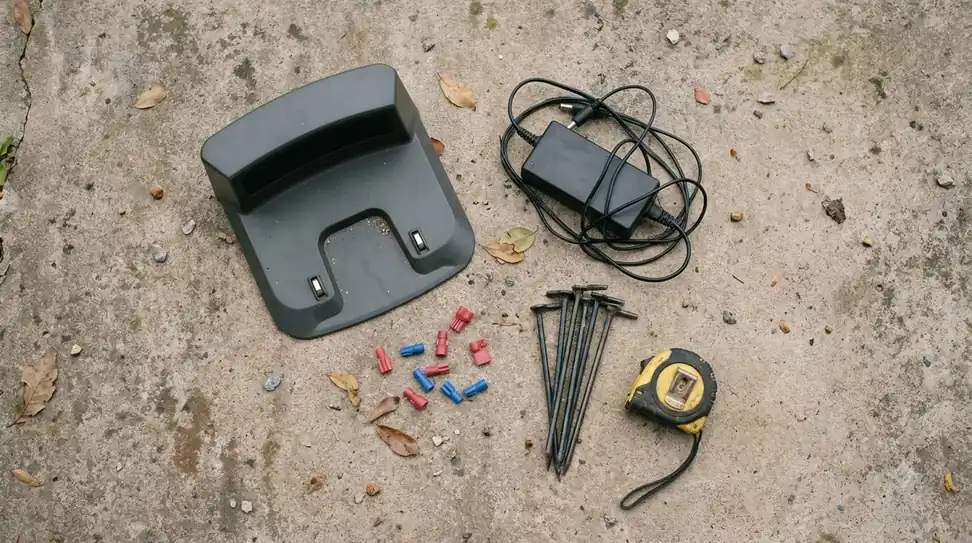
- Coverage at your address. Brand services usually run a coverage check. Use it, because a covered city does not guarantee your street.
- Data link at the dock and on the lawn. Test signal strength where the mower charges and at the far corners of the yard, not only near the house; a Wi-Fi extender for a robot mower or a cellular link are the usual fixes.
- Subscription terms. Brand bundles often include the service for a set period and then ask for renewal. Read the current terms on the vendor site, because prices and periods change; we do not list fixed prices here, and figures change as of November 2026.
- Setup details for DIY builds. If you run your own mower or software, the stream needs a correct endpoint, mountpoint, username and password. Swift identifies a wrong endpoint or mountpoint as a frequent cause of a receiver failing to reach RTK.
Heads up
Service terms, free periods and coverage maps are controlled by the vendor and can change. Confirm them on the vendor’s own page before you buy, rather than relying on a third-party summary.
When a local base station still makes sense
A local base is the fallback when the network path is the weak point. An RTK network service for robot mower without base station depends on that path, so if your Wi-Fi or cellular signal is poor across the yard, corrections can drop often, and the mower will spend more time in float or waiting for a fix. If the coverage check fails for your address, a local base is the practical alternative.
Our reading is that a local base is less dependent on your internet connection once it is set up, but it adds an antenna and a power point to the yard. An RTK network service for robot mower without base station removes that hardware but adds a dependency on the data link. Choose based on which weak point your yard is more likely to have.
Frequently asked questions
Do I need a base station with a network RTK service?
No. The mower receives correction data from a reference network over the internet, so no base antenna is placed on your lawn. You still need a working data connection at the dock and across the yard.
Does a network RTK service need internet?
Yes. The corrections are streamed over the internet, usually through Wi-Fi or a cellular link. Without a data connection the mower cannot receive a continuous correction stream. A local base station does not depend on the internet for its corrections.
Is there a fee for a network RTK service?
It depends on the vendor and the service. Brand bundles may include a free period and then ask for renewal, while third-party NTRIP services are sold on subscription. Check the current terms on the vendor’s page, since they change. This guide does not list fixed prices.
What happens if the connection drops during a mow?
The mower can lose its RTK fix. Swift notes that corrections can coast for typically three to four minutes, so a short dropout may be tolerated, but a longer one will reduce accuracy until the stream returns. RTKdata’s vendor guide says delays of one to three seconds can cause more float readings.
Sources
- Topcon, Topnet Live explained: correction services for robotic lawn mowers (manufacturer article): network RTK, virtual reference station, delivery over internet or L-band.
- BKG, NTRIP about page (German federal agency): NTRIP definition and its three components.
- Swift Navigation, troubleshooting RTK and NTRIP issues (GNSS hardware maker): stream rate, endpoint and mountpoint, coasting time.
- RTKdata, wire-free robot mower RTK accuracy guide 2026 (correction service vendor, vendor content): brand network services, Wi-Fi or 4G needs, latency.
 Up next8 min readGearBest Weatherproof Enclosure for RTK Base Station: 6 Checks Before You BuyUpdated Nov 13, 2026
 10 min readGearRTK Base Station Power Cable Outdoor: What to Check FirstUpdated Nov 19, 2026
 7 min readGearBest Outdoor Power Strip for RTK Base Station: 5 ChecksUpdated Nov 16, 2026
 8 min readGearWhere to Mount an RTK Base Station for a Robot MowerUpdated Nov 19, 2026
 7 min readGearRobot Mower Charging Station Base Plate: Setup RulesUpdated Nov 19, 2026
 7 min readGearRobot Mower Base Station Solar Panel: Is It Enough?Updated Nov 20, 2026