
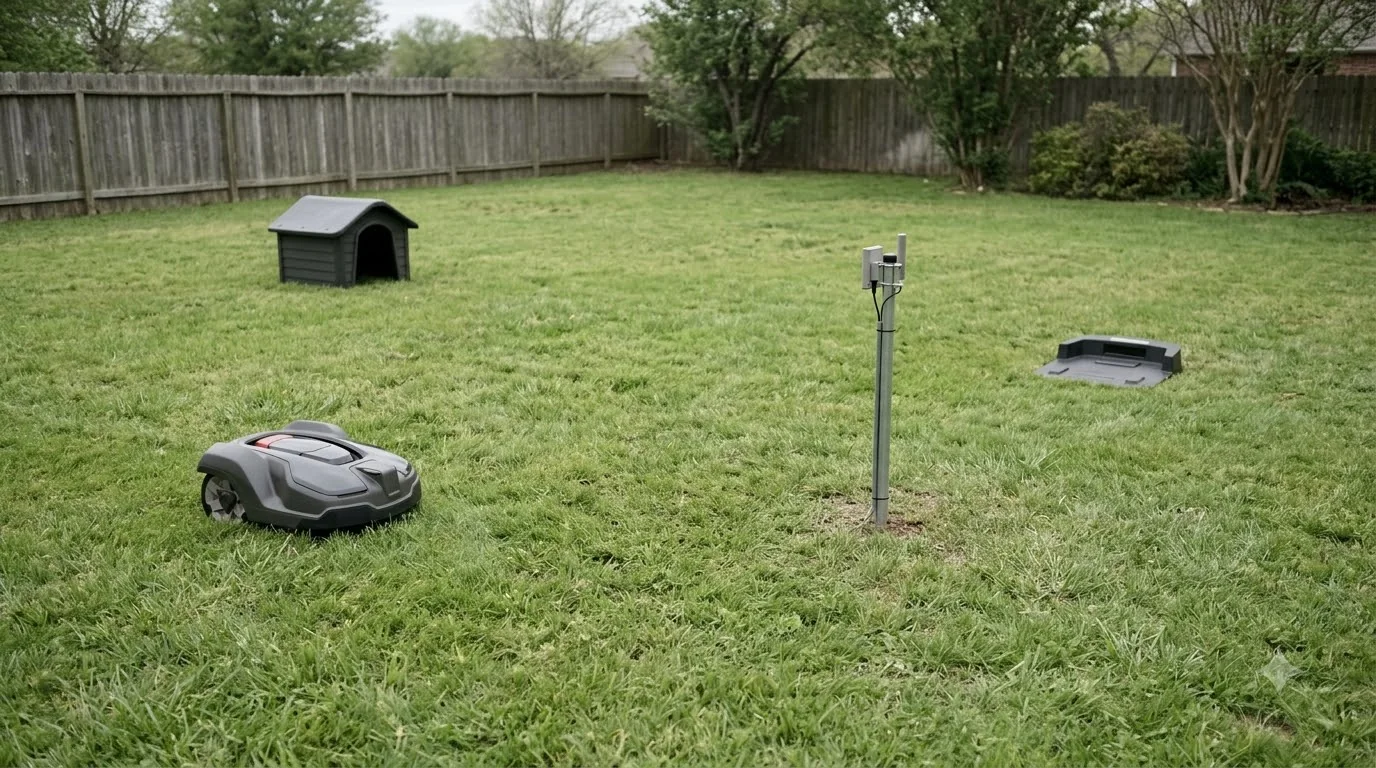

A robot mower base station solar panel can power an RTK base station when there is no nearby outlet, but it only works if the panel gets steady sun and the station has a battery to ride through cloudy days. Mains power is the more reliable choice when an outlet is reachable. Solar is a practical option for a remote corner of the yard, and the trade-offs are mostly about sun, battery size, and placement.
The short answer
- The base station needs continuous power. Standards guidance says a reference station needs a continuous and reliable source, and both mains and solar can meet that when sized correctly.
- Solar suits open, sunny spots. It is a weak choice under trees, on a shaded side of a house, or in regions with long stretches of cloud.
- Battery matters as much as the panel. The battery carries the station through dark hours and poor weather.
- Check the kit against your station. Panel kits are not interchangeable across every base station model.
Why a base station needs steady power
An RTK base station sends correction data to your robot mower so it can locate itself with centimeter-level accuracy. If the station loses power, the mower loses its reference signal, and the mower may stop or fall back to a less accurate mode. That is why power is not a minor detail for an RTK setup. A steady supply matters more than the source, and an outdoor timer for dock power is one tool some owners use to manage it.
The International GNSS Service’s guidelines for reference stations put it simply: every station needs a continuous and reliable power source, and mains and solar are both suitable options. The guidelines also recommend a dedicated circuit for mains power so other equipment does not trip the breaker. For a home base station, the question is which option is practical for your yard.
When mains power is the better choice
If an outdoor outlet is within reach of the planned mounting spot, mains power is usually the simplest route. It does not depend on sunlight, and it avoids the battery questions entirely. A weatherproof outdoor outlet, a cord rated for outdoor use, and a secured cable run cover most of the setup. Where a socket is within reach, the case for going solar is weaker, and the wider guide to solar power for a robot mower dock explains the trade-offs. If mains is chosen, a low voltage run from the outlet may be needed to reach the dock position.
The one caveat is cable routing. A power cable running across a lawn or walkway is a tripping hazard, and a long extension cord is not a substitute for a proper outdoor circuit. If the only route is a long run, the mounting spot may be a poor choice in the first place.
When solar makes sense
Solar is useful when the station sits far from any outlet, such as the back corner of a large lot or a spot beside a fence. The guide we read on robot mower RTK setups notes that solar works best in consistently sunny climates. That is the core limit: a panel is only as good as the sun it sees.
A solar setup has three parts that all need to match: the panel, a charge controller, and a battery. Some vendors sell these as a single kit. When you compare kits, look at the battery capacity and the panel rating together, because a large panel with a small battery still goes dark quickly on a cloudy week.
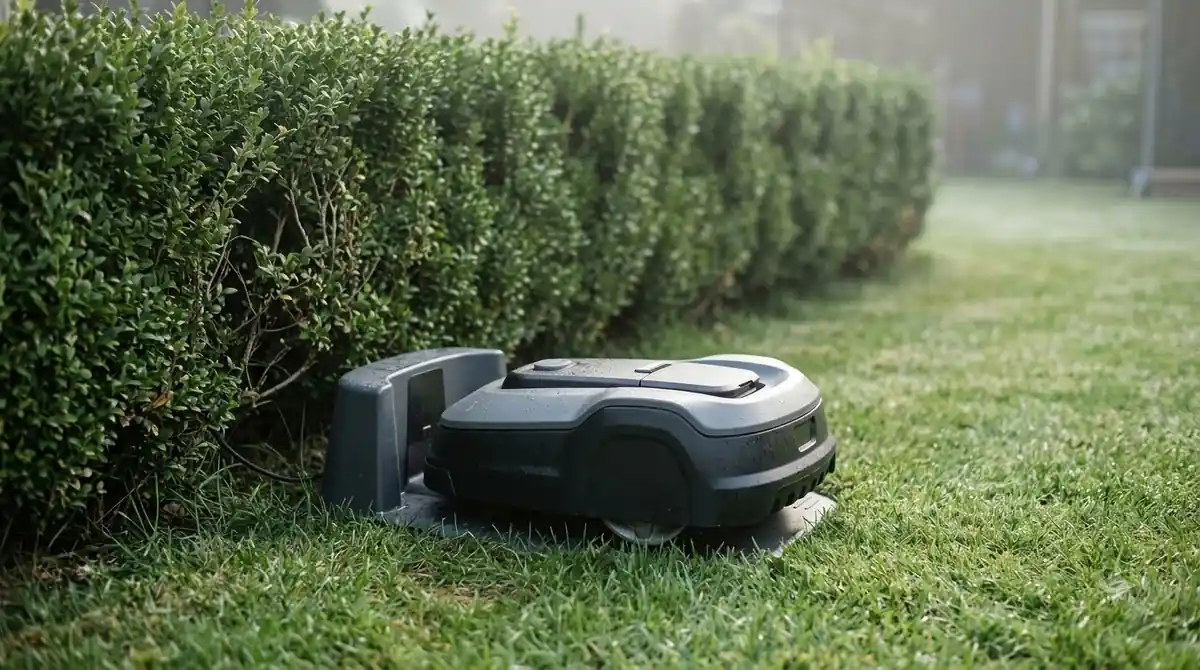

Sun and placement for a robot mower base station solar panel
Put the panel where it gets direct sun for most of the day. A spot with trees, a roofline, or a neighbor’s wall in the morning or late afternoon can cut output a lot. Also keep the panel out of the mower’s working path, so the mower does not bump into it.
The station itself also needs open sky. The guide we read recommends a clear, unobstructed sky view and mounting at about 2 to 5 meters above the ground, to avoid blocking satellite signals. Solar does not change that requirement. A sunny panel on a station that sees poor sky is still a weak setup.
Heads up
Do not mount a base station near high-voltage power lines or overhead transformers. Those can add radio noise that disrupts GPS and can cause a complete loss of RTK signal near them.
Battery and winter performance
The battery is the part of a solar setup that most often fails the owner, not the panel. In summer, a modest battery may cover several cloudy days. In winter, shorter days and snow cover can cut the panel’s output to almost nothing, so the battery has to carry the station through the gap. Short winter days reduce solar input just as the pack is under the most strain, and how cold weather affects the pack is worth reading first.
Vendor runtime claims vary widely and depend on the model and conditions. Treat any single number as a best case. The honest test is whether the station stays online through your own worst week of weather, which you can check in the app’s signal status over time.

| Factor | Mains power | Solar power |
|---|---|---|
| Dependence on weather | None | High |
| Setup needs | Outdoor outlet, weatherproof cable | Panel, controller, battery |
| Best location | Near an outlet | Sunny, open spot |
| Main risk | Cable trip hazard and outlet placement | Cloudy or snowy stretches |
Mounting and weatherproofing
Whether the station is solar or mains, mount it firmly on a post or wall so it does not shift. Keep the connections sealed against rain, and check the cable path for pinches or animal damage at least once a season. A loose base station can move enough to shift its surveyed position, which hurts accuracy for the whole lawn. Even a solar setup often keeps a mains backup, and weatherproof outdoor outlet covers protect that connection. Cable between the panel and the base should be shielded, and waterproof conduit for exposed cable is the usual choice.
What to check before you buy a solar kit
- The kit lists your base station model as compatible.
- The battery capacity is stated, not only the panel rating.
- The mounting spot gets direct sun for most of the day.
- You have a plan for winter, when sunlight is weakest.
- You can check the station’s signal status in the app over time.
Related reads: Before you buy a solar kit, consider outdoor surge protection for the dock, since lightning and grid spikes affect both power sources.
Frequently asked questions
Can a solar panel fully replace mains power for a base station?
It can in a sunny climate with a battery sized for your weather, but it is less reliable than a mains outlet. If you live in a cloudy or snowy region, mains is usually the safer choice.
Does the solar panel need to be near the base station?
Ideally the panel and station are close, since long cable runs add voltage loss and trip hazards. Keep both in the sunniest area you can reach.
Will a solar setup work in winter?
It may struggle. Shorter days and snow cover reduce output, so the battery must carry the station through those weeks. Check the station’s signal status during the first winter.
Can I use any solar panel with my base station?
No. Match the kit to your base station model, and confirm the voltage and connector type before buying.
Sources
- IGS CORS guidelines, power and communications (standards body): reference stations need a continuous and reliable power source, with mains and solar both suitable, and a dedicated circuit for mains.
- RTK GPS for robotic lawn mowers guide (independent guide): describes AC or solar power, solar working best in sunny climates, mounting height and a clear sky view, and warnings about high-voltage lines.
 Up next7 min readGearSolar Power for a Robot Mower Charging Station: What WorksUpdated Nov 19, 2026
 7 min readGearBest Outdoor Power Strip for RTK Base Station: 5 ChecksUpdated Nov 16, 2026
 8 min readGearRTK Network Service for Robot Mower Without Base StationUpdated Nov 19, 2026
 8 min readGearBest Weatherproof Enclosure for RTK Base Station: 6 Checks Before You BuyUpdated Nov 13, 2026
 10 min readGearRTK Base Station Power Cable Outdoor: What to Check FirstUpdated Nov 19, 2026
 7 min readGearRobot Mower Charging Station Base Plate: Setup RulesUpdated Nov 19, 2026